A millennium before Christopher Columbus was born, my people – since I am descendant of the Tamil Kings – embarked to sea without knowing what they would find; explorers, with ships filled with the best spices, jewelry and manufactured goods on the planet.
They were headed toward the dawn, open ocean to the East and South, with probably very well-thought-out research, because we’re Tamil, on what they’d find.
For the next twelve hundred years they met, traded with, loved and engaged with every single culture from my birthplace to the “Wallace line” – end of the Sunda shelf.
This is why, every time I travel in what you call South East Asia, I feel intense kinship with every person I meet. They feel it instantly, and I acknowledge it openly, with deference and appreciation.
My pleasure at the exquisite variations of the cultures here that were born from those now ancient relationships THRRRUMMMMS! with a harmony of centuries.
That I know this pleases everyone – and their cultures flower before me in brilliant ways:
Here’s a current playlist on my travels:
The White Man just. doesn’t. get it. It’s a god damn distant object of exotic fascination from what they perceive of falsely as a lesser culture.
My people had libraries and Universities while the European man was still crawling in the dirt.
Then slowly, they learned everything from us. Then they ran out of room for themselves, built ships and started “colonizing”: calling all other people animals and heathens and enslaving and murdering us. For five hundred years.
It’s certainly political. People don’t like us … Hindus. Because they’re not sure what they’re gonna get when they open the pack. Surprise! Wild card! Rest assured, what you will get will be deeply civilized and intellectual.
Take me for example, I am not a practicing Hindu anymore, I have been studying Buddhism for three decades and am an atheist dedicated to a scientific interpretation of our universe for the good of all humanity.
Well look, I gotta go. But anyway, I’m in Bali and I love every single person from here to Tamil Nad. But not enough to call you back.
It was as if the ocean herself took a gulp. The wave was instantly far above him. The riptide churned and he tumbled in the suck.
Kiran let himself roll until struck by the terror he had not taken a deep enough breath. He unrolled parallel with the wave and opened his eyes but saw only pulses of light.
At last the pull lessened. He strained to the surface, broke through into the bright sunshine and gasped, swallowing air. He breast-stroked to the shallows, crawled up on the sand, and collapsed, exhausted.
A wrinkled old man wrapped in cotton squatted on the sand a few feet away. He remained unmoved. Kiran lay face down, beached, sputtering. The man spoke.
“Good. You did not panic.”
The old man shifted slowly. His eyes narrowed. He returned to staring out to the distant horizon.
Kiran lay in the sand, breathing hard. The waves lapped up the legs of his trunks, chilling him. His cheek was pressed into the speckled sand. His open eye focused on the tiny grains.
When he was younger, most likely stoned, he’d have concentrated on the microverse of color and texture, aimlessly. Instead, at 45, he found himself reminded of the article he’d just read about this beach. He propped himself up with both arms, peered at the sand.
“Is this monazite,” he thought, “What color is monazite?” He seemed to remember it was a reddish-brown.
It wasn’t the first time he’d misjudged the tide. The last time was years before, but the feeling was discretely precise: the grip in his chest and his mind screaming, “I’m out of breath!”
But instantaneous to the panic was a knowledge not to. His rational mind took charge.
His heart was pounding. He shuddered and felt older. Kiran gathered himself and stood. The Indian Ocean licked his ankles. A brahminy kite, Haliastur indus, screeched. He turned to see it dive into the tide. It emerged with a fish. It hunted in the sea, on land, in the air, a masterful omnipresence. The mated pair that nested in a palm tree near his hut were apex predators. He watched the male fly off toward home with his catch.
Haliastur indus (photo: MTK 2007)
Kiran was master of little, apex of nowhere. He had come back to his birthplace to resurrect himself, but thus far all he had resurrected were memories that burdened him. He swam twice a day and stayed fit but his spirit flagged. He was shiftless. Soon, he’d have to leave.
“But not yet,” he thought.
He stumbled to his towel, grabbed his novel and sunglasses and headed back to the hut he called home the past three months.
Kiran plodded up the beach warily, avoiding the shits of the villagers and pied-dogs. His mind twisted in the blistering heat. Summer on this coast culminated in hot winds; Agni Natchathiram, the hottest period of the year on the Tamil calendar. It was way-offseason, which was why he could afford to return to India at all. Now, he was broke.
Kiran stopped at the gate to the gravel road that led back to the village. He shook the sand off his chappals and dusted his feet. Children ran about. No one paid him attention. He had almost drowned. He wondered if the old man would have let him.
There was a narrow pathway between the beach and the village, fenced off by wind-bent bamboo. He turned the corner to the path and the tintamarre of the beach dropped dramatically. It was the mid-morning calm.
Dawn was the loudest time of day, from cock’s crow, through crow’s caw, multiple staticky jam-boxes and at least one television set every hundred feet projecting bhajans and popular songs. Through it all, Kiran lay awake in bed or sat at his desk with coffee. The clatter came to an end abruptly – when there was a brief silence into which the cow next door lowed – an enormous sound.
Kiran had seen his neighbor wash the ass of that cow with her bare hands and water with as much care as she gave her own child.
It did not go unnoticed in the village that Kiran bought fish from Ambika, and at least once a week went into town and had a steak at the French restaurant, or a burger or a chicken sandwich.
Despite being born a local Brahmin, he wasn’t a vegetarian – yet another count chalked up to his Americanism, like the western accent he had when speaking Tamil.
He’d traveled on a U.S. passport, a citizen for decades, but here in his birthplace, unemployed and divorced, he was untethered. That was why he had returned: to see if he still belonged, or to discover for certain he no longer belonged, here.
Within days he knew it was moronic to think he could answer such a question, in three months, ten years or a lifetime.
The trouble was, with the changes in the U.S., he no longer felt he belonged there either.
A respite from the war on terror seemed to emerge with the election of a well-educated and earnest black Democrat – who had voted against the Iraq War.
He and the First Black First Lady breathed fresh air into the nation for nine months, when <wham> slammed the financial crisis of 2008, plunging the country into deep recess.
Bad economic times dispensed by a personable and intelligent President numbed everybody Kiran knew further. They began to ignore the drone strikes and Iraq and Guantanamo and the incessant war.
Suddenly the pressure to buy-in was real. They succumbed to the insistent crush of the seductive digital economy – joined Facebook and Twitter and put increasingly complicated phones in their pockets and then in their homes, devices that spied on them freely.
As Kiran’s friend Siva, a professor of culture and media studies put it, in his book on Facebook: “It isn’t Orwell, it’s Huxley.”
When he decided to return to India, Kiran felt on the cusp of something. He was desperate for direction but earnest no one else should author it.
He wanted to know what he was supposed to have learned by now. What was life supposed to have taught him?
He walked through the village quickly and swept through his gate. He rinsed off his feet with the hose on the cement patio and wondered if the reddish water swirling down the drain was monazite.
Months before, a stone carver he’d invited over had pointed out the mineral’s value, but Kiran had done nothing to investigate. He didn’t act on the possibilities right beneath his own feet until it was too late.
“Shit or get off the pot,” Phillipe had said, but with his accent, it was hilarious.
Kiran cursed his sloth as he showered. The hut and its small yard were surrounded by an eight foot wall which allowed Kiran to live unobserved by the villagers. This contributed to their speculatory gossip about him.
He took advantage of the privacy to walk around naked after a shower. He liked drying off openly in the hot Tamil air. It was something he would never do anywhere else. It felt so natural and normal here. Everything felt more base here.
He felt more like the animal he was. Yet he was no longer that animal. Knowing it was like a sting. Had he loved at all?
The sting and that question were immediately followed by a flood of images – Jim Carrey smiling like a tool in The Truman Show. He wondered if his entire American life was a simulacrum.
If he felt more connected to the animal he really was here, then what had he been there?
Who had played hoops and spun records?
Who had loved Sara, and planned with her and fathered Dash?
He wondered if his whole personality to this point was merely a projection he’d created to function in the U.S.
The thought that emerged these past three months in his birthplace, where he felt like a foreigner in practical society and profoundly himself when alone, never progressed. It only was.
He walked in circles around the small hut and yard, naked.
India was exploding with possibilities as the U. S. downspiralled.
For two and a half months he’d been walking in this circle, going swimming twice a day, and walking in this circle.
Because he knew nothing ends he had no answer.
He stopped walking and snorted aloud, “Yeah, right, I’m going to start mining thorium from the sand.”
Kiran drew the curtains and lay down on the mat. He was still. The fans turned. Then nothing moved. The power was intermittent.
With the power cut it was too hot to sleep or work and when he heard a high-pitched, “eeeeeeeeeeeee!” – the whine of the first mosquito – he leapt up.
Lying naked in a still hut by the beach mid-morning was asking for months of nasty joint pain: the blood-suckers carried chikungunya. He’d have to go into town.
Kiran wrapped himself in a cotton lungi and took a long-sleeve jibba from the second drawer of his dresser. As he pulled it over his head, he heard the call of Ambika, the fishmonger: “Meee-eeeeen!”
The woman sat patiently awaiting him on the dusty patio outside his gate. She had a wide, shallow, stainless steel dish on her lap. There was usually little left to choose from by the time she got to his hut because Kiran woke later than everyone else in the village and went swimming with the sun well up
Ambika woke with her husband long before dawn. She made him capi and saw him off to the sea. She received him back after sunrise. The men divided the day’s catch and she cleaned and prepared her dish with the wives of the other fishermen. They each walked a separate route through the village to sell their share of the ocean’s bounty.
Ambika wore a sea-green and midnight-blue sari with thin, gold lining that matched her nose ring and the gold chain that hung around her neck signifying she was wed. She had dark skin and deep blue tattoos on both arms in the style of the older tribes. She was just two years older than Kiran, but years in the sun in this beach village, gave her a wizened look.
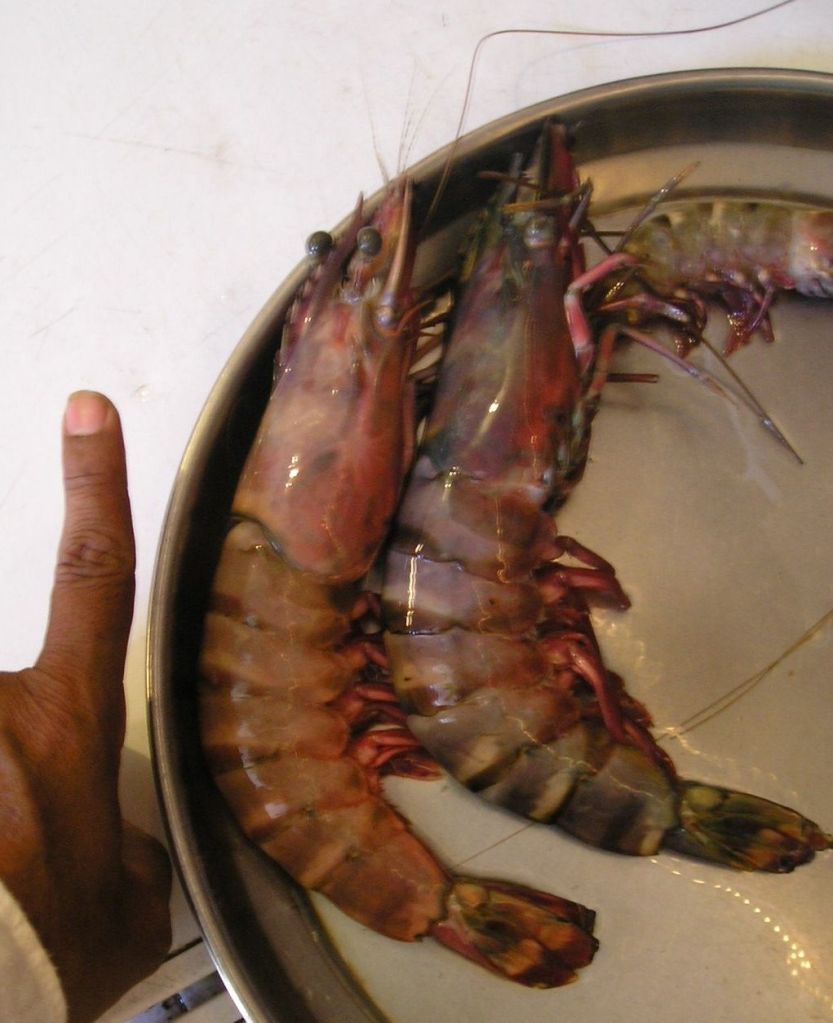
Today she had a single white perch and two giant tiger prawns. The mid-morning sun glistened and flashed brightly off the stainless steel dish as she swiveled it to show him. He bought the perch but then asked if he could take a picture of the prawns.
Ambika loved when he did this. Despite the ubiquity of phones in the village nowadays, no one used them to take pictures of food. It was something foreigners did. This time she posed, which was a first.
Kiran had eight pictures of Ambika in his phone, documenting seven different species on her dish. In the initial snaps she looked wary and stoic – on occasion suspicious. Now she took time to position herself. She turned the dish to prevent glare. She drew the top of her sari from her shoulder up and over her head to shade her face.
Suddenly, Kiran realized that she, and therefore all the villagers, must think he was leaving. He imagined her saying to the fishermen’s wives that next time he asked to take a picture of her fish, she would pose – because ‘who knew where sir was going and who all then would see her?’
He bent down and zoomed in on the dish, eliminating her from frame. The prawns were huge, at least ten inches long. Green and dark gray at the tips of their tails, their color grew lighter along the fat crustaceans’ bodies over the swimming legs, and pink toward the fore. The walking legs were striped a cartoonish pink-and-white beneath the dull, gray-pink carapaces.
Two round black eyes sat like little black caviar roe placed atop the rostrum above the wiry, red antennae that swept out before them. “Decapods,” Kiran thought, as he set his left hand beside the dish and stuck his index finger out for scale. He had never seen prawns this size before – not in the U.S. He suddenly felt he couldn’t think of anything better about the USA at all.
He stood up, and thanked and paid Ambika. Then he took the perch back inside. He had leftover rice from last night’s meal. He warmed it in the pan as he fried the fish. He stirred in some diced green onion and ginger, finally adding some cut spinach and chili paste. A squeeze of lemon brought out the flavor of the whitefish. It cut flaky and tasted delicious.
As he ate, Kiran thought again about Ambika. She saw much more clearly than he did despite all his travels and his western education. She and the other villagers were lighting-quick-witted. Their connection through daily process to thousands of years of Tamil made it so.
His mind was filled with the ceaseless noise of his Facebook, Twitter and IG scrolls.
When he arrived he never said when he’d depart. They knew before he knew himself. They were reading him as they read every tourist who came to stay.
The villagers’ lives were unchanged for centuries. They’d seen many come and go, among whom he was no more or less unique – to them he was a simpleton.
Kiran finished eating, washed up and changed into trousers, replacing his chappals with closed-toed black loafers. He had to go to the bank.
He wheeled the bike out, locked the gate and pushed off. He took the main road only as far as the first circle road. He did not want to pass the cafe on the way in. He wasn’t ready to face the gossip pit of expats and regulars yet. Cutting east, he headed down back alleys to the bank.
Emerging from one of these alleys into the round that diverted lorries and buses to the highway, he crossed but got caught between lights at the auto-rickshaw stand.
“Dey! Merica-sir!” a voice yelled at him. He turned to see the autorick driver he’d been buying ganja from standing among a cadre of his fellow drivers. He called him “Merica-sir” because he knew he hated it. It was both respect-building for his local familiarity with Kiran, a foreigner, and it was a dismissive dig.
The driver waggled his hand in a combination hang-loose and call-me sign. His head swiveled in the back-and-forth bobbling unique to South Indians that asks, implies and gestures, at once.
Kiran shook his head and waved him off as the light changed. If he hustled, he could make the light at the next round while all the lights between were green.
He drew a gulp of dusty, earthen air, the grit and residue of thousands of souls, and pushed hard. The auto-rick driver squeezed his rubber air-horn in a honkedy-honk-goodbye which Kiran was surprised he could pick out from the tumultuous roar of the busy street.
He made the lights, swung into the next roundabout and shot out into the bank parking lot. He pulled onto the front patio and chained his bike to the end of the crowded stand. There was a mall adjacent to the bank. The bike rack was always crowded.
Kiran loved coming to the bank. It had an entrance way – mirror-tinted double glass doors let you in to a small foyer and another set of glass doors that led inside. It was a glass air lock – an area to shake oneself of the dust and heat before entering the cool A/C and the clean confines of the bank.
There was a water fountain in the foyer and even a small, single-stall restroom with a sink. Kiran went in and rinsed off, wiping the sweat and dust from his arms and face. He dried his hands by pushing back his hair, took a deep breath and looked at himself in the mirror. He was older.
His temples were flecked with gray that contrasted sharply with his long black hair. His scruffy beard was equally salty. He knew he’d have to shave it all before going back to the U.S. He pulled down the skin under his eyes and stared into himself. When he let go he pored over the extent of the bags.
Kiran had opened the bank account from California over the net. They overnighted him a card international express. When he arrived at the airport in Chennai, he withdrew 120,000 rupees. He used it to get situated. Only then did he use the card to buy sundries in town.
He knew the e-trail of his purchases was being closely observed by the bank. If he spent money at Western fast food chains and checked into a 5-star hotel it meant one thing. If he bought groceries and supplies from local shops, it meant something else. He paid for the hut in cash.
After a few days in the village, he made his way to the bank on a bicycle, covered in cotton. On a Tuesday, a week after he had been in town, Kiran made a showy first appearance at the bank to “meet the manager” and be seen by those who had been watching his purchases as a non-resident Indian.
It was standard practice: make it seem you have plenty of money in the U.S. and are here to share it with family and explore business opportunities. Behave as local as you can. He used the card to buy his bicycle. He used cash when he rented a moto.
He never used the card at local bars. It was the first arrangement he made with Phillipe. He left a deposit, ran a tab till an agreed upon limit and then paid in full in rupee notes. Keeping currency fluid was an invaluable skill of travel.
Mr. Srinivasan was a prototypical South Indian money manager: balding on top and clean shaven, with a round face and baby cheeks. He wore thin wire spectacles that could have been a decade old. He wore a brown suit. It was 42 degrees C outside and this guy was in a suit.
“It is vonderful to see young men doing well in America and coming home to invest,” Srinivasan had remarked as they signed the paperwork. There was an old wooden abacus at the edge of his desk. In the corner, unused, sat a typewriter. Kiran gave him a thumb impression for the bank’s records. “Will you require transfer account?” Srinivasan had asked.
“Not at the moment,” Kiran had replied, “We’ll see.”
The manager bobbled his head at him, “India is booming, sir. You will do very well here now. And your vife, sir?”
“We’re divorced,” Kiran had murmured, signing and initialing paperwork. It was another tight, efficient lie, that pegged him as American.
Srinivasan immediately fired off the excessive tsks that were so common here, “Tsk, tsk, tsk, tsk, tsk, tsk, tsk, tsk, tsk” – a rapid-fire nine tsks was considered more empathetic – “terrible,” he had concluded.
Now, as the interior glass doors slid open before him, Kiran realized he looked forward to seeing the old man again. Srinivasan would testify to his goodness if called upon to do so while he was away. Kiran was confident he’d left an impressive e-trail of purchases and relationships.
There was a podium placed beside the doors as he entered. This was new. A tall, thin, mustachioed young boy in uniform stood at the podium and greeted him. Kiran asked to see Srinivasan. The boy furrowed his brow and looked down at a nonexistent list. “There is no one here working by that name, sir.”
Kiran then asked after the manager and was told he would have to make an appointment. He told the young man to go and ask the manager if he would see him now. Being pushy at the bank exhibited the confidence of both a wealthy American and a local Brahmin. It couldn’t hurt to try.
“Madam is a madam, sir.” the boy replied.
“Fine,” Kiran threw on the frustrated voice, “ask her.”
The young man dropped his head to his chest and ran to the back offices. “The new India, “ Kiran thought, “where turnover is high and smart women make moves to gain control of their lives.”
Now one of them appeared. She was young. “Maybe not 30,” Kiran thought. She was 28: “I’m Urmila.”
Like the bank manager before her, Urmila dressed in western attire, though considerably more sensibly. She wore a thin, black, linen jacket over a light white blouse and a medium-length, business-cut, black skirt. She wore a string of silvery-white pearls. Her gold name tag read: “Urmila Narayan, Manager”.
She extended her hand. Her hair was tied up in a tight bun. She had a sharp but elegant nose over which she now assessed him with searching, dark-brown eyes. All business. They shook and he noticed she looked him-up-and-down before saying, “Come on back to my office.”
Urmila spun around quickly and strode off to the back. Kiran hop-stepped to catch up. He called out after her, “Hey, listen, I didn’t realize I needed an appointment-”
“It’s no trouble,” she called out over her shoulder, not breaking stride.
Her office was small, but one wall was a window treated with the same mirror-tint on the front of the building and when she closed the door the space was cool, well-lit and humming. There were two wall-mounted monitors overhead which ran livestreams of BTVI and Bloomberg Global and two monitors on a desk crowded with a keyboard, mouse and documents. She sat behind the desk and indicated a chair opposite.
There was unopened mail on the chair. He handed it to her and she glanced at the envelopes as she set them atop all the documents on her desk, put her hands together, looked at him and asked, “What can I do for you?”
“I’m headed back to the States briefly and want to maintain my account. I just wanted to touch base with the bank about that. Clarify dates, if there’s a minimum balance or …” he trailed off.
She looked up his account on one of the monitors before her and said, “I see you opened this just a few months ago. How long do you expect to be gone? Because we have some options.”
Kiran was not prepared for this. It was a long way from balding Srinivasan and his abacus and typewriter of a few months ago. “Uh, I don’t know for sure. I have to go back to take care of a few things. Of course I’ll be in touch from there and I can still conduct operations with my account through transfers and the net, right?”
“Right,” Urmila replied, curtly, as if suddenly realizing exactly whom she was dealing with.
She sat back and spoke quickly: “You’ve taken our most basic account, which you opened with a principal balance you deposited as a lump sum from your account in California before you arrived. The monthly fee for the card and other services has been taken out of this principal. So if you continued with this basic account, you’d have to keep paying the monthly fee and maintain a balance,” she paused, scanning the monitor, “I think it’s like 100,000 rupees. There would of course be penalties if you didn’t manage this.”
“Sure, I understand,” Kiran replied.
“Alternatively,” Urmila continued, swiveling in her chair to a shelf behind her, “I would encourage you to consider investing with us.” She pulled down a glossy folder from the shelf and passed it to him. It was filled with printed pages and charts. “Here’s a simple explanation of some of the opportunities we have. You could leave as little as 5,000 US here and it would be working for you.”
Kiran tried to look cool. “Oh, I see,” he took the folder and pretended to flip through it. His ignorance wasn’t lost on her. “But I guess there would be tax implications …” he trailed off again.
Urmila sighed and grabbed a business card, flipped it and deftly wrote her number on the back. “This is my mobile. It’ll be easier than trying to use the appointment line. Call me direct to discuss and we can do the needful.” She handed the card across the desk to him and sat back.
He realized this was all the time she had and stood. He thanked her as they shook hands and he left. It was all cold, swift, mechanical and delivered exactly as it might have been in Modesto. “The new India,” he thought.
He put the folder in his backpack and headed out of the bank. The second doors opened and the heat hit him like a wall. He craved a drink, but knew he had to visit the Internet cafe first. He had to look up flights and let Sara and Dash know he was headed back. He unchained the bike and set off.
He pulled up to the cafe and was pleased to see there weren’t that many bikes out front. School hadn’t let out yet. In the afternoons the place was swamped with teenagers. There were only 15 cubicles, stalls really, so groups of kids hung around each, spilling over.
Kiran checked in and slid into a stall. He ran a Kayak search on tickets and checked every box: Cheap-O air and ijustfly and orbitz and priceline and whatever Indian options they added. There were nearly a dozen windows to sift through to get an idea of a price range. He would use the range to negotiate with a local travel agent for a lower price or a better flight. After a half hour of collecting data, his mind swimming with flight numbers, fares and connections, he shut down all the sites and put away his notes.
He wrote Sara first. Short sentences. Their relationship had decayed to where only the most pertinent info was exchanged. It was like writing a telegram in the last century: “Home next month. When can I see him? – K.”
He thought about writing to Dash to tell him as well, but realized he didn’t have concrete dates to share. Instead, he sent him a few snaps of the beach and of an elephant he saw on the road. “Wish you were here. How are the A’s doing?” he wrote. Kiran wondered if Dash even kept up with baseball.
He spent a few minutes looking for articles about thorium in the sands of Tamil Nadu. He stared at images of monazite-laden sand. He couldn’t tell anything from comparing the images. They all looked different from each other and the sand by his hut.
The tiny bell on the front door of the Internet cafe began ringing periodically and insistently, as teenagers and their posses kicked it open and filed in. Many of them were Dash’s age.
In San Francisco, in the Mission District, between 1993 and ’95, I read Haruki Murakami’s A Wild Sheep Chase, Hard-Boiled Wonderland at the End of the World, The Wind-Up Bird Chronicle and Norwegian Wood. He was then only recently translated into English and popular in San Francisco.
Those early novels were unpredictable, well crafted and defied genre. Murakami’s talking cats, imploding houses, slight shifts in perception of reality – and his cool characters’ natural acceptance of deep, scalar trips through levels of that reality – became a genre of their own.
His characters and prose paralleled in literature the malaise, disaffection, vapidity and bored waiting game of the end of the 20th century and then transcended it with fantastic departures from the world. The ride was like manga without the images or a purely textual Miyazaki Hayao animation epic just for single, young adults.
I first read A Wild Sheep Chase, Murakami’s third novel, written in 1982, in San Francisco when I was 25. It remains my favorite. I remember feeling incredibly small in the face of the universe as his characters were pushed around.
I have a reverent fascination with Japan and a profound respect for her people. In my lifetime Japan was the most Americanized among all Asian countries, so growing up in the US, I was allowed slightly greater exposure to her writers.
Among Japanese novelists, I’d read Kawabata since I was a teenager, and in university covered Mishima and Akutagawa. I hadn’t yet read the post-war existentialists, when I picked up Murakami. Banana Yamamoto’s Kitchen was the hot new wave hitting California from the land of the rising sun.
Murakami was immediately different: pop synthesis of West and East through a contemporary urban Japanese socio-cultural lens.
Haruki Murakami began writing novels at the age of 29, in 1978, and has told Bomb Magazine, “Before that, I didn’t write anything. I was just one of those ordinary people. I was running a jazz club, and I didn’t create anything at all.”
Wiki states he had a sudden epiphany during a baseball game:
In 1978, Murakami was in Jingu Stadium watching a game between the Yakult Swallows and the Hiroshima Carp when Dave Hilton, an American, came to bat.
… in the instant that Hilton hit a double, Murakami suddenly realized that he could write a novel. He went home and began writing that night. Murakami worked on Hear the Wind Sing for several months in very brief stretches after working days at the bar. He completed the novel and sent it to the only literary contest that would accept a work of that length, winning first prize.
Now I’m 45 and Murakami’s 65, so we both remember 1984, the year in which his newest novel, 1Q84, is partially set. We have also both lived through an era that has seen the realization of some of the socio-cultural horrors described in George Orwell’s prophetic novel, 1984, which 1Q84 uses as a sort of launching point.
My loudest use of Orwell’s work was on the first anniversary of the September 11th attacks, in 2002, as a performance element of the art installation US=THEM, in Los Angeles, I read Orwell’s 1984 aloud in its entirety in a book store gallery, beginning at 5:35am (the time the first plane struck WTC2) and ending just as the sun set on the corner of Sunset and Alvarado. I printed slap tags that read 2002=1984 and stuck them everyplace.
I was excited to hear Murakami was using Orwell as a point of reference, and assumed the work would have socio-political overtones. I hoped 1Q84 would be more openly political and less personally intimate than the love stories he’d been writing. I consider Orwell to have been ahead of his time, so I was biased by the title’s obvious reference.
The particularly Asian coolness and practicality of Murakami’s characters in every day life is inspiring. But from the first, I felt his work was limited by the use of first-person narrative, usually with a narrator who seemed very much like himself: a middle-aged Japanese man living in Tokyo and underwhelmed by normal existence.
Murakami’s male narrators, all roughly his age, made the work light-weight. His contemporaries in late-20th century fiction writing in and translated into English: Garcia-Marquez, Eco, Kundera, Bowles, Ondaatje, Atwood, Boyle, Kureishi, DeLillo, Roth, Rushdie, Oates, Bolaño didn’t succumb to this basic approach.
As a writer, I’d come to the conclusion that my fiction suffered from my inability to write effectively in third person. I was biased by instructors and Modernism away from the trend toward first-person narratives written for the Me Generation. Murakami had no such bias, and neither, it turns out, did the publishing industry.
Murakami was young when he began and was thrust into the international limelight very quickly because of the accessibility of his work and his remarkable imagination. He was rewarded for making it easy to read. He was rewarded immense audiences for his references to Western pop, to “classical music” and to the boozy freedom of post-modern urbanity.
Haruki Murakami’s narrators’ exceptional breaks from the normative were what thrilled – these crazy trips into the unreal experienced coolly by his characters.
As a straight, booze-drinking, single, urbanite in my twenties (pre-metrosexuals) Murakami’s meals, drinks and one-night stands were a blast, in some cases a relief from the moralizing of political correctness.
I have sometimes felt targeted by novelists. Some just succeed in getting it. I wouldn’t discover Pepe Carvalho until a decade later, but Spanish readers will appreciate the comparison to Montalban. We used to joke about a drinking game in which you take a drink every time a Murakami character does. It gets harder to finish the book.
I only begrudgingly got into Murakami’s use of Western cultural tropes as described within an East Asian urban society, which Murakami was “first-to” in terms of crossover, and which he uses abundantly like a signature.
As an Indian living in the U.S. and Asia, who studied Ronald Takaki then, this was unappealing, I hated what post-post-modernism was becoming. But by the late ’90’s crosshatching Asia and the West had flooded the field. Murakami and Jim Jarmusch and Quentin Tarantino and Miyazaki Hayao made it cool. Sensible. At last, Asians outside London and New York were exhibiting what Hanif Kureishi knew, was called insouciant for writing.
It was inevitable at the dawn of the Internet and the globalizing 21st century. Haruki Murakami, the runner, from the longest US-occupied part of Asia, Japan; the novice writing in Japanese, first-person about being single, urban and sexually liberated was the first high-reaching Asian to just go ahead and run with it. Straight into the 21st Century.
I’m generalizing, but proposing Murakami was the best-seller who embodied the literary trend toward first-person narrative form and made it cool for Asian writing to love the West. Rushdie’s Ground Beneath Her Feet, must’ve been influenced in some small part by what Murakami was carving out.
Initially turned off by the brazen professing involved in it, I began to embrace Murakami’s careful choices of European orchestral music and western movies, TV shows and pop songs appropriated to both metaphorize, translate and drive narrative on multiple tiers. But creatively it always struck me as an easy way to force structure.
I was least impressed by Norwegian Wood. It struck me as a soap opera written for a specific audience of romantics. So after finishing it, I passed on a few of Murakami’s books and embarked on other, pretty heavy, post-war Japanese novels: Dazai Osamu, The Setting Sun and No Longer Human; Kobo Abe, The Woman in the Dunes; and Saiichi Maruya’s contemporary classic, A Mature Woman.
I returned to Murakami in 2005 with the publication of Kafka on the Shore, which was my summer read while living on a Japanese shore, in Kamakura.
Again impressed by the proficiency with language, I liked the poetics and the magical, even spiritual, feel, but I remained disappointed by what struck me as basically a first-person, relationship story. Murakami was still pushing western tropes through to the title page and writing less political, getting more pop.
That’s my experience with Murakami’s work. I am not qualified to review 1Q84 as anything other than a reader of novels for 30 years. I do not pretend to understand him as a man, nor have I read much about him or his method, barring what’s been published in the New Yorker here and there.
In some small part this will also be a discussion of the state of the publishing industry in 2012 which has carefully produced ‘Murakami, the technically proficient, edgy yet non-threatening Asian romantic fantasist’ into an internationally best-selling novelist.
Though I’ve lived in Japan, I cannot read Japanese and so have experienced all the Japanese novelists only in translation to English.
1Q84 – translated by Jay Rubin and Philip Gabriel – was published by Knopf as a massive, 944-page, case-bound Borzoi, with a vellum slip cover designed by Chip Kidd that lightly masks close-ups of two Japanese faces, a female on the front and a male on the back, on October 25th of last year (2011) and sold for $30.
I found one in great condition for $18 earlier this summer at one of the used book stores I help stay in existence. I finished it last week.
The paperback and e-versions have been available for some time now and I began to wonder whether this form of publication is ever really being read, cover-to-cover. The thing is a doorstop, a bookcase brace, a coffee table weight, but reading it’s awkward, heavy and very hard to conceal.
Lugging this anvil around the past few weeks, I was stopped and asked about it many times in the street. One guy stopped pedaling his bike, going up a hill to stop me and ask, “Is that the new Murakami?’ Is it good?” Waiters, bartenders and waitresses at all my local coffeeshops, bars and restaurants asked and showed anticipatory excitement about this big, pretty thing.
I was sure the novel was being read … but figured the vast majority of that reading was happening in multiple parts as separate books in paperback, or in a digital format. I’ve never wanted an e-reader more than in these past few weeks lugging around 1Q84, with its slippery vellum cover.
Which brings us to the design by Chip Kidd and to why it was sitting pretty, marked down 30% at the used bookstore within eight months of publication.
“But Knopf, which published the title late last month, has not only turned the book into a bestseller, it’s also managed to reverse another trend: it has made the book more popular in print than in digital.
“According to numbers released by the publisher, the novel, which was at #2 on the Times bestseller list on November 13, has sold 75,000 copies in hardcover, and 25,000 in digital. Those impressive print sales are thanks, in large part, to an extravagant package that Knopf put together that has made the book the kind of object–beautiful and collectible–that readers want. And, more than likely, non-readers also want.”
The design is horrible.
The lettering of the title is put on two lines so that the 1Q is above the 84, rather than written like a year: 1Q84. The result is that everyone who knows nothing about the book thinks its title is I.Q. 84 – which is hilarious and sad.
The vellum cover and the bold, sans-serif font make it worse. It’s so done-already. The design completely fails to help make Murakami’s connection between 1984 and 1Q84. (oddly, so does Murakami within, so perhaps it’s a case of too-good design)
The faces on the cover aren’t the author but face-models, and the vellum Kidd asked for that’s received so much praise, serves to mask their Japanese-ness, while retaining the sexy – fashion! haute couture!
The endsheets and chapter title pages continue the idiocy of separating the numbers of the title out, making it more disassociated than ever from Orwell. These pages are all black and white photographic backdrops of twilight and of the moon, which plays a significant role in the book, but though highly-stylized, they’re cheaply produced and the graphic elements aren’t even like the descriptions by the author within, which are specific about the appearance of the moon. Design sensibility invades literature again.
ugh. It’s whorish and stupid and has received nothing but praise and exaltation for Knopf and Chip Kidd for 8 months.
“the kind of object–beautiful and collectible–that readers want. And, more than likely, non-readers also want.”
sigh.
In the late-’90’s when I was working as a low-wage proofreader, fact-checker, jacket-designer and researcher in the New York publishing industry while trying to get published myself, at nights and on the weekends I also worked to help found a non-profit artists book organization in Brooklyn.
It was bizarre: by day, I’d be using new digital tools to make mass-produced work flashier, more-designed, more image-oriented, less text-heavy, while at night and on the weekends I helped produce fine art books with traditional materials in limited edition.
The turn of the millennium in New York City brought the consolidation of publishing and birthed the end of the book as we know it. What happened with 1Q84 last year was that it was sold as a sculptural object to great success. They made it into something you could market at Xmas whether anyone read it or not.
But appreciating the work within is made more difficult by the immense distraction of these new marketing methods, which crowd the work with the gushing sycophancy of non-readers buying sculpture.
END PART ONE
and now,
a poll:
PART TWO: 1Q84, Murakami Tries Third Person
1Q84 is Murakami’s first novel in third person. It succeeds in reaching for high ground, but weaknesses are revealed by the more difficult form. Some of these may be solely a result of translation issues, but whatever made it happen, at points it’s unbearable.
1Q84 is overwritten. It could easily be two-thirds the length. There may be perhaps no single person or department to blame for this.
It could be issues of translation. Having two different translators may have contributed to the repetition of ideas as each attempted to infuse their read. Throughout the work slipshod word choices are not just used but repeated awkwardly.
I hated the choice of the word “jacket” rather than “sleeve” for record covers. It isn’t wrong but it just sounds clunky in repetition – and the term is repeated within a paragraph without replacement when “sleeve” or “cover” would work so much better. The translation seemed rushed and simple. I presume this added pages.
It could have been a bad editor at Knopf, unwilling or unable to realize that when you publish three books in the same series from another language into one book sometimes there will be an absurd number of repetitions of basic points because when the work was originally published, these points were repeated to bring in new readers at each stage of publication.
I haven’t read any other reviews of this book, but I gather from the PW clip that this was the NYT’s problem.
It could be the fault of Knopf, itself, which seems to have rushed to shove the book out the door fast for Xmas season of last year, using cheap, flashy design to create a book to be sold as a sculptural object. They didn’t care what was in it as much as what was on it, what it looked and felt like. It could easily have been rushed for sales and cheated of the requisite time and effort required for editing and translation.
These possibilities notwithstanding, the responsibility for quality of the work lies with the author and Murakami’s attempt at third person results in common problems for anyone embarking on the daunting task of writing a proper novel: you must get inside the characters to let them live, but you mustn’t show you are inside the characters for them to live.
One sophomoric method used to achieve this for several decades is italics to represent the thoughts and inner monologues of a character. If it absolutely has to be done, then this is the accepted practice. Oh, I’m getting pedantic!I hope they’ll understand what I mean, that you should be able to write your characters into what you’re trying to convey and not have to rely on italicized font to tell the reader something important, oh, maybe I’m just nitpicking. M.T., you’re such an oppressive rationalist.
But just like the flashback has become nauseatingly common to drive narrative in movies since Pulp Fiction, usage of italicized thoughts has become standard in novels in third-person in this, the era of the first-person narrrative. It’s a failure on the writer’s part, or at least a CYA move. If you have to do it as a writer, you make it count.
Not so in IQ84.
Murakami’s discomfort with form leads to an unending parade of italicized thoughts. No character goes mentally uninvaded. Like the first-person narrative before, Murakami is shaking off rules again in this attempt at third-person narrative. This could be considered bold, I suppose, but not by me.
What was bold was the whole new dimension added when Murakami decided to have these characters thinking in italics about quotes. These sections are actually italicized and bolded. I don’t mean once or twice at climactic moments, but throughout the entire novel; nearly every character.
Murakami has characters read a number of different texts aloud to each other. This is in and of itself bizarre because references to existing texts, like Chekov could have been made “off-the-page” rather than being read aloud between two characters.
The point of using the Chekov could have been made in action, or through literary tactics, leaving the text itself as a support floating in literary space. In some cases these non-fiction texts are literally the full repetition of historical data as bedtime stories, simply so they can be referred to in future chapters – clunky. It’s also demeaning to readers.
In the case of notes read aloud between and within the minds of characters, Murakami doesn’t even let the note exist as the exchange. The note is quoted by a character within his or her own thoughts! Murakami and the translators use bold text within the italicized thoughts to display the character working out the meaning in their own thoughts. It’s either genius beyond me or annoying filler because you can’t convey what you mean.
The repetitions continue, almost as though when ‘occupying’ one character or another, Murakami has forgotten that another character has made a point … and so he repeats that point. At first, I thought this was because the book, like works of Murakami’s in the past, was going to get fantastically multi-layered and these would echo. But that never happens. It’s just repetitive.
1Q84 is also a little predictable, despite it’s imaginative elements. I saw the intersection of the lead characters Tengo and Aomame coming long before it was clear they were intertwined. I wondered if Tengo was authoring Aomame into existence, so I could see clearly through to Murakami himself.
I lay all of this at the feet of the shift to the third-person narrative. It’s hard to do. That is why I think Murakami is at mid-career despite having written so many novels and achieving such success. Murakami strikes me as a hard-working perfectionist who will likely tackle third-person narrative form again rather than shy away from it after a first-rate attempt. I look forward to his progress, and as usual, will be among the millions reading his flights of fancy.
I enjoy Murakami’s precise, technical prose, like describing a meal or a piece of music. I admire what Murakami does well: creating translucent, shimmering waves of realities that both define and filter how his characters perceive of reality.
I enjoy his detailed descriptions of events of the past – like war and post-war conditions, laden with contemporary attitudes about those events. Certain simplicities like descriptions of the natural world, Murakami just nails – his cicadas take me to Japan in summer:
Haruki Murakami continues to display a brilliant imagination and wild ideas. He weaves his plot streams together beautifully. Though some of the unpredictability has gone as a result of our familiarity with his tactics, Murakami has invaded our consciousness with his genre.
Unfortunately 1Q84 as it stands is too long, in parts very repetitious, somewhat clunky, and as a result, boring. I give it a 3 out of 5.
In Conclusion: The NY Publishing Industry’s Horrible Now
As I write these words from my home in California, the Nobel Committee prepares to announce its highly political and socially-influenced choices and the New York publishing industry is preparing to launch any number of new 1Q84s to push forward their bottom lines in this year’s Xmas season – some new sculptural objects whose contents are mostly recycled scraps and cardboard, rather than goose down and gold. Orwellian indeed.
For people living in California and Asia and with concerns about the works from these places, these two events in Scandinavia and on the East Coast of the US have little bearing. They have proven themselves wholly out of touch. While here and in Japan we fight to author a new world.
We must bring ourselves up out of what post-post-modernism and its failed capitalist globalism has wrought.
Read, read, read. Think, think, think. Enough with the gushing sycophancy – the world is headed down a dark road by our ignorance and selfishness.
As readers, we must demand better product; better editors, translators and deciders of what gets put into our hands.
Seek out authors from independent publishers, read blogs, comment.




 MTK The Writist