These three books – perhaps more than any others – are the beginning of practical life sciences.
These men, empowered by their societies, showed that our human brains can observe the natural world, understand it in new ways, communicate it to others and then perceive collectively of the complicated idea of natural selection over eons being responsible for the evolution of all life.
These books are the beginnings of our contemporary understanding of deep time in relation to living things, the dawn of bio-geographical studies.
Alexander von Humboldt’s Personal Narrative of a Journey to the Equinoctal Regions of the New Continent influenced the young Charles Darwin profoundly.
Alfred Russell Wallace shares more in common with von Humboldt though. His independent spirit and commitment to observation and collection of species was a titanic extension of the thinking.
Evolution is real. Natural selection is real. It’s happening constantly all around us and has been since the dawn of time.
These men were the first to describe it on a scale that makes it visible and comprehensible to all who read them.
It has been a month and a half since last I wrote. The statistics for this site reveal that no one reads what I write. It is, and has been, a resource for documenting my view of this existence in which I was born the eleventh mouth to feed in a two-room apartment in India, moved at two to the United States of America, the youngest of a family of five that disintegrated.
And who then travelled alone for years and lived in Austin, Taiwan, Japan, India, Thailand, Washington D.C., and New Orleans before moving to San Francisco in 1993, to New York in ’97, and L.A. in 2002 – where I fathered a child and was a local radio personality – and back to Japan for all of 2005; India ’06 – ’07 and finally back to Oakland and the San Francisco Bay Area.
Ten years ago, I began to split my time between SF and San Antonio, Texas, where my father – undeniably a great American – wished to die.
Now, five years in the wake of his passing, I write to you from back home in my favorite city, San Francisco, where I am alone.
My eighth trip around the world was embarked upon from here in late 2022 when I spent significant time in Amsterdam and same in Bangkok in 2023.
It has taken me 40 years to free myself of the burdensome garbage I’ve had to participate in – just to be an American.
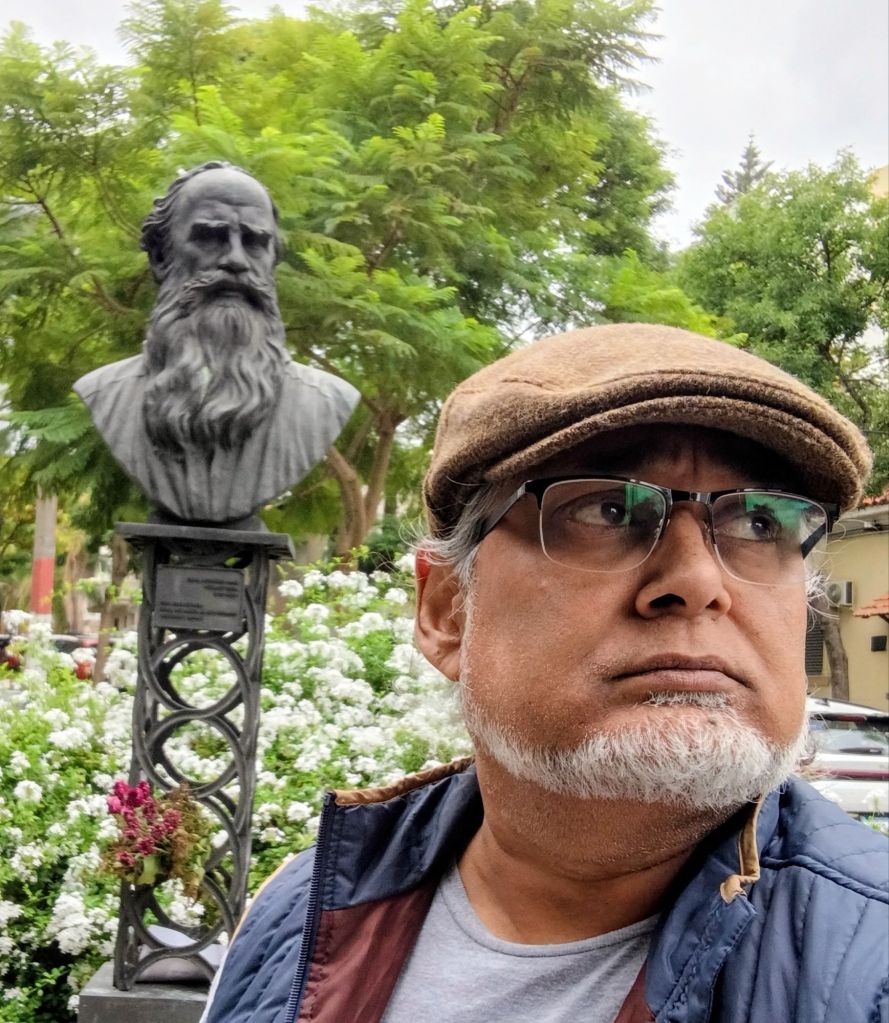
But now, I consider myself like Tolstoy after the wars,
or the young boys of the golden era of dutch painting, wealthy scions of colonists bringing everything from around the world back to Amsterdam. I’m financially stable, experienced, educated and have been writing and making art for 30 years.
I am widely disliked and in 55 years of being in the United States, I never made a friend. In the United States now, I am persona non grata for my beliefs first and my behavior in societal situations next. Most people who meet me have no interest in befriending me any more because I reject the society and maintain the uncompromised position that is a thread throughout my life and work. Being true to myself has “cost” me every relationship I ever made.
In a controlled way, and very aware of the audience, I still perform somewhat loudly in public space – coffeeshops, bars, alleys – as I have done for thirty years in the United States, expressing my truths … but now they tire of the “act,” that has been my existence here.
I continue to read in public as well, promoting the act of reading and general intellectual pursuits. I have been reading novels for decades and intend still to write a good one – let’s see.
To most, I am merely an immigrant they can either use or forget.
To me this separation was an inevitable eventuality to my methodology. It is not to be railed against, but to be rolled with and seized for the immense value it has. I have time, resources, abilities I need to let flower. Please support me or leave me alone, thanks.
Last year I bought a 17-year-old used car in San Antonio, Texas. It’s a 2007 Nissan 350z, V-238, six-speed manual transmission, high performance sportscar.
The model was called the “Fairlady Z,” because the President of Nissan at the time of her creation, Katsuji Kajamata, admired the Broadway musical, “My Fair Lady,” which he had seen on a visit to New York in 1961.
I named mine Sylvie.
I bought Sylvie last March after months of searching for a suitable car. I used bots set to seek a car with: manual transmission, with fewer than 100,000 miles use, for less than 10,000 dollars.
After eight months of garbage hits (a the Thing, a ’72 BMW, other nonsense), I got a hit in San Antonio about Sylvie. It was on February 29th, because last year was a Leap Year.
She turned 100k miles on the odometer on the trip. Sylvie received her California plates and registration in Palm Springs where she was also treated to a refurbishment and repair of worn parts and given a full tune-up. I planned in advance to do this in Palm Springs, because So Cal is car country.
I figured in the Bay everything would have taken longer (DMV would’ve been days instead of hours; repairs weeks instead of days) and been of suspect quality. I love San Francisco, but if you need anything done you have to leave the City and then you are in the private club of Nor Cal where you have to know somebody to get the best work done. I hear Manhattan is like that now. Palm Springs did Sylvie and me right.
This is Sylvie in San Simeon day before yesterday:
We drove the last stretch home last year stopping only in Pismo for a night. I pulled into SF and parked Sylvie in her new garage, rented in my preferred neighborhood, in SF.
So since summer of 2024, my car has a home in SF.
And, for the last nine months, I’ve been taking Sylvie on long drives – most recently to Cactus League, as Spring training for major league baseball is known in Arizona. I saw the preseason Giants play in their stadium at Scottsdale and at Surprise, Arizona, where they took on the Royals.
Sylvie and I drove down to LA along the coast back in January to catch a Lakers game at Crypto dot com Center, staying in Santa Barbara and SLO. On our most recent trip we stayed in San Simeon and Los Alamos, a little exploration of Central Coast California.
“My Travels with Sylvie,” an homage to both Steinbeck and Thompson.
In San Francisco, in the Mission District, between 1993 and ’95, I read Haruki Murakami’s A Wild Sheep Chase, Hard-Boiled Wonderland at the End of the World, The Wind-Up Bird Chronicle and Norwegian Wood. He was then only recently translated into English and popular in San Francisco.
Those early novels were unpredictable, well crafted and defied genre. Murakami’s talking cats, imploding houses, slight shifts in perception of reality – and his cool characters’ natural acceptance of deep, scalar trips through levels of that reality – became a genre of their own.
His characters and prose paralleled in literature the malaise, disaffection, vapidity and bored waiting game of the end of the 20th century and then transcended it with fantastic departures from the world. The ride was like manga without the images or a purely textual Miyazaki Hayao animation epic just for single, young adults.
I first read A Wild Sheep Chase, Murakami’s third novel, written in 1982, in San Francisco when I was 25. It remains my favorite. I remember feeling incredibly small in the face of the universe as his characters were pushed around.
I have a reverent fascination with Japan and a profound respect for her people. In my lifetime Japan was the most Americanized among all Asian countries, so growing up in the US, I was allowed slightly greater exposure to her writers.
Among Japanese novelists, I’d read Kawabata since I was a teenager, and in university covered Mishima and Akutagawa. I hadn’t yet read the post-war existentialists, when I picked up Murakami. Banana Yamamoto’s Kitchen was the hot new wave hitting California from the land of the rising sun.
Murakami was immediately different: pop synthesis of West and East through a contemporary urban Japanese socio-cultural lens.
Haruki Murakami began writing novels at the age of 29, in 1978, and has told Bomb Magazine, “Before that, I didn’t write anything. I was just one of those ordinary people. I was running a jazz club, and I didn’t create anything at all.”
Wiki states he had a sudden epiphany during a baseball game:
In 1978, Murakami was in Jingu Stadium watching a game between the Yakult Swallows and the Hiroshima Carp when Dave Hilton, an American, came to bat.
… in the instant that Hilton hit a double, Murakami suddenly realized that he could write a novel. He went home and began writing that night. Murakami worked on Hear the Wind Sing for several months in very brief stretches after working days at the bar. He completed the novel and sent it to the only literary contest that would accept a work of that length, winning first prize.
Now I’m 45 and Murakami’s 65, so we both remember 1984, the year in which his newest novel, 1Q84, is partially set. We have also both lived through an era that has seen the realization of some of the socio-cultural horrors described in George Orwell’s prophetic novel, 1984, which 1Q84 uses as a sort of launching point.
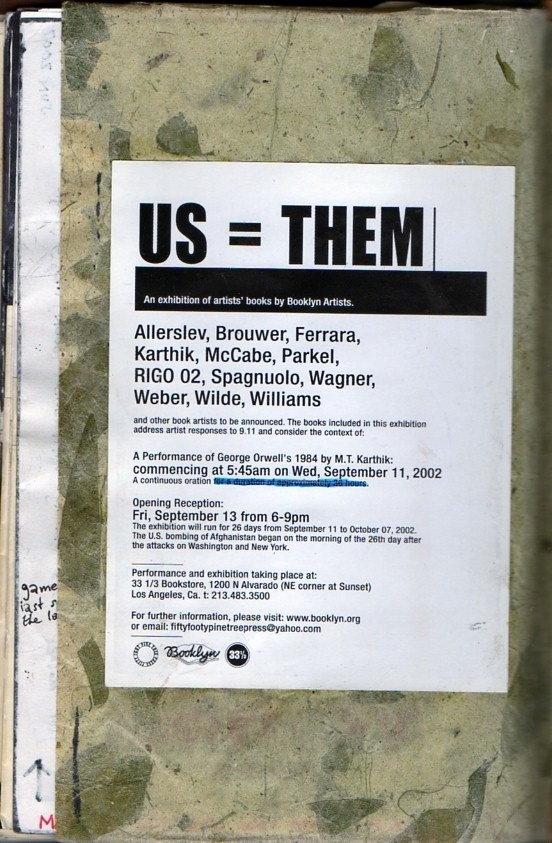
My loudest use of Orwell’s work was on the first anniversary of the September 11th attacks, in 2002, as a performance element of the art installation US=THEM, in Los Angeles, I read Orwell’s 1984 aloud in its entirety in a book store gallery, beginning at 5:35am (the time the first plane struck WTC2) and ending just as the sun set on the corner of Sunset and Alvarado. I printed slap tags that read 2002=1984 and stuck them everyplace.
I was excited to hear Murakami was using Orwell as a point of reference, and assumed the work would have socio-political overtones. I hoped 1Q84 would be more openly political and less personally intimate than the love stories he’d been writing. I consider Orwell to have been ahead of his time, so I was biased by the title’s obvious reference.
The particularly Asian coolness and practicality of Murakami’s characters in every day life is inspiring. But from the first, I felt his work was limited by the use of first-person narrative, usually with a narrator who seemed very much like himself: a middle-aged Japanese man living in Tokyo and underwhelmed by normal existence.
Murakami’s male narrators, all roughly his age, made the work light-weight. His contemporaries in late-20th century fiction writing in and translated into English: Garcia-Marquez, Eco, Kundera, Bowles, Ondaatje, Atwood, Boyle, Kureishi, DeLillo, Roth, Rushdie, Oates, Bolaño didn’t succumb to this basic approach.
As a writer, I’d come to the conclusion that my fiction suffered from my inability to write effectively in third person. I was biased by instructors and Modernism away from the trend toward first-person narratives written for the Me Generation. Murakami had no such bias, and neither, it turns out, did the publishing industry.
Murakami was young when he began and was thrust into the international limelight very quickly because of the accessibility of his work and his remarkable imagination. He was rewarded for making it easy to read. He was rewarded immense audiences for his references to Western pop, to “classical music” and to the boozy freedom of post-modern urbanity.
Haruki Murakami’s narrators’ exceptional breaks from the normative were what thrilled – these crazy trips into the unreal experienced coolly by his characters.
As a straight, booze-drinking, single, urbanite in my twenties (pre-metrosexuals) Murakami’s meals, drinks and one-night stands were a blast, in some cases a relief from the moralizing of political correctness.
I have sometimes felt targeted by novelists. Some just succeed in getting it. I wouldn’t discover Pepe Carvalho until a decade later, but Spanish readers will appreciate the comparison to Montalban. We used to joke about a drinking game in which you take a drink every time a Murakami character does. It gets harder to finish the book.
I only begrudgingly got into Murakami’s use of Western cultural tropes as described within an East Asian urban society, which Murakami was “first-to” in terms of crossover, and which he uses abundantly like a signature.
As an Indian living in the U.S. and Asia, who studied Ronald Takaki then, this was unappealing, I hated what post-post-modernism was becoming. But by the late ’90’s crosshatching Asia and the West had flooded the field. Murakami and Jim Jarmusch and Quentin Tarantino and Miyazaki Hayao made it cool. Sensible. At last, Asians outside London and New York were exhibiting what Hanif Kureishi knew, was called insouciant for writing.
It was inevitable at the dawn of the Internet and the globalizing 21st century. Haruki Murakami, the runner, from the longest US-occupied part of Asia, Japan; the novice writing in Japanese, first-person about being single, urban and sexually liberated was the first high-reaching Asian to just go ahead and run with it. Straight into the 21st Century.
I’m generalizing, but proposing Murakami was the best-seller who embodied the literary trend toward first-person narrative form and made it cool for Asian writing to love the West. Rushdie’s Ground Beneath Her Feet, must’ve been influenced in some small part by what Murakami was carving out.
Initially turned off by the brazen professing involved in it, I began to embrace Murakami’s careful choices of European orchestral music and western movies, TV shows and pop songs appropriated to both metaphorize, translate and drive narrative on multiple tiers. But creatively it always struck me as an easy way to force structure.
I was least impressed by Norwegian Wood. It struck me as a soap opera written for a specific audience of romantics. So after finishing it, I passed on a few of Murakami’s books and embarked on other, pretty heavy, post-war Japanese novels: Dazai Osamu, The Setting Sun and No Longer Human; Kobo Abe, The Woman in the Dunes; and Saiichi Maruya’s contemporary classic, A Mature Woman.
I returned to Murakami in 2005 with the publication of Kafka on the Shore, which was my summer read while living on a Japanese shore, in Kamakura.
Again impressed by the proficiency with language, I liked the poetics and the magical, even spiritual, feel, but I remained disappointed by what struck me as basically a first-person, relationship story. Murakami was still pushing western tropes through to the title page and writing less political, getting more pop.
That’s my experience with Murakami’s work. I am not qualified to review 1Q84 as anything other than a reader of novels for 30 years. I do not pretend to understand him as a man, nor have I read much about him or his method, barring what’s been published in the New Yorker here and there.
In some small part this will also be a discussion of the state of the publishing industry in 2012 which has carefully produced ‘Murakami, the technically proficient, edgy yet non-threatening Asian romantic fantasist’ into an internationally best-selling novelist.
Though I’ve lived in Japan, I cannot read Japanese and so have experienced all the Japanese novelists only in translation to English.
1Q84 – translated by Jay Rubin and Philip Gabriel – was published by Knopf as a massive, 944-page, case-bound Borzoi, with a vellum slip cover designed by Chip Kidd that lightly masks close-ups of two Japanese faces, a female on the front and a male on the back, on October 25th of last year (2011) and sold for $30.
I found one in great condition for $18 earlier this summer at one of the used book stores I help stay in existence. I finished it last week.
The paperback and e-versions have been available for some time now and I began to wonder whether this form of publication is ever really being read, cover-to-cover. The thing is a doorstop, a bookcase brace, a coffee table weight, but reading it’s awkward, heavy and very hard to conceal.
Lugging this anvil around the past few weeks, I was stopped and asked about it many times in the street. One guy stopped pedaling his bike, going up a hill to stop me and ask, “Is that the new Murakami?’ Is it good?” Waiters, bartenders and waitresses at all my local coffeeshops, bars and restaurants asked and showed anticipatory excitement about this big, pretty thing.
I was sure the novel was being read … but figured the vast majority of that reading was happening in multiple parts as separate books in paperback, or in a digital format. I’ve never wanted an e-reader more than in these past few weeks lugging around 1Q84, with its slippery vellum cover.
Which brings us to the design by Chip Kidd and to why it was sitting pretty, marked down 30% at the used bookstore within eight months of publication.
“But Knopf, which published the title late last month, has not only turned the book into a bestseller, it’s also managed to reverse another trend: it has made the book more popular in print than in digital.
“According to numbers released by the publisher, the novel, which was at #2 on the Times bestseller list on November 13, has sold 75,000 copies in hardcover, and 25,000 in digital. Those impressive print sales are thanks, in large part, to an extravagant package that Knopf put together that has made the book the kind of object–beautiful and collectible–that readers want. And, more than likely, non-readers also want.”
The design is horrible.
The lettering of the title is put on two lines so that the 1Q is above the 84, rather than written like a year: 1Q84. The result is that everyone who knows nothing about the book thinks its title is I.Q. 84 – which is hilarious and sad.
The vellum cover and the bold, sans-serif font make it worse. It’s so done-already. The design completely fails to help make Murakami’s connection between 1984 and 1Q84. (oddly, so does Murakami within, so perhaps it’s a case of too-good design)
The faces on the cover aren’t the author but face-models, and the vellum Kidd asked for that’s received so much praise, serves to mask their Japanese-ness, while retaining the sexy – fashion! haute couture!
The endsheets and chapter title pages continue the idiocy of separating the numbers of the title out, making it more disassociated than ever from Orwell. These pages are all black and white photographic backdrops of twilight and of the moon, which plays a significant role in the book, but though highly-stylized, they’re cheaply produced and the graphic elements aren’t even like the descriptions by the author within, which are specific about the appearance of the moon. Design sensibility invades literature again.
ugh. It’s whorish and stupid and has received nothing but praise and exaltation for Knopf and Chip Kidd for 8 months.
“the kind of object–beautiful and collectible–that readers want. And, more than likely, non-readers also want.”
sigh.
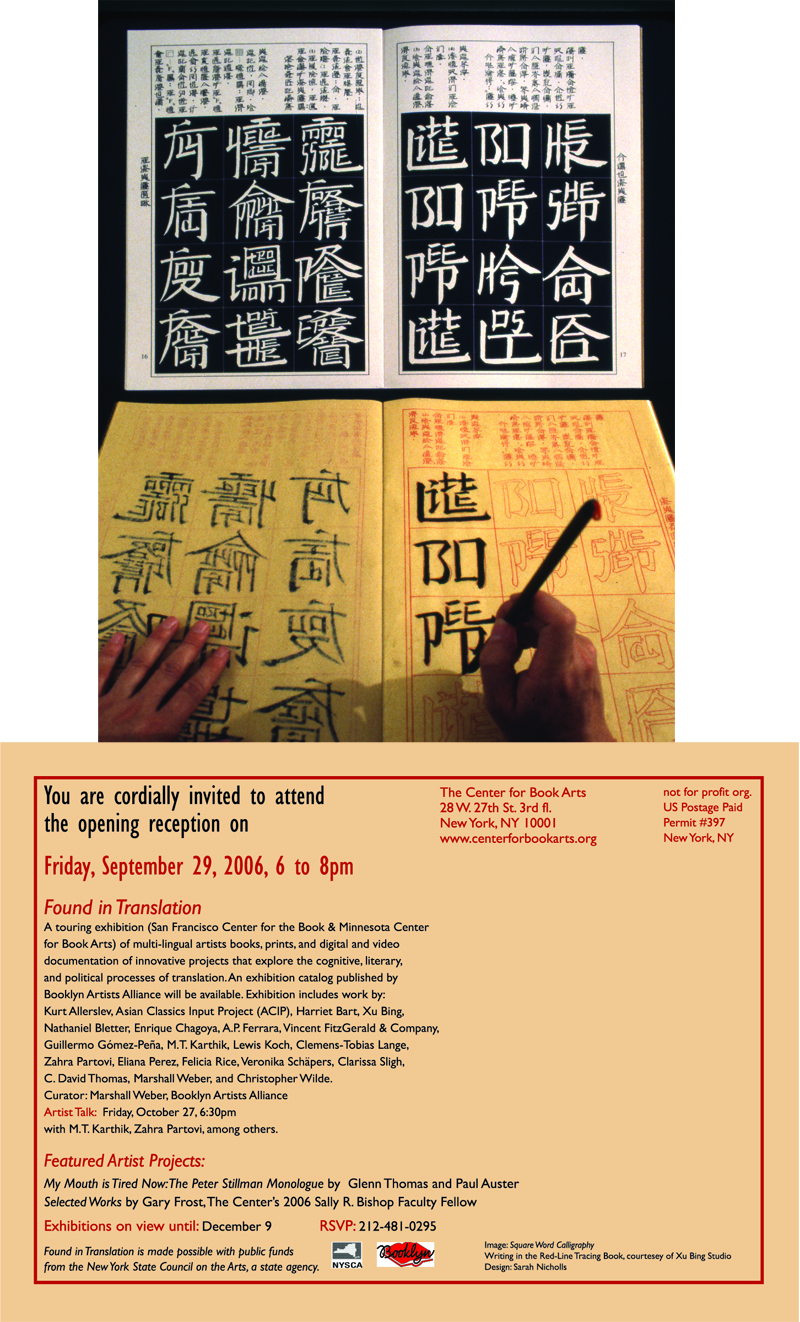
In the late-’90’s when I was working as a low-wage proofreader, fact-checker, jacket-designer and researcher in the New York publishing industry while trying to get published myself, at nights and on the weekends I also worked to help found a non-profit artists book organization in Brooklyn.
It was bizarre: by day, I’d be using new digital tools to make mass-produced work flashier, more-designed, more image-oriented, less text-heavy, while at night and on the weekends I helped produce fine art books with traditional materials in limited edition.
The turn of the millennium in New York City brought the consolidation of publishing and birthed the end of the book as we know it. What happened with 1Q84 last year was that it was sold as a sculptural object to great success. They made it into something you could market at Xmas whether anyone read it or not.
But appreciating the work within is made more difficult by the immense distraction of these new marketing methods, which crowd the work with the gushing sycophancy of non-readers buying sculpture.
END PART ONE
and now,
a poll:
PART TWO: 1Q84, Murakami Tries Third Person
1Q84 is Murakami’s first novel in third person. It succeeds in reaching for high ground, but weaknesses are revealed by the more difficult form. Some of these may be solely a result of translation issues, but whatever made it happen, at points it’s unbearable.
1Q84 is overwritten. It could easily be two-thirds the length. There may be perhaps no single person or department to blame for this.
It could be issues of translation. Having two different translators may have contributed to the repetition of ideas as each attempted to infuse their read. Throughout the work slipshod word choices are not just used but repeated awkwardly.
I hated the choice of the word “jacket” rather than “sleeve” for record covers. It isn’t wrong but it just sounds clunky in repetition – and the term is repeated within a paragraph without replacement when “sleeve” or “cover” would work so much better. The translation seemed rushed and simple. I presume this added pages.
It could have been a bad editor at Knopf, unwilling or unable to realize that when you publish three books in the same series from another language into one book sometimes there will be an absurd number of repetitions of basic points because when the work was originally published, these points were repeated to bring in new readers at each stage of publication.
I haven’t read any other reviews of this book, but I gather from the PW clip that this was the NYT’s problem.
It could be the fault of Knopf, itself, which seems to have rushed to shove the book out the door fast for Xmas season of last year, using cheap, flashy design to create a book to be sold as a sculptural object. They didn’t care what was in it as much as what was on it, what it looked and felt like. It could easily have been rushed for sales and cheated of the requisite time and effort required for editing and translation.
These possibilities notwithstanding, the responsibility for quality of the work lies with the author and Murakami’s attempt at third person results in common problems for anyone embarking on the daunting task of writing a proper novel: you must get inside the characters to let them live, but you mustn’t show you are inside the characters for them to live.
One sophomoric method used to achieve this for several decades is italics to represent the thoughts and inner monologues of a character. If it absolutely has to be done, then this is the accepted practice. Oh, I’m getting pedantic!I hope they’ll understand what I mean, that you should be able to write your characters into what you’re trying to convey and not have to rely on italicized font to tell the reader something important, oh, maybe I’m just nitpicking. M.T., you’re such an oppressive rationalist.
But just like the flashback has become nauseatingly common to drive narrative in movies since Pulp Fiction, usage of italicized thoughts has become standard in novels in third-person in this, the era of the first-person narrrative. It’s a failure on the writer’s part, or at least a CYA move. If you have to do it as a writer, you make it count.
Not so in IQ84.
Murakami’s discomfort with form leads to an unending parade of italicized thoughts. No character goes mentally uninvaded. Like the first-person narrative before, Murakami is shaking off rules again in this attempt at third-person narrative. This could be considered bold, I suppose, but not by me.
What was bold was the whole new dimension added when Murakami decided to have these characters thinking in italics about quotes. These sections are actually italicized and bolded. I don’t mean once or twice at climactic moments, but throughout the entire novel; nearly every character.
Murakami has characters read a number of different texts aloud to each other. This is in and of itself bizarre because references to existing texts, like Chekov could have been made “off-the-page” rather than being read aloud between two characters.
The point of using the Chekov could have been made in action, or through literary tactics, leaving the text itself as a support floating in literary space. In some cases these non-fiction texts are literally the full repetition of historical data as bedtime stories, simply so they can be referred to in future chapters – clunky. It’s also demeaning to readers.
In the case of notes read aloud between and within the minds of characters, Murakami doesn’t even let the note exist as the exchange. The note is quoted by a character within his or her own thoughts! Murakami and the translators use bold text within the italicized thoughts to display the character working out the meaning in their own thoughts. It’s either genius beyond me or annoying filler because you can’t convey what you mean.
The repetitions continue, almost as though when ‘occupying’ one character or another, Murakami has forgotten that another character has made a point … and so he repeats that point. At first, I thought this was because the book, like works of Murakami’s in the past, was going to get fantastically multi-layered and these would echo. But that never happens. It’s just repetitive.
1Q84 is also a little predictable, despite it’s imaginative elements. I saw the intersection of the lead characters Tengo and Aomame coming long before it was clear they were intertwined. I wondered if Tengo was authoring Aomame into existence, so I could see clearly through to Murakami himself.
I lay all of this at the feet of the shift to the third-person narrative. It’s hard to do. That is why I think Murakami is at mid-career despite having written so many novels and achieving such success. Murakami strikes me as a hard-working perfectionist who will likely tackle third-person narrative form again rather than shy away from it after a first-rate attempt. I look forward to his progress, and as usual, will be among the millions reading his flights of fancy.
I enjoy Murakami’s precise, technical prose, like describing a meal or a piece of music. I admire what Murakami does well: creating translucent, shimmering waves of realities that both define and filter how his characters perceive of reality.
I enjoy his detailed descriptions of events of the past – like war and post-war conditions, laden with contemporary attitudes about those events. Certain simplicities like descriptions of the natural world, Murakami just nails – his cicadas take me to Japan in summer:
Haruki Murakami continues to display a brilliant imagination and wild ideas. He weaves his plot streams together beautifully. Though some of the unpredictability has gone as a result of our familiarity with his tactics, Murakami has invaded our consciousness with his genre.
Unfortunately 1Q84 as it stands is too long, in parts very repetitious, somewhat clunky, and as a result, boring. I give it a 3 out of 5.
In Conclusion: The NY Publishing Industry’s Horrible Now
As I write these words from my home in California, the Nobel Committee prepares to announce its highly political and socially-influenced choices and the New York publishing industry is preparing to launch any number of new 1Q84s to push forward their bottom lines in this year’s Xmas season – some new sculptural objects whose contents are mostly recycled scraps and cardboard, rather than goose down and gold. Orwellian indeed.
For people living in California and Asia and with concerns about the works from these places, these two events in Scandinavia and on the East Coast of the US have little bearing. They have proven themselves wholly out of touch. While here and in Japan we fight to author a new world.
We must bring ourselves up out of what post-post-modernism and its failed capitalist globalism has wrought.
Read, read, read. Think, think, think. Enough with the gushing sycophancy – the world is headed down a dark road by our ignorance and selfishness.
As readers, we must demand better product; better editors, translators and deciders of what gets put into our hands.
Seek out authors from independent publishers, read blogs, comment.
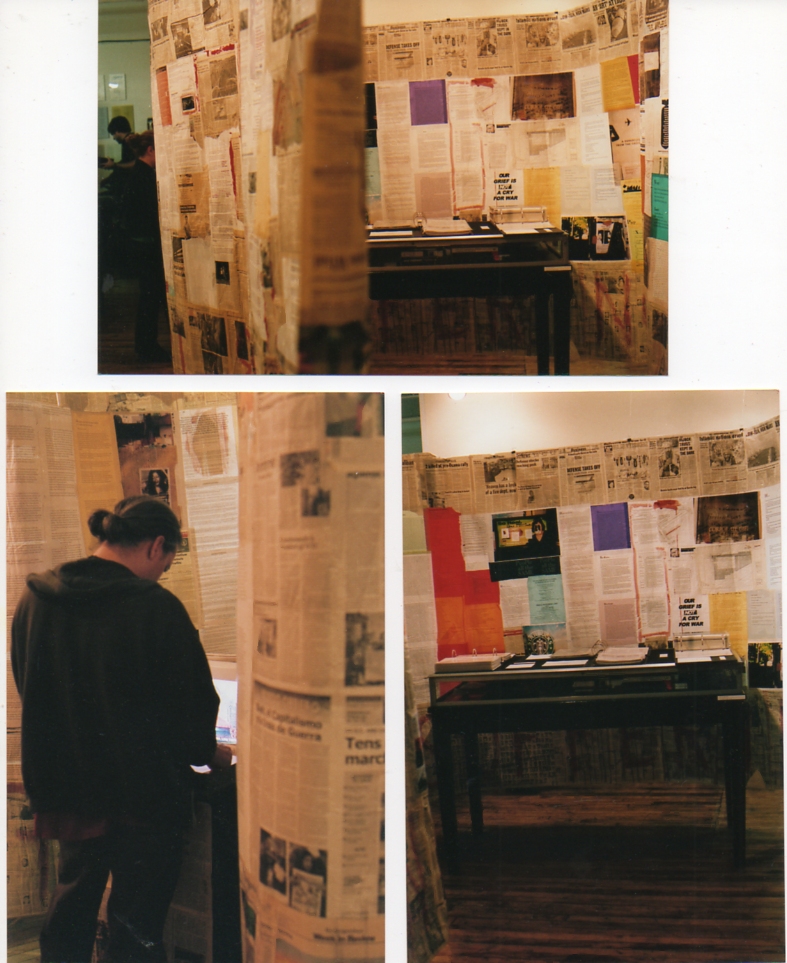
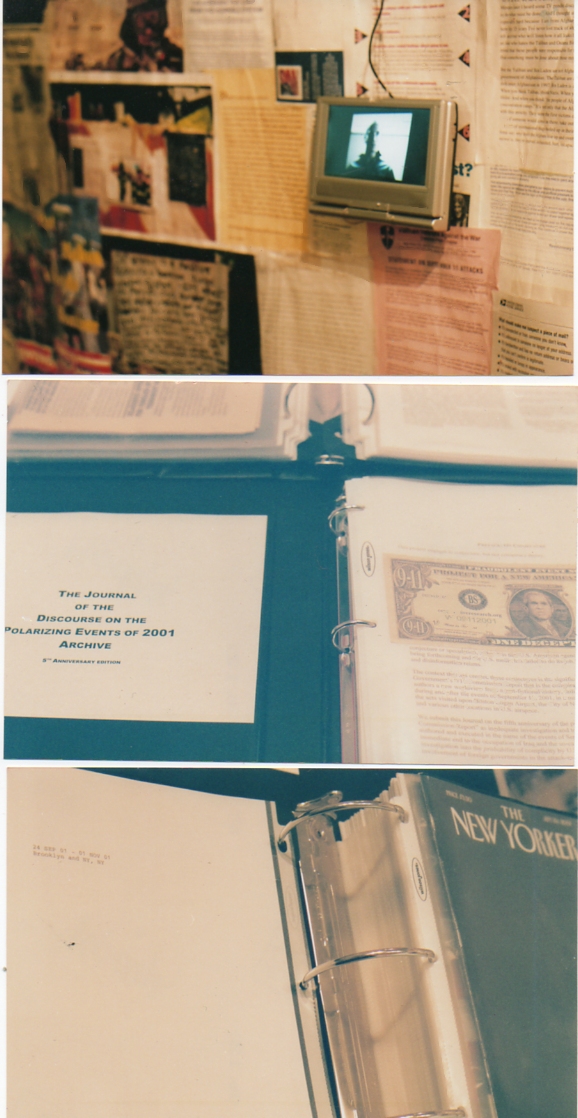
Us = Them, curated and produced by M.T. Karthik, Fifty Foot Pine Tree Press, Wine Hobo Trio, Booklyn Artists Alliance and 33 1/3 Books and Gallery, Sunset at Alvarado, F. Sosa, Proprietor, September 11, 2002
1984, performance by MTK
On September 11th, 2002, beginning at 5:35am Pacific Time, corresponding to the moment the first plane struck the World Trade Center in New York City exactly one year before, MTK read George Orwell’s novel 1984, aloud in its entirety at 331/3 Books and Gallery, at the corner of Sunset and Alvarado, in Los Angeles, ending at sunset:
as a performance element on the opening day of the Booklyn Artists exhibition
Us = Them, curated and produced by M.T. Karthik, Fifty Foot Pine Tree Press, Wine Hobo Trio, Booklyn Artists Alliance and 33 1/3 Books and Gallery, Sunset at Alvarado, F. Sosa, Proprietor, September 11, 2002
1984, performance by MTK
On September 11th, 2002, beginning at 5:35am Pacific Time, corresponding to the moment the first plane struck the World Trade Center in New York City exactly one year before, MTK read George Orwell’s novel 1984, aloud in its entirety at 331/3 Books and Gallery, at the corner of Sunset and Alvarado, in Los Angeles, ending at sunset:
as a performance element on the opening day of the Booklyn Artists exhibition







 MTK The Writist