Tags
antonio, diamondback, Karthik, m.t., mtk, nerodia, reptile, rhombifer, river, riverwalk, sa, San, snake, swiming, watersnake
cool,
mtk
20 Thursday Apr 2017
18 Tuesday Apr 2017
Posted in weather
11 Tuesday Apr 2017
Posted in birds
03 Monday Apr 2017
Posted in GBC Readers, Opening Day, pitchers
Tags
baseball, corner, Francisco, gbc, giants, Karthik, League, m.t., major, mlb, mtk, National, reader, San, sfgiants
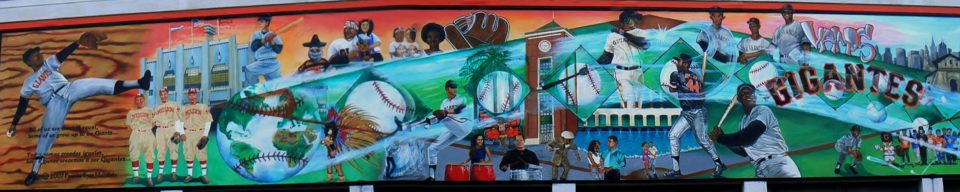
Opening day in Phoenix was a massive, thick-beamed wood rollercoaster ride built by Madison Bumgarner that went off the rails in such a familiar manner it felt sickening – or for the less dramatic and more experienced fans, like typical Giants baseball.
During the frustration, I got into a Twitter discussion over the use of the word ‘torture’ to describe Giants baseball.
We all fell in love with Mike Krukow’s term in 2010 because it felt like a pure assessment of the near-misses that made it up: the earthquake, the 100 win season fail, the Angels in ’02, Pudge in front of the plate.
But personally, the torture I felt for 30 years was washed away by the immense wave of relief I felt on November 1, 2010 when we finally won it all for the first time in SF.
Giants fan Ted G, 57, disagrees. For him, SF Giants baseball is uniquely agonizing across decades win or lose. He thinks Krukow’s phrase, “Giants Baseball … Torture,” is emblematic of our pathos as an organization and the struggles we eternally endure.
“The term torture has nothing to do with not winning. Totally about how they go about creating situations that are torture.” – Ted G, @TedSFGman
I can see that, but whatever remnants of the feeling of torture that may have remained for me were certainly washed away by winning the way we did in 2012 – my favorite of the championships. We had to retire Melky Cabrera. Pablo hit 3Hrs – two off Verlander – and Romo dared and won with an incredible fastball to end it with Miggy looking.
Madison going out there in 2014 and ripping it away from the Royals cemented my feeling that we have earned well-deserved titles, establishing a kind of dynasty in an era when the back-to-back World Series championship has disappeared.
There hasn’t been a back-to-back World Series Champion in the 21st century. So for me, this ain’t torture any more, it’s working the details.
But enough about torture, lets get to
The first GBC Reader of the year:
It was a rough game because of the blown saves, but being opening day on the road, it really shouldn’t matter that much in the face of what Madison Bumgarner accomplished: the first pitcher in the 140 years of this game to hit two home runs on opening day put himself in position to win twice before the bullpen’s struggles came to bear. It was epic and #TheLegendofMadBum continues to grow.
Ashley Verala, the West Coast Fan Girl @wcoastfangirl has a sweet piece she calls Last True Renaissance Man of Major League Baseball about our Mad Bum.
Brisbee noted that Bumgarner was also the first Giant to hit two dingers on Opening Day since Barry Lamar. And Grant’s coverage of the debacle it became is actually considerably temperate – I think fatherhood is mellowing him out.
Hank is back in his seat for another long season and here’s his takeaways.
MLB dot com Columnist Joe Posnanski has some really excellent things to say about Madison’s performance, really putting the scale of MadBum’s audacity in nice perspective. He includes Statcast data regarding the speed of these HRs that if you haven’t checked out yet, you gotta see.
Haft chose to focus on MadBum’s dominance on the mound. Man, did he look good.
I like AlPav’s headline for his pretty close-up view of the guts of this one. Ruthian Game For the Ages from Bumgarner pretty much sums it up.
Baggs however seems to have felt more like I did. His piece drips with the wretched agony of cheating MadBum of the win.
But Mark Simon and Sarah Langs at ESPN were enthralled by our heroic pitcher.
I didn’t really have time to make this great, but hey, it’s the first one of the year. I’ll add some links later if I find more content.
I also apologized on Twitter for rage tweeting the value of Mark Melancon’s contract excessively yesterday. I am sorry. It was petty lashing out at the collapse and an irrelevant memory of last year that fueled my rage.
Which brings us to Jake Mastroianni’s piece about everyone who overreacted to the opening day loss.
Happy New Year everyone.
Love ya,
MTK
30 Thursday Mar 2017
Posted in Uncategorized
28 Tuesday Mar 2017
Posted in landscape
22 Wednesday Mar 2017
Posted in birds
21 Tuesday Mar 2017
12 Sunday Mar 2017
Posted in birds
06 Monday Mar 2017
Posted in birds
06 Monday Mar 2017
Posted in fauna
06 Monday Mar 2017
Posted in birds
05 Sunday Mar 2017
Posted in architecture, landscape, weather
05 Sunday Mar 2017
Posted in architecture, landscape
05 Sunday Mar 2017
Posted in birds
Tags
alba, antonio, ardea, egret, Karthik, m.t., mt, mtk, point, recharge, rocky, RPRZ, San, texas, zone
Should have moved slower and stayed further away.
not really HQ enough for the digital slo-mo to be that impressive and tracking this guy was hard – had to spin all the way around. Anyway, happy to see Ardea alba returning.
Maybe I saved a few frogs lives today!
love,
mtk
05 Sunday Mar 2017
Posted in birds
01 Wednesday Mar 2017
Posted in birds
01 Wednesday Mar 2017
Posted in Uncategorized
01 Wednesday Mar 2017
Tags
animals, antonio, avian, bird, deer, fauna, field, flora, insect, Karthik, m.t., mtk, nature, observation, playlist, point, recharge, rocky, RPRZ, San, skunk, study, texas, videos, zone
Finally put together a playlist covering the Rocky Point Recharge Zone. Here are videos of birds, deer, reptiles, amphibians and insects in our area of study
love,
mtk
27 Monday Feb 2017
Posted in birds
27 Monday Feb 2017
Posted in Uncategorized
Tags
antonio, avian, bird, birds, charadrius, courting, field, fledge, fledging, Karthik, killdeer, m.t., mtk, point, recharge, rocky, RPRZ, San, teaching, texas, vociferus, Young, zone
This was a noisy Sunday in the field as the Killdeer (Charadrius vociferus) were out screeching away trying to teach their young to fly and to walk across the street. Incredibly funny to me the way they act.
mtk
26 Sunday Feb 2017
23 Thursday Feb 2017
23 Thursday Feb 2017
Posted in Uncategorized
23 Thursday Feb 2017
Posted in birds
23 Thursday Feb 2017
Posted in birds
16 Thursday Feb 2017
Posted in Book Review, reviews
Tags
Bardo, book, form, George, Karthik, Lincoln, Lincoln in the Bardo, m.t., m.t. karthik, mtk, novel, review, Saunders, structure, the, writing
The originality of the structure of Lincoln in the Bardo immediately sets George Saunders’ debut novel apart. It’s composed of stacked lists of quotations attributed to the souls occupying Oak Hills cemetery in the Georgetown section of our nation’s capitol in 1862; to the President at the time, Abraham Lincoln, and to his son, Willie, recently deceased; and to the night watchman and manager of the cemetery, neighbors, historical figures and eyewitnesses to the events of the time.
I plunged into this work thinking these crazy quotes would continue for a few pages and then return to a normal third or first person narrative. Not only did they not, the form became its own sort of thing with hilarity and piety. The quotations interact, finish one another’s sentiments.
Saunders’ approach from his short stories in Pastoralia, where letters and notes and faxes between characters move plot and create conflicts, is here in fuller effect. This “debut novel” thus actually resides somewhere between the novella and the norm of long-form fiction. Almost as if Saunders still isn’t ready to write one of those “novel” things.
It was initially off-putting because pretty quickly quotes from real historical sources reside in equanimity with a tumbling invention of the thoughts of the dead.
The first time several quotations are used to describe the same person and there are wide disparities implying unreliable reportage, forcing the reader to flip back-and-forth to separate quotes from actual historical texts from made-up ones, it’s a hilarious reminder that we’re in a novel, and it doesn’t matter.
Fiction and Non-fiction swim together.
In the mid-90’s, in San Francisco, it was the fashion among serious young (read: unpublished) writers like me to read the postmodern fiction of structuralists like Harry Matthews, the only American member of the Oulipo, with great love. The Ouvroir de Littérature Potentielle bears consideration in advance of talking about Saunders as constructionist.
There is a confidence and ease I love about George Saunders. He really is in command of his craft. With this form, within a matter of a few chapters, you are in his world. If a person were to come over to you and look over your shoulder while you’re reading this novel, it would look to them like insane gibberish.
Saunders’ effort is totally original but like Matthews and the Oulipo before him, uses structure to train you into his narrative – isolating you from being able to “tell” this book.
It was immediately apparent an audio book of this work is basically impossible without dozens of actors and a unique method for attribution, audibly. It’s another thing, a book.
I wonder how the e-versions look/read?
Once aboard, the form establishes a rhythm and momentum that sends this richly imagined exploration of death, life and loss, forward with vigor.
The historical facts surrounding the 16th President and the death of his son at the White House and the Civil War that raged with the nation’s history in the balance are the nest in which Saunders crafts a re-imagining of purgatory. He does so to examine our sense of purpose and meaning – in life and after death.
But rather than a staid, dusty exploration of our historical understanding of the deaths of the time, Saunders populates his work with real people – everyday people who lived and died normal and un-extraordinary lives, filled with sins and loves and hates and pettiness. It is part of his charm in the short form that his characters are easily believable and admirable for their flawed, utterly human qualities. They are our guides to the mind of our beloved Lincoln, and nation.
Saunders’ exceptional understanding of people and compassion for their desires, dreams and regrets is again on display as this diverse collection of souls from many walks of life reveal themselves and the stories of their lives.
The population of the cemetery includes slaves but the book fails to really plunge into the national sin. I read a review that felt the opposite, that the recrimination and oppression of the slaves in the cemetery by the whites was clearcut and evocative, giving voice to the horror, but it was disappointing to me.
As I reflect on the role the slaves do play, it is once again as from a position of rectitude, to be able to look back at slavery and racism to contain it in the national narrative.
There are some serious and violent points of intersection between the black and white population of the cemetery and one particularly poignant one never ends, an eternal struggle. But I can’t help but feel this could have been developed. Slaves and masters in the same cemetery, with only the masters in marked graves, seems a rare territory and an opportunity to explore racism more deeply.
The conceit does fruit into a tangential reference into Lincoln’s conclusions on the matter, conclusions that led to years of bloody war over ending slavery. This book isn’t about that though, nor about the civil war.
It seems to be about how we, all of us, think of ourselves and our lives more than Lincoln or anyone else in 1862 does. It seems to be about how we think of our lives in advance of, and even after, death – whether it’s the death of someone we know or ourselves. In that, Lincoln in the Bardo succeeds with sensitivity and compassion.
Saunders understands un-requite, failure, desperation and the longing we all feel. He also knows how to craft this understanding into an incredibly direct narrative. It’s amazing.
Apparently he has said about his process that the narrative tells him how long it is to be, what it is to be. In this case it became something wondrous.
I am left with so much after this novel. I find I cannot describe it very well. It’s like a magician’s deception. What you find within is worth much more than the conceit.
It is clear though, the magician knows his audience inside and out.
Impressive.
mtk
13 Monday Feb 2017
Posted in thoughts
Tags
advance, antonio, book, card, date, Karthik, library, m.t., mtk, new, NYC, nypl, pub, public, release, San, sapl, twain, york
At last the pub date has arrived.
Tomorrow morning Lincoln in the Bardo, the debut novel from George Saunders, goes on sale. I’m #10 on the list for one of the 17 copies coming to our city-wide library system, but it probably won’t get to my local branch by tomorrow, so there’s a copy on hold for me at a local bookstore. More on this process in a moment …
Though I don’t usually buy books anymore – and when I do, I prefer buying them from independent bookstores or my former employer, Half Price Books – in this case, I want to read it as soon as possible and so the corporate behemoth will take my money. I hope at least some of it ends up in George Saunders’ account.
On three occasions, when I lived in New York, and in D.C. and in L.A., as a member of the press and publishing industry, I had access to advance copies. It was exquisite. To have your hands on a novel before everyone else, before it can be reviewed, critiqued, analyzed and translated, before society gets its grubby fingers all over the way reading a new book feels, that’s a great thing. I miss that.
I wish I could tell the novelists that; how excellent it is to connect with their work unencumbered.
In my reviews, I struggle to avoid giving away plot points or spoilers. My reviews are more about how a book feels, how the words are cast. I am trying to discuss tone and quality of writing without giving away anything because I revere the feeling of getting into a book without knowing where it will take you.
I suppose e-readers get early access nowadays, but I still can’t get comfortable with them. They still come nowhere near the lovely feeling of a book in my hands. So …
Publishers:
PLEASE SEND ME ADVANCE HARD COPIES OF GREAT NOVELS.
Thank you.
MTK
A Word On Libraries
I’ve traveled a lot, and not like a tourist. I have moved to places to live there in order to honestly experience them. My plan was to feel what a full set of seasons in a place feels like before judging it. If, after a year, I felt it deserved more of my time, I’d stay longer. By this method I have lived in Austin, New Orleans, San Francisco, New York City, Los Angeles, Taiwan, Japan and India for many years.
The very first thing I do when I get to a new place is get a library card and like most, my greatest experience with a library system was in NYC.
For more than a century and a half writers have gone to New York City drawn by the virtues of the New York Public Library system; its depth and efficiency. With the publishing industry right there, new books make it into the system quickly.
When I was in Brooklyn, if I wanted a brand new book that I read about in The New Yorker or the Times or the New York Review of Books, I could simply ask my librarian to get it and have it sent to my local branch. For fifty cents I had my hands on the latest, hottest shit. I took full advantage of it.
There was nothing like that where I grew up. When I left San Antonio, Texas, at eighteen it was a cultural backwater and a cowtown. There were few libraries and they certainly had no such service.
But fast-forward 32 years and the SAPL system has caught up. In fact the system is all online and I can order books directly to my local branch without ever speaking to a librarian.
Still, lately, if I’m at the grocery store or bank or somewhere and I open my wallet to get my card or I.D., people have noticed my library card. These are actual responses:
or words to that effect. Often.
I cringe, smile a tight smile and reply: it’s still a great resource.
Despite that there were few branches when I was a kid here, and none nearby, my mother took us to the library like clockwork every two weeks in the summer and during the school year as necessary. My sister and I would load ourselves up with books on these trips – usually ten to fifteen each at least – and take them home and plow through them.
One of the most attractive things to me about the mother of my child, the last great love of my life, was that she had this habit herself. She always had a library card, always pushed us to get them as soon as we got anywhere we were to be living. She went regularly herself, and when our son was old enough, maintained this precious habit as a parent as much or more even than I did. I love that about her.
My old college classmate Siva Vaidyanathan writes about the crucial need for libraries and their changing role in society. He is one of the most sensible academics I know and it comforts me to know he at least is attempting to help maintain this cultural resource in a society fast becoming illiterate.
From Mark Twain:
“The man who does not read has no advantage over the man who cannot read.”
To say we are becoming illiterate is no exaggeration. Videos, audio and memes of the shortest textual length are how most people consume information today.
Do yourself a favor. If you do not have a library card, google your local branch, figure out how to get there and sign up. Trust me, you will be amazed at what you find there for free. You can get movies, music, novels, instructional coursework … all for nothing.
GO TO THE LIBRARY!
Well, just counting down the hours now til I get my hands on Lincoln in the Bardo.
peace.
MTK
07 Tuesday Feb 2017
Posted in Book Review, maturation, midlife, reviews, thoughts
My rating: 4 of 5 stars
Some people feel the rain, others just get wet.
– 2017 Nobel Literature Laureate Bob Dylan
I have always been a romantic, despite the cruel human stupidity deteriorating this world.
I have seen and read and loved a lot and come to know the pain of it and of cynicism. I have come to appreciate Dorothy Parker and Bob Dylan. I have fought to resist the patina of the produced and to stare long in pursuit of a realistic understanding. Yet, I have always believed and fight still to believe in beauty, nature, goodness, harmony and love. I am not yet completely jaded. Hence I remain a romantic.
Even now, despite my age, I look upon a woman I find attractive from a distance and, knowing nothing about her, still think, “what if we are perfect for each other, in some way.” 50 years of living on this earth has dampened my spirits and broken my heart, but not ultimately my belief in the possibility of love.
But when people ask me what I want to write about, I’ve given the same response for decades: my interest is literary fiction about real relationships and people. I like the ability of a great writer to honestly capture what goes on between people in states of profound intimacy as effectively as the interior dialogue within them.
And the truth is, little of the best of this writing is romantic. The best is at turns cynical, petty, harsh and loving in ways that seem impossible to describe … until someone does.
I would give Kawabata as my first and greatest example. Then perhaps Kundera. You could add Hanif Kureishi to that list and now yet another K – Ismail Kadare.
Aksidenti, by Ismail Kadare was written in Tirana, Albania in 2008 and translated into English as The Accident in 2010. It is a haunting exploration of love, lust and desire wrapped into the puzzling investigation of a car crash.
From this seemingly simple conceit, Kadare weaves the pieced-together tale of two lovers, composed of the evidence and actualities that surrounded them. Untrustworthy depositions mingle with contradictory ones and the use of language amazes and delights as the story tumbles along, revealing unrequitedness, jealousy and the power game of love.
The first time I ever heard of Kadare was on a flight returning from Maine to New York City in August of 1999. I had taken a sailing trip up the coast of Maine for nine days with two close friends and I used the opportunity to read Tolstoy’s War and Peace the first time.
On the flight home, I had my tray table down and my journal out as I was making notes on the text. I pulled out the Tolstoy to copy some quotes from it and the man seated next to me noticed it. “Ah, Tolstoy!” he said, and as I turned to him he covered one of his eyes with one palm, stared at me through the other, and exclaimed, “Kutozov!”
It was an instantaneous connection over the scene in War and Peace in which the one-eyed general Kutozov is approached by a foot soldier who has come to ask for orders only to hear from the wizened general that it doesn’t matter what they do, that the orders, like the battle itself, are irrelevant.
The man seated next to me had a bushy mustache, thick black hair, and a slight Eastern European accent. He could have been Russian, but was more likely Czech or Hungarian or perhaps from one of the former Yugoslav Republics, which were then in the throes of separation and even dissolution.
The man put his hand down, looked at me and then asked, seriously, “Have you read Kadare?” When I shook my head no, he continued, “You must. He is the greatest living writer.” Which is how I began my exploration of this Albanian who has since won the inaugural International Man Booker Prize and is perennially a candidate for the Literature Nobel.
The Accident is first and foremost a puzzle of an investigation, but the story is about retroactively composing the last weeks of the lovers, Mr. Besfort Y. and Rovena, tossed from a taxi that “veered off the airport autobahn at kilometre marker 17.”
Kadare effortlessly moves between third and first person accounts in chapters that take off in different directions, leaving the reader to catch up. But once you do, he delivers a deep understanding of human emotions expressed directly. He is clever and precise in his method of setting you up to grasp what he is trying to say about us and the way we love or treat one another.
I had to flip back several times to remember things and put things together, but rather than being a nuisance or distracting, it became charming – as though I, too, were involved in this elaborate investigation and as if I might be the one who ultimately sees the truth.
Kadare doesn’t insult the reader. It is so great. He ‘hup-hups’ the reader to stay abreast, hiding important facts of the case in everyday accounts only to have them remembered later and tossed and turned all about. The puzzling elements are crisp and Borgesian, while the emotional landscape of this relationship and its satellites of love are raw, detailed and exceptionally written.
There is so much feeling in the human relationships, described nakedly and with stark eloquence, that I found myself thinking once again how much is lost to me by being in the United States. The relationships in our books are so narrow and empty of emotional range.
More and more it is because we are becoming flat and superficial. Americans on dates talk about tv shows, movies, stuff and money. We are fast becoming the kingdom of porn stars and prudes working in concert to confuse a society increasingly incapable of understanding true love or what meaning is.
Ismail Kadare’s love story or lust story or death story or whatever this is, is much more full than even real everyday loves in the United States, an incredible book.
I am glad Bob Dylan won the 2017 Nobel, but I must say, I am increasingly with the crowd favoring Kadare to win it soon.
mtk
04 Saturday Feb 2017

 MTK The Writist