Ahem.
So The Iron Age started in India millennia before Europe.
**UPDATE**
05 Saturday Jul 2025
Posted in 2025, Asia, India, Tamil Coast
13 Saturday Apr 2024
Posted in 2024, fiction, literature
Tags
#mtkforever, Asia, asian, fiction, m.t. karthik, Mindswimming, tamil
(4500 words)
© M.T. Karthik 2024
It was as if the ocean herself took a gulp. The wave was instantly far above him. The riptide churned and he tumbled in the suck.
Kiran let himself roll until struck by the terror he had not taken a deep enough breath. He unrolled parallel with the wave and opened his eyes but saw only pulses of light.
At last the pull lessened. He strained to the surface, broke through into the bright sunshine and gasped, swallowing air. He breast-stroked to the shallows, crawled up on the sand, and collapsed, exhausted.
A wrinkled old man wrapped in cotton squatted on the sand a few feet away. He remained unmoved. Kiran lay face down, beached, sputtering. The man spoke.
“Good. You did not panic.”
The old man shifted slowly. His eyes narrowed. He returned to staring out to the distant horizon.
Kiran lay in the sand, breathing hard. The waves lapped up the legs of his trunks, chilling him. His cheek was pressed into the speckled sand. His open eye focused on the tiny grains.
When he was younger, most likely stoned, he’d have concentrated on the microverse of color and texture, aimlessly. Instead, at 45, he found himself reminded of the article he’d just read about this beach. He propped himself up with both arms, peered at the sand.
“Is this monazite,” he thought, “What color is monazite?” He seemed to remember it was a reddish-brown.
It wasn’t the first time he’d misjudged the tide. The last time was years before, but the feeling was discretely precise: the grip in his chest and his mind screaming, “I’m out of breath!”
But instantaneous to the panic was a knowledge not to. His rational mind took charge.
His heart was pounding. He shuddered and felt older. Kiran gathered himself and stood. The Indian Ocean licked his ankles. A brahminy kite, Haliastur indus, screeched. He turned to see it dive into the tide. It emerged with a fish. It hunted in the sea, on land, in the air, a masterful omnipresence. The mated pair that nested in a palm tree near his hut were apex predators. He watched the male fly off toward home with his catch.

Kiran was master of little, apex of nowhere. He had come back to his birthplace to resurrect himself, but thus far all he had resurrected were memories that burdened him. He swam twice a day and stayed fit but his spirit flagged. He was shiftless. Soon, he’d have to leave.
“But not yet,” he thought.
He stumbled to his towel, grabbed his novel and sunglasses and headed back to the hut he called home the past three months.
Kiran plodded up the beach warily, avoiding the shits of the villagers and pied-dogs. His mind twisted in the blistering heat. Summer on this coast culminated in hot winds; Agni Natchathiram, the hottest period of the year on the Tamil calendar. It was way-offseason, which was why he could afford to return to India at all. Now, he was broke.
Kiran stopped at the gate to the gravel road that led back to the village. He shook the sand off his chappals and dusted his feet. Children ran about. No one paid him attention. He had almost drowned. He wondered if the old man would have let him.
There was a narrow pathway between the beach and the village, fenced off by wind-bent bamboo. He turned the corner to the path and the tintamarre of the beach dropped dramatically. It was the mid-morning calm.
Dawn was the loudest time of day, from cock’s crow, through crow’s caw, multiple staticky jam-boxes and at least one television set every hundred feet projecting bhajans and popular songs. Through it all, Kiran lay awake in bed or sat at his desk with coffee. The clatter came to an end abruptly – when there was a brief silence into which the cow next door lowed – an enormous sound.
Kiran had seen his neighbor wash the ass of that cow with her bare hands and water with as much care as she gave her own child.
It did not go unnoticed in the village that Kiran bought fish from Ambika, and at least once a week went into town and had a steak at the French restaurant, or a burger or a chicken sandwich.
Despite being born a local Brahmin, he wasn’t a vegetarian – yet another count chalked up to his Americanism, like the western accent he had when speaking Tamil.
He’d traveled on a U.S. passport, a citizen for decades, but here in his birthplace, unemployed and divorced, he was untethered. That was why he had returned: to see if he still belonged, or to discover for certain he no longer belonged, here.
Within days he knew it was moronic to think he could answer such a question, in three months, ten years or a lifetime.
The trouble was, with the changes in the U.S., he no longer felt he belonged there either.
A respite from the war on terror seemed to emerge with the election of a well-educated and earnest black Democrat – who had voted against the Iraq War.
He and the First Black First Lady breathed fresh air into the nation for nine months, when <wham> slammed the financial crisis of 2008, plunging the country into deep recess.
Bad economic times dispensed by a personable and intelligent President numbed everybody Kiran knew further. They began to ignore the drone strikes and Iraq and Guantanamo and the incessant war.
Suddenly the pressure to buy-in was real. They succumbed to the insistent crush of the seductive digital economy – joined Facebook and Twitter and put increasingly complicated phones in their pockets and then in their homes, devices that spied on them freely.
As Kiran’s friend Siva, a professor of culture and media studies put it, in his book on Facebook: “It isn’t Orwell, it’s Huxley.”
When he decided to return to India, Kiran felt on the cusp of something. He was desperate for direction but earnest no one else should author it.
He wanted to know what he was supposed to have learned by now. What was life supposed to have taught him?
He walked through the village quickly and swept through his gate. He rinsed off his feet with the hose on the cement patio and wondered if the reddish water swirling down the drain was monazite.
Months before, a stone carver he’d invited over had pointed out the mineral’s value, but Kiran had done nothing to investigate. He didn’t act on the possibilities right beneath his own feet until it was too late.
“Shit or get off the pot,” Phillipe had said, but with his accent, it was hilarious.
Kiran cursed his sloth as he showered. The hut and its small yard were surrounded by an eight foot wall which allowed Kiran to live unobserved by the villagers. This contributed to their speculatory gossip about him.
He took advantage of the privacy to walk around naked after a shower. He liked drying off openly in the hot Tamil air. It was something he would never do anywhere else. It felt so natural and normal here. Everything felt more base here.
He felt more like the animal he was. Yet he was no longer that animal. Knowing it was like a sting. Had he loved at all?
The sting and that question were immediately followed by a flood of images – Jim Carrey smiling like a tool in The Truman Show. He wondered if his entire American life was a simulacrum.
If he felt more connected to the animal he really was here, then what had he been there?
Who had played hoops and spun records?
Who had loved Sara, and planned with her and fathered Dash?
He wondered if his whole personality to this point was merely a projection he’d created to function in the U.S.
The thought that emerged these past three months in his birthplace, where he felt like a foreigner in practical society and profoundly himself when alone, never progressed. It only was.
He walked in circles around the small hut and yard, naked.
India was exploding with possibilities as the U. S. downspiralled.
For two and a half months he’d been walking in this circle, going swimming twice a day, and walking in this circle.
Because he knew nothing ends he had no answer.
He stopped walking and snorted aloud, “Yeah, right, I’m going to start mining thorium from the sand.”
Kiran drew the curtains and lay down on the mat. He was still. The fans turned. Then nothing moved. The power was intermittent.
With the power cut it was too hot to sleep or work and when he heard a high-pitched, “eeeeeeeeeeeee!” – the whine of the first mosquito – he leapt up.
Lying naked in a still hut by the beach mid-morning was asking for months of nasty joint pain: the blood-suckers carried chikungunya. He’d have to go into town.
Kiran wrapped himself in a cotton lungi and took a long-sleeve jibba from the second drawer of his dresser. As he pulled it over his head, he heard the call of Ambika, the fishmonger: “Meee-eeeeen!”
The woman sat patiently awaiting him on the dusty patio outside his gate. She had a wide, shallow, stainless steel dish on her lap. There was usually little left to choose from by the time she got to his hut because Kiran woke later than everyone else in the village and went swimming with the sun well up
Ambika woke with her husband long before dawn. She made him capi and saw him off to the sea. She received him back after sunrise. The men divided the day’s catch and she cleaned and prepared her dish with the wives of the other fishermen. They each walked a separate route through the village to sell their share of the ocean’s bounty.
Ambika wore a sea-green and midnight-blue sari with thin, gold lining that matched her nose ring and the gold chain that hung around her neck signifying she was wed. She had dark skin and deep blue tattoos on both arms in the style of the older tribes. She was just two years older than Kiran, but years in the sun in this beach village, gave her a wizened look.
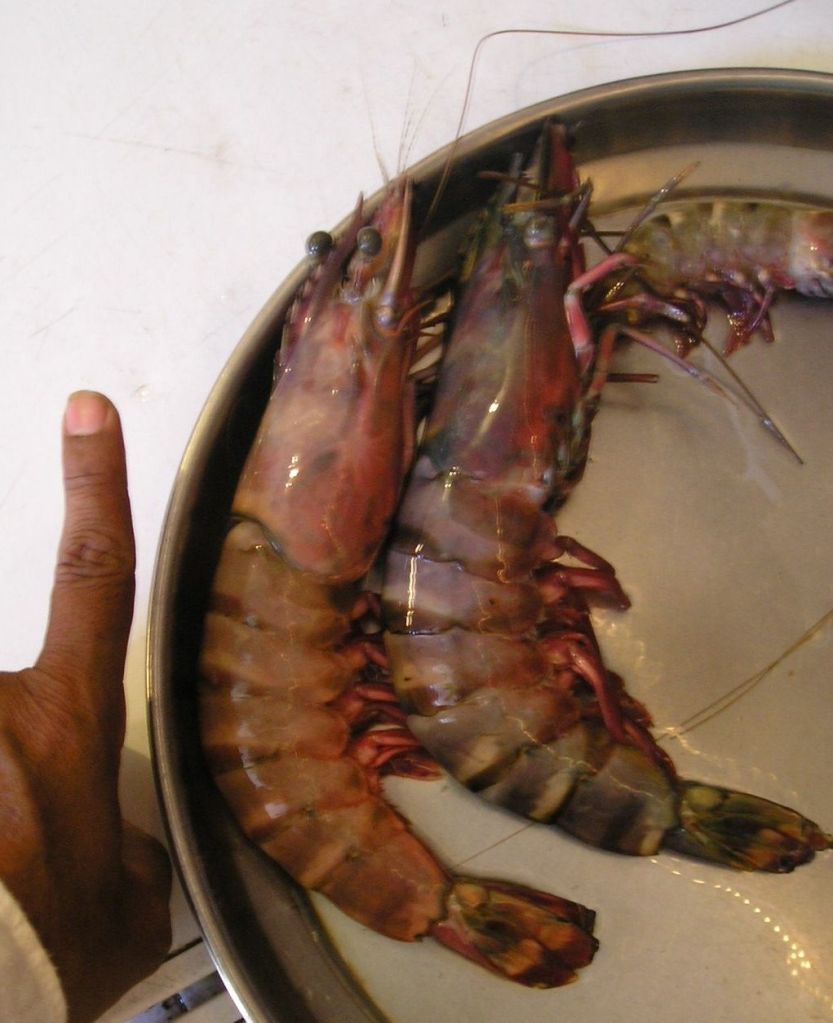
Today she had a single white perch and two giant tiger prawns. The mid-morning sun glistened and flashed brightly off the stainless steel dish as she swiveled it to show him. He bought the perch but then asked if he could take a picture of the prawns.
Ambika loved when he did this. Despite the ubiquity of phones in the village nowadays, no one used them to take pictures of food. It was something foreigners did. This time she posed, which was a first.
Kiran had eight pictures of Ambika in his phone, documenting seven different species on her dish. In the initial snaps she looked wary and stoic – on occasion suspicious. Now she took time to position herself. She turned the dish to prevent glare. She drew the top of her sari from her shoulder up and over her head to shade her face.
Suddenly, Kiran realized that she, and therefore all the villagers, must think he was leaving. He imagined her saying to the fishermen’s wives that next time he asked to take a picture of her fish, she would pose – because ‘who knew where sir was going and who all then would see her?’
He bent down and zoomed in on the dish, eliminating her from frame. The prawns were huge, at least ten inches long. Green and dark gray at the tips of their tails, their color grew lighter along the fat crustaceans’ bodies over the swimming legs, and pink toward the fore. The walking legs were striped a cartoonish pink-and-white beneath the dull, gray-pink carapaces.
Two round black eyes sat like little black caviar roe placed atop the rostrum above the wiry, red antennae that swept out before them. “Decapods,” Kiran thought, as he set his left hand beside the dish and stuck his index finger out for scale. He had never seen prawns this size before – not in the U.S. He suddenly felt he couldn’t think of anything better about the USA at all.
He stood up, and thanked and paid Ambika. Then he took the perch back inside. He had leftover rice from last night’s meal. He warmed it in the pan as he fried the fish. He stirred in some diced green onion and ginger, finally adding some cut spinach and chili paste. A squeeze of lemon brought out the flavor of the whitefish. It cut flaky and tasted delicious.
As he ate, Kiran thought again about Ambika. She saw much more clearly than he did despite all his travels and his western education. She and the other villagers were lighting-quick-witted. Their connection through daily process to thousands of years of Tamil made it so.
His mind was filled with the ceaseless noise of his Facebook, Twitter and IG scrolls.
When he arrived he never said when he’d depart. They knew before he knew himself. They were reading him as they read every tourist who came to stay.
The villagers’ lives were unchanged for centuries. They’d seen many come and go, among whom he was no more or less unique – to them he was a simpleton.
Kiran finished eating, washed up and changed into trousers, replacing his chappals with closed-toed black loafers. He had to go to the bank.
He wheeled the bike out, locked the gate and pushed off. He took the main road only as far as the first circle road. He did not want to pass the cafe on the way in. He wasn’t ready to face the gossip pit of expats and regulars yet. Cutting east, he headed down back alleys to the bank.
Emerging from one of these alleys into the round that diverted lorries and buses to the highway, he crossed but got caught between lights at the auto-rickshaw stand.
“Dey! Merica-sir!” a voice yelled at him. He turned to see the autorick driver he’d been buying ganja from standing among a cadre of his fellow drivers. He called him “Merica-sir” because he knew he hated it. It was both respect-building for his local familiarity with Kiran, a foreigner, and it was a dismissive dig.
The driver waggled his hand in a combination hang-loose and call-me sign. His head swiveled in the back-and-forth bobbling unique to South Indians that asks, implies and gestures, at once.
Kiran shook his head and waved him off as the light changed. If he hustled, he could make the light at the next round while all the lights between were green.
He drew a gulp of dusty, earthen air, the grit and residue of thousands of souls, and pushed hard. The auto-rick driver squeezed his rubber air-horn in a honkedy-honk-goodbye which Kiran was surprised he could pick out from the tumultuous roar of the busy street.
He made the lights, swung into the next roundabout and shot out into the bank parking lot. He pulled onto the front patio and chained his bike to the end of the crowded stand. There was a mall adjacent to the bank. The bike rack was always crowded.
Kiran loved coming to the bank. It had an entrance way – mirror-tinted double glass doors let you in to a small foyer and another set of glass doors that led inside. It was a glass air lock – an area to shake oneself of the dust and heat before entering the cool A/C and the clean confines of the bank.
There was a water fountain in the foyer and even a small, single-stall restroom with a sink. Kiran went in and rinsed off, wiping the sweat and dust from his arms and face. He dried his hands by pushing back his hair, took a deep breath and looked at himself in the mirror. He was older.
His temples were flecked with gray that contrasted sharply with his long black hair. His scruffy beard was equally salty. He knew he’d have to shave it all before going back to the U.S. He pulled down the skin under his eyes and stared into himself. When he let go he pored over the extent of the bags.
Kiran had opened the bank account from California over the net. They overnighted him a card international express. When he arrived at the airport in Chennai, he withdrew 120,000 rupees. He used it to get situated. Only then did he use the card to buy sundries in town.
He knew the e-trail of his purchases was being closely observed by the bank. If he spent money at Western fast food chains and checked into a 5-star hotel it meant one thing. If he bought groceries and supplies from local shops, it meant something else. He paid for the hut in cash.
After a few days in the village, he made his way to the bank on a bicycle, covered in cotton. On a Tuesday, a week after he had been in town, Kiran made a showy first appearance at the bank to “meet the manager” and be seen by those who had been watching his purchases as a non-resident Indian.
It was standard practice: make it seem you have plenty of money in the U.S. and are here to share it with family and explore business opportunities. Behave as local as you can. He used the card to buy his bicycle. He used cash when he rented a moto.
He never used the card at local bars. It was the first arrangement he made with Phillipe. He left a deposit, ran a tab till an agreed upon limit and then paid in full in rupee notes. Keeping currency fluid was an invaluable skill of travel.
Mr. Srinivasan was a prototypical South Indian money manager: balding on top and clean shaven, with a round face and baby cheeks. He wore thin wire spectacles that could have been a decade old. He wore a brown suit. It was 42 degrees C outside and this guy was in a suit.
“It is vonderful to see young men doing well in America and coming home to invest,” Srinivasan had remarked as they signed the paperwork. There was an old wooden abacus at the edge of his desk. In the corner, unused, sat a typewriter. Kiran gave him a thumb impression for the bank’s records. “Will you require transfer account?” Srinivasan had asked.
“Not at the moment,” Kiran had replied, “We’ll see.”
The manager bobbled his head at him, “India is booming, sir. You will do very well here now. And your vife, sir?”
“We’re divorced,” Kiran had murmured, signing and initialing paperwork. It was another tight, efficient lie, that pegged him as American.
Srinivasan immediately fired off the excessive tsks that were so common here, “Tsk, tsk, tsk, tsk, tsk, tsk, tsk, tsk, tsk” – a rapid-fire nine tsks was considered more empathetic – “terrible,” he had concluded.
Now, as the interior glass doors slid open before him, Kiran realized he looked forward to seeing the old man again. Srinivasan would testify to his goodness if called upon to do so while he was away. Kiran was confident he’d left an impressive e-trail of purchases and relationships.
There was a podium placed beside the doors as he entered. This was new. A tall, thin, mustachioed young boy in uniform stood at the podium and greeted him. Kiran asked to see Srinivasan. The boy furrowed his brow and looked down at a nonexistent list. “There is no one here working by that name, sir.”
Kiran then asked after the manager and was told he would have to make an appointment. He told the young man to go and ask the manager if he would see him now. Being pushy at the bank exhibited the confidence of both a wealthy American and a local Brahmin. It couldn’t hurt to try.
“Madam is a madam, sir.” the boy replied.
“Fine,” Kiran threw on the frustrated voice, “ask her.”
The young man dropped his head to his chest and ran to the back offices. “The new India, “ Kiran thought, “where turnover is high and smart women make moves to gain control of their lives.”
Now one of them appeared. She was young. “Maybe not 30,” Kiran thought. She was 28: “I’m Urmila.”
Like the bank manager before her, Urmila dressed in western attire, though considerably more sensibly. She wore a thin, black, linen jacket over a light white blouse and a medium-length, business-cut, black skirt. She wore a string of silvery-white pearls. Her gold name tag read: “Urmila Narayan, Manager”.
She extended her hand. Her hair was tied up in a tight bun. She had a sharp but elegant nose over which she now assessed him with searching, dark-brown eyes. All business. They shook and he noticed she looked him-up-and-down before saying, “Come on back to my office.”
Urmila spun around quickly and strode off to the back. Kiran hop-stepped to catch up. He called out after her, “Hey, listen, I didn’t realize I needed an appointment-”
“It’s no trouble,” she called out over her shoulder, not breaking stride.
Her office was small, but one wall was a window treated with the same mirror-tint on the front of the building and when she closed the door the space was cool, well-lit and humming. There were two wall-mounted monitors overhead which ran livestreams of BTVI and Bloomberg Global and two monitors on a desk crowded with a keyboard, mouse and documents. She sat behind the desk and indicated a chair opposite.
There was unopened mail on the chair. He handed it to her and she glanced at the envelopes as she set them atop all the documents on her desk, put her hands together, looked at him and asked, “What can I do for you?”
“I’m headed back to the States briefly and want to maintain my account. I just wanted to touch base with the bank about that. Clarify dates, if there’s a minimum balance or …” he trailed off.
She looked up his account on one of the monitors before her and said, “I see you opened this just a few months ago. How long do you expect to be gone? Because we have some options.”
Kiran was not prepared for this. It was a long way from balding Srinivasan and his abacus and typewriter of a few months ago. “Uh, I don’t know for sure. I have to go back to take care of a few things. Of course I’ll be in touch from there and I can still conduct operations with my account through transfers and the net, right?”
“Right,” Urmila replied, curtly, as if suddenly realizing exactly whom she was dealing with.
She sat back and spoke quickly: “You’ve taken our most basic account, which you opened with a principal balance you deposited as a lump sum from your account in California before you arrived. The monthly fee for the card and other services has been taken out of this principal. So if you continued with this basic account, you’d have to keep paying the monthly fee and maintain a balance,” she paused, scanning the monitor, “I think it’s like 100,000 rupees. There would of course be penalties if you didn’t manage this.”
“Sure, I understand,” Kiran replied.
“Alternatively,” Urmila continued, swiveling in her chair to a shelf behind her, “I would encourage you to consider investing with us.” She pulled down a glossy folder from the shelf and passed it to him. It was filled with printed pages and charts. “Here’s a simple explanation of some of the opportunities we have. You could leave as little as 5,000 US here and it would be working for you.”
Kiran tried to look cool. “Oh, I see,” he took the folder and pretended to flip through it. His ignorance wasn’t lost on her. “But I guess there would be tax implications …” he trailed off again.
Urmila sighed and grabbed a business card, flipped it and deftly wrote her number on the back. “This is my mobile. It’ll be easier than trying to use the appointment line. Call me direct to discuss and we can do the needful.” She handed the card across the desk to him and sat back.
He realized this was all the time she had and stood. He thanked her as they shook hands and he left. It was all cold, swift, mechanical and delivered exactly as it might have been in Modesto. “The new India,” he thought.
He put the folder in his backpack and headed out of the bank. The second doors opened and the heat hit him like a wall. He craved a drink, but knew he had to visit the Internet cafe first. He had to look up flights and let Sara and Dash know he was headed back. He unchained the bike and set off.
He pulled up to the cafe and was pleased to see there weren’t that many bikes out front. School hadn’t let out yet. In the afternoons the place was swamped with teenagers. There were only 15 cubicles, stalls really, so groups of kids hung around each, spilling over.
Kiran checked in and slid into a stall. He ran a Kayak search on tickets and checked every box: Cheap-O air and ijustfly and orbitz and priceline and whatever Indian options they added. There were nearly a dozen windows to sift through to get an idea of a price range. He would use the range to negotiate with a local travel agent for a lower price or a better flight. After a half hour of collecting data, his mind swimming with flight numbers, fares and connections, he shut down all the sites and put away his notes.
He wrote Sara first. Short sentences. Their relationship had decayed to where only the most pertinent info was exchanged. It was like writing a telegram in the last century: “Home next month. When can I see him? – K.”
He thought about writing to Dash to tell him as well, but realized he didn’t have concrete dates to share. Instead, he sent him a few snaps of the beach and of an elephant he saw on the road. “Wish you were here. How are the A’s doing?” he wrote. Kiran wondered if Dash even kept up with baseball.
He spent a few minutes looking for articles about thorium in the sands of Tamil Nadu. He stared at images of monazite-laden sand. He couldn’t tell anything from comparing the images. They all looked different from each other and the sand by his hut.
The tiny bell on the front door of the Internet cafe began ringing periodically and insistently, as teenagers and their posses kicked it open and filed in. Many of them were Dash’s age.
It was time to go.
24 Saturday Dec 2022
Tags
beach, Exhibition, India, kollam, Nadu, pondicherry, promenade, puducherri, puducherry, rangoli, tamil
24 Saturday Dec 2022
Posted in 2022, India, Tamil Coast
Tags
beach, India, Nadu, pondicherry, pondy, promenade, puducherri, puducherry, Rock, tamil
19 Monday Nov 2012
08 Sunday Jul 2007
Posted in fauna, jazz, music video, short film
Tags
butterfly, common, India, Karthik, mariposa, mtk, Nadu, papillon, pondicherry, puducherri, rose, schmetterling, tamil
24 Thursday May 2007
Posted in Asia, performance, sculpture, short film
23 Friday Mar 2007
Posted in Asia, fiction, India, music video, performance, self portrait, short film, Tamil Coast
23 Friday Mar 2007
Posted in Asia, fiction, India, short film, Tamil Coast
13 Tuesday Feb 2007
Posted in Asia, India, performance, short film, Tamil Coast, travel
04 Thursday Jan 2007
Posted in Asia, essay, India, Tamil Coast
Over the last few nights, lit by an obese moon, the local animals have been fighting; first the dogs went at it ferociously; then loud, wailing cats; hissing, crying, haunting sounds. Then a crazed bird-fight, filled with screeching – all this in the two nights of the moon’s fullest face.
The village is a breathing thing, a living ecosystem of many species of insects, reptiles, mammals and birds living adjacently. The village mood is governed communally, first by the most powerful forces of nature, primarily the sun and moon – and, here, the sea – and secondly, by humanity in concert with nature.
In working with nature, humanity is further subdivided, along a continuum from those who will care for animals and plants, to those who would not tolerate them, but as food. Most follow a gentle co-existence.
A properly functioning village can be considered among the most sane and balanced social ecosystems ever created by human beings. Interspecies tolerance, collegiality and an awareness of the fundamental interconnectedness among all living things exists.
Here, vegetarianism is considered a social enlightenment for most people. Trash is often laid out on low thistle or brush to allow ants and other insects to pick it clean. I have watched a village woman wash the anus of her cow with her bare hand and water with such care as she would give her own child.
The village is asleep shortly after sundown. It gets dark quickly. Public lighting is elegantly limited to one or two long, narrow, tube lights, atop wooden posts placed at the intersection of paths or at the gate of one of the wealthier homeowners. But power outages are common, eliminating even this small amount of soft, light pollution. The night sky is clear, the stars, sharp.
Dawn is the loudest time of day, from cock’s crow, through crow’s caw and eventually multiple, staticky, jam-boxes, and at least one television set, projecting bhajans and popular songs. This comes to an end abruptly, when there is a brief silence into which the cow next door lows – an enormous sound – at least once each morning. Today, all sound was overcome by a single, overpowering noise, a retort, by human design, repeated at regular intervals. Someone was lighting and dropping grenade-like bombas.
This same, single, very powerful firecracker, set off very near to this house every half hour or so, was irregular enough to feel sudden each time – 9:30, 9:55, 10:27. The noise hit me in the gut. The dog was terrified.
It is an intense sound in this place – and now the cat fight continues, screeching and hissing, tearing-around sounds between booms.
Bombas all day long: “someone died” is the best we have. Sekar says it was two people, one on either side of us, in recent days. The villagers gathered with firecrackers, drums and flags – multiple very loud retorts all day long; many right now.
The dog stayed under the bed for hours, until sundown when the bombas finally ceased – we all sat in silence. Then, through the night, under the flat, bright light of the fat waning moon – really three days full – came the horrible, sad, wailing of a woman who sounded like a widow, or a mother, begging God or anyone to explain “Why?” between heavy, interminable sobs. She finally fell asleep, but her cries were the loudest sound in the night for an hour. The death must have been literally just beyond the wall to our West.
The entire village is a part of the death – even the crows were vacated by the noise. They say that when a king dies, crows fly and caw – maybe it’s because of the fireworks. This full moon there was an important death, likely two, in our village. The crows and dogs and cats know it … and I know it, too.
4 January, 2007
Periyamudaliar Chavady, TN, India
[discovered that one of the two deaths was L’s grandmother – the mother of the man from whom I’ve been leasing a motorbike. We learned, too, that there was another death, just next door to us – very close to us, on the same day – likely someone we had seen daily in the last few months – but we don’t know whom. I would know the face … but which face, of the last few months, is missing now? that I cannot say. So it was Usha, the daughter- in-law of one of the deceased, who told us, three weeks after Pongal, that the villagers did not celebrate Pongal this year because of these deaths, a full moon before].
16 Saturday Dec 2006
Posted in Asia, India, photography, Tamil Coast, travel, vehicles
Tags
2006, 3-wheel, auto, autorick, chennai, Coimbatore, India, Karthik, lambretta, m.t. karthik, mtk, Nadu, rickshaw, rigo 23, tamil, three, Tricycle Museum, wheel


In autumn of 2006, for a traveling project by Rigo 23 that he calls Tricycle Museum, I researched and purchased three-wheeled vehicles from South India and shipped them to Madeira Island, Portugal. Here are some of the best of the many auto-ricks I photographed.
They are arranged in reverse chronological order for the most part and the last one is a 1958 model that was still running on the roads in Coimbatore in 2006!
08 Friday Dec 2006
Posted in India, photography, Tamil Coast, travel
Tags
2006, chennai, cycle, cyclericks, India, Karthik, m.t. karthik, madras, mtk, Nadu, ricks, rickshaw, tamil, tricycles


In autumn of 2006, for a traveling project by Rigo 23 that he calls Tricycle Museum, I researched and purchased three-wheeled vehicles from South India and shipped them to Madeira Island, Portugal. Here are some of the best of the many cycle-ricks I photographed.
15 Saturday Nov 1997
Posted in essay
Tags
12th, 1997, brahmin, ceremony, community, day, death, description, dhanam, doctor, funeral, immigrant, indian, jersey, new, puja, punditah, slokas, story, tamil, telegu, uncle, usa
This is the story of people who act with the purpose of the ages though they may not at any given moment have any idea what they are doing. It is also a story of change and transition because we are changing, and our minds and souls with us. Soon enough we’ll all be dead, or American beyond distinction. It takes place in the Garden State in autumn of 1997, the time of year when the stems of chlorophyll- leaking leaves snap free and send showers of technicolor shard drifting crunchily to the New Jersey earth. The Internet as we know it wasn’t five years old.
I had found refuge from the coming cold in Morris Plains with an aging couple who were family friends. Among family and friends, we call elders “Uncle” or “Auntie,” whether they’re related or not. This Uncle was a physical chemist at Picatinny Arsenal and Auntie worked in the psychiatric hospital, Greystone. They never had children of their own, but had hosted hundreds of people from India in their home, young and old. They were stewards of a generation of Indian immigrants.
I arrived from Manhattan unaware I was just in time for the last two weeks of Uncle’s life.
There is a story among our thousand-thousand-year old people about the man who comes for a funeral at the house of the deceased and annoys everyone by staying past his welcome for the free food and shelter at the hand of the widow. I had arrived before my hosts’ death. We haven’t yet developed such a response to the type of visitor I was. Maybe this one will do.
The soon-to-be departed was a 70-year old colleague and friend of my father’s for four decades and in that time my father had sent him a quantity of business from which he had benefited. Through hard work and dedication to the science of his profession he had earned well and had treated himself and his wife to the surroundings in which they had been planted for the last twenty-five years; a beautiful suburban six-bedroom, three-bath home. Childless, their resources went not to progeny, but instead to the building of a community of their people in northern New Jersey.
While I had neither spoken nor written to my father in more than a year (he had taken a despise for my general lack of interest in work or study), I wasn’t above taking advantage of his alliances to protect myself from the ravages of nature in the long months of winter.
Upon arrival, I dazzled my hosts with such conversation and jocularity as to earn my invitation to stay – independent of my host’s obligation to my father – for at least a week or two. I was marshalling resources to return to my own war in nearby New York City. I convinced them I was a writer who kept copious notes of circumstances such as these and that I might one day immortalize their own lives. They believed I was an artist between exhibits seeking inspiration from the autumnal hues.
I knew that despite their immigration to these United States, my hosts had clung tightly to the traditions of South Indian culture. Women kept their own carefully-ordained place in the company of men, as men did in the company of women. So I intended a comfortable time behind heavy doors closed to the bitter cold, my soul warmed by the fireside of my hosts, sipping their brandy and discussing the bodies politic and geographic, attended with snacks and refreshed drinks from time to time. I thought I’d make myself available occasionally to wash a dish or two in exchange, perhaps a trip to market to lend a hand. This is how our time had begun before my host’s untimely demise.
We are a proud lot whose culture allows for the manipulation of the universe toward our own ends at any cost under the auspice of our belief in dharma. It is our complete acceptance of the universe’s larger workings which allows this state of mind. It shall sort, indeed, has already sorted it out.
This might be a confusing position for the western mind to understand, as many believe in the knowability of answers and of the mind of God in some personage, a God who rewards truth and justice and balances acts pure and impure. But then again, the westerner often takes the so-called “big bang” as a zero-point, supposes it the dawn of time, while we find this to be a very shallow view. We know an infinite number of times, dawning and dusking eternal.
Such matters my host and I had already taken to discussing upon the first day of my arrival when I met one woman around whom this tale would later revolve. He had just finished saying to me, “The Iliad and the Odyssey taken together are but one-eighth the length of the Mahabarata,” when she walked into the room and delivered a snack tray for our consideration. How she moved.
Her name was Priya and to my eyes never had a more beautiful creature walked this earth. Beauty like only the daughter of Death herself as a vision walked. The only sufficient words are in the vernacular and so from here I continue in such timbre so I may better illustrate the point:
Chocolate. Sweet, dark chocolate skin and ink-black eyes which reflect the soul of anyone who peered within them. Thick, jet-black hair surrounded her oval face and fell to her shoulders. Her hips were well-rounded and her breasts were gloriously full. She had that beauty only young Indian women have when they are capable of driving a man to the wild impulse of marriage because they think they can possess them thus.
My host’s wife introduced us. She was married to a doctor and the couple were staying in the basement rental apartment which he had installed ten years before when his father had lived here and required a live-in nurse. So they were living in the basement of my hosts’ house amidst the colorful autumn leaves of New Jersey when I turned up, broke, unemployed and seeking shelter under a harvest moon.
She was the only daughter of a family friend in the area and had been sentenced to her Indian doctor in an arranged marriage in Vijayawada three years before. Her mother had taken the view that a daughter once married no longer belonged in her parent’s home and so had nudged the young couple out a month ago. But the young doctor had yet to receive his American medical residency, was in fact without occupation and so when Priya’s mother pushed them out, the young couple were strapped for money and a place to live. They turned to the woman who had brought Priya to this country – not her own mother but my host’s wife.
This is where our story takes its first ugly turn. Long before her marriage, Priya had been brought to this country by my hosts because her mother had rejected her at birth and left her with a villager’s family in their hometown in India.
It went like this: a mother and father with three children – two boys and a girl – gain an opportunity to emigrate from India to the United States and elect to take only the sons, leaving the daughter behind until she is seven years old. At last she is brought by a woman to whom she is unrelated – a neighbor – to be reunited with her (now) American family who only guardedly welcome her.
Then, after fifteen years and an American upbringing, the family requires she marry an Indian doctor and so she moves back to India to do so, only when she returns to the United States, she is told she cannot live with her new husband in the family home like her brother and his wife and child.
So for the second time in her life they reject her. She sought refuge in the only place she could, in the folds of her neighbor’s wife’s sari, sleeping in the basement of their house – a house which has served as shelter for dozens of other refugees over the years, refugees from nations and loves, hatreds and political legalese; a shelter for me.
I wish I could say Priya’s story was uncommon, but I cannot. India is overpopulated and resources are thin. It has made our people strict, ancient and realistic about the material world. Sensitivity to the struggle of others is often measured against what it will cost or what one can gain. Altruism is in short supply.
I arrived on a Monday afternoon, the 29th of September. The weather was much warmer here than in New York City; blue skies with cottony clouds floating by. When I left the city, it was muggy, cool and humid. It felt so ominous and dirty. By contrast, at night, there were crickets here. It’s a really lovely place.
Dover is something like an hour and twenty minutes from the city. After I’d gotten down from the bus on the streets in downtown, I’d rung Auntie. She came to pick me up in her red Oldsmobile station wagon with wood-paneled sideboards. She, too would be 70, the following month. She was wearing a colorful red and gold sari and looked tiny and sweet behind the steering wheel of her big American wagon when she pulled up to the curb to pick me up.
She brought me a turkey sandwich to eat and took me back to the hospital where she worked – a campus of grassy lawns and trees. This is a nut house. It is also where Auntie works as an administrator and counselor. She had to wrap up a few things and left me to sit eating lunch on a beautiful old wooden swing in the grassy lawn. I sat in the lovely rockaway swing: the type which has two seats facing one another connected to a floor board and hooked on either end to a carriage structure. It’s made of all wood slats so the whole unit swings between the frame. I spent the half hour drawing the swing in detail.
We went to their home in Morris Plains where Uncle was waiting, presumably aging and infirm after his consecutive heart failures over the years. But I found him alert and eager for my arrival. It was me who was exhausted. Upon arrival I slept for hours and hours and hours at the behest of my hosts.
Arising late the morning after I arrived, I went with Uncle to his office at Picatinny Arsenal – a Vietnam Era military facility which produced and then worked to deactivate mines and other explosive devices for use in South East Asia and elsewhere.
He was seventy years old and drove a silver, late-model Mercedes with ease. Though weakened by his recent illness, he had the energy to go to work at least briefly. Auntie told me he had been going two or three times a week since he got out of the hospital in August.
“You can check your e-mail from my office,” he said. He moved slowly but not ungracefully. It was becoming apparent that he had some weakness to contend with. But Uncle never let on how much and he escorted and drove me to his office and back without me feeling an inkling for his true pain. He was mentally strong and had tremendous character.
In reality he was quite frail and in recuperation from six months of congestive heart failure. A 30-year diabetic, he labored over the care of his body with insulin injections and capsules and pills of all sorts. He complained that a heart failure treatment called Coreg, a tiny pill with a powerful kick, was wiping him out.
The pill is a beta-blocker. The spiking interchange of adrenaline (briefly) and “crashes” from Insulin reactions and hypoglycemia fatigued him completely and the side effects of heart meds made up the end of his life. Though the doctors asked for his activity to be limited, the desire to move, to act, to go to the office, to be productive was stronger. His will to continue his chemistry, his work, moved him.
But that day when Uncle and I went to his lab and office at the Arsenal, I had no real understanding of his condition, self-absorbed as I was, immersed in my thoughts and writings and thoughts about writings. I was worried about my first novel, copies of which I had left in Manhattan with several agents and publishers in the hopes one would read and choose to publish it.
I was worried about my process, my life and my anxieties, and so my writings reflected my selfish need for appeasement in the face of my fears. I didn’t realize the journals I kept then would carry a heavy burden. I talked to myself about a meaningful life because of my fears that I was not living one, even though my hosts were in the middle of a health crisis which loomed far larger than such philosophical ramblings.
Here was my entry during my visit to Picatinny:
9/30/97, The Arsenal
Uncle was a senior research scientist who specialized in physical chemistry dealing in nitromides. For 37 years he had one job, at Picatinny Arsenal. My father was a sulfur chemist and an organic chemistry professor. These two men were the same age and for a very long time focused the powerful capacities of their mental faculties on a variety of projects, often in support of the US Military. It is because of this relationship that they are here at all. It is definitely why they are the owners of houses and cars and luxury items in the U.S. of A.
Picatinny is located on a beautiful, rolling, hilly campus of small roads nestled among lovely groves of trees which also had begun their autumnal parade of color. The arsenal is an explosives and weapons munitions campus and Uncle took me deep into the windowless laboratory buildings where he worked. The walls were made of thick, white cement bricks. The lighting was institutional, tube lights under flat plastic sconces.
Uncle told me the peak of activity here at Picatinny was during the Vietnam War. He was working then on methodologies for disarming mines. There was hardly any activity to be seen when we arrived. Uncle said that in the previous ten years, employment had dropped 300%, downsizing from 6,000 to around 2,000 employees.
We were sitting in the George C. Hale Laboratory. It is a white-cement, very plain building planted like an ugly gray brick in the beauty of these surroundings. Uncle’s office is also windowless. Going to work for forty years he couldn’t even look outside. Old chemists and scientists are a strange and beautiful lot, to me. Old school Indian chemists worked hard, damn near blind to the specifics around them, so absorbed.
We spent a couple of hours at his office and he let me use his internet to check my e-mail. Uncle was, even at this stage of his own problems with life, concerned about my need for e-mail in order to pursue my work. He and Auntie seemed supportive of my efforts to become a writer, though I’m unemployed, broke and unmarried at 30 which is uncommon for an Indian at best and looked upon as pathetic at worst.
For many years I had known Auntie and Uncle were here but I had not been in touch with them. I had grown away from my own family and so I did not retain the contacts which my father and mother kept. I knew they were here but knew nothing really about their lives. I was taken aback by their refreshingly open approach to my process, my lifestyle. I was wary however of the underlying nature of my people which crawls into every interaction. We are deceptive, cautious, manipulative. Were they humoring me only to quietly reorganize my thinking?
The town of Dover was, by its own estimation, 275 years old, announced on a wooden sign when you enter the town square, that read:
1722 Dover 1997
Lots of US flags. Lots of big houses on beautiful occupied territories that keep some native names.
Northern New Jersey was also home to the first and largest immigrant community from India in the United States. I had never grown up around a lot of Indians. There were a few families who trickled in slowly to where I grew up and we knew and supported them of course, but I never had close Indian friends. I was surrounded by white kids and a handful of Latinos, among whom I was the weirdo with the funny name.
I was fascinated by the Indian community surrounding Auntie and Uncle. Here were Indian kids with Jersey accents who switched back to Indian ones when they were with their parents or other family members, but they had other Indian kids to do it with!
Concerning the Author
Let me take a moment now to describe who I am: a Brahmin man, born in India and raised in the United States. There are now many like me.
Our parents brought us here because they were seduced by the American century at one time or another and now they expect us to know things about our culture which they take to be natural. When we do not maintain our culture, often they are angered by our inability to feel what they believe are normal ties to family and food.
They told us to assimilate and then left us to be raised by ignorant, bigoted, limited white people who watch too much television. They expected us to be Indian-Americans with an emphasis on the Indian. But we were disenfranchised, disunited and dissed in these states. I am disillusioned.
In our schools we were raised as outsiders and foreigners because no one could pronounce our names, we dressed funny and carried smelly lunches. At home, the relationships we witnessed between husband and wife were in direct contradiction to every major feminist movement spawned by the American century. We were shown the patriarchy at an early age and pitched its opposite by our teachers and friends.
When we failed invariably to live up to the previous generation’s hopes and desires for us, we were chastised privately and lied about publicly to avoid familial embarrassment. I am among the few of us to manage to get this far in expressing ourselves.
Our culture sometimes makes me sick. But as I’ve said, I am not above taking advantage of it in my time of need. My host and I talked about many things and bullshat one another about the importance and validity of our knowledge. It is our way never to point out when someone is clearly lying and so our discussions bounce around the room like rubber checks. We invented the half-nod/half-no head shake for this very purpose. It says neither that you agree or disagree, but allows the conversation to continue.
Thus, completely irresponsible half-truths are spoken aloud and allowed to resonate. Whole worlds of argument are built on the foundation of a faulty logic supported by sycophancy. But we are Brahmin men, and so we do this with impunity in the living room energized by the food and drink brought to us from the kitchen by our women.
Priya was beautiful. Her carriage, despite being weighted with an immeasurable sadness, was graceful and contrite. She was neither prideful nor temperamental. She served her husband and her host family with a quiet orderliness.
When we got back home from the Arsenal, we watched the Mahabharata – a then newly produced operatic version from England being widely praised. We listened to Ravi Shankar records. Uncle was fading.
One Week Passes
one week passed like this: I met some of Uncle’s friends and neighbors. I met his nurse.
Uncle had a private nurse named Ruth who came to see him in his home. She was a middle-aged, white woman with nice features, a good smile, and a short brown, businessy hairstyle.
She came every other day or once a week. She sat with Uncle and Auntie for a few minutes, took readings. did a very limited in-home check of diagnostics. She was present for maybe 20 minutes and began by saying, “Rest. Rethink how you work.”
Auntie says, “Until 40 we think about the mind and not the body. But from 40 on we have to forget about the mind and think about the body.”
Ruth, an American, responds loudly in a tone of voice she obviously uses often daily as though Auntie and Uncle are hard of hearing, “Wee-eeeell, we should think about the body all our lives and then when we get to 70 it won’t be like …. Aaaaaaaaaaaaah!” She shakes her wrists and hands.
She continues, “If we think about how we eat, how we exercise, how we live and how we pray,” she says, pausing significantly, “ long before 40. We’ll be a lot better off at 70.”
Her tone of voice is reprimanding as if she knows better than these two 70-year-old scientists, these thousands-year-old Brahmins. I hate this kind of condescension. Then she leaves. For each of these visits no matter how long, 20 minutes or an hour, she receives $175.00. At ten visits a week to clients? Do the math.
Auntie told me Ruth is a member of an ashram in New York City and that she likes coming here to their house because she sees the house as peaceful and spiritual. She invited auntie to go to the ashram in New York with her. She is a westerner who practices yoga, which is becoming more common.
I was 30. Ruth was maybe 40. Auntie and Uncle were 70. What does money and comfort have to do with meaning in life? Death is the meaning of life.
Uncle worked forty-to-sixty-hour work weeks for 35 years for the Army contributing at times over the seasons to the manufacture of explosives designed to kill, maim and destroy people of all ages and at other times to the disarmament of the same toward peace. Ruth may work 20 hours a week telling people what they already know so they might live longer.
I’m penniless. And homeless. I work at the act of living a meaningful, slowly-paced, gentle existence … a full life … unemployed by anyone but myself toward this end.
Ruth will die. I will die. Uncle will die.
It is a beautiful autumn day, a gift for the dying in New Jersey.
More That Happened in the Week that Passed
I shot an art short on video (Beta) with the Doctor. He ‘acted’ as a newly arrived immigrant. I shaved my facial hair and clothing to create three characters who meet him in the USA. There were staged bits and improvised sections where he simply reacted honestly to his feelings about emigrating. The dialog is philosophical and cultural and conducted in three languages.
When he was away at the hospital with Auntie, I had long conversations with Priya. She tells me the doctor is violent with her and calls her a bitch when he has sex with her.
Her husband is half a man and barely a doctor. The latter rubber-stamped him for her as a husband and the former makes me burn with impassioned righteousness. I am too Americanized. I want to free her. I want to tear her from this patriarchy and take her to the tops of the rooftops of the world, in the City. In an instant I imagine us dining at my favorite restaurant in the Mission District, three thousand miles away in the city by the Bay, and driving at night across the bridge to stare back at San Francisco from the Headlands.
But what foolishness is this? It is only the half-cocked romantic thought of a man who has abandoned his own culture for dreams. She wouldn’t enjoy it anyway. She would only look across the table at me with her profoundly sad eyes and sigh as she nudged at her food with her fork. Besides, I don’t have a dime to my name. I’m homeless. Unemployed. Worth less.
October 8th, 1997, Uncle Enters Hospital
Some numbers and number-awareness: On the way to the hospital last Wednesday night, Uncle said, “8 pints to the gallon.” And as I sat in the back seat of the Benz at an intersection while Auntie waited for the traffic to pass, wondering why he said it, he continued, “one pound is one pint … so they’ve taken a gallon of liquid from me.”
It was October 8th, 1997: Emergency Nurse’s Day, “commemorating the more than 90,000 emergency nurses throughout the world who blend the art of caring with the science of nursing to countless patients everywhere,” reads the sign in the waiting room. Count one more patient for the four nurses who met us in the emergency room at Dover General. We were taking him to the ER to fight the water retention.
They weighed him. I wrote down his result and then weighed myself, my scrap of paper reads: “131.2 Uncle, 187.0 me.” 40 years and 56 pounds separated us upon his death. What will I wither away to?
*****
They kept Uncle in hospital and Auntie and I returned home. Uncle’s condition has not changed. He is “stable,” but unconscious or asleep from the sedatives. I didn’t expect this.
The women started bringing the food that afternoon. There were a lot of people around now. It was a Sunday and the skies were clear. The sun shone through the leaves. There were leaves all over the lawn. They had all yellowed, rusted and fallen in the two weeks since I came.
In the last conversation I had with uncle he said that the leaves age and change even more beautifully North of here, in New England, but from the window in his study, I cannot imagine how true that could be. His lawn is a blanket of sprinkled light on green and yelloween.
He is dying. We all know it. Each of us deals with it in our own way, though we have a collective sense of support for our spirits.
The next morning started at 6:00 am, Auntie and Uncle’s cousin’s wife were up and in the kitchen before dawn. I heard them talking because I had been sleeping on the sofa since family members began arriving. Auntie was so practical in the face of her husband’s impending death. She talked about planning for all the people who would come to her house, about preparing food and making sleeping arrangements for them. She made calls to cousins and other family members. She was stunningly together and active.
It was becoming more apparent that these were Uncle’s last days. In the morning, when everyone left to visit the hospital, I stayed at the house alone to “man the phones,” and to be responsible for disseminating information about flight times and hospital updates and the comings and goings of others. They would come later in the day by whatever means possible from many different destinations. Uncle’s sister and brother-in-law from Canada would land at Newark International Airport at 2:30, Uncle’s cousin’s son from London by Virgin air at 6:40. Everyone who can come was making arrangements now.
Mornings were thus the antithesis of evening: an empty house with just me, the itinerant visitor, drifting aimlessly through the rooms. Uncle and Auntie’s cousins from New York, a couple and their son whom they were taking to Rutgers came in at around 10:00 in the morning. This auntie had a stern, harsh appearance and was emotional from the get-go. Her name begins with V., her husband’s S, so we called them V-auntie and S-Uncle.
V-auntie was instantly suspicious of me. Her fear and worry were exhibited in her face immediately. She had no idea who I was, all alone in her cousin’s house. I sat with them when they arrived and tried to explain what I knew, about uncle’s condition and auntie’s and the hospital and the flight plans. V-Auntie just sat opposite me and stared. Her glare was cold as ice and her face as firm as stone.
We sat silently after my stilted recitations on facts and figures and finally she spoke in a crackling voice, “We were married in this house,” and S-Uncle pointed at the carpet, “Right here.” he added.
V-Auntie continued, “We were the first one’s married in this house. There have been many weddings here since then.” Her voice was trembling. “Fourteenth is our anniversary,” indicating the day after tomorrow. Before I could ask how many years ago she answers my thoughts, “our twenty-fifth.” Her emotions were welling beneath her exterior and I am a stranger to her. I don’t know how to behave except to try to be reassuring and tell her what I can about the situation. I sit with them and the depth of the hurt and sadness is inescapable.
S-Uncle calls and gets directions to the hospital. He and V-Auntie will take their son to the hospital and then S-Uncle will take their son to Rutgers for school. They leave and again I am alone briefly.
I walk through the rooms of the house and reflect on my time with Uncle which has been brief but enjoyable. I feel so many strange emotions. I cannot feel him dying or as dead. It just hasn’t struck me yet. I have only words about the phenomenon and they are empty.
*****
Later in the evening people were leaving who will not stay past the weekend. Uncle was still in the same condition with no change. Auntie had slept maybe four or five hours of the last 60. She had been at the house for maybe three hours a day and the rest of the time stayed at the hospital with her husband.
Everyone wore a brave face and made small talk and even chatted gaily sometimes in the face of events. It was a unifying experience, but also a confusing one as many of us did not know one another, or hadn’t seen one another in years. I was the most an outsider.
The family is from Andhra Pradesh and so they speak in Telegu which I, as a Tamilian, cannot understand. Thus, I was left out of the most intimate 65% of conversation. Everyone made allowance for my status as a speaker of Tamil and so we shared English as a common tongue between us all.
The conversation was about a wide array of things ranging from what everyone does, is doing, to where they have been since seeing one another last. There have been marriages and births. It is that sort of an occasion and I am an unintentionally present guest.
Where to begin in discussing the way in which each of the friends and relatives approached their grief ?
The cousin of Uncle’s who had come to visit the previous week, and so was one of the few I had already met, is also a diabetic and had the most in common with him over the years. He is pessimistic. He had come too often to this house for this reason. He believed only a miracle would pull his cousin out of trouble at this point.
We talked at length about such spiritual topics as our shared beliefs in reincarnation and the advancement of spirituality through the laws of physics, the meta-physical made real in a discussion which included unified wave theories and numerology.
This day he said meaningfully, “Well, you know uncle’s birthday is 22nd.” I do not know how to respond to this information and am briefly shy and almost embarrassed. “And tomorrow is the thirteenth,” he continues, “and three and one is also four.” He completes the syllogism for me, “so if he can make it through tomorrow, he could be all right.”
Every time the phone rang, I’d get a stirring feeling in my gut of wonderment and fear. I supposed that everyone here did, too; wonderment as to who it was and fear an instant later that it was the hospital.
Uncle’s cousin has an uncle of his own who lives in Austin, Texas, and who had dedicated the last dozen years to translating ten volumes of Vedic texts: nine books of the Upanishads and a tenth compilation of ‘highlights,’ from the other nine. The work was deeply spiritual, centered on coming to an understanding of the universe from a cultural perspective which is thousands of years old. The word for grandfather is Thatha and they call him Texas-Thatha.
This Texas-Thatha was also enraged at Tagore’s poem which became the Indian National Anthem. Tagore named all the northern states in the poem, but encapsulated southern Indian culture into a single line referring to us as Dravidians. Texas-Thatha hated that national anthem of India so much that he rewrote it with different sanskrit lyrics to the tune of “O’ Canada!”
Uncle’s cousin was pessimistic about Uncle’s condition.
*****
At one point there were at least twenty people in the house – lots of aunties and uncles and friends and cousins came. The faint of heart could not see uncle intubated and passive and practically without function. It was intensely depressing to see him without the strength and life he normally carried. Uncle’s younger sister and her husband came from Saskatchewan. They wandered in and out of the kitchen all night worn and tired by the waiting and the helplessness.
A strange aspect of the day was that the power went out three times for no apparent reason and we were all briefly, collectively plunged into darkness in different rooms without windows around the house causing us to wander into the well-lighted spaces and ask one another in various languages and dialects if the power had gone. The computer upon which I made these notes shut down thrice because of it.
Uncle’s dog Randy wandered from person to person stumbling, searching for his master’s face in the sea of legs and bodies which surrounded him. He was confused and lonely and at one point got outside while no one was watching and ended up wandering around in the grass of the neighbor’s lawn across the street.
Priya found him and brought him back in. She was wandering through the house with her husband, too. None of us knew how to behave, There was no order, nor rules for this condition, but the elders demanded an order of some kind. They had been around death and had a ritualized process which they had developed to deal with it. They behaved in an orderly way. The young and the pets are numb and confused.
Earlier, I wrote, “He is dying. We all know it. Each of us deals with it in our own way, though we have a collective sense of support for our spirits.”
I was dealing with it by sitting at Uncle’s brand new PowerPC which we installed and set up together and by typing these words. It was the only meaning I could find in the crazy empty process of dealing with the practical matter of Uncle’s illness.
I had come here homeless and penniless after having slept in Central Park and wandered around New York trying to get my works published. And with neither judgment nor recrimination, Auntie and Uncle took me in like a puppy and provided for me.
As I have said, they were host to two others who, like me, are in a transitionary period in their lives: Dr. R. and Priya, staying in the basement apartment in Auntie and Uncle’s house while they await R.’s results for his applications for medical residency.
It was their story I began to tell before becoming distracted by death. Since the morning of the funeral, Priya had been feeling nauseous. She was pregnant.
*****
Five minutes after 11:00 in the morning on October 13th, Columbus Day, the call came.
At 11:07 Auntie and several others went to the hospital. The caller told auntie, who had been picking up the phone on the first ring since yesterday evening when she came home to sleep, that uncle’s condition was worsening, that his heart had seized again and that he needed to be defibrillated again. They were “doing everything they can.”
That morning and the previous evening, we were all feeling strangely positive. This was the thirteenth, and since 4:00, the day before, Uncle had been off sedatives. Despite the sedation’s absence he had remained stable and that morning according to Auntie and others he had even moved his extremities, though he didn’t open his eyes.
The First Generation Americans
There are a disproportionate number of doctors in the house. Indian doctors. So there were many approaches to Uncle’s illness ranging from the matter-of-fact to the wildly emotional. The responses were not divided by any factors related to occupation or gender, though generally the most emotional response came from V- Auntie, and the least from one of the many Indian doctors here.
One of them, Uncle’s nephew who flew in from England, was 30 years old and treated as the “eldest son.” It became his responsibility to describe the condition of Uncle to various people in languages ranging from the technical to the medical to the emotional. When he was not around others tried to do the same, but the specifics were insufficient.
The eldest son was quite Americanized and doesn’t speak Telegu, the mother tongue of the family. He did not forgive himself for this easily and wore his responsibilities at this time like a badge with which he hoped to return to his own culture from outside. He took great pleasure in his role though he was struck with grief and cried often. He felt the mantles shifting around himself and wanted to perpetuate the traditional roles of his culture as he perceived them, though his perception was ignorant, uninformed, narrow and reduced.
During my last visit to the hospital and my last opportunity to see Uncle, I sat with Indian doctors in the waiting room who spoke matter-of-factly about respirators and ventilation maintenance. They did so in front of that same V-Auntie who sat with me at the house that first day and then opposite me in the waiting room, who had been married exactly 25 years before in Uncle’s house.
V-Auntie was also a doctor, a pediatrician. She sat with her eyes closed in the waiting room and suddenly she barked out with a deep inhalation of air and sound. It was as if she had awoken from a terrible nightmare. She looked directly at me. “I have to leave here,” she said, “I’m getting depressed.” Priya and I immediately stood up and offered to drive her back to Auntie and Uncle’s house.
As we were leaving, on the elevator, her state worsened. She said, “I can’t listen to the way the others speak, so mechanically. I can only pray.” Then we walked from the elevator through the lobby and out the front doors and she finally broke down.
I held her as she cried into my chest. She cried for a full two minutes saying, “So many important things happened in their house. So many things with my son happened in their house. I cannot see him like this.”
This woman whom I hadn’t met until that morning was crying on my chest in front of the lobby of Dover General and I didn’t have any words or thoughts to help her.
On the way home she sang bhajans in prayer to God which included the names of Auntie and Uncle. She told us that the one thing she had asked of her swami in whom she believed so deeply was that neither she nor Auntie should have their husbands die first. There was no way to respond to the threat to her faith which existed in the car with us on that day. She went to New York the following day to pick up two other family members from La Guardia.
Unlike many of the others, Auntie was stable as an ox throughout the entire experience. She moved with grace through the house of guests who came to wake her husband. She was amazingly calm and composed. The morning he died, she simply came into the kitchen and said, “his condition is worsening. They are doing everything they can.” Then she left.
Death is the meaning of life. Language is a useless way of dealing with it.
*****
The younger nephews and nieces arrived last. They were all closer to my age and so we had some things in common. I was a curiosity to them, another 30-year-old at their Uncle’s house in these grim hours, but one they had never seen while growing up.
We were all interested in comparing notes. We went out to get cocktails together to break the ice. When we do we look like a club or a gang … a pack of brown Indians in western clothes, relatively hip , hardly conservative and without a trace of an accent – at least no Indian ones, some British, but of course here in the US that’s respected blindly. It was slightly uncomfortable for most of us at first but we were all soon very good at being good at it. We had a good time.
Conversation was centered around the happenings of the week and my appearance here a few weeks ago. We all laughed together about the ridiculous relationships we have with elder Indians and Indian-Americans. We have so many secrets from them. We are nothing like them and yet we feel a responsibility to behave ourselves. Some more than others. Me the least of all. The eldest son, who would be responsible for making funeral arrangements and delivering the eulogy was growing into his skin as a doctor.
The elders doted on him and reveled in his position as a med student in England. They were very proud. Though we are exactly the same age, he is treated differently. His being a doctor makes the part of the difference that my being a stranger doesn’t make, the rest is left to my being unemployed and a writer. Strangers who are doctors (or lawyers or engineers) are at least in the party line.
Late that night, I smoke out the eldest son with the tiniest, last remaining portion of marijuana I have left from my time in the City. We sit up, high, and talk about death and life and whether or not I want to sleep with any of his cousins.
What are lies and what is truth?
In order to do this telling justice, I must use names. However to make it easier, I will use names of my own manufacture. Who would believe that a young man named Andy, a student in his fifth year of medical residency in London, England, returned home because of his uncle’s hospitalization for a fatal condition would be sitting opposite me, a total stranger alongside his cousins with whom he shares a long history of growing up in the house in which I have been staying for just the last few weeks?
Andy was a frat boy. Over in England he missed football and Sportscenter. He wants me to write about his Uncle and his uncle’s house because he sees the story as glorious and heroic. He wants me to do it because he doesn’t believe he can. He sees me as a writer and a creative person. Falsely, he sees me as something other than himself. He feels he has given in and become a doctor because it was expected of him. At one point, he actually tells me he feels he was made to become a doctor. He perceives me as a risk-taker.
“I mean,” he says, “It’s a pretty amazing story, really.” He says this to me often during the week of his uncle’s passing. He is referring to the story of his uncle and aunt’s immigration to the United States, to their tireless efforts to make their house an institution to support other immigrants from South India and others less fortunate than themselves.
Andy is in the years when it is important for him to believe many things. He needs to find meaning in Hindu rituals which he has never understood. He needs to step into his role as eldest son by pretending to understand some things, asking about some others and accepting vague answers to questions he asks about the arcane meaning of ritualistic behavior so he can believe he knows something about himself and his relationship to his culture. He is like me, or any of us in-between. But now he has more responsibilities. Soon he will have a life in the US as an Indian doctor. There are already so many precedents for such a life. He wants to step into a mold which he perceives as glorious.
There are many things Andy did while he was home for this family emergency. He came to the hospital and talked earnestly and grimly with the doctors. He served as the primary contact for the family to explain the situation at hand though the situation was obvious to even the least educated person. Andy stepped into his role in the patriarchy with aplomb and a desire for flair. He arranged the funeral and cremation services. He wore a jibba for the funeral and had a story to tell about shopping for it. He wrote a stirring eulogy and delivered it through heartfelt tears.
A couple of days after the funeral, he shopped for a BMW, which he has decided will be his car of choice when he becomes a surgeon. He said it “has to be German.” He shopped for a new personal computer. He went around and saw some friends.
Andy used to be married to an American girl. They are now divorced. The descriptions of that experience are riddled with unhappinesses. Andy tells me he felt even on his wedding day that he was watching someone else get married. He didn’t know what he was doing. At one point, an Indian relative of his, the Texas Tha-tha, I believe, had begun a recitation in Sanskrit to bless the wedding. The recitation went on for some time and Andy’s damn-near-bride leaned over and asked him to try to cut the Tha-tha short. Andy tells the story with shame and self-loathing as well as no small amount of distaste for his ex-wife.
They were married for two years.
Then Uncle died.
The twelfth day from his death was on a Saturday and it is the convention of our people to observe the death during this period of time out of respect and honor for the deceased. Thus, the house was full of people. Many meals were eaten, tears were shed, and some laughter was heard. The silence and pregnant emptinesses of Uncle’s absence permeated rooms full of people, even children were brought to it.
What were we doing here? Sometimes simply reminiscing about a man who had passed. At other times sharing in the experience of the void his absence brought.
The nephew who presided over many of the events and was responsible for many of the troubling details of the last week wrote a eulogy which he delivered at the funeral proudly and through heartfelt tears. It was matched by the tears of the eighty people in the mausoleum of the Cemetery in Dover, New Jersey where the funeral was held.
It was a beautiful day. The sun was shining through the long, tall windows and the ten-paneled skylight overhead and lit the grey-white triangles on the granite stones of the resting places of the deceased within. The panels of stone were dappled in various patterns across the names etched deeply and evenly in the stones.
It was warm and sunny the two weeks before we took Uncle into the hospital and for the three days he was in the hospital it was dark, cold, grey and stormy. The first rains of autumn came on Sunday, the day after his first cardiac arrest and coma. The rains and clouds lasted until the evening before the funeral, the fifteenth, which was also the mid-autumn harvest night. The clouds broke to reveal the shining white face of the full, round moon hung brightly in the night sky.
This was the mid-autumn festival moon in China (Zchong Chyo Jie), and across the planet hundreds of millions of family members gathered to eat mooncakes and sit on rooftops and look at the moon and talk in much the same way that this family talks, when it isn’t thinking about the reason we are all here. The “extended family principle” of Asian families is not something to be codified and analyzed. It is innate to us. We cannot turn from it without pain. We meet and share and do our duties without duty. We feel one another.
Mid-autumn among the changing, falling, dying leaves of North Central New Jersey, my host chose to leave this earth.
There was a period of viewing at the funeral home which brought mixed emotions to the family and friends present. It was so disturbing to see his empty corpse in that cold, grey coffin, half-opened to reveal his upper torso. His absence from that chamber was painfully apparent in the immediate. There was nothing left of the soul which had so recently occupied this cadaver.
We were angry at his departure and stared numbly. Some of us whispered, “I hate this!” and “This is not Hindu tradition!” and “Why are we here?” But we did so mostly because we were angry he was gone and we were hurt and tired and exhausted by our own emotions.
He was dead then and the viewing was meant to confirm it. It was ugly the first day. I couldn’t return for the next. But I heard it was better, with more people in the room and more talk and energy.
The funeral was presided over by a Brahmin, a Hindu priest from the local temple. He came in a white cotton dhoti with a thin bluish-brown borderline. He carried sticks to burn and cloth to lay across the body of the deceased. He burned what is called a homum – a small flame in the mausoleum. He recited slokas and mantras in sanskrit and repeated the many names of God and our many chanted prayers for the dead, dying and living. The ceremony was long.
It began with his nephew’s eulogy:
FAREWELL PEDDANANAGARU
Peddamma, Atta, Nanagaru, Ummagaru, Mamaya, family and friends today we are celebrating the life of a man who has inspired and enriched each of our lives. It is difficult to capture his essence with a few simple words; however, the simplicity of his approach to life is what captivated our attention.
FAMILY
When I asked my cousin what intrigued her about Peddananagaru, she quickly responded , family. Peddananagaru strove to instill the values of family in all his nieces and nephews. His interest in the extended family was so important to us raised away from the family web that is India. This extended family does not merely constitute our blood relatives, but the entire Indian community. I am proud to address each and every one of you as Uncle, Aunty, and Cousin because of him.
GOODWILL
The outpouring of emotions from people in this country and abroad are testament to the goodwill he imparted on others. Peddananagaru’s home has always been a place where anyone was welcome without hesitation. It is where many got their start in this country. It is where you came to get married. It is where you came to seek advice. It is where you came to simply chat.
PASSION
Peddananagaru tirelessly and passionately pursued excellence in all that he did. Whether this was Chemistry or understanding and treating his medical condition, he pursued all with precision.
LOVE
Peddananagaru’s love for his wife and family have always been clear for all to see; however, his love for animals and children was something to behold. Kirin, Sasha, Prince, and Randy were not merely pets, but individuals who played an integral part in the chemistry of the Bulusu household.
HOPE
Peddananagaru’s optimisim and hope for the future was without bounds. Not only did he meticulously map out his own future, but encouraged us all to do so. His hope and zeal for the future kept us all alive.
PEACE
The ferocity with which he pursued life was always tempered with his peaceful side. I commented this week, that over the past several months Peddananagaru has seemed more philosophical. I believe what I was sensing was his sense of inner peace regarding his achievements, contributions, and role in this life.
This brief narrative cannot do justice to his glorious life. Over this past week several descriptions and titles have come to mind: Ambassador, Diplomat, Pundit, Emminent (sic) Research Scientist; but, I believe the title of Peddananagaru, eldest father, suits him best. How else can one describe someone who has been a father to us all? We will miss him, but I’m sure the greatness of his soul will be felt elsewhere.
Go in peace Peddananagaru.”
*****
During the ceremony it was necessary to open the bottom half of the casket and expose Uncle’s legs fully so a homespun cloth could be placed upon him. Just as this was done, a crow flew past the mausoleum and called out in sets of four.
Caw. Caw. Caw. Caw.
Caw. Caw. Caw. Caw.
*****
We manufacture truths from a collection of languages we decide to believe as we pass through this earth avoiding righteousness and blind to the basic injustice of it all. I am just as guilty, though I struggle with my experiments with the truth. But the shrieking widow has had her vengeance on my arrogant posture. I arrived with the full intention of taking advantage of her hospitality and I end up picking up after her dead husband.
I am sick of the feeble attempts to describe this life in the face of death. In defense of this position I told Uncle’s cousin: “I hold what Lao-Tse says to be true, “existence is beyond our capacity to define.” I believe that science is a self-referential language which builds upon its own definition of truths to create an ever-expanding body of thought which is uniformly true to itself by definition. But because it depends upon our ability to perceive of ourselves “outside” of the natural state in which we exist in order to name and subsequently manipulate phenomena, it is and will always be, ultimately, limited by our abilities (or lack of ability) to perceive the whole.”
He told me to read Max Delbruch.
Uncle’s cousin remains steadfastly optimistic that we will come to a satisfactory understanding of human consciousness through science. His disagreement with me gives me hope.
Uncle is dead after a long war with his own body. He wrestled with congestive heart failure, with diabetes for 30 years, with edema and pulmonary problems. The war was waged thus as battles in his feet, lungs, liver and heart. The soldier cells marched wearily and incessantly through his veins, fighting attrition.
The history of diabetes runs rampant in the family. Even the nephew who spoke so eloquently at the funeral is aware of his propensity at the age of 30.
Uncle’s cousin, for 16 years a diabetic, has watched his cousin die and has listened to doctors say repeatedly, “that diabetes really complicates things …” And still he remains optimistic about the chance that we will someday come to a physical understanding of our state of consciousness.
Dare I, at 30, healthy, say otherwise? Dare I suggest that the fear of death inspires desperate rationalization and belief in unnecessary dogma?
I dare not.
But at 30, I embrace the notion of the natural passage from life to death without the need to understand consciousness. I believe perhaps equally as faithfully, though I am not driven to consider it until challenged to do so, that I am a part of a whole which has breathed me alive and into birth and which will exhale me out unto death. That this is how it has always been, I am confident. My faith is what I have to assure me that it is orderly and passes as it should. Will I, too, grow old to fear?
There are donuts here every morning and Uncle’s cousin’s daughter says, “the donuts are cooked in lard,” prompting another cousin to retort, “Oh great, a houseful of vegetarian diabetics waking up to a box of Dunkin Donuts every morning.”
Laughter soothes us. We laugh about many things, but laughter around stories about Uncle soothes us most. There is always a collective moment of silence after such laughter which he owns despite his corporeal absence. We know that silence belongs to him.
His science and numbers also belong. There are many doctors and chemists and physicists among us. We are Indians after all; good at Maths and Science. We invented numbers. Numbers are made important through the generations of like-minded thought.
*****
We who were gathered now at his home, are mostly educated in science. I was one of the only artists/writers until C. arrived, a design student in a Bachelor’s of Architecture and Design program in Canada. We ache to make. So we stay up until 3 in the morning comparing sketchbooks and bartering metaphors. It is good, healthy art.
I am rejuvenated by a 25-year-old Canadian boy who studies design and art and who breathes life into my science-deadened lungs. I share with him a drawing I made in my journal that I can show to no one else in this house: his dying uncle connected by plastic tubes to a machine which breathes for him accompanied by words from his last hours of life. Only an artist can observe coldly thus. We are purposed with the need for “reality and truths” to be real and true.
Priya is pregnant. Her conception happened in the basement of this house by a man who called her a bitch as he fucked her hard. She will have a baby which will be born to a father and mother who have had an arranged marriage in India and who live in someone else’s home.
“Thank God you’ve arrived,” said the atheist to his brother, “I’ve been surrounded by believers for weeks.” “A dying man is silent and thus have I recorded his final words,” replied the brother.
*****
How can I begin to tell you about the multiplicity of things I have learned about my own culture in the few days I’ve been here? “While the rest of the world was populated by ignorant savages, there were great civilizations in the East.” – Gibbons. Uncle tells me this: “There is more meter in Sanskrit poetry than any in the world. It can’t be beaten.”
That word, “beaten” … what a strange position. I am an Indian-American immigrant with the stories of my culture passed through me as oral history to defend myself to the education and propaganda I am taught by the culture in which I currently live. But my own culture is often unsupportive of my efforts because our own willful desire for self-promotion. Our lack of belief in the concrete denies me access to truths which can be validated universally, as we Hindus are so good at having our own stubborn-minded opinions.
Meanwhile. Mean. While. I am surrounded by a dominant culture which seeks to reduce the worlds of thought and energy of my culture’s thousands of years of history and philosophy into categorizable ideas. Lump-summing our poets into a small box on a timeline in an encyclopedia made by Time magazine or by Microsoft for inclusion in its next encyclopedia-software package to be sent with pc components around the world: “Indian philosophers are old and wrote long poems about their many Gods. Next topic. Space. Press “d”, for Dinosaurs.”
We part learn our own culture so we can defend it in layers to one another, preaching to our own choirs and afraid to stand up before the world and defend the greatness of our collective thoughts. We can’t even understand the infinite machinations of our rituals sufficiently to agree about their meaning.
Eleventh Day Rumi
It is the eleventh day and the skies have gone grey and dark. Rain is predicted for tomorrow morning and the house is filling again. I have been receiving e-mails from one of the cousins who has gone back to her own home in Atlanta. They have included numerous poems. Here is one by Jalaluddin Rumi:
Listen to the story told by the reed,
of being separated.
“Since I was cut from the reedbed,
I have made this crying sound.
Anyone apart from someone he loves
understands what I say.
Anyone pulled from a source
longs to go back.
At any gathering I am there,
mingling in the laughing and grieving,
a friend to each, but few
will hear the secrets hidden
within the notes. No ears for that.
Body flowing out of spirit,
spirit up from body: no concealing
that mixing. But it’s not given us
to see the soul. The reed flute
is fire, not wind. Be that empty.”
Hear the love-fire tangled
in the reed notes, as bewilderment
melts into wine. The reed is a friend
to all who want the fabric torn
and drawn away. The reed is hurt
and salve combining. Intimacy
and longing for intimacy, one
song. A disastrous surrender
and a fine love, together. The one
who secretly hears this is senseless.
A tongue has one customer, the ear.
A sugarcane flute has such effect
because it was able to make sugar
in the reedbed. The sound it makes
is for everyone. Days full of wanting,
let them go by without worrying
that they do. Stay where you are
inside sure a pure, hollow note.
Every thirst gets satisfied except
that of these fish, the mystics,
who swim a vast ocean of grace
still somehow longing for it!
No one lives in that without
being nourished every day.
But if someone doesn’t want to hear
the song of the reed flute,
it’s best to cut conversation
short, say good-bye, and leave
This poem strikes me in the heart of my displacement. I am hurt by my reduction to observer status as a half-Hindu as a result of our immigration. I have missed out on many things which separate me. Not facts, but beliefs.
There was a portion of the twelfth day ceremony, for example, which was meant for all male Hindus who have had their upanayanam (a rite of passage for young Brahmin boys). I was upstairs working on this piece when it occurred and no one came to get me. Someone told me it was because they assumed I did not have my upanayanam done.
When one of the aunties ran into me later and told me this, I informed her that I had my upanayanam in India, w my cousins. We stood in the silence of our separation. I was petty inside and thought in an instant, “never mind … just call me when you need the trash taken out,” since I had been responsible for that task all week.
It is said that a truly orthodox Hindu is not even supposed to cross a single body of water from his home. I have crossed the Pacific, the Atlantic and swum in seven seas, in Lakes and Bays and Sounds. I have eaten meat: chicken, pork, fish, beef, squid, octopus, goat, snake, crckets, grasshoppers, alligator, eel, and drunk alcohol, taken drugs and made love to many women.
Am I even a Hindu anymore?
Uncle certainly was.
What measure of a man was he? At his death about 5’ 4” tall and weighing about 131 pounds. At his peak, maybe 5’6” and weighing 175, wealthy by Indian standards and well-to-do by American ones, he laid claim to both countries and traveled the world. Handsome and charming as a youth and centered and driven as an aging man.
He was the lynchpin for immigrants from the state of Andhra Pradesh in India, to the United States, and in particular to New Jersey where now the largest population of Indians living in the US reside.
There are practically no immigrants from Andhra who have not at one time or another been in his home, a place that has been called The Ellis Island of Andhran Immigration.
He would be called a “liberal,” by political denomination in terms of American politics and he supported the American Democratic party and social democracy in and out of the US. He loved India, Andhra and the United States. He was a member of his local temple to which he sent his wife the morning he chose to leave this earth with a heart seizure. He believed in, but rarely spoke of, God.
He owned a Mercedes Benz and a number of high-tech tools, and for everything he owned, he kept meticulous records. He maintained his possessions with a near obsessive care. He kept the original boxes to electronic equipment which was more than thirty years old. His wife still has receipts from their purchase. He was well-versed in a number of areas but specialized in physical chemistry.
The Twelfth Day
It is the twelfth day since Uncle’s death and the house is full of people. There are easily a hundred people here in the house and the number is growing as car after car pulls up and parks on the tree-lined streets of the neighborhood where they live. His obituary from the local paper read as follows:
Suryanarayana Bulusu, 70, senior research scientist
MORRIS PLAINS – Suryanarayana Bulusu died yesterday at the Dover campus of Northwest Covenant Medical Center after a short illness. He was 70.
He was born in Elldre, India, and lived in Succasunna before moving to Morris Plains in 1972.
Mr. Bulusu was a senior research scientist with Picatinny Arsenal in Rockaway Township, where he worked for 35 years before retiring May 15.
He was a graduate of the University of Bombay and received his doctorate degree there.
He was a member of the Hindu Temple of Bridgewater and the American Chemical Society.
Survivors include his wife Lakshmi; a sister Venkata Lakshmi Vittala of Yorkton, Saskatchewan, Canada; and several nephews and nieces.
Arrangements are by the Tuttle Funeral Home, 272 Route 10, Randolph.
(They misspelled the name of the town of his birth which was “Ellore.”)
The End
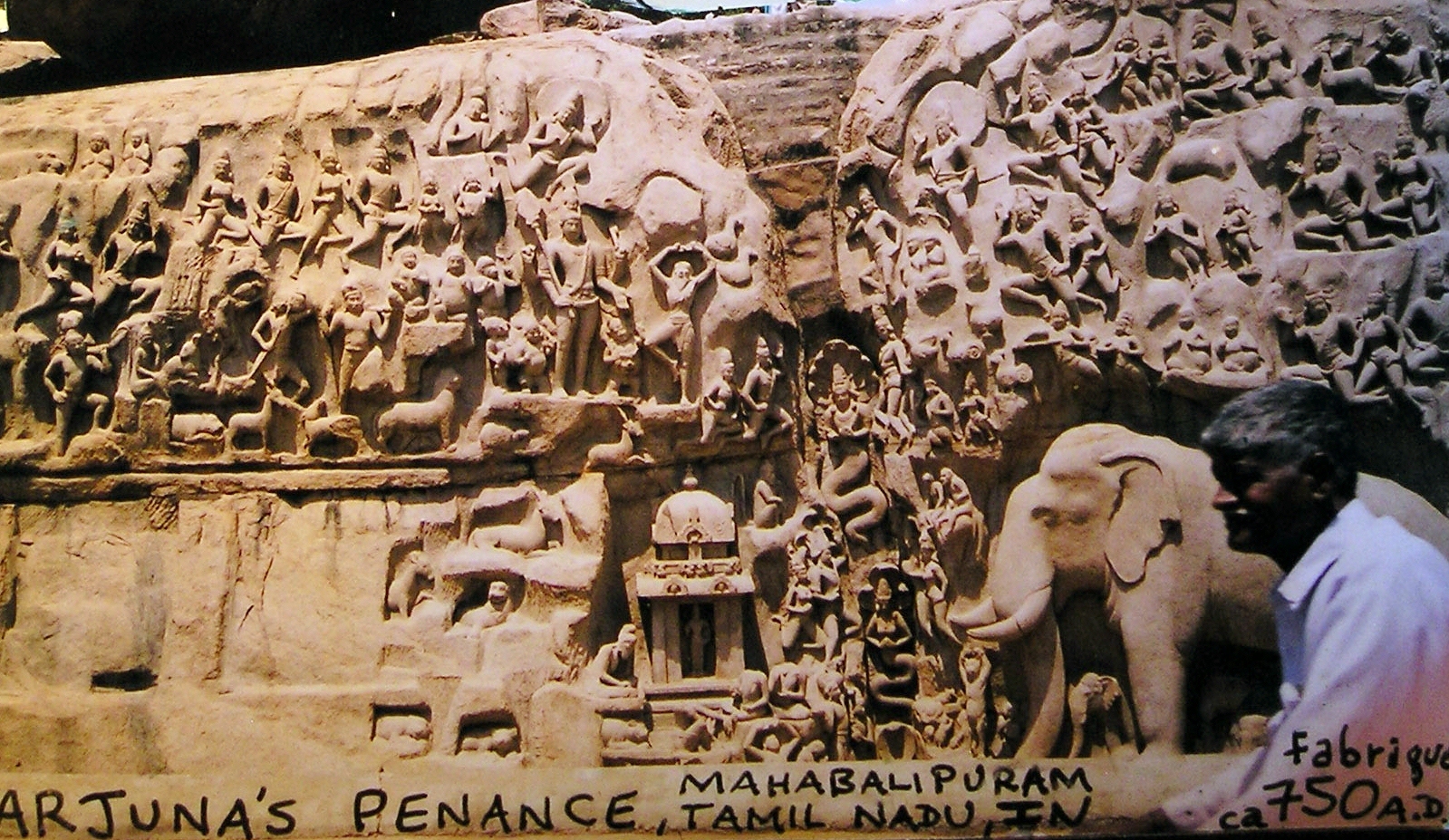
 MTK The Writist