Reluctantly, I paid for ChatGPT for three months in order to evaluate engagement with what we call chatbots, or responsive Artificial Intelligence (AI). It was disturbing and I want to share my experience as a snapshot of the state of affairs today.
These interactive AI are based on the LLM or “large language model” – a model trained with machine learning, on an immense amount of text.
The largest and most capable models, designed for natural language processing, especially language generation, provide the core capabilities of chatbots and are called Generative Pre-trained Transformers or GPTs – hence ChatGPT.
Back in 2008, Hollywood made having a hyper-advanced AI you talk to feel sexy, through Robert Downey, Jr.’s Tony Stark, Iron Man.
First, his comprehensively integrated AI, named “Jarvis,” voiced by Paul Bettany, was the ultimate English butler. Tony Stark could make hip, insanely complex requests of his AI, and Jarvis accomplished them in real-time with dry wit intact.
By 2012 in the MCU, Jarvis was replaced with “F.R.I.D.A.Y.,” an acronym Marvel says means “Female Replacement Intelligent Digital Assistant Youth” but is a tongue-in-cheek reference to the 20th century, post-war term for a secretary or personal assistant, “Girl Friday” or “Gal Friday,” which in itself was a gender switch from the character of Friday, in the novel Robinson Crusoe (1719) by Daniel Defoe.
In the novel, Crusoe names the islander he meets ‘Friday’ because that was the day they met. Crusoe refers to him as his “man Friday.”
By extension, the term “girl Friday” became used for a female. The OED considers “girl Friday,” dated today. Still, it defines it as: “a female assistant, especially a junior office worker or a personal assistant to a business executive.”
Kerry Condon, a talented Irish actor, with an excellent professional voice, trained at the Royal Shakespeare Academy, voiced F.R.I.D.A.Y. Yet they still effected her sound with heavy vocal fry to make it sexier.
The following year an entire feature film, Her, starring Joaquin Phoenix and directed by Spike Jonze, was dedicated to a man having an intimate relationship with his AI chatbot, voiced by Scarlett Johansson.
The robotic, unemotional tone of Siri and the Googlemaps vox was beginning to disappear. Seductive voices were marketed heavily.
By 2021 in the Marvel Universe, Spider Man required a hip, tech-savvy teenaged relationship with A.I.
High schooler Peter Parker’s AI, named Karen and voiced by Jennifer Connelly, was a chatty, personal teacher and friend, “like a big sister, but you know not your sister,” they might have pitched. Karen was designed expressly to correspond to young people nationwide being exposed to their own chatbots in real life.
So for thirteen years, from 2008 to 2021, Hollywood crafted voices for artificial intelligence, until real-world AI caught up to being used widely by everyone. We were being taught how to talk to our machines.
Yeah, I’m not talking to it.
I’ve avoided using
“Siri” (Apple, 2012),
“Alexa” (Amazon, 2014) ,
or the more recent “Gemini” (Google, 2023).
These are all voice-activated chatbots responsive to their names, or a name you give them. Here was the original ad for Siri:
Ten years later, since 2021, during the high-profile commercials of the Super Bowl and Xmas, across every platform of gaming and streaming, ads like this one, featuring people using chatbots – and so explaining how to use them – have made these AI far more common.
By January of 2022, my friend Tom – a consistently early adopter for the 30 years I’ve known him – talked to Alexa through his house and car regularly. Between ’22 and today, use of interactive, voice-activated and responsive artificial intelligence, or chatbots, has increased and diversified. It’s popular now.
The ask is known as a prompt.
Because I can’t bring myself to talk to it or give it a name, the extent of my first interactions with ChatGPT were text-based even if they concerned images.
This summer, on a trip to Indonesia, I visited Bali Bird Park, where I saw many exotic birds only within their large, caged enclosures. I decided my first ask of ChatGPT would be to remove the cage bars that were in my photos.
The prompt was: “remove the bars from in front of the bird(s)”
This is the Eclectus Parrot.
or is it?
What do you see? Is the parrot behind the bars the same? Take a look at the feathers, the talons.
At the heart of the problem with the popularization of AI-generated images is a degree of approximation the machine does that goes unnoticed.
This withers the attention of the viewer and weakens their powers of observation. They think: “Sure, that’s good enough – now you can see the parrot.” But they don’t notice the photographed bird has been changed.
In the same way that compression drove us to trade high fidelity audio for the ease of owning, playing and manipulating music, these AI-generated images weaken our perception. An assault on the ears first, and now the eyes.
My second prompt was to remove the bars from a cage in which there was a more unusual bird. The Sulawesi Hornbill has a fantastic appearance. I photographed this one that was just hopping around outside the cages, so there were no bars to be removed:
Sulawesi Hornbill
Below its beak, there is an area of knobbed or wrinkled skin and feathers that gives it a larger appearance – a false mouth lower on its body. It is an unusual creature. What would AI make of it?
Sigh. If you just glanced at it, look at it again! It’s a different thing.
WRONG!
There are details that are just completely wrong. If I were to share the photo on social media without the bars and say, “hey everyone look at these Sulawesi Hornbill I photographed in Bali!” It would be a lie.
This shocked and saddened me. Because I know most people won’t look closely enough. They won’t carefully discriminate.
Already, because I quit social media in 2021, I notice the WRONG quick-takes and mistakes based on these small but not insignificant errors made by AI more than most.
We must train ourselves to be even more vigilant.
Next I decided to use AI for something based more in contemporary pop-culture. A 2025 television show called Alien: Earth, introduced a creature known as t. ocellus – a sort of octopus eyeball capable of parasitically occupying other creatures by replacing their eyeball with its own and manipulating the body it occupies. It was a fantastic addition to the science fiction world of the Alien franchise, and fictional creatures in general. I drew it freehand for fun.
In the TV show, the idea was introduced but not shown that the ocellus could occupy the body of the larger, more powerful creature from the Alien franchise known as the Xenomorph. I think everybody who saw the show wondered what that would be like. The small powerful eyeball creature inside the head of a xenomorph was an image instantly awakened in the imagination, though it was never presented.
So I set ChatGPT to the task. I asked it to make the Xenomorph from the Alien franchise as if it had been occupied by the t. ocellus. ChatGPT would be pulling its awareness of both the Xenomorph and the ocellus from general information available culturally because of the new TV show. It was fresh, and yet had an older pop cultural aspect – the Alien franchise has been around for forty years. ChatGPT started out cartoonish:
so I asked it to be more filmic:
But the single eye in the middle of the head was wrong … so I directed it to make the Xenomorph in profile. It made several as I tweaked it, and you can see below that the internal mouth was in some cases wrong because ChatGPT couldn’t distinguish two jaws. But this one is perhaps best:
It is an interesting exercise in iterations. I began to see that even if I didn’t ask ChatGPT to make certain specific changes between iterations, it would make some changes anyway – in pursuit of greater verisimilitude. Still it would equally fail in some other way. It was like, if I could just get an amalgamation of several of the images it made to come up with all the correct features in one image, we’d be okay. Troublesome.
I decided to use myself as a model for my next request:
My prompt was: “create a loteria card called “the Writist” with this image.
It caught my wonky eye! I tuned the prompt.
I said, “make the card number 47 and make the image more realistic.”
It was then I showed it to my friend Sofia, who commented, “Well it should be ‘El’ not ‘The'” – which is correct. So I asked ChatGPT to change it. I also took the time to ask ChatGPT to make the cigarette into a joint.
No. 47 El Writist
Why did it suddenly add the strip of blue color when I changed it to “El”? Was it pursuing a more “Loteria card” feel?
And why did it return to a more generic and comic book look from the more realistic?
It thinks “joint” means a conical spliff from Amsterdam.
I was ready to quit using ChatGPT. It left a terrible taste in my mouth and whatever the corresponding terms for negative feelings in my eyes are.
But the World Series was about to start and I had been telling people that the Dodgers have a Three-Headed Japanese Hydra. By this I meant they have three Japanese players: Shohei Ohtani, Yoshinobu Yamamoto and Roki Sasaki, who are formidable.
Would ChatGPT know who these Japanese players were? What they look like? The World Series was as fresh as Alien: Earth in terms of current volume of discourse.
So I asked ChatGPT to make a Three-headed Hydra emerging from the sea with the heads of Shohei Ohtani, Yoshinobu Yamamoto and Roki Sasaki:
Definitely NOT the three gentleman in question. Ohtani maybe. So I asked it to do the same with the singers Toni, Tony Toné:
It got crazy. And sort of racist.
Maybe it exposed something about the race of ChatGPT’s learning model and its view of the world.
Finally I asked ChatGPT to make an image using the movie poster from Miyazaki Hayao’s animated feature film, Castle in the Sky, and feature instead a picture of Spurs guard Stefon Castle, flying in the air for a dunk.
This was as close as we got:
The profile is just … wrong. The ear is wrong. The face.
There were some pretty bad ones. Unlike the random Black and Japanese faces on the Hydra it pulled from its awareness, this was ChatGPT approximating a person from a photograph I uploaded. Like the image I shot of myself for the Loteria card
It kind of looks like me. But not exactly. That kind of looks like Stefon Castle.
And this one definitely doesn’t.
Doesn’t look like him.
I bet if you asked it for DJT it would.
** UPDATE and CONCLUSION **
I ran the Chat GPT AI product into Google AI animation and this is the final piece of that project – from staged photo behind Silver Spur through ChatGPT and Google AI.
A millennium before Christopher Columbus was born, my people – since I am descendant of the Tamil Kings – embarked to sea without knowing what they would find; explorers, with ships filled with the best spices, jewelry and manufactured goods on the planet.
They were headed toward the dawn, open ocean to the East and South, with probably very well-thought-out research, because we’re Tamil, on what they’d find.
For the next twelve hundred years they met, traded with, loved and engaged with every single culture from my birthplace to the “Wallace line” – end of the Sunda shelf.
This is why, every time I travel in what you call South East Asia, I feel intense kinship with every person I meet. They feel it instantly, and I acknowledge it openly, with deference and appreciation.
My pleasure at the exquisite variations of the cultures here that were born from those now ancient relationships THRRRUMMMMS! with a harmony of centuries.
That I know this pleases everyone – and their cultures flower before me in brilliant ways:
Here’s a current playlist on my travels:
The White Man just. doesn’t. get it. It’s a god damn distant object of exotic fascination from what they perceive of falsely as a lesser culture.
My people had libraries and Universities while the European man was still crawling in the dirt.
Then slowly, they learned everything from us. Then they ran out of room for themselves, built ships and started “colonizing”: calling all other people animals and heathens and enslaving and murdering us. For five hundred years.
It’s certainly political. People don’t like us … Hindus. Because they’re not sure what they’re gonna get when they open the pack. Surprise! Wild card! Rest assured, what you will get will be deeply civilized and intellectual.
Take me for example, I am not a practicing Hindu anymore, I have been studying Buddhism for three decades and am an atheist dedicated to a scientific interpretation of our universe for the good of all humanity.
Well look, I gotta go. But anyway, I’m in Bali and I love every single person from here to Tamil Nad. But not enough to call you back.
It has been a month and a half since last I wrote. The statistics for this site reveal that no one reads what I write. It is, and has been, a resource for documenting my view of this existence in which I was born the eleventh mouth to feed in a two-room apartment in India, moved at two to the United States of America, the youngest of a family of five that disintegrated.
And who then travelled alone for years and lived in Austin, Taiwan, Japan, India, Thailand, Washington D.C., and New Orleans before moving to San Francisco in 1993, to New York in ’97, and L.A. in 2002 – where I fathered a child and was a local radio personality – and back to Japan for all of 2005; India ’06 – ’07 and finally back to Oakland and the San Francisco Bay Area.
Ten years ago, I began to split my time between SF and San Antonio, Texas, where my father – undeniably a great American – wished to die.
Now, five years in the wake of his passing, I write to you from back home in my favorite city, San Francisco, where I am alone.
My eighth trip around the world was embarked upon from here in late 2022 when I spent significant time in Amsterdam and same in Bangkok in 2023.
It has taken me 40 years to free myself of the burdensome garbage I’ve had to participate in – just to be an American.
But now, I consider myself like Tolstoy after the wars,
or the young boys of the golden era of dutch painting, wealthy scions of colonists bringing everything from around the world back to Amsterdam. I’m financially stable, experienced, educated and have been writing and making art for 30 years.
I am widely disliked and in 55 years of being in the United States, I never made a friend. In the United States now, I am persona non grata for my beliefs first and my behavior in societal situations next. Most people who meet me have no interest in befriending me any more because I reject the society and maintain the uncompromised position that is a thread throughout my life and work. Being true to myself has “cost” me every relationship I ever made.
In a controlled way, and very aware of the audience, I still perform somewhat loudly in public space – coffeeshops, bars, alleys – as I have done for thirty years in the United States, expressing my truths … but now they tire of the “act,” that has been my existence here.
I continue to read in public as well, promoting the act of reading and general intellectual pursuits. I have been reading novels for decades and intend still to write a good one – let’s see.
To most, I am merely an immigrant they can either use or forget.
To me this separation was an inevitable eventuality to my methodology. It is not to be railed against, but to be rolled with and seized for the immense value it has. I have time, resources, abilities I need to let flower. Please support me or leave me alone, thanks.
Last year I bought a 17-year-old used car in San Antonio, Texas. It’s a 2007 Nissan 350z, V-238, six-speed manual transmission, high performance sportscar.
The model was called the “Fairlady Z,” because the President of Nissan at the time of her creation, Katsuji Kajamata, admired the Broadway musical, “My Fair Lady,” which he had seen on a visit to New York in 1961.
I named mine Sylvie.
I bought Sylvie last March after months of searching for a suitable car. I used bots set to seek a car with: manual transmission, with fewer than 100,000 miles use, for less than 10,000 dollars.
After eight months of garbage hits (a the Thing, a ’72 BMW, other nonsense), I got a hit in San Antonio about Sylvie. It was on February 29th, because last year was a Leap Year.
She turned 100k miles on the odometer on the trip. Sylvie received her California plates and registration in Palm Springs where she was also treated to a refurbishment and repair of worn parts and given a full tune-up. I planned in advance to do this in Palm Springs, because So Cal is car country.
I figured in the Bay everything would have taken longer (DMV would’ve been days instead of hours; repairs weeks instead of days) and been of suspect quality. I love San Francisco, but if you need anything done you have to leave the City and then you are in the private club of Nor Cal where you have to know somebody to get the best work done. I hear Manhattan is like that now. Palm Springs did Sylvie and me right.
This is Sylvie in San Simeon day before yesterday:
We drove the last stretch home last year stopping only in Pismo for a night. I pulled into SF and parked Sylvie in her new garage, rented in my preferred neighborhood, in SF.
So since summer of 2024, my car has a home in SF.
And, for the last nine months, I’ve been taking Sylvie on long drives – most recently to Cactus League, as Spring training for major league baseball is known in Arizona. I saw the preseason Giants play in their stadium at Scottsdale and at Surprise, Arizona, where they took on the Royals.
Sylvie and I drove down to LA along the coast back in January to catch a Lakers game at Crypto dot com Center, staying in Santa Barbara and SLO. On our most recent trip we stayed in San Simeon and Los Alamos, a little exploration of Central Coast California.
“My Travels with Sylvie,” an homage to both Steinbeck and Thompson.
To this Gate I gave the name of Chrysopylae, or Golden Gate; for the same reasons that the harbor of Byzantium was called Chrysoceras, or Golden Horn.
John C. Frémont, July 1, 1846
——–
On a half empty flight returning to SFO from Costa Rica, in seats 17B and C, Freddy Pico held hands with a stranger. She was in her mid-30’s and trying to get back to Vegas. She approached him at Juan Santamaria International and quietly asked if she could sit beside him on the half-empty, wide-bodied jet, confessing hapless fear during takeoffs and landings.
Her name was Elizabeth and she waited till he was alone. Freddy stood off apart from the others in front of a floor to ceiling window pane.
The harsh tube bulbs overhead were oddly made more stark by the rectangular plastic covers meant to serve as flat sconces. The ultimate effect was that everyone waiting to board, latinos y gringos alike, appeared undead.
Freddy was twisting his body around in front of the window, trying to position himself to actually see – to avoid the harsh glare and make out the fiery volcanic glow of the Poás in the distance – when Elizabeth approached and stammered her request.
Now, twenty years later and 3,000 miles away, standing on Ocean Beach, Freddy suddenly remembered what Elizabeth said during that takeoff, when she death-gripped his hand while their 747 banked slowly out to sea, leaving the ribbon of coastal Nicaragua behind.
She murmured, “I live in the desert because I don’t like change. People who like change need the ocean.”
Freddy remembered her looking up and away awkwardly to avoid any open blinds and the thousands of feet between them and mother earth. Her dishwater brown hair was tied up in a small bun. Her pale hazel eyes jumped to the no-smoking and fasten-seat-belt signs, the personal fan and light, the dull gray of the plastic stowaway bins – anywhere but the windows.
People always asked Freddy to do things like that: hold their hands during takeoff, or mind their stuff while they ran outside to feed the meter. He was easy-going. He wasn’t short or tall. He had a round, welcoming face, warm eyes. His paunch appeared and disappeared, a tide of the seasons, not the hustle of jogging.
The marine layer sat thick overhead. It made everything dark; the sea, the sky, the stone outcroppings in the gate. This contrast gave the sand a clean, beige hue. Freddy saw the boys running around on the sand and tried to implicate them in his flight mate’s analysis of what different people need, from so long ago.
Marcus, the eldest, liked change. Ricky was in constant change. Really, all the kids were.
“Kids,” Freddy thought, “need the ocean.”
“C’mon! Let’s go,” Freddy yelled at the sinewy black shadows running against the gray wall of sky and surf down the beach. He raised his hand when he saw Ricky looking back at him and swirled his finger in a wide circle in the air, reeling them back in. Ricky waved, turned away and chased down the others. Today there were four of them.
Two flying forms blew past Freddy tearing up the long beachhead. He didn’t get their names. Earlier, Marcus showed up at Freddy’s place with these two – brothers, maybe three years apart – easing in behind him. “Oye, Mr. Pico, I told these guys they could come along.” Freddy realized Marcus liked being the gatekeeper – bringing kids from the neighborhood around to his place.
It had started with one of Marcus’s classmates three years before, and today Freddy didn’t know these two brother’s names, but he knew their mother and had seen them around the neighborhood. As long as he knew the kids’ parents, Freddy never asked questions. He just gave as many as fit in his Gran Torino a ride to the beach and back, some fruit, a couple of bottled waters.
“You got towels?” the elder brother asked.
“Uh, yeah, sure.”
Ricky strolled up with his shoes in his hand, eyes sparkling and blurted, “Man, the sand’s actually cold!” Freddy turned and looked back for Marcus, whose shadowy form he made out slowly trudging toward them. The fog and swirling sand intermittently swathed him in mist.
Marcus looked up the windy beach and made sure Mr. Pico turned back around before taking out the joint. He had been unable to light it on the beach without it being obvious. He spent a frustrating twenty minutes trying to get it lit before finally giving up.
It was the first time he had ever sneaked a joint on a beach trip and he’d brought matches, which he got free from the goldfish bowl at the hostess stand next to a dish of individually-wrapped, red-and-white peppermints in the foyer of Aldo’s, the Italian restaurant in his neighborhood.
He hadn’t thought about the wind at the beach and only now realized he should have bought a lighter. As a result, he never managed to get an actual hit. He brushed the charred, crumbly bits off the end of the pinner, pinched it and twisted it closed. He slipped it back into his shirt pocket under his hoodie and shell jacket.
As he approached the cement ramp that eased up out of the sand to the car and the others, Marcus felt a sharp spasm of guilt. If he had been successful, he realized, he’d have felt worse. As he approached the big Ford, he feared Mr. Pico would smell it.
Unlocking the doors, Freddy called out ,”Hey guys, dust the sand off before getting in.” Ricky sat on a bench beside the old sedan, swatting the bottoms of his feet with his socks.
“So what’d you think?” Freddy asked the two new boys.
“It’s hecka cold, man!” the younger brother erupted, grinning. The elder boy shrugged. Freddy could see the kid was carrying something heavy all day. “So where am I taking you guys … to your mom’s?
Marcus walked up and interrupted before they could answer: “Just take us all back to your place. We’re gonna walk down to GameStop on the way home.”
The younger boys careened into the backseat, falling on top of each other. They fell asleep before the long, low Ford even hit the panhandle. In the passenger seat, Marcus had his ear buds in, his hood up and his face turned to the window.
Freddy noticed a recent change in Marcus’ demeanor, a posture of urban defiance. Marcus wanted people in the city to see him as East Bay: low-slung and closed-off. But Freddy knew he was drinking everything in, peripherally – Oakland style.
A guy in his mid-20’s with thick, black, designer glasses, wearing a gray scarf around his neck and a long, black overcoat that hung to the knees of his cuffed designer jeans, was standing on the corner texting someone, ignorant that he had the light. He stood just at the edge of the curb, tantalizingly close to stepping off, and yet … not doing it.
An Indian cabbie trying to make a right at the corner, was left hanging. Was the guy going to walk?
The Gran Torino was in the middle lane, paused at the light for traffic, so Marcus’ passenger window was immediately beside the cab and he could hear the woman in the back seat barking in rage at the cabbie to get a move on – unaware he could go nowhere until the guy on the corner either moved or looked up from his I-phone.
The full-bearded Sikh, who filled out the driver’s seat like a massive blue tuber, puffed his cheeks and let out a sigh that emptied his breast and crumpled his shoulders. His turban sank. Marcus sighed sympathetically.
“What’s up?” Freddy asked.
“Nothing,” Marcus murmured, “Just fools in the city.”
The marine layer lay thick across San Francisco as the big sedan slowly edged forward through traffic toward the bridge. The skyline was waist deep in it. The Pyramid, BofA and Salesforce were all masked in gray.
But as they came up on the 101, the gray evaporated. Halfway across the water, the fingers of the marine layer were melted away. Skies were clear over the East Bay and it was sunny; windows with views of the ever-changing chrysopylae reflected the sunlight, peppering the Oakland hills with white dots and shimmering lights.
Freddy reflected on how little the boys knew about the hills, or the city. Their world was the flats of Oakland, and only a few block radius. That was what had inspired him to take these trips to the beach; how it came to pass that Federico Ignacio Pico was the first person to introduce Marcus, Ricky and a half dozen other local kids to the Pacific Ocean.
He enjoyed watching them the first time, approaching the sea boldly, then as they got nearer the waves, more cautiously, until at last they put their toes in the water, yelped with frozen joy and leaped backward.
As his big Ford crept up the onramp to finally enter the bridge, Freddy noticed a man behind the wheel of a little gray sedan in the lane beside him, with an intense look of stress on his face.
“Driven near-blind chasing the cost of living.” Freddy thought.
It’s the same anywhere there’s hills and flats, cities and burbs; where there are people overlooking the overlooked. The hills have treasured views, and the flats get unaffordable rents. But here there’s a treasure in the flats – a glittering gem of silver and gray, blue, brown and green: the San Francisco Bay.
As the crazy, bastard pathfinder noted, at sunset from the Oakland hills: it’s golden at times, too.
The Pacific pours through this ever-changing chrysopylae under Our Lady of Perpetual Suicides. It breathes up the delta and down the South Bay, brackish. There’s continuity. If you stick your toe in Lake Merritt or Corte Madera Creek; San Pablo Bay or the Carquinez Straits, you always feel connected to the Pacific.
Freddy glanced at the boys in the rear view mirror, then tapped Marcus and spoke up to get through his music. “They don’t need to go to GameStop – they’re all crashed out. I’m taking ’em home.”
Marcus didn’t turn to face him, “Yeah, all right.” The bay rolled by.
“What’s the tide doing?”
Marcus sat up, pulled out his earbuds and leaned to look: “hustlin’ out.”
“How’s the chop?” Freddy could see the water, but he feigned focus on driving. Marcus had learned a lot in three years.
“Hella caps … gotta be 20 … well, 15.”
Changing lanes across the wide, gray asphalt of the maze to the 580, and easing into Oakland, the white of the bridge, the cranes and the road stripes shone brightly – it was warm.
“Yo, man, just let me out on Telegraph,” Marcus added.
Freddy nodded and eased the GT through the criss-crossing traffic of the thousands homeward bound.
*******
Barbara Carter rented one side of a duplex in the middle of a typical East Oakland block. At one end there was an empty warehouse building. The other end of the street crossed a busy avenue. The corner had a pizza delivery spot, a bodega, a coin laundromat, a gas station and an eight story, glass and concrete condominium rising above them all.
The units in the condo were mostly 700-square foot studios. The tenants were all unmarried singles who either didn’t have much patience for kids, or feared them. They walked city-fast, headphones in, head down to their phones tapping apps on the way to BART to the City.
The kids had no place to be. The pizza spot had no tables. It was just a stand for delivery drivers, that served $5 gourmet slices to the condo residents. The corner store owner was fascist against kids hanging around his shop. The bodega and laundromat were no loitering zones and the gas station … well, it was a gas station.
The playground for the kids was the empty end of the block with its decrepit warehouse wrapped entirely in barbed-wire fencing. Realtors signs were tied to the woven metal with metal twist-ties every thirty feet, but none of the signs were legible as each had been tagged “Paloma” in sweet, lyrical, Belton Molotow Premium Azure Blue.
Barbara’s duplex was halfway up the block. The houses on either side were all single family homes. She had a housemate, Michelle, who was obliged to pass through a small common space, a foyer, to come and go. Michelle had closed the front door to the foyer and spun to face the street just as Freddy pulled up. Her pony tail whipped around and hit the screen door as it closed.
Seeing it was the boys, she turned, opened the screen door, unlocked the front door, and then, ponytail whipping back-and forth, turned and walked back purposefully in front of Freddy’s car to his window. She leaned in and lowered her sunglasses, shaking her head: “You don’t want to go in there.”
She saw the two sleeping brothers in the backseat. “Aw, look at that! That is so sweet what you do for these kids.”
Freddy smiled, “Whose Volvo ?” He nodded to the black EX-30 parked in the driveway they shared.
“PTA,” Michelle whispered, “They’re saying Eric stole something.”
“Which one’s Eric?” Freddy asked, as he emerged to let the kids out. Michelle helped rustle them to the sidewalk. “This,” she patted his head as she gently nudged him to the curb, “is Michael, he’s eleven. And that,” she said, nodding at the elder brother, “is Eric, he’s thirteen. What did you do?”
“I didn’t do anything,” Eric murmured, half asleep, half-defiant. Freddy wondered if the kids’ sullen attitude all day had something to do with whatever was going on inside.
“Did you have fun at the beach?” Michelle asked the boys as they slipped out of the big back seat.
Michael turned and smiled weakly, giving a thumbs-up, then continued after the slinking figure of his brother toward the front door. Michelle gently patted Freddy on the back, “Good to see you Freddy, I’m telling you: Stay out of it.”
She crossed the street to her Honda and Freddy watched her start up and pull out, before turning to the duplex. He had already dropped Ricky off and, since Marcus had gotten out at Telegraph, this was his last stop.
The door to the foyer was ajar, and he could see Barbara inside as he walked up and heard her: “Oh, good. Come in,” as he waved through the screen door before swinging it open.
“Have you got a few minutes, Freddy?”
Michael and Eric’s mother was a formidable woman. She stood nearly six feet in heels and was thus slightly taller than Freddy. She had dark skin which gave her form broad, statuesque features. She stood in the entrance to the kitchen and didn’t move nearer the door as Freddy entered.
Eric was standing at the front of the living room, between them, head down, staring at his shoes. There was no sign of his little brother. A man and woman were seated on the couch. Freddy did not recognize them. Both rose when he entered.
Barbara quickly added: “How was the beach? Were they good?”
Freddy glanced about. Michael had dragged himself off someplace.
“They were great. We had fun.”
Eric stood in front of a big, flat, wall-mounted monitor. When on, it dominated the small, neat living room. Off and silent, the monitor created an immense black backdrop for Eric, who looked even more isolated as he faced the interrogation taking place.
Barbara walked across the room to Eric’s side: “Well, I’d love to hear all about your first trip to the beach, but unfortunately, we’ve got to address a problem.” She took her place behind him, supportively, and put her arms on his shoulders before turning to the others.
“This is Mr. Pico. He took the kids to the beach today,” and, turning to Freddy: “This is Lynn Chen and Paul Wallace, with the PTA.”
There was a low, round table in front of the couch, and the two stepped out and around to greet Freddy. The Asian woman seemed to be Chinese, but Freddy couldn’t tell her direct heritage. She wore a simple black dress, with white shoes and a simple medium length string of pearls. She put her hand out confidently, “Nice to meet you, I’m Lynn. Are you the boy’s guardian?”
“The boy,” Freddy thought, as he shook her hand before replying, “Oh, no-” but Barbara interrupted:
“No. He’s a neighbor.” She stopped full then added, “and a friend.” There was tension for a half second before Barbara turned to Freddy, “But I may need you in a professional capacity.” and then to the others, “Mr. Pico is a police officer.”
Freddy let go of Lynn’s hand, shaking his head, “No,” he demurred, as he turned to the tall man with thinning brown hair and glasses beside her. Middle-aged, in brown slacks and a beige blazer over a rumpled but clean, white-collared shirt, he looked a little lost.
Freddy continued, “I’m a graduate of the Oakland police academy, but I’ve never served as an officer.”
“Ah.” the tall, clumsy man said, noncommittally. “I’m Paul. Paul Wallace.”
Freddy explained, “They needed bilingual candidates and I signed up, but I was in the graduating class after the budget cuts. There were limited positions, so I deferred.”
As they shook hands, Paul nodded vigorously, approving, “I see, I see, well …” He was the type that trailed off. Freddy wondered if it was because Wallace was often in rooms filled with opinionated parents. Freddy imagined he’d grown accustomed to being deferential at the PTA.
There was dead air as they continued shaking hands and staring at each other. Seeing Wallace wasn‘t about to say anything else, he continued: “Please, call me Freddy.” He turned to find a place to sit. Barbara took Freddy’s arm, “What I meant was we may need your services as an investigator.”
There was an empty armchair to the right of the couch and Freddy took it as Paul and Lynn returned to the sofa.
“Yeah, they needed either Chinese or Hmong or Tagalog speakers so I gave up my spot.”
The tone in the room, unreeled carefully by Eric’s mother, had shifted with Freddy’s arrival. She now asked, “Would anyone like coffee?” and to the general lifting of mood and nods all around, “Great, just give me a second. Eric, honey, why don’t you come help me?”
“Terrible business, this … ” Paul muttered, trailing off.
Lynn looked to Paul but was obviously used to him, because she waited only a brief, perfunctory moment – it was like she was staring at him counting to some number in her head; a limit – before she shook her shoulder length hair and turned to Freddy to take charge of the situation.
“I think the boy’s involved with whoever has taken a valuable sculpture from the grounds. They melt them down and make good money – it’s happened before.”
“They,” Freddy thought.
“Now, Lynn,” Paul was used to this role, already back-tracking, “Slow down. Until there’s some clear-cut evidence, we shouldn’t go accusing …”
“Until,” Freddy thought.
Not knowing what else to say and eager to turn to someone else, Paul looked to Freddy, “Honestly I didn’t want to come …”
Lynn stopped short and looked at him, wounded, as he continued, “The police came when we reported it of course, but they have no leads or …,” his voice disappeared again into thin air. Then he started fresh, “The District will be conducting our own investigation,” and then he paused again, before muttering, “but perhaps you could be … of some … “
He was like an engine that just won’t turn over. “Well, I’m happy to do whatever I can for Barbara and Eric,” Freddy replied, “But I’d be working on their behalf. We’re neighbors.” He paused and looked at Lynn, “And friends.”
Lynn, visibly exasperated by the sudden appearance of someone even less allied to her views than Paul, realized she had to be diplomatic, “Well, it’s just we need to act fast because whoever’s got it is going to melt it down and turn it into cash as fast as they can. They’ve got to get rid of the evidence. And I think that boy,” she said, pointing at the kitchen, “knows where our Cooper’s Hawk is at this very moment.”
“Hmm, well,” Freddy said. “I can tell you I spent the day with Eric and his little brother, Michael, and they were great on our outing.
“I began giving kids from this neighborhood monthly rides to the beach a few years ago-”
“Oh wait-” Lynn said, “I’ve heard of that.”
“of that,” Freddy thought, before continuing, “Different kids, and if there’s room, some kids come back.”
Lynn smiled and sat back. Paul nodded vigorously, incapable of an appropriate response. Freddy let them off the hook:
“So this is one of the bronzes in that series the school commissioned last year? The Cooper’s Hawk is just one, right? of several that depict native flora and fauna reproduced in bronze?”
“That’s right,” Lynn responded, “I was on the selection committee. It’s an important work. We can’t have elements of it just walking away-”
The need for increased security for the remaining statues hadn’t struck her yet and she interrupted herself, trailing off, “The other statues …”
Barbara returned with a coffee pot and a tray with cups, which she set on the low table. There was creamer in a small, cylindrical metal pitcher with a hinged lid and spout and brown sugar in a crystal bowl with a spoon, rather than lumps. She poured Freddy a cup, handed it to him, then poured coffee into the remaining three cups on the tray and took one for herself. She gently added a dash of creamer. Paul and Lynn quickly and mindlessly did the same, as Freddy continued:
“Those statues are installed along the creek, I believe. But I’ve noticed the Cooper’s Hawk has a vulnerability in its design. At the point where the legs meet the branch, the metal’s quite thin. It has delicate talons.”
Freddy’s crisp, direct investigative approach silenced the room. The quiet unassuming fellow who strolled in like the driver or sitter was gone. In his place, a shrewd and observant local emerged. He took their silence for agreement and pressed on.
“So that’s the weak point. But it’s installed at some height, I believe.”
“Yes, that’s right,” answered Paul, “It’s meant to be seen from the ground at rest on a branch, perhaps like it’s hunting for mice. It’s probably fifteen feet up there.”
“So how did the thief get up there unseen?” Freddy continued.
“That said, it would’ve been pretty easy to break the sculpture off the branch at the thin point near the talons,” he paused, “Once you were up there – you wouldn’t need a torch.” Freddy looked directly at Lynn, “A child could do it.”
Lynn sat back smugly and listened to see where this was going.
“When was it taken? Who first noticed it missing?”
Paul replied, “It was discovered missing by a student and his father who bike the creek to school together. They noticed it on Saturday, on their way to the farmers market. The father called me to report it. So …”
Lynn interrupted more quickly this time, “So it was taken sometime Friday night.”
“Or early Saturday morning,” Freddy concluded.
Since his mother had taken her coffee cup to the other armchair opposite Freddy, Eric looked even more isolated, standing, awkwardly, staring at his shoes.
Freddy turned to him, “Eric, do you know anything about this?”
“No.”
Lynn sat up straight with alarm, “There are a group of kids who hang out together every afternoon. They hang around the campus and they … they …” she sighed, constrained by language, “they get into a lot of who knows what?
“I’ve been told for seven years now as my kids grow up in this neighborhood that we don’t use the word, ‘gang,’ because it’s inappropriate and stigmatizing, and in fact, ” she quickly turned to Barbara before continuing, “I agree with that, I do. But we need to admit we have at least one group of kids that hang around only with each other and roam about doing mischief.”
Barbara looked as though she might explode in reaction had she not immediately stood, taken a large deep breath and returned to her son’s side. Instead, she asked simply and slowly, “Do you have some specific evidence against my son? Or are you singling him out for hanging around campus after school with his friends?”
“We’re not singling him out,” Paul countered, “We’ve sent parent/teacher pairs to each of the other parents, too. So we’re not … ”
Lynn again jumped in, “On Friday afternoon, Eric and his friends were seen not just hanging around, but standing under the Cooper’s and throwing rocks at it. There were a whole lot of kids who saw them. They said they probably knocked it off the branch with a rock and took it. We’re following-up on what the eyewitnesses-”
“Eyewitnesses?” Barbara retorted, “To what?”
Freddy spoke up, “Eric, were you and your friends throwing rocks at the Cooper‘s Hawk statue?”
Eric shifted weight and looked at Freddy, “Yeah, we were trying to hit it.”
“See?” Lynn spat triumphantly.
Freddy put his palms out, face down, and patted the air between them, saying gently, “Hang on, now.” He turned back to Eric, “You didn’t knock it down?”
Eric sniffed, “No way,” he shook his head, “It’s bronze. I mean we were just throwing tiny little rocks …”
Barbara turned to Lynn sternly: “So you interviewed a bunch of little kids who wouldn’t know a bronze like that can’t be knocked off a branch by a pebble and that’s why you’re here?”
“Do you know how bronze statues like that are made, Eric?” Freddy asked, in part to ease the tension.
“Um, no.”
“Well, the metal is liquefied and poured into a form, a mold. The mold is made out of a material that’s sustainable.”
Eric listened and shrugged.
Freddy turned to Lynn, “Which means the artist can reproduce the work, right? I mean, they still have the forms for each of the pieces.”
Lynn Chen was not pleased with the direction this was going. “That’s not the point-”
Freddy continued, “I’m not sure on what criteria you made your decision on this project … delicate bronzes in public space? and he paused, “but I guess it’s a good thing you can secure a replacement.”
Lynn stared at him coolly. “That’s true.”
“And maybe the artist can strengthen the point of contact,” Freddy continued, “or make the work more secure somehow,” Then he shook his head, “But I just don‘t think Eric here would have any idea what to do with a bronze to make money off it. Can’t speak for his friends …”
He turned to Paul: “Can I get a list of the other parents whose kids are involved?”
Paul shifted uncomfortably, “Oh. Well, see. You understand, Mr. Pico- I mean, you’re not even a parent. It’s just not something …”
This time it was Barbara who seized the empty space of Paul’s indeterminacy. “I’m going to get on the phone tonight and find out what’s going on.” She turned to Eric and said, “Honey, I know you must be tired and sandy. Why don’t you go up and take a shower and get ready for dinner?”
The gratefulness in Eric’s eyes belied no trace of guilt. He turned and ran. “Make sure Michael gets cleaned up too!” Barbara shouted at the shrinking form of her eldest son.
Lynn sat back on the couch as if to fix herself there and crossed her arms. “We need to ask him what he was doing with those kids on Friday afternoon. Did he go back to the campus later that night? Where was he Friday night, Mrs. Carter?”
Freddy interrupted, “I’ll talk to Eric. I’ll ask him about it.”
“Right.” Lynn was skeptical, “and you’ll tell us if he and his friends did it?”
Freddy replied, “It doesn’t serve my business reputation to cover up crimes. If there’s more to discover, Barbara and I will let you know.”
Barbara stood to imply the meeting was over. Wallace stood immediately thereafter. Freddy slowly rose and gestured, and finally, begrudgingly, Lynn stood to shake his hand.
As they left, Freddy remarked, “I think you’ll find kids’re more forthcoming to their own families. You really ought to let the parents of the other kids talk to them first. I’ll be happy to help.”
Lynn softened, “If it wasn’t Eric, I’m sorry. I just feel we have to hold the kids responsible for their campus.”
Barbara spoke more gently as she walked them out, “I don’t want to believe he’s involved in this, but if he is somehow, I promise you, we’ll get to the bottom of it and Eric will take responsibility.” She shook hands with Paul and Lynn once again on the porch, a considerably more amicable air between them.
*****
Freddy pulled into the driveway and noticed his housemate wasn’t home. Raj had a separate entrance and the porch light over his door was on. His bicycle, usually locked up on the side of the house, was gone. Freddy went in and turned on the radio. The evening news had just begun.
Before they left for the beach, Freddy had left a filet of wild caught salmon to thaw in the refrigerator. He pulled it out and a shallow dish, which he sprinkled with salt. He squeezed half a lemon into the dish and laid the fish in it, flipping it so both sides absorbed the marinade. He let it sit covered as he filled and set the rice cooker.
He pulled a head of broccoli out of the refrigerator, cut and washed some florets and tossed them into the inner vessel of a range top steamer. He found two carrots in the crisper and diced them in.
Then Freddy pulled down a pan, set it on the range and drizzled it with avocado oil. He turned on the burner, and when the pan was sufficiently hot, set the fish inside, pouring the excess marinade from the plate on top. In a few minutes the aroma of the salmon filled his flat. He flipped on the fan in the hood and turned to peel and dice a chunk of fresh ginger which he tossed in with the fish.
Freddy drew a bottle of white wine from his makeshift stores: a cool, dry cupboard under the stairs that led up to Raj’s flat. It was a 2011 gewürztraminer from Navarro he’d bought the previous month, when he passed through Anderson Valley on the way home from a fishing trip to the North Coast. He uncorked the wine, poured a glass, then flipped the cork, reinserted it into the bottle and put it in the door of the fridge.
Sipping the gewertz, Freddy turned the fish and peeled back the skin, stir frying it separately in the edge of the pan. He diced a serrano pepper and tossed it in with the bits of skin at the edge of the pan. In the end he’d add the spicy, crispy, fried skin to the cooked rice. Freddy poured a shallow amount of water into the outer vessel of the steamer, put it on another burner and waited for it to boil. Then he gently set the inner vessel into the steamer and closed it.
Freddy’s cel rang. It was Raj. He answered: “Hey man, I‘m making fish and rice if you’re hungry.”
“I’m good,” Raj replied, “Meet me for a drink after.” Freddy agreed and stabbed at the face of his phone with his little finger to hang up.
The rice was finished. He removed the lid from the cooker and flipped the salmon skin up into the rice with the spatula. He broke up the filet in the pan to reveal the bones, then plated the rice, vegetables and half the fish. He turned off the burners, put a lid on the remaining salmon, refilled his wine glass and took his plate to the bar in the living room to eat and listen to Minds Over Matter, the radio quiz show.
He called in to answer but his guess was wrong. It was Margaret, queen consort of Malcolm III who was “first to cross the firth at Forth.”
*****
The lights of the logos for Walgreens at the corner of Telegraph and 51st had the ‘W’ of the scripted neon blown out for years. So it said “Al Green’s” for so long that’s how people liked it. The Ethiopian manager was down, so he let it be. Tricked out strip mall lighting and rolling graffiti are often misread as blight rather than culture.
Marcus strolled in under the watchful gaze of the security guard by the door. The older African recognized him as one of the neighborhood kids, knew he didn’t steal and gave him a head nod and a big smile. He wanted kids like Marcus to like him.
Marcus went straight to the counter and asked for a black Bic. He tested it with a flick, like he’d been taught to do by the kid who gave him the joint. He paid for the lighter and took it outside where he peeled off the white adhesive warning label and tossed it in the trash can on the corner. He fingered the joint in his pocket and looked down the block.
He walked to Bushrod park and found a stand of trees set off away from the playground. He stood under an oak, alertly looking around for cops or nosy adults as he lit the joint. This was only the third time in his life that Marcus had ever smoked weed, and it was the first time he was doing it alone. He coughed and struggled to hit the joint. A thin, twisting line of whitish smoke drifted upward from the tip. After just a few tokes, his mind went blank. He stubbed the joint out against the trunk of an oak, twisted the end closed again and dropped it back into his pocket. In the waning glow of twilight he wandered out of the park toward home.
*****
Barbara could see the boys were exhausted. After nodding slowly over the course of dinner, little Michael finally just fell asleep in front of his plate. His chin rose and fell on his chest as he snored lightly. Beside him, Eric was just staring into his remaining food, stirring what was left of the vegetables.
During dinner Barbara had exchanged texts with most of the other parents. Sunday evening was precious relaxation time for all the families. They collectively agreed – through a quick series of texts – to put the kids to bed and discuss the missing Cooper’s Hawk by email, or when convenient on a call, within a day or two.
“You guys must have had fun,” Barbara said quietly. “Go ahead and take your brother to bed, Eric. I‘ll come and tuck you in after I clean up.”
Eric woke Michael up with a nudge and the boys headed off to the room they shared. Barbara cleared the table, brushed the leftovers into the organics, rinsed the plates and loaded them into the dishwasher. She wiped down the table and countertops and put her smaller kettle on for tea.
Checking the time, she calculated so she could program the television. She started a Netflix show she’d saved, then paused it. Then she scheduled a new episode of her favorite show on HBO to interrupt when it was due to begin later that evening.
She went to tuck the boys in, but found them both passed out on their beds with the desk lamp on. Percy Jackson’s Battle of the Labyrinth lay splayed open across Michael’s chest. Barbara picked up the novel gently, grabbed a baseball card from the bedside table and used it as a bookmark. She set the book on the table and gave Michael a kiss. Then she drew the blankets across her two beautiful sons, turned off the lamp and left them to their dreams.
The originality of the structure of Lincoln in the Bardo immediately sets George Saunders’ debut novel apart. It’s composed of stacked lists of quotations attributed to the souls occupying Oak Hills cemetery in the Georgetown section of our nation’s capitol in 1862; to the President at the time, Abraham Lincoln, and to his son, Willie, recently deceased; and to the night watchman and manager of the cemetery, neighbors, historical figures and eyewitnesses to the events of the time.
I plunged into this work thinking these crazy quotes would continue for a few pages and then return to a normal third or first person narrative. Not only did they not, the form became its own sort of thing with hilarity and piety. The quotations interact, finish one another’s sentiments.
Saunders’ approach from his short stories in Pastoralia, where letters and notes and faxes between characters move plot and create conflicts, is here in fuller effect. This “debut novel” thus actually resides somewhere between the novella and the norm of long-form fiction. Almost as if Saunders still isn’t ready to write one of those “novel” things.
It was initially off-putting because pretty quickly quotes from real historical sources reside in equanimity with a tumbling invention of the thoughts of the dead.
The first time several quotations are used to describe the same person and there are wide disparities implying unreliable reportage, forcing the reader to flip back-and-forth to separate quotes from actual historical texts from made-up ones, it’s a hilarious reminder that we’re in a novel, and it doesn’t matter.
Fiction and Non-fiction swim together.
In the mid-90’s, in San Francisco, it was the fashion among serious young (read: unpublished) writers like me to read the postmodern fiction of structuralists like Harry Matthews, the only American member of the Oulipo, with great love. The Ouvroir de Littérature Potentielle bears consideration in advance of talking about Saunders as constructionist.
There is a confidence and ease I love about George Saunders. He really is in command of his craft. With this form, within a matter of a few chapters, you are in his world. If a person were to come over to you and look over your shoulder while you’re reading this novel, it would look to them like insane gibberish.
Saunders’ effort is totally original but like Matthews and the Oulipo before him, uses structure to train you into his narrative – isolating you from being able to “tell” this book.
It was immediately apparent an audio book of this work is basically impossible without dozens of actors and a unique method for attribution, audibly. It’s another thing, a book.
I wonder how the e-versions look/read?
Once aboard, the form establishes a rhythm and momentum that sends this richly imagined exploration of death, life and loss, forward with vigor.
The historical facts surrounding the 16th President and the death of his son at the White House and the Civil War that raged with the nation’s history in the balance are the nest in which Saunders crafts a re-imagining of purgatory. He does so to examine our sense of purpose and meaning – in life and after death.
But rather than a staid, dusty exploration of our historical understanding of the deaths of the time, Saunders populates his work with real people – everyday people who lived and died normal and un-extraordinary lives, filled with sins and loves and hates and pettiness. It is part of his charm in the short form that his characters are easily believable and admirable for their flawed, utterly human qualities. They are our guides to the mind of our beloved Lincoln, and nation.
Saunders’ exceptional understanding of people and compassion for their desires, dreams and regrets is again on display as this diverse collection of souls from many walks of life reveal themselves and the stories of their lives.
The population of the cemetery includes slaves but the book fails to really plunge into the national sin. I read a review that felt the opposite, that the recrimination and oppression of the slaves in the cemetery by the whites was clearcut and evocative, giving voice to the horror, but it was disappointing to me.
As I reflect on the role the slaves do play, it is once again as from a position of rectitude, to be able to look back at slavery and racism to contain it in the national narrative.
There are some serious and violent points of intersection between the black and white population of the cemetery and one particularly poignant one never ends, an eternal struggle. But I can’t help but feel this could have been developed. Slaves and masters in the same cemetery, with only the masters in marked graves, seems a rare territory and an opportunity to explore racism more deeply.
The conceit does fruit into a tangential reference into Lincoln’s conclusions on the matter, conclusions that led to years of bloody war over ending slavery. This book isn’t about that though, nor about the civil war.
It seems to be about how we, all of us, think of ourselves and our lives more than Lincoln or anyone else in 1862 does. It seems to be about how we think of our lives in advance of, and even after, death – whether it’s the death of someone we know or ourselves. In that, Lincoln in the Bardo succeeds with sensitivity and compassion.
Saunders understands un-requite, failure, desperation and the longing we all feel. He also knows how to craft this understanding into an incredibly direct narrative. It’s amazing.
Apparently he has said about his process that the narrative tells him how long it is to be, what it is to be. In this case it became something wondrous.
I am left with so much after this novel. I find I cannot describe it very well. It’s like a magician’s deception. What you find within is worth much more than the conceit.
It is clear though, the magician knows his audience inside and out.
I am reading Ismail Kadare’s The Accident, and it’s pretty great. Taking me a little longer to finish, because his riddling, nested, suspenseful style requires more effort. I wonder what it’s like in Albanian?
I’ll post a review when I’m done, but one note on a line that made me laugh aloud.
The Accident begins with and concerns a car accident in Tirana, Albania, that results in the deaths of two people about whom little is known but much becomes suspected. Agencies from neighboring countries are – perhaps paranoically – worried these seemingly accidental deaths are part of a larger plot and they come to Albania to investigate. Then amidst the descriptions of each of the interested parties’ procedures, Kadare segues thus:
“As usual, the Albanian intelligence officers took a long time to reach a position which the others had already abandoned.”
which caused me to erupt in my first lol of this finely crafted novel.
The Accident, I. Kadare, Onufri Publishing, Tirana, 2008.
Writing
I haven’t been blogging or writing in a journal in some time and I think it has had an effect on my mind and my behavior which is suspect for its simplicity and uninspired plodding lately.
The fact of the political circumstance I am now living in is no small part of this situation.
I am a brown-skinned, South Asian immigrant to the United States who has been a naturalized U.S. citizen for 36 years. I am routinely subject to racism and discrimination because of my appearance and name.
Before I open my mouth and speak, no one around me knows I have lived in the U.S. since I was two, have attended all public elementary, middle and high schools and the largest public university in this state – that I am as or more local than anyone in the room. This is a racist and bigoted place.
The two-faced behavior which is taught, encouraged and rewarded by the masters – the ones who seek to maintain their pre-eminence – as equally seeks to contain liberated thought and free will, which are discouraged and ultimately punished, through disconnection and isolation. They hope to drive out those who would not agree.
And now the Slum Lord is the Driver Outer in Chief .
Ultimately the way immigrants like myself behave – the things we say, do and write – are not judged in and of themselves as expressions of a free mind, but rather against an “Americanism” that is shifting, biased, calculated and profoundly racist. Freedom to speak out is curtailed through this and other subtle means.
As Octavio Paz wrote decades ago,
“the North American does not tell lies, but he substitutes social truth for the real truth which is always disagreeable.”
– O. Paz, Labyrinth of Solitude, 1950
… this has grown into a fantastic parallel history in which the North American social truth denies – via the mechanism of retelling the story – the genocide and slavery of its historical real truth, denies and marches on with pipelines and religious intolerance and banning people and ideas.
Sitting here, being me, it is thus, hard to write. I know I’m marginalized. Though less than most because I have worked at some of the biggest publication and broadcast entities in this country. I’m both educated to and have experience of how it works – after years in New York, LA, Silicon Valley.
I also know I need specific and intelligent support to write what I want to write, a supremely competent agent, lawyer and contract with a publisher with power. Sticking it here free for the world without support is just stupid and pointless.
So yeah, back to writing reviews then. I will finish the Kadare and have a full review of The Accident next week.
For decades, in bars at this time of year I have raised a glass and told people,
“It is said that most suicides happen on a Monday and that most suicides take place in the month of January. Therefore if you can get through the last Monday in January, you’ve increased your odds already.”
– M.T. Karthik, date unknown, some time in mid-1990’s, in San Francisco
Every day or at most every couple of days, I set aside my responsibilities as a father and all my work as an artist and a writer to create the entries on this blog. It costs me time and, arguably, money.
So, recently I’ve wondered why I do it at all. Today, I want to answer that question as an attempt to invite you, dear reader, to read, follow and engage with me.
I do this because I love the Giants and I love to write. I think I have novel ideas about the state of play and the team itself, that are NOT being expressed in the social media realm. I express them on the radio as “M.T.” and on this blog, and in tweets @giantsbaseballc as an attempt to get my two cents in sure, but more, hoping to improve the team and the discourse.
I’ve been a fan of the Giants longer than many of the current fans I read on twitter have been alive. As a 47-year-old, my view is informed by three decades of watching this team, not just the four years since we won our first World Series in SF. I’m no bandwagoner.
Coincidentally, one of my high school friends married into the Magowan family in 1994, so I was lucky to be able to meet Peter and his family and to be a part of the Giants family in a small way, too. I’ll never forget running into Peter Magowan out in front of the park on a gray day in November of 2010. He was just walking on King street toward the parking lot with his brief case in his hand. I looked up and said, “Peter.” (stupidly … I mean I should have said, “Mr. Magowan” .. I was just taken aback ’cause he was standing right in front of me). I’d only met the guy once 15 years earlier, but he stopped, remembered me by name and had a thrilling chat with my son and I about our deliriously exciting World Series win. It felt like we were part of the family.
The same happened in 2012 when SFG productions asked my son and me to participate in the “Together We’re Giant” campaign, following us through the NLCS and World Series games. When they were done editing it, we were amazed to find we were the first people fans hear and see in the critical episode. That was so cool. Our episode even won an Emmy!
So I do this because I want the team to win, but because I believe that can only happen if the fan base is smart, analytical and keeps a high tenor to the discourse. I believe I occasionally make avant-garde analysis in an attempt to push the team and our fans toward a deeper, more nuanced view. I’ll just give you one example fans from 2010 may remember.
In the summer of 2010, when Jeremy Affeldt was blowing starts, I went on a radio and text campaign to praise and push for the employment of Javier Lopez in all of Affeldt’s would be starts until Affeldt could rectify whatever was wrong. I did this loudly, as M.T., and for a time was the only one doing it in early July of that year. I have recordings of the first times I went on KNBR to discuss this.
Mychal Urban picked it up and gave me some air time. The discussion picked up steam … and we all know what’s happened since. The two lefty relievers compliment each other perfectly. Affeldt used the push of Lopez to improve. Instead of competing they worked together. It’s one of the reasons I use a quote from Lopez as this blog’s tagline: “focused on the relentless flow of the positive river.”
Of course, I am not so narcissistic as to believe I changed team chemistry or team management. I do believe however that a lot of fans discussing it may have helped let it seep into staff ideology.
I try to do this kind of thing all year long, to come up with a way we aren’t looking at it or that’s different somehow and push it into the discourse. It’s fun and makes me feel like I am part of the collective will of our team, our fans. I am occasionally provocative and just plain wrong. It’s an inevitability of trying to be avant-garde, to think outside the box. This turns a lot of people off on twitter and elsewhere. But it’s like a prototypical swing-for-the-fences guy … lotsa homers, lotsa strikeouts.
In my opinion, in recent times, the quality of coverage of the Giants has been significantly reduced by the demands of a sportstainment complex that seeks to equate all fans – bandwagoners and old-timers, fans who know little about the game and those with lots of knowledge, the young and the old.
All of this takes place in the social media realm in a very commercially driven way … so diversity of coverage has dropped and reiteration of the same (sometimes banal) points goes on ad nauseum.
The very language of coverage has changed so much that Henry Schulman, whom I admire, has changed his style to suit the social media demands. The beat writer changing good, journalistic, analytical language for petty, social media chit-chat is only one example of something I lament and last year, it got me in trouble.
I went out drinking with some friends who bought too many rounds, more than I usually indulge in. I came home and read one of Schulman’s particularly offensive stretches into what he obviously must do as the beat reporter to keep followers in this new era, and foolishly, I berated him and tweeted that he “only had his job because of the Giants.”
This was misinterpreted by him and others as a critique of his fine work and I paid a price socially (social medially?) for it. People thought I was mean-spirited. IN FACT THAT WAS NOT WHAT I MEANT AT ALL.
What I mean, and I really, really wish Henry would understand this, is that the San Francisco Giants in 2010 saved the SF Chronicle. They were forced to fire and lay off dozens of people. They were going to shutter the paper … close it down.
Then … the Giants went on the epic tear we now celebrate as our first World Series victory in San Francisco. The team saved the paper.
That is what I meant.
I tweeted it, and taken out of context (granted coupled with my criticism of Henry’s work being reduced to inane social media blather), it read all wrong.
I don’t think I owe Henry any more apologies than I have already exchanged with him, but I never got to explain what I meant, that I hate when he is forced to do stupid work to stay “social.” Of course, I appreciate Schulman when he does great work, I have for a decade. I simply meant he and the rest of the workers at his paper are lucky they still have a place to go to work, and it is in large part due to the Championship team that sold papers all summer and autumn of 2010. Their winning ways help to this day.
From the Comcast producers’ ideas of spending so much time covering people’s hats, outfits and behavior in the stands, to the utterly pathetic non-baseball blather of Gary and Larry on KNBR, much of the coverage that seeks to mollify the half-interested under an umbrella of “social-ness” has gotten base and/or way too social, and so it’s often unreadable or unlistenable to me. I enjoy it sometimes of course, but I long for something … else.
So I do this because I want coverage like the kind I produce here: text driven, summative, analytical, long form, which takes critique seriously; instead of the sycophancy of a social media insider’s crowd. I think there is way too much glad-handing and empty critique. The result is that all of the coverage is filled with social media asides, petty complaints about irrelevancies, catty chat, and, increasingly, less baseball analysis and discussion.
As an aside, I do credit Marty Lurie, who joined us only recently – 2010 – and whom at first, I disagreed with considerably more than I do today. He is a true fan of the game and it is a pleasure to talk about it with him … most days 😉 … I hate when you are dismissive of my wilder suggestions, Marty, but I get it, you’re a lawyer.
I wrote this in 2012 about my experiences with Marty Lurie.
So I am writing this for people who agree with me about some of these complaints or attitudes, if you will, and who seek another positive, but honest fan’s perspective. I don’t mean to condescend or to be naive or to offend.
Recently I offended a twitter follower and Giants fan simply by suggesting a statistical response to her single word critique of Bruce Bochy. He pulled a pitcher and she wrote “WHY???”
I replied that the next batter was particularly good against lefties and so management probably was looking to odds. I listed the batting stats in the reply. I was just trying to provide a stat that might explain the skipper’s actions.
What I received in return for this was vitriol and accusations that I was condescending to her. It was totally uncalled for and very representative of what I hear on the radio more and more, and read on twitter, FB and elsewhere. It’s over-emotional, with way too much “homerism” and often devoid of perspective.
I know for a fact I’ve been a fan of the team longer than this particular person has been alive. In fact, I suppose I am on twitter just so I can find some other way to relate to younger people.
But I was just trying to contribute, to take the conversation to another level. I asked her why she had me on blast … and got a loud, defensive reaction. We unfollowed each other promptly afterward. I don’t think I need to apologize, but I will here, since you know who you are. I hope we can re-follow one another someday and this explanation of my somewhat eccentric methods helps to explain my approach.
I just don’t like the way the new media is affecting coverage of the game. I’m old school, I guess. The beauty of a blog is that I can do whatever I want here. … so I have been.
But it takes a lot of time, and unlike Henry, Kruk, Kuip, Dave, Jon, Alex, Baggs, Marty, Haft, BASG, Brisbee or the others I enjoy, I’m not being paid for my efforts. That’s not a plug, just a fact … I don’t seek to make money from this blog … I seek to be taken seriously as an analytical voice in the Giants community. It’d be nice to be invited to contribute.
I am disappointed in much of what I read and hear and see, so I want a place were I can write and re-read the season with analysis that’s leaner and more focused on the overall trending of the team. My own view.
Here I must say guys like Henry, Kruk, Kuip, Dave, Jon, Alex, Baggs, Marty, Haft, BASG and Brisbee are all good at a lot of things. That’s why I read and listen and have read and listened to them all so often, but the overall language, in general, is changing in a way that doesn’t make it enjoyable to a guy like me.
I know there are fans out there who, like me, think of the players as numbers and positions more than personalities; who like to indulge in aggressively calculated second-guessing and deeper analysis of management decision-making; who like to READ longer sentences, more poetic and prosaic approaches to the game itself.
If so, that’s who this blog is for.
I really hope you will join me, but if not, that you will pass this address on to someone else who might. It would be comforting to know there are at least a few out there who like looking at the game for the game it is, talking positively about opponents when they make good plays or perform well; admiring the state of play; and being capable of critique while supporting the Giants as fans and analysts.
Maybe this is all just a long-winded way of saying I don’t think my stuff is working the way everybody else’s is. But I think I am also saying, I don’t really want or expect it to. I’m not a kid-journalist trying to get a job. I’ve already had careers as a sports journalist, a news correspondent, a published author, a collected artist. I’m in mid-career. This is a labor of love for me to try to get back something I miss. If you miss it too, please join me.
Tim Lincecum’s season debut evokes ink including national press like Senior Baseball Columnist Scott Miller at CBS and ESPN’s David Schoenfield calls it an important start. but Bay City Ball’s excellent two pieces analyzing Lincecum’s numbers over the past few years are best
Between 1995 and 1997 I wrote my first novel,Mood. Because digital printing and imaging were nascent technologies, and because I was growing increasingly interested in doing art myself, in making visual art myself, Mood was conceived and designed specifically,with a graphic element that drove the creative engine of the work: the passage of an image of the changing moon moving through the margins, and the presence of the night sky on the pages by making the pages dark and the letters light, with the slightest alteration of color and contrast of the pages and letters as the book progresses to correspond to the light provided by the moon as it passed through a fortnight of phases during the course of the narrative of the novel.The pages were to be the night sky and the letters the stars – paragraphs were constellations.
The timing of the narrativetakes place during the fortnight represented by the physical pages and artwork, and as a conceit, the main character’s name changes with each phase of the moon. Set in San Francisco, I employed many contemporary businesses – bars, restaurants – that were popular among scenesters then. I punnishly changed names, or not, on a whimsical basis. Anyone who went out to hear live music or DJs or art in The Mission, North Beach, SOMA orelsewhere in the mid 1990’s would recognize many locations by their descriptions in the novel, Mood.
I physically took Mood to New York City in August of 1997, and attempted to have it published. I hand delivered copies to Sonny Mehta at Random House and at all the major houses. This was the exact moment when many of NYCs oldest and most famous publishers were being bought out by large German corporations.
Response to Moodwas almost negligible. Only one agent wrote back at all, a handwritten note to say he liked the style but that the work was too experimental.The book was never produced as imagined and for a dozen years has existed as only a single, 187-page hardcopy, bound in 1997 (which may be lost in India), and as files stored on floppy disk.In January 2000, one chapter of Mood was published as a short story by the Conde Nast women’s monthly, Jane magazine. That story, Shanti, was roughly 1500 words long and represents my first published work of fiction that had a national audience. More than 50 readers wrote to an e-mail established to receive feedback. All the feedback was good.
I stayed in New York to attempt to write more and address the publishing industry, but grew increasingly disappointed in the changing face of the industry and writing in general.The New Yorker rejected seven of my submissions between 1997 and 2009, though once they wrote by hand that I was on the right track, “this one is more like what we might run,” the unsigned note read.
In 2001, my short story, Close the Piano, was published in an anthology of South Asian writers out of Toronto, Canada, under the pseudonym Raj Balas. I did a public performance as Raj Balas reading a part of that story aloud to a group gathered at the Asian American Writers Workshop in Manhattan, in April of that year – four months before the September 11th attacks which changed my career trajectory, somewhat, as I began and have been doing much more art, performance, news and journalismrather than fiction writing,ever since.
After 9/11, I nearly stopped writing fiction altogether. This has been an intense period in my life that includes the birth of my son and years of writing hard news and politics for Pacifica Radio, as well as anti-war essays and e-mails for a half decade. I was very politically active during the Bush/Cheney era. I also completed a lot of art, performance and installation work that was politically motivated in response to our changing world.
My explorations into visual art – which began in 1996 with Rigo 23 in San Francisco – began to fruit in New York in part as a result of collaboration with Christopher Wilde, Marshall Weber, Mark Wagner, Sara Parkel, Amy Ferrara and others at Booklyn Artists Alliance, and also because, on an irregular but intense level, I began assisting Rigo 23 with large scale art and installation projects all around the world. I became a working artist somewhere between the year 2000 and 2003 – when most of my placed work found its home in educational and arts institutions in the U.S.A. This is also when I founded Fifty Foot Pine Tree Press (Los Angeles, April 25, 2002) to begin producing limited editions, artist’s books, prints and digital art, now on the web at www.ffptp.org
In the 21st century, I began to make artists books and to do collage, drawing and painting more than to write fiction, however, I did write one more novel and five more short stories while in New York City. None of this work was published, though the novel was posted page by page, online, in its entirety, by a now defunct website. That novel remained online for a full year, December 1999 to January 2001.
I have only finished one story since 9/11, as raising my son has made it nearly impossible to find the mental space and time to write what I want to write. The only fiction I have finished in the last 3 years isBefore You Came, the opening chapter of a novel with the working title, The Outsider Inside.
In a slow, measured and lucid way, a way that has revealed itself to me with heaviness over the past fifteen years, I have come to believe I am seeing the end of something.
Humankind must put an end to war or war will put an end to humankind.
To isolate oneself in contemplation, no matter how comfortable it may seem a position from which to view the world, is simply unacceptable; costly.
We must use the extremely complex tools we have invented for this purpose: to focus our energies and work toward more equitable and efficient distribution of the earth’s available resources.
We must put an end to warmongering.
We must disarm and then de-militarize first the United States.
It must be held accountable for its excesses and waste. It must assume responsibility for the Colonial Era and the good U.S. Americans, who know the truth, must begin the task of admission of the ongoing genociding of cultures in USA, of the economic reality that the current power structure has been built on slave’s labor [for the Millennium?]
Rampant, bloated overdependence as a result of the Era of Capitalism must be tamed and harnessed to bring the world together peacefully.
Those incapable of diplomacy should be jailed until they have calmed down and seen the error of their course.
I am motivated to aid those who see that thieves and dacoits have stolen the greatest of the earth’s resources for the last five hundred years and are not through yet and must be held to task for such barbaric idiocy; that seeks to interfere with the great continuity of human thought.
The USA is the world’s greatest impediment to peace, stability and progress; it must be toldby humanity to stand down in the exact manner that international humanism told South Africa, “Aparteid will not stand.”
Q: “How long have you been writing?” – T. Rhae Watson, question posed by e-mail – July 17th, 1998ce
A: I have never answered this question before. I include here a discussion only of the things I still possess – that are thus verifiable.
I began writing a journal entry to myself about my own life as I perceived it at the age of 9. It was in a small (maybe 5″ x 5″), square journal given to me by my mother. It had a plastic laminated cover that was mostly white. It had green-bordered edges. There was an image of a yellow, sparrow-like bird on the cover. It sat on a twig or branch of some tree. Inside I made drawings of Snoopy, the dog from the comic strip Peanuts by Charles M. Schulz, riding his doghouse as a WWII pilot chasing “The Red Baron”.
I wrote in it that at night I was listening to classical music on the radio before I went to sleep. I wrote about the San Antonio Spurs basketball team and about other sporting events. I wrote about what we did after school i.e. “built a fort … went caving.” I wrote in it that I had been watching different television shows and of how my sister and I were getting along. I wrote about being afraid to bring home a report card to my father with a grade of b minus in one of my math classes.
I wrote my first short story when I was 8. It was called, “The War of the Saturnanians and the Jupiteranians and other Space Stories” It was typewritten by Ms. Hutzler, my second grade teacher and the first teacher I had in Texas, in the United States. It had drawings that I made myself. I still have it.
The journal entries continued and I began to write about pubescence – about girls in school I had crushes on who rejected me (Jill Prather in the 6th grade) or who took an interest (Michele something-or-other … is it significant that I can’t remember her last name but can remember Jill’s?). I wrote about my teachers and friends whom I felt separate from, separate because of my appearance as an Indian kid.
I began writing more serious journal entries and poetry in the autumn of my 14th year. That year I became an American citizen by oath and against my will and that same year, my parents, after years of bickering and fighting became one of the first Indian families in the US and the first in my ancestry to divorce.
I wrote about loneliness and disaffection from the society in Texas where I lived. I was depressed. Writing helped me to feel less alone. But more than the writing – which I showed to no one, reading helped a great deal. Listening to Jazz was deeply influential to my writing.
I read “Music is My Mistress” (the autobiography of Edward Kennedy “Duke” Ellington) that year. I also first read the Autobiography of Malcolm X. I was listening to Ellington, Strayhorn, Monk, Miles, Coltrane and other jazz musicians avidly. I had taken an interest in Russian literature in this time, too. In particular the work of Anton Chekhov – I can remember that at that time I read “The Bet” and it “changed my life”. I also read a great deal of Kurt Vonnegut’s work, whom I admired.
I wrote more and more short stories and poetry in the next ten years. In high school, I wrote stories and poems – which again I showed to no one, save a few friends, and by young adulthood to one or two lovers (though the use of that term for what we were then is laughable). I wrote a couple of stories for a class in high school – Mrs. Garner’s Honor’s English class. The first one was a fantasy story about an E.R. Burroughs’s Conan-like character who traveled into a mine shaft. The second was a rip-off of “Miracle on 34th Street,” save that it was stupider and less interesting – it was called totally unoriginal by Jessie Burstein, the most talented writer in my class, who had her own column in the school paper called, “Jabberwocky”. I heard the class comment on the story from outside the window. Mrs. Garner who was a great English teacher, told the class who the author of the story was though she promised the readings would be anonymous. Later, she told me she revealed me because she thought, “I could take it.”
In college I wrote about many things. I wrote a paper on the Kurds in Turkey (this was before the big American press blow-up). I wrote about Civil Disobedience and Constitutional Law. I wrote a short story about a guy named Joe who had the most boring job in the world because he was assigned to watch the world’s most accurate clock, to be sure it stayed accurate. Then one day it stops and time stops and alien creatures land and tell him they have been stopping time and visiting all along and that the clock is totally inaccurate but that we all don’t know it because time is a relative concept. Joe is flabbergasted and amazed. It was a stupid story with a bad ending.
I was deeply influenced at this time by the works of Howard Fast, Gabriel Garcia-Marquez, Lewis Carrol and other writers of the “fantastic.” I had been reading science fiction for years. I also began my first serious pursuit of the writings of Buddhists. Prior to this time I had been reading only casually works by Paul Reps and other translators.
After college I worked for a while in Austin, Texas and then made the decision that I needed to leave the United States.
I moved to Asia on a one way ticket and with $10 US on September 6th of 1990. For the next three years I wrote journals and stories. I wrote journal entries about my travels and changes in perspective. I learned Chinese and went back to India. I traveled in Taiwan, Japan, Korea, Thailand, Indonesia and India. I wrote a great deal about language and about my withering and often depressed self. I felt free and alone for the first time in my life. I felt very alone and depressed.
When I returned to the US – again against my will – I went back home to Texas, took the Graduate Record Exams with my mother and then made a series of blunders – moved to Washington DC for four months, then to New Orleans for two years to study for my Graduate degree at Tulane, a “mistake” that cost me $40,000, which I haven’t yet paid back. I left New Orleans in December of 1993 in a driveaway car, with $1000 in cash and up to my ass in debt. I arrived in San Francisco on December 24th, 1993 – Christmas Eve.
I walked and walked and thought a great deal that night. There was a crescent moon over the Transamerica pyramid. I went back to a friend’s place where I was staying temporarily and wrote a list of goals for the time to come. This list included the first practical discussion of my desires to write. I made a list of items I wanted. A novel and a collection of short stories appeared on that list. I intended to use my time in San Francisco to create a body of work.
I worked for ten months at Genentech, Inc. with Dr. Don Francis on an AIDS vaccine project. I saved about $3000. I wrote three short stories in that time – all of which sucked because work was a distraction. One was called The Plan and was about a marathon dance contest. On January 9th of 1995, I met Jonas Salk at a meeting regarding the prophylactic AIDS vaccine project upon which I was working at Genentech. The next day I quit and moved to Ecuador. I arrived on January 15th and began writing what would become a novel and the journalistic experiment I would finish two years later. Jonas Salk died while I was in South America.
For four months I wrote journal entries, some poems and a handful of story ideas while in South America. I spent the time considering what I wanted to achieve. I moved back to the US (again) and sublet an apartment in Austin, Texas. I gave myself a test period, telling myself I would try to write for two months. I reasoned that if I spent the two months just hanging around Austin, enjoying myself and lounging then writing wasn’t for me. If however I actually spent the time writing then I would see into what it would grow. I stopped cutting my hair.
Those two months were the birth of the novel.
I moved back to San Francisco, couch-surfed homeless for ten months, entered the 1995 Anvil Press 3-Day Novel Writing Contest on Labor Day, placed in the top ten, continued writing and writing and writing and finished a skeleton of the novel by January. By February shit was pretty lame – I was broke and homeless.
My friends and family assisted me in getting a room in an apartment on Hayes Street. That was April of 1996. I set myself a deadline of January 15th, 1997, to finish the novel and the writing experiment. In August I was extremely depressed, writing a lot and feeling alone.
That month, I gifted a story I wrote called Eulogy, to my friend Missy as a birthday present. I read it aloud at a party at her house while having my hair, which had grown long by then, braided by you, an editor. You called and expressed interest in my work and between then and January you know the story: you edited fifteen of my works.
On January 17th, two years and two days after I began, I ended the novel, produced a copy and took it to Chronicle Books in San Francisco. It was a sunny Friday afternoon that I chronicled carefully. I walked the book to Chronicle and dropped it off. The receptionist was reticent to accept it because she said it should have been mailed. Then, after consultation by telephone to the inner sanctum, she finally took it.
It was rejected within ten days without being read. I have a confession from the person who signed the letter of rejection that the book was never read. I wrote a reply to the rejection, sealed it in the book and closed it up.
Over the next five months I turned thirty years old and produced the books “Mood”, “Truthful Conceits”, “Sucka Free” and “An Examiner’s Chronicle” – self published texts all: a novel, collection of short stories, of essays and journals.
On June 6th, I decided I would move to New York. During the time I spent in SF, South America, Austin and back in SF, I had created four novels, fifteen short stories, a collection of essays and hundreds of thousands of words in journal entries. I had made a body of work. Megan Sapperstein cut off most of my hair and then I shaved my head.
I moved to New York in summer – writing a novel called “Incognito” on the way across the country – and sending post cards to Sonny Mehta, the president of Knopf publishing as we traveled. I told him I would arrive in New York and deliver my novel to Random House publishing on September 1st. I arrived Sept. 1st and went to Random House. It was closed for Labor day.
I returned on September 2nd and delivered the book, which Mr. Mehta subsequently saw. He suggested I pass it to two other editors. I also gave him a copy of the novel “Incognito” which I wrote while traveling. The novel was a post-modernist collage of flyers and text and characters created in the spirit of “On the Road.” It was written by hand during the summer of the 50th anniversary of India’s independence and the 50th anniversary of Kerouac’s travels with Cassady that became “On The Road.” Incognito is comprised of four journal-sized books and a Compact Disc which I made in Seattle – it is intended to be a disc of one of the characters of the novel singing and telling a story. It is 60 minutes long.
Once “Incognito” was returned by Knopf, I sent it back out on the road by passing it to a reader without my name in it, in a shoebox. “Incognito” is presumably still traveling from reader to reader.
Since that time I have heard nary a word from Random House about my book. The company has been bought by Bertelsmann. I never again heard whether my book was accepted or rejected. I have written three stories in New York City. The first two were called “Mahmoud Singh,” and “The Rubric of Philpot Dot Doc”. The most recent piece I have written is called “Close the Piano”.
I am alone in New York. … and that is the story of my writing career. … I have never written that down nor said it aloud before. Now I have a job I hate – in administration at The New School University in Manhattan. I can be reached at 212/ 229-5662 x286. Messages may be left for me at 212/ 229-5662 x286. Every word I have written here is true to the best of my knowledge.


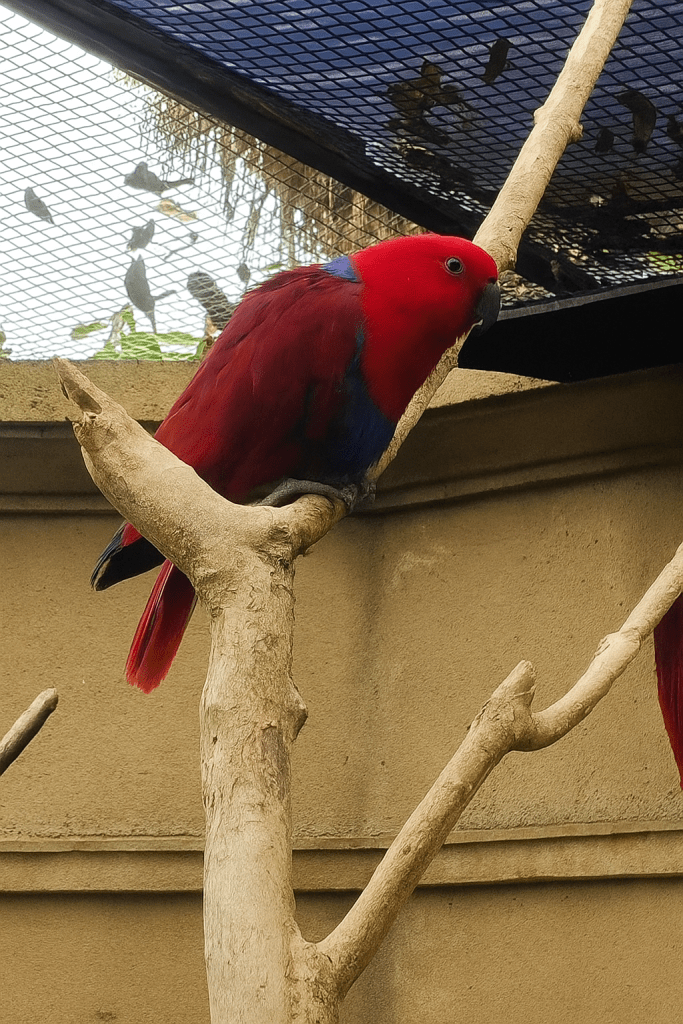


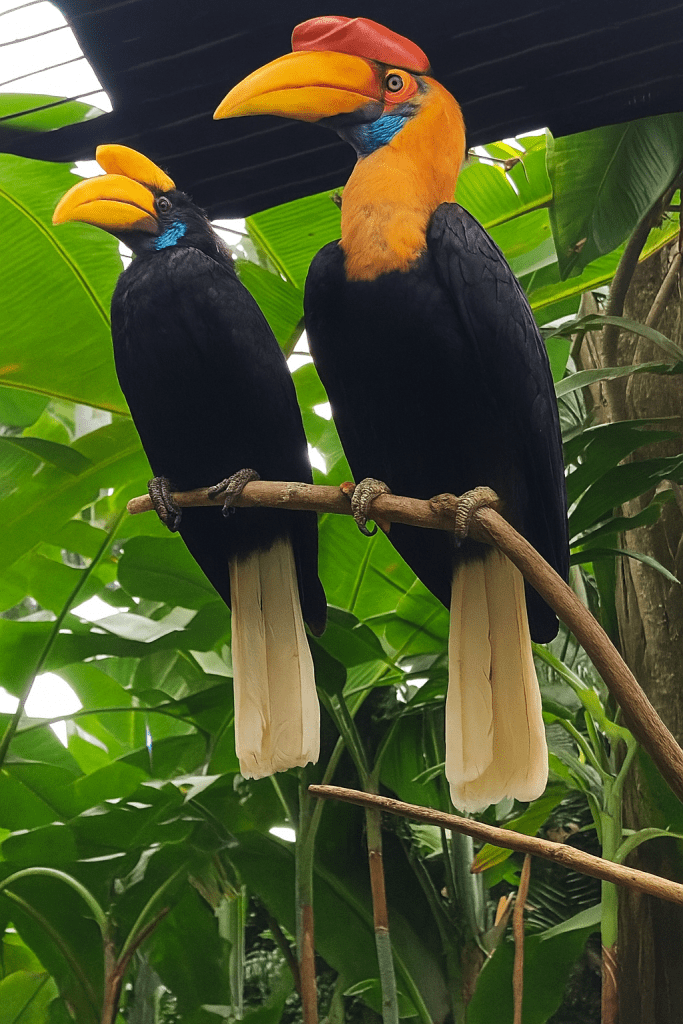

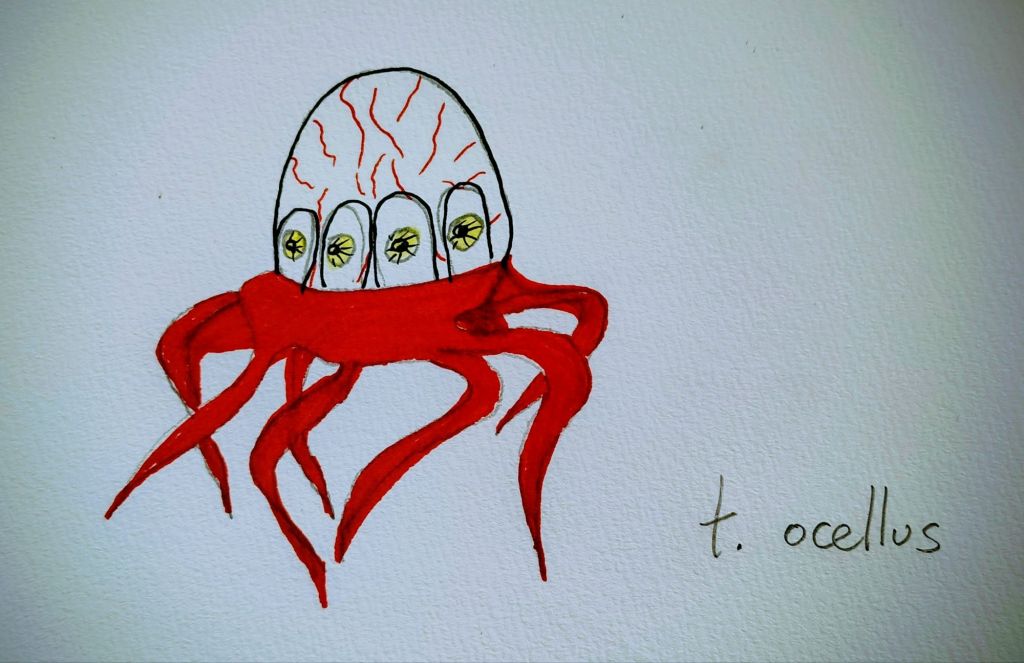

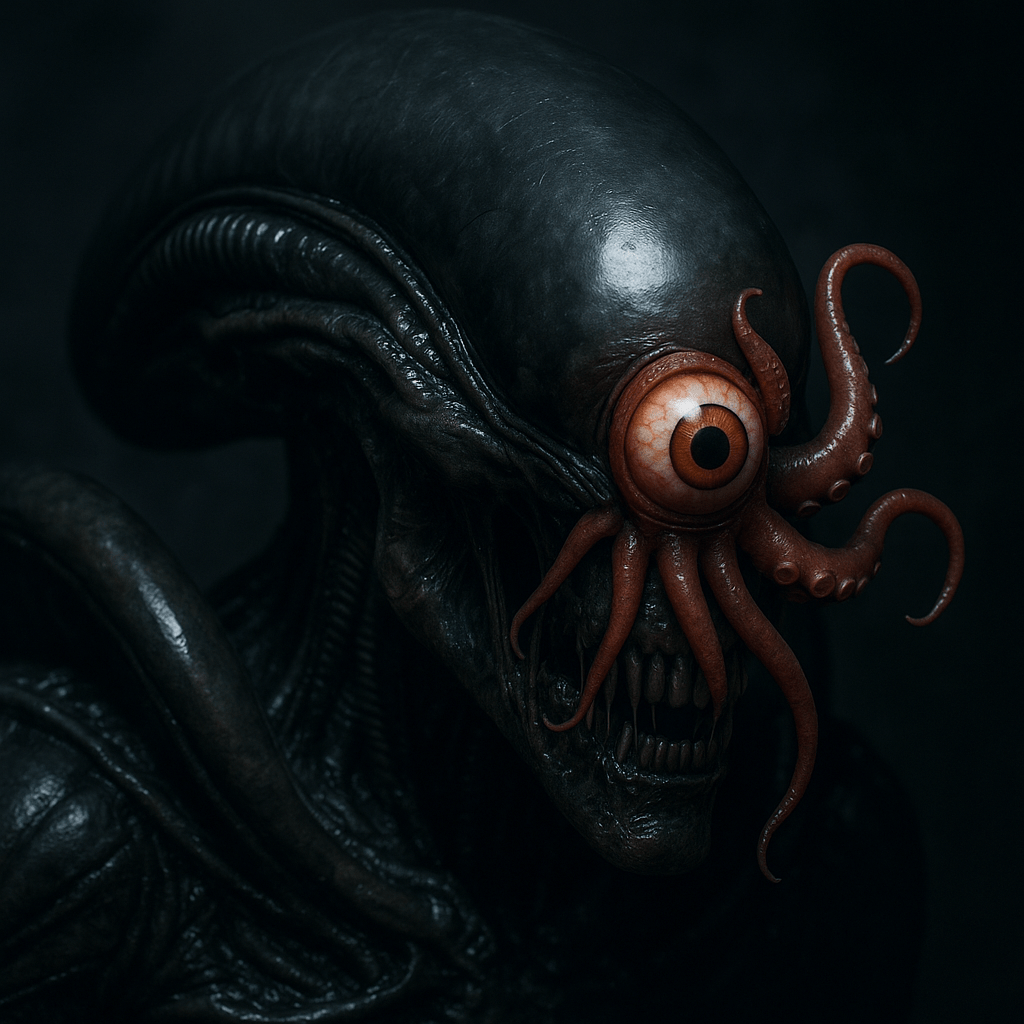





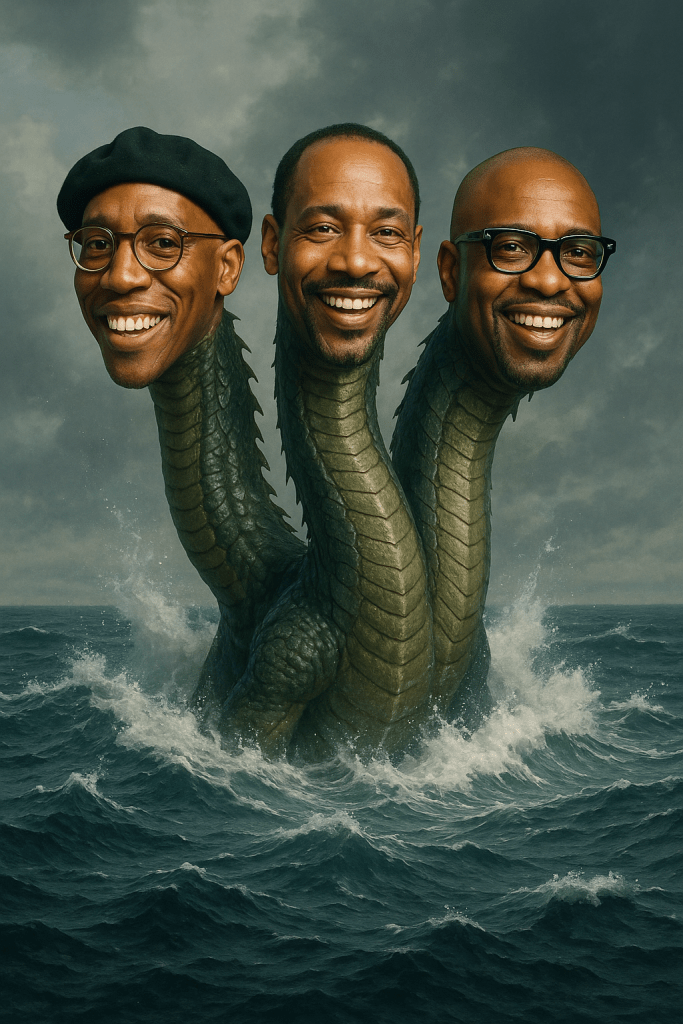

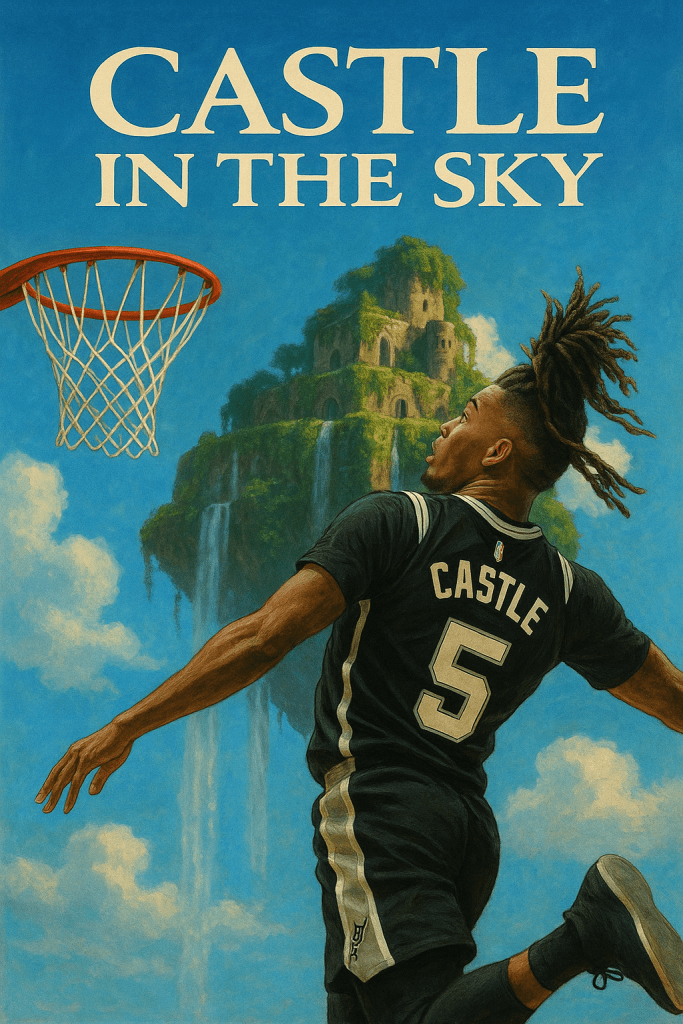
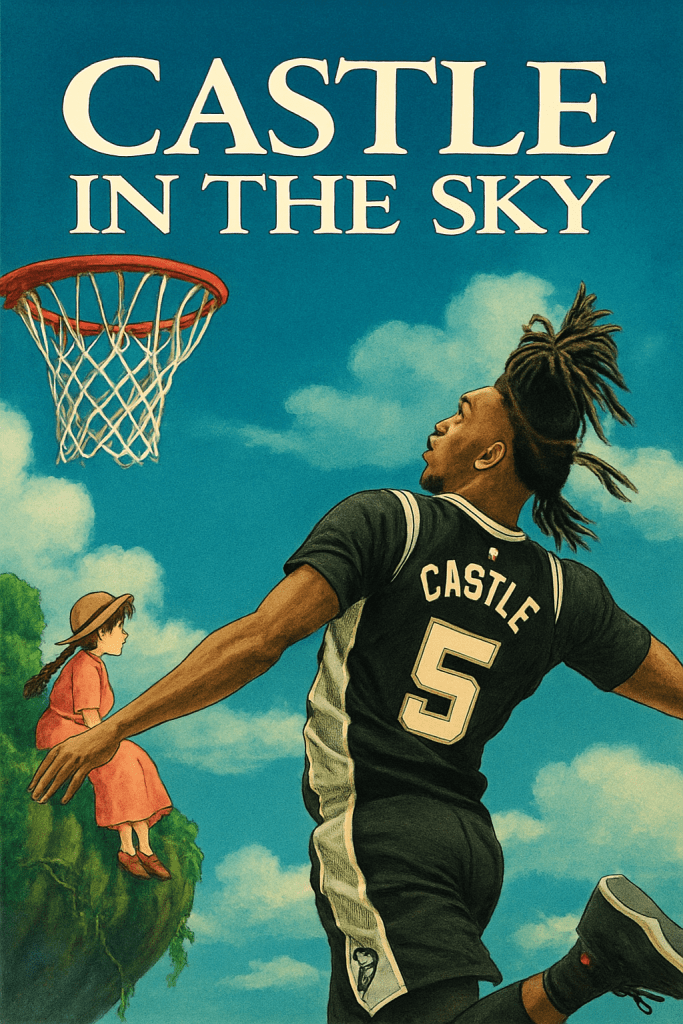
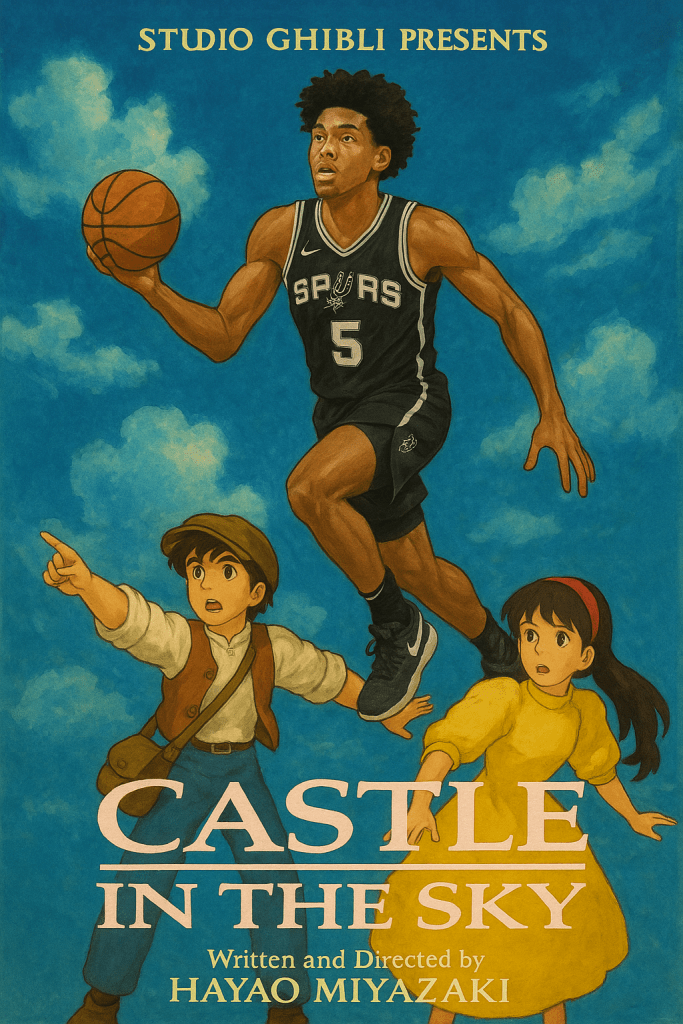

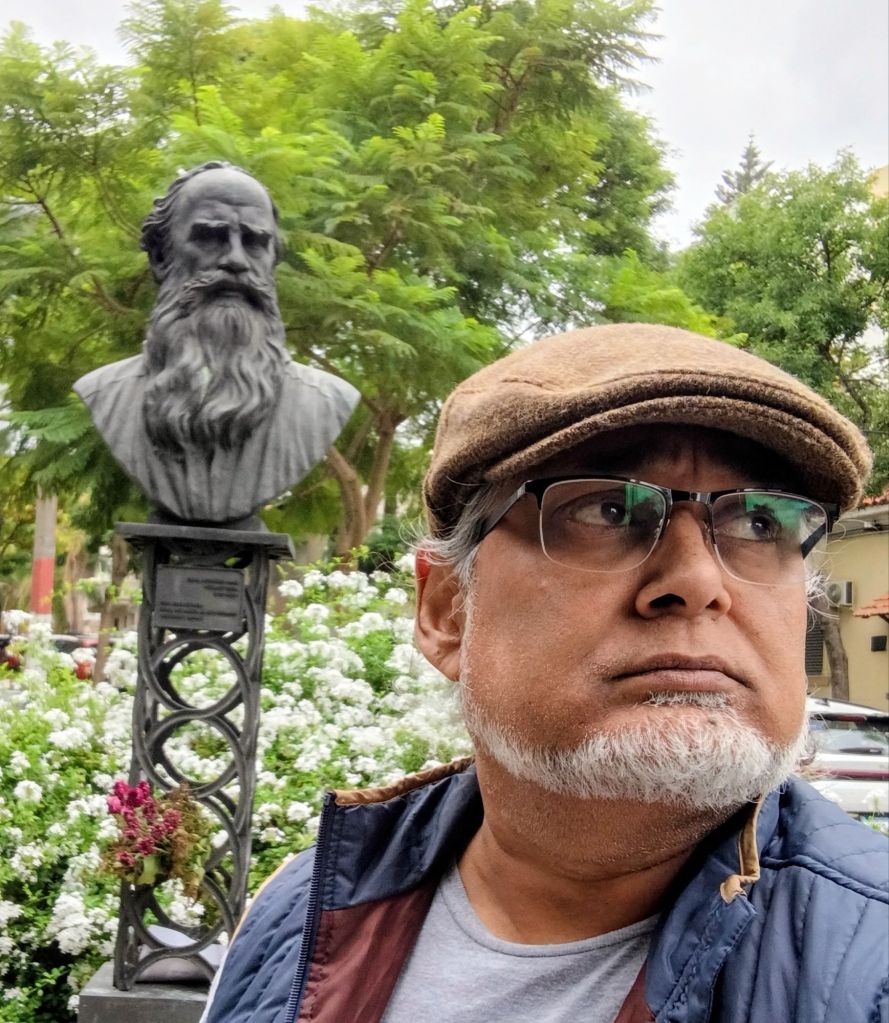
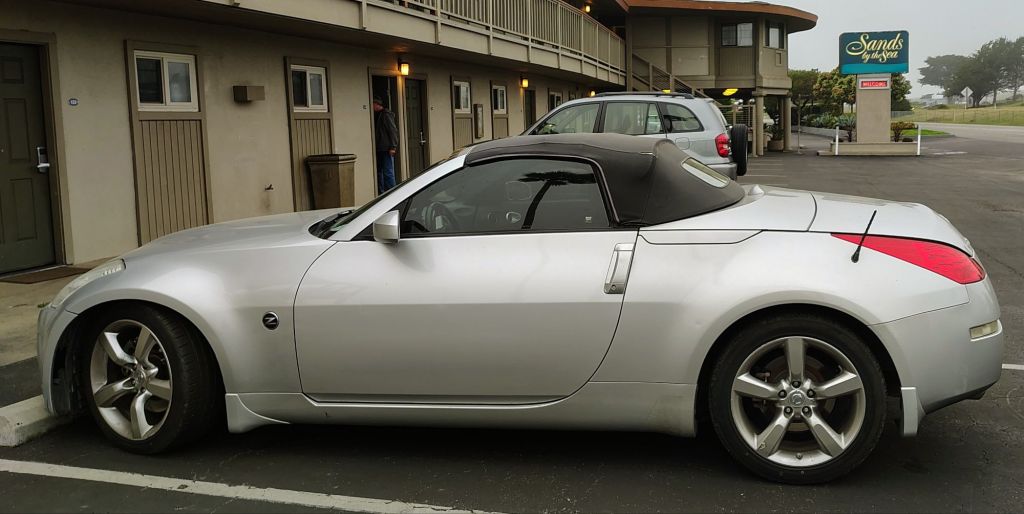

 MTK The Writist