grown by Dr. B. Thyagarajan, SATX


19 Thursday Jul 2012
Posted in flora, photography, San Antonio
13 Friday Jul 2012
Posted in music video, North Oakland
11 Wednesday Jul 2012
Tags
#asg, all, bases, best, cabrera, cain, first, game, home, Karthik, League, loaded, major, matt, melky, mlb, mtk, MVP, pablo, run, Sandoval, star, triple
The San Francisco Giants OWNed major league baseball’s All-Star Game.
Our pitcher started, was best and got the win (Matt Cain),
our big bat (Pablo Sandoval) got the only triple with bases loaded ever scored in the history of the All Star Game, scoring three,
the first of whom was our best hitter for average (Melky Cabrera) who won the MVP going 2 for 3, with 2 runs and 2 RBI, had the game’s only HR, and was the first and last man across home plate.
Together We’re Giant
08 Sunday Jul 2012
Posted in bees, fauna, flora, North Oakland
Playing catch at the park we noticed what looked like fungus on a tree. Upon closer inspection it was a beehive – but unlike any I’ve seen before.
backwards edit, so it’s photo stills for 47 seconds and then the best video starts at 0:48 in the clip below. You can see the bees entering the trunk of the tree. They’d built this multi-tiered structure on its bark:
07 Saturday Jul 2012
Posted in bees, fauna, flora, North Oakland
05 Thursday Jul 2012
Posted in flora, North Oakland, photography
04 Wednesday Jul 2012
Posted in S.F., short film, vehicles
15 Friday Jun 2012
Tags
Alien, Aliens, Biene, Cameron, does, engineers, fiction, film, Gibson, if, is, James, Karthik, LV-223, LV-426, mean, michael, movie, mtk, plot, Prometheus, Ridley, ripley, sci-fi, science, Scott, shaw, Sigourney, spolers, synopsis, timeline, universe, Weaver, Weyland, what, William, xenomorph
**8,500+ hits (as of Apr ’14) from around the world to this post, which was written when it first opened in theaters. Please do answer poll. Thanks**
The writer William Gibson recently tweeted (@GreatDismal) that he’s also noticed strong and divided opinions about Director Ridley Scott’s new science fiction spectacular, Prometheus, in theaters now.
Gibson tweeted on June 14th: “Split on Prometheus (which I haven’t seen) is vast and deep, with smart friends on both sides. In that situation, there’s often something going on with the dichotomy.”
Similar critique surrounded Scott’s Alien three dozen years ago and Bladerunner received the same treatment when it came out in 1982; the producers felt disrespected. On the DVD of the Director’s cut, with commentary, one of them snarls that Gandhi won the award for Best Costume Design over Bladerunner that year.
What if Ridley Scott’s worst crime is he’s a visionary unable to express ideally within the constraints of Hollywood’s demands and thus left us with a mess to interpret? Over the years in sci-fi we’ve considered far less quality product with far more attention.
Here’s excerpts of interviews with screenwriter Damon Lindelof and some actors from the film (not Ridley Scott, who is pretty closed-mouthed), that reveal a lot of this movie was edited out for the time constraints of Hollywood’s ‘Summer Blockbuster Marketing Mentality’.
This certainly has contributed to the confusion. Lindelof goes so far as to say that in Hollywood they just don’t want a movie to last more than two hours. The run-time is 2:03.
Frustrated fans have a right to be upset if this is true. A story takes time to tell. Marketers and groovy executives must be kept out of the calculation when it comes to run-time.
We’ll see if future extended versions and Director’s cuts of Prometheus flesh out the film. I propose we have to work harder to imagine the story wholly, but that it’s worth it.
To describe the story in Prometheus, Alien and Aliens taken together, I’ll use both my own writing and plot synopses written by others. [Prometheus from IMDB by WellardRockard; Alien by Colin Tinto].
Please respond to this poll of your thoughts on the film:
The “Other” Comments
Nine poll respondents used “other” to comment:
“both awesome and full of shortcomings,”
“Intense, positive for sure, but lacks full disclosure. Leave em wanting more?!”
“amazing brilliant movie.”
“Expecting more than a thinly disguised Alien remake.”
“Lot of plot holes and overall inconsistencies”
“Great. and visual!”
“I fell Asleep Watching it  “
“
“flawed.”
“lacking information”
Explaining Prometheus
Ridley Scott is an avant-garde of the first two decades of multi-episode, scalar, sci-fi sagas.
I say Ridley Scott is avant-garde in the context of a continuum of sci-fi film-making that begins with Kubrick’s 2001: A Space Odyssey (1968) and then, only after nearly a decade of Planet of the Apes (1968) sequels, moves on to Lucas’ Star Wars and Spielberg’s Close Encounters of the Third Kind (1977), before Alien (1979) and The Empire Strikes Back (1980), and finally Bladerunner, The Thing and E.T.: the Extra-Terrestrial (1982). Spielberg’s hand was what made the genre more popular until Cameron’s The Terminator (1984) and Aliens (1986) come along and blow it up.
In Alien, his breakout, Ridley Scott established a unique and very specific blueprint: a slow build with the first half of the film to establish grand settings and an ensemble of characters within an immense context and then a hell ride for the second half of the film to its fantastic, terrorizing conclusion.
Perhaps Scott’s failing, if it can be called that, is avant-garde-ism coupled with a density of information that startles and cows some contemporary viewers, preventing appreciation of the work the first time through.
A second major problem seems to be an issue of control over editing. Screenwriter Damon Lindelof was meant to bring human dimension to Scott’s immense vision, but it sounds like much of the tempo and dialogue required to do this ended up on the cutting room floor.
It requires imagination to appreciate imagining of this scale and one has to have two things to enjoy the movie: a willingness to wholly go on the ride, and active interpretation of subtle motivations described in a limited fashion by the cut.
I’m definitely eager for the Director’s Cut, which I hope will be a vastly improved film.
(editorial note: the death of Ridley Scott’s brother, Tony, within weeks of the release of Prometheus, must have interrupted any post-release work)
The Grand Plot Begins on Earth Before the Dawn of Man
Human life on Earth began millennia ago because a being – perhaps twice human-size, capable of interstellar travel and to whom we refer hereafter as an Engineer – drank something toxic and died while visiting Earth, collapsing into a waterfall.
I gather this from the title sequence of Prometheus. This Engineer’s DNA co-mingled with the primordial soup to jump start evolution and ultimately to create us: smaller, weaker, less advanced versions of the Engineers. It is unclear whether this is a purposeful act, but the pain the Engineer endures in disintegrating implies not.
An oblong shape is seen above him in the sky – a ship? It appears to be getting smaller, leaving? I wondered whether he was being left here to commit suicide?
2089 A.D., Humans Discover the Engineers
A series of ancient cave paintings are found all over Earth, each depicting one of these oversized human figures (the Engineers) pointing upward to a constellation pattern. In the year 2089, archaeologist couple Elizabeth Shaw and her boyfriend Charlie Holloway discover this star map among ruins and archaeological sites of several otherwise unconnected ancient cultures.
Shaw and Holloway divine a location in space to associate with the star pattern. The two interpret this as an invitation from humanity’s forerunners – an interpretation which may or may not be one of many misreadings in the grand narrative.
Throughout his career, Ridley Scott has succeeded in imbuing contemporary human hubris onto our future behavior, making viewers unsure whether the actions and opinions of any of his characters, save Ripley (Sigourney Weaver) in the Alien films, are sound.
The events of the film Prometheus take place between 2089 and 2094. Shaw and Holloway are hired to lead an expedition to the theorized location depicted in the cave drawings,a moon that orbits the immense ringed-planet LV-223. They achieve interstellar travel via cryogenic suspension with the crew of the ship USS Prometheus.
2093, the Prometheus plot
Peter Weyland, the elderly founder and CEO of the Weyland Corporation, funds the creation of the scientific deep space research vessel USS Prometheus to follow the cave painting maps to a distant moon orbiting the planet LV-223, many light years from Earth.
The ship’s crew travels in stasis at light speed while the android David stays awake, pilots the craft, studies ancient languages in order to translate for possible interactions with humanity’s makers, and monitors the passengers in cryo-sleep on their voyage, going so far as to read their dreams.
Note: One flaw is that if LV-223 is, as stated, many light years away and the Prometheus arrives in just over two years, the craft must have traveled faster than the speed of light to cross the distance in space between Earth and LV-223. This remains unexplained and mere cryo-stasis is not sufficient to explain it. It can only be a maximum of two light years away. (wormholes?)
The android David, the scientist Shaw and the CEO Weyland are direct parallels as characters to the androids Ash and Bishop; to Ripley; and to the Company in the Alien films. These tropes are significant on multiple levels because Scott makes use of the image we have of these characters. He constructs them to be knocked about so we can see a range of human experience – and in so doing, he acknowledges, subtly, sci-fi blockbusters of the past.
In David, one senses not only Ash and Bishop, but also the cold, insouciant, horrifying spirit of HAL from Kubrick’s 2001: A Space Odyssey; in Shaw, the naive wonderment of Jodie Foster’s Ellie Arroway in Contact meets Ripley’s stubborn righteousness; and in Weyland, we’ve the aging hubris of Jurassic Park‘s Jon Hammond, played so deliciously by Richard Attenborough, and the billionaire boys’ club attitude, ever-forward pushing like Contact‘s S.R. Hadden, as played by Jon Hurt. There’s a movie sci-fi continuum.
Here, Weyland is portrayed by Guy Pierce as a cold, calculating, demanding CEO, the inventor (of David) and aging corporate raider obsessed with extending his own life above all other concerns.
In Prometheus, there’s continuity of feeling with Alien and Aliens, and nuanced shades of many science fiction films and characters of the recent past, but there remains a doomed feeling throughout that much of our human spirit is weak and flawed. Maybe that’s why people don’t like it.
The principle criticism I hear from fans so far, who like the work in general, is that the characters are not developed. Very few of the characters are given much depth, and it’s painfully obvious that the “Hollywood Summer Blockbuster” cut is brutal. One has to imagine a lot, and much if it isn’t good. That’s not easy and folks don’t like doing it.
That said, the relationship between Shaw and Holloway is the most explored. It’s revealed that she has faith in Christ and that he is an atheist. In making their discovery Holloway chides Shaw about her faith. She claims to be unfazed, a believer. This is what Weyland saw in her.
Holloway, her atheist colleague and lover is, for his part, unbothered, he loves her and would do anything to pursue her interests. Holloway’s faithless willingness to do anything leads to his doom.
In 2093, the ship arrives in the orbit around LV-223. This is not the same planet first seen in Alien (1979) and in Aliens (1986) as confirmed by Ridley Scott in an interview on Friday June 1st on BBC radio 5 live.
Alien is set on LV-426, or Acheron, while Prometheus is set on a moon of LV-223.
After being awakened from hibernation, the crew are informed of their mission to find the ancient aliens, the “Engineers”. They also view a holographic message from Weyland himself, which tells them that he, Weyland, has since died, but that he has funded the mission under the direction of the scientists.
The Weyland hologram introduces Shaw and Holloway to the others, and the two explain what they have discovered and their intention to respond to what they perceive of as an invitation from humanity’s creators.
The other scientists are agog at the scale of the mission and the geologist Fifield and biologist Milburn express real skepticism. Mission director Meredith Vickers orders all present to avoid any direct contact if the Engineers or any other aliens are found.
The Prometheus lands near an alien structure and a team including Shaw, Holloway, and David explores it, while Vickers and Captain Janek remain aboard the ship and monitor their progress.
Flying drone scanners are employed to zoom through the immense curved structure beaming red, analytical light across the interior surface and allowing 3d mapping to be simulated as a visual model back on Prometheus and the data to be shared among the scientists simultaneously – rad.
The explorers find breathable air within the alien structure, discover hundreds of vase-like artifacts and a monolithic statue of a humanoid head. Other bodies are later found, and the Engineers are presumed to be extinct.
Using his polyglothic array of ancient languages, David sorts out how to use the controls for projectors within the structure and makes visible 3-Dimensional video replays of the final moments of the Engineers.
The replays show the oversized human beings, the Engineers, running through the structure, and yield valuable archaeological perspective of the events that led to the death of one of them, who tripped and was decapitated by a fast closing doorway. When David rapidly interprets the commands etched in a wall beside where this occurred, and opens the door, they find the actual large humanoid head of the Engineer behind it.
A rapidly approaching storm forces the crew to return to the Prometheus. Shaw insists they take the Engineer’s head back to the ship with them and they barely make it back alive. A biologist and geologist, Milburn and Fifield are stranded in the structure after becoming lost trying to find the way out.
David, the android, meanwhile, returns to Prometheus with one of the vases, while back in the structure, apparently induced by the presence of the away team, dozens of the remaining vases begin leaking black, gooey liquid. Small worm-like creatures are seen writhing in the goo – there’s life here. Upon entry the vases were dry and clean. Something about the entry of these people here has begun what is occurring with the vases, which the scientists told David to avoid.
David secretly bringing the vase back is the first of three covert acts that make us question his motivations.
In the ship, Shaw and medic Ford analyze the Engineer’s head, bringing it to life with electrostatic shock. They find some kind of disease, illness or growth on the surface of the head, which comes to life and endures a lifelike pain and exacerbation of the skin growth, eventually rupturing, causing the head to explode. “Mortal, after all,” remarks the android David.
Taking a sample of the tissue, Shaw discovers that the DNA of the Engineer is identical to that of the human race, confirming our relationship to these predecessors.
Note: this DNA match makes no sense whatsoever – if it is an exact match then, they would be, essentially us, and since they are in fact different from us in size, it seems likely there would be some difference in genetic structure.
Meanwhile, revealing an unnamed covert purpose, David investigates the vase he has secretly brought aboard and discovers a vial containing a black liquid.
David removes a drop of the black, organic goo within and puts it on his finger. There’s a beautiful ECU of David’s finger – instead of prints he has the Weyland logo subtly carved into his fingertip.
Earlier in the film, during stasis, we see David standing over the cryochambers and realize that he is able to see into the dreams of the sleeping passengers. Now, we see him again standing over a passenger. It is unclear who is within the chamber, but someone on the mission has not yet been awakened. David is communicating with the person in stasis.
Vickers confronts David about this, asking, “What did he say?” To which David initially responds “He” wouldn’t want David to tell her, but pressed by Vickers physically, responds the message from “him” was “Try harder.”
While it’s unclear to whom they’re referring, the fact that it’s Weyland, Vickers employer, who created David, is inescapable. Vickers intimacy implies a deeper connection between her and to whomever David is communicating.
David’s android reasoning is revealed further by this conversation; caught by his Master’s need for secrecy, he cannot lie to Vickers and yet cannot tell her the whole truth. This is the first of David’s conundra that result in unusual behavior.
Two Possible Directives Explaining David’s Behavior
Weyland is directing David to act from within the cryochamber via both some kind of direct communication and David’s ability to read the dreams of the sleeping passengers.
There are two basic directives:
1. to find a living Engineer; take Weyland to the Engineer, and convey Weyland’s wishes for immortality.
2. David is also being told to explore the organic goo and the parasitic creatures found aboard the Engineer’s ship – for the purposes of Weyland’s corporate goals.
These two directives are being interpreted by a first-generation, one-of-a-kind synthetic human, who:
a. is instructed by its maker to both function covertly and serve the mission of the Prometheus.
b. is a prototype and predecessor by 29 years of the android Ash, who was also programmed to act covertly in Alien aboard the Nostromo (which the Company calls a malfunction), and by 81 years of the softer, safer version of synthetic person, Bishop in Aliens.
c. has spent two years interpreting the dreams and thoughts of Weyland, Shaw and the entire crew bound to meet their maker, all while studying human culture and ancient human culture.
Long before the Prometheus arrives at LV-223, questions of identity abound for David.
Upon opening the vase and taking a drop of the liquid for his own analysis, David realizes that to follow through on the second directive he must infect a passenger.
David’s scene with Holloway in the billiard room is an excellent example of an android reasoning out how to proceed with the problem of his orders being covert. He asks Holloway a series of leading questions meant to bring Holloway to implicit approval of David’s plan to infect him.
The dialogue ends with David saying,”Then it’s time for a drink” – only then does David infect Holloway by briefly tapping the tiny black drop of the gooey substance on his finger into a glass of champagne he has poured.
Android reasoning – David gets Holloway’s tacit approval for experimenting upon him. It is subtle but clearly by design and only after a series of statements and questions that David allows himself to deposit the drop in Holloway’s glass.
Holloway downs it,”Here’s mud in yer eye, pal.” It’s such a Deckard line – most of my friends think it cheesy, I love it.
David predates Ash by 29 years and Bishop by 81 years. He is also a unique, a one-off – the first, a prototype. There is little compassion in him, little emotion. His quirk of having a fascination for one single human movie – Lawrence of Arabia – is hyper-constructed and yet gives him so little sweetness. The android is calculating and emotionless in 2093.
Shaw and the infected Holloway have sex. It is revealed that Shaw is sterile. Holloway follows her blindly and experiments wildly alongside. He loves Shaw and takes her as she is, a believer, a Christian, unable to bear children. He truly loves her and would be led by her to the end of the universe, to this Godforsaken place.
Holloway later looks in a mirror and sees his eyes are changing – mud in his eye – first evidence that he has been poisoned with the black goo by David. He still does not know how he came to be infected.
Meanwhile, trapped back inside the structure by the storm, Fifield and Milburn meet and are attacked by snake-like creatures which invade their suits, their skin and their minds. The slithery tentacle-like snakes have a bulbous head of folded skin that unfolds to reveal a triangular head with gaping mouth and teeth.
Note: just as in Alien, the first appearance of the ‘monster’ isn’t until one hour and one minute into the film. Scott’s blueprint is intact.
The snakes penetrate first the suit and then the skin of Milburn, who is killed, and perhaps made a host for an embryo – the snake goes into his mouth. A corrosive fluid (yellow acid blood) from one of the creatures melts Fifield’s helmet, exposing him to the dark liquid leaking from the vases. The “acid for blood” immediately recalls to mind the facehugger in Alien.
The crew returns to the Engineer’s structure after the storm passes to find Milburn’s corpse and no sign of Fifield.
David, meanwhile, separates from the others and discovers an immense cargo hold filled with the goo-filled vases. Though he is connected digitally to the Prometheus and specifically to Vickers, David intentionally severs this connection, revealing for the second time a covert intent.
In another room David discovers a living Engineer in stasis and video replays that allow him to see a holographic star map of the universe. The map highlights Earth.
Then David discovers the bridge of what is obviously a spacecraft. We’ve seen this huge, C-shaped ship with a giant chair in it already. It’s the one occupied by the skeletal remains of an oversized humanoid pilot with its rib cage pushed out in Alien and Aliens.
David learns how to operate the craft from the videos of the extinct Engineers, and how to liberate the living Engineer from cryostasis. He does all of this alone, cut off from the Prometheus, adding to the aforementioned covert mystique.
This is a trillion-dollar, private, corporate expedition and there are unseen hands at play – the undead Peter Weyland is acting through the robot David. We come to realize that Weyland is in cryogenic stasis and that David has been communicating with him throughout. The agent behind David’s covert activity becomes more clear.
David can thus be seen as part of a progression in robot design over 81 years – from David to Ash in 29 years of development and from Ash to Bishop in 57 more years. But he is also the first, a unique, like HAL. Weyland’s crowning achievement in synthetic people, like HAL, is subject to philosophizing, wonderment, and devious, purposeful action in the pursuit of its directives.
Holloway’s infection rapidly ravages his body, and he is rushed back to the ship. Shaw doesn’t understand why he is sick and no one else is. As he visibly deteriorates, Vickers, holding a flamethrower and standing at the ramp to the Prometheus refuses to let Holloway aboard. Holloway is in immense pain and finally he steps forward demanding she kill him. Vickers immolates him at his request.
Shaw is shattered, and stunned because she does not know how her lover was exposed singularly. She doesn’t know David gave him the black goo in his champagne. She doesn’t understand what is happening. Her naivety takes its major slam in the face. This, of course, is very reminiscent of Ripley’s experience in the Alien films and it’s horrifying and emotional.
To make matters much worse, a medical scan reveals that Shaw, despite being sterile, is in an advanced state of pregnancy impregnated with an alien creature that in 10 hours has grown to the size of a basketball and is still growing, all as a result of having sex with Holloway who has been poisoned by David with the black goo. David – removed, eerie, in the revelatory moment says, “Well, Doctor Shaw, it’s hardly a traditional fetus,” then – HAL-like, Ash-like – attempts to subdue her.
One feels obvious parallels here: Weyland has instructed David to return Shaw to Earth in stasis as a container for the creature which he considers a biological weapon. It’s exactly what the Company, Ash and Burke hope to do with Ripley and the crew of the Nostromo and Ripley and Newt, in 30 and again 87 years in the future from these events.
But Shaw, like Ripley, escapes and uses an automated surgery pod to cut a cephalopod-like creature from her abdomen. It’s a female parallel to crewman Kane’s stomach-rip in Alien in some weird way.
The scene is epic: The robotic, automated surgery chamber, a gurney in a tube, uses spray-on anaesthetic, robotic hands and metal clamps to fold back Elizabeth’s belly skin. A small robotic crane enters her exposed gut and brings out the placenta-covered, squid-like creature which then emerges, alive, spraying pre-birth from within its amniotic sac all over her. The machine closes Shaw with a staple gun, while the tentacled squid-thing flops angrily above her, held tenuously by the robotic crane arm.
Note: The idea that a machine capable of conducting such COMPLEX, delicate operations on human beings would somehow not be designed for males and females is ridiculous.
Shaw escapes crawling out from under it and, stumbling around like a little girl who has had everything horrible revealed to her, discovers Peter Weyland alive, sitting calmly on a bed, being waited upon by his doting robot.
Shaw realizes Weyland has been alive the whole time in stasis aboard the ship. She finds him and the cold, bemused David – who considers her resilient for surviving the implantation of an alien within her – preparing to meet the Engineer.
David is an excellent predecessor to the androids Ash and Bishop of Alien and Aliens, colder, more calculated, less concerned about human beings than either. He dotes on his creator, who made him singularly and treats him like a son.
Weyland and David explain to Shaw that Weyland intends to ask the Engineer to help him avoid his impending death. The subtle devotion that David has for Weyland, the blind following, reveals much about his actions in the film thus far.
Outside the Prometheus, a mutated Fifield attacks the hangar bay and kills several crew members before being killed himself. Janek sees what is happening and theorizes that this moon is actually a facility where the Engineers designed weapons. He proposes it was a military base until they lost control of their biological weapon: the vases and the black fluid they contain.
Vickers attempts to stop Weyland from going through with his plan. She tells him he will be killed. Weyland is stoic even as, in departing, Vickers calls him father and the connections are all made clear. Weyland’s invented a son in David and abandoned his connection to his daughter. Vickers grew up hating the old man – something David takes to be normal in all humanity – “Doesn’t everybody hate their parents?” he asks Shaw.
Weyland, David, Shaw and Ford return to the structure to awaken the Engineer David discovered in cryogenic stasis. It becomes clear that the Engineer is occupying a space ship (the same design as the crashed alien space ship seen on LV-426 in Alien and Aliens). It’s a spaceship with a cargo hold filled with toxic chemical and biological weapons that can destroy whole worlds with parasitic aliens.
David shows Weyland, Shaw and Ford the bridge and cryo-chambers of the Engineer. He then wakes the Engineer from cryogenic sleep. This is the moment Weyland and Shaw have been waiting for: to meet our maker. But now, after all that has happened, each has very different requests.
The immense Engineer slowly comes to its wits from hypersleep and attempts to understand the small human beings before it. Shaw, realizing Janek is right, screams in English “Ask him what’s in his Cargo Hold?” Why is he taking it to Earth?” and then at the Engineer: “Why do you want to kill us? What have we done?”
Before the Engineer can respond, the selfish and decrepit Weyland has Shaw silenced to put forth his android, his son – the perfect specimen of human likeness, capable of speaking in multiple languages, indeed having translated those of the Engineer to learn the controls of the craft and its devices – to explain his purpose.
The Engineer responds by decapitating David and killing Weyland and Ford. Shaw escapes the alien ship as it is activated for launch by the Engineer. Weyland dies, pathetic, broken. Vickers, observing from aboard the Prometheus, and hearing the flatline confirming the death of her father Weyland, orders Janek to return to Earth.
The still-active David lies disembodied on the floor of the Engineer’s craft, but maintains contact with Shaw and now begins to tell what he knows. The craft begins to initiate take-off and Shaw is hurled from within the ship and crawls and runs across crevasses created by the launching of the immense craft.
It’s a scene that mimics the headless Ash being brought back to tell the crew of the Nostromo what is actually happening to them in Alien. David’s severed body and still-conversant head are similar to the final state of the android Bishop of Aliens as well, who ends divided yet able to cling to the floor of the Sulaco and grab Newt to save her from being thrown out the airlock. It’s as if the fate of all Scott’s androids is a milky decapitation.
David reveals to Shaw that the Engineer is starting up the ship and is intending to release the vases of black goo on Earth. She hears David and tries to warn Vickers and Janek that the ship is headed to Earth with the intention of killing off humanity.
Vickers, aboard the Prometheus, orders Janek to return to Earth, but this is the Captain’s shining moment. Janek, in a brief exchange with Shaw, assesses the threat to humanity if they allow the Engineer’s ship to leave. He defies Vickers and tells her to abandon ship if she doesn’t want to die. While Vickers flees in an escape pod, Janek and his crew, straight-forward, no-nonsense and generally non-involved in the mission throughout, save humanity by crashing the Prometheus into the Engineer’s ship as it attempts to take off.
The disabled ship of the Engineer crashes onto the planet, falling onto Vickers, crushing her. The ship continues to tumble and nearly crushes Shaw, but she escapes.
Shaw goes to the escape pod to get oxygen and retrieve supplies and finds her alien offspring has grown to gigantic size. The Engineer survives the crash, enters the escape pod and attacks Shaw, who releases the tentacled creature. It subdues the Engineer by thrusting a tentacle down its throat. When the Engineer falls with the immense tentacled creature atop him, the creature looks very much like the “facehuggers” in the Alien films.
David, still functioning and decapitated, lying on the floor of the bridge of the downed spacecraft, communicates with Elizabeth Shaw who lies, crying on the moon’s rocky desolate surface. David says he would like her help, that if she can collect him and carry him, he could help here to leave this place because there are other crafts like this one on the moon.
Shaw recovers David’s remains from the alien ship, and asks if he can operate the craft. He responds that he can fly them back to Earth.
Shaw asks if he can fly them to the place of origin of the Engineers and he says that he can. Together they activate another Engineer ship. Shaw and the remains of android David then take off to travel to the Engineers’ homeworld in an attempt to understand why they created humanity and why they attempted to destroy it.
In the final shot, back in the Prometheus escape pod, the immense tentacled facehugger has died (just like the facehuggers do after implanting the embryos in Alien) and the Engineer’s body begins to convulse. From within his chest emerges an alien (very similar but not the same as seen in later movies) The creature bursts out of the dying Engineer’s chest and we see the mouth within a mouth and familiar head structure and body shape of the “chestburster” xenomorphs in Alien.
2122, the Alien plot – 29 Years After Events of Prometheus
The events of Alien (1979) take place June 3rd to 6th in the year 2122 A.D.
USCSS Nostromo encounters what is assumed to be a distress signal emanating from the planetoid designated LV-426, in the Zeta-2-Reticuli system. Captain Dallas, Executive Officer Kane, and Navigator Lambert investigate a derelict spacecraft that contains the fossilised remains of an unknown alien species, and thousands of Xenomorph eggs. One of the xenomorph spore (‘facehugger’) attaches itself to Kane’s face and plants an embryo in his throat, which then hatches, killing the host. The hatchling (‘chestburster’) grows to over 7 feet tall and kills Dallas and Engineer’s Mate Brett.
Warrant Officer Ripley discovers that Weyland-Yutani want the Alien specimen and the crew of the Nostromo are expendable. It is revealed Science Officer Ash is in fact a Hyperdyne Systems 120-A/2 android, who has been protecting the Alien.
Chief Engineer Parker renders Ash inoperative when Ash attacks Ripley. Parker and Lambert are killed by the Alien whilst evacuating the Nostromo. Ripley rigs the ship to self-destruct and escapes on the shuttlecraft Narcissus with the ship’s cat Mr Jones. The Alien also escapes on the shuttle, but Ripley manages to blow it out of the airlock, effectively killing it.
Plot Summary of Alien (1979)
(scenes in red are only in the Special Edition)
Nostromo, a commercial towing-vehicle en route to Earth towing several million tons of mineral ore, carries a crew of seven: Captain Dallas, Executive Officer Kane, Warrant Officer Ripley, Navigator Lambert, Science Officer Ash, Chief Engineer Parker, and Engineering Technician Brett. When the story opens, the Nostromo is heading back to Earth.
A computer the crew calls “Mother” monitors the ship’s operations. Mother intercepts a strange signal from a nearby planetoid and wakens the crew. The crew believe at first that they’ve arrived at Earth, however, they quickly determine that they’re charged with investigating the strange signal, which is assumed to an SOS. Before they prepare the “tug” craft to land on the planet, crew members Brett and Parker argue that they’re not a rescue team and that they should be compensated for the extra work. Ash tells them that there is a portion of their working contract that states the crew must investigate any occurrences such as this one.
The tug portion of the Nostromo lands on the planet (with the ore and mining facilities left in orbit); the landing is rough, causing repairable damage that will take some time to fix. Dallas, Kane and Lambert leave the ship to investigate the signal, walking through the planetoid’s inhabitable atmosphere. They soon discover a derelict spacecraft of unknown origin, losing contact with the Nostromo upon entering the massive ship. Inside they find the remains of an enormous alien creature in the pilot chair, now fossilized. There is a hole in its ribcage, indicating that something burst out from inside its chest. Meanwhile, Ripley’s analysis of the unidentified transmission reveals that it is not an SOS, but a warning. Ripley wants to go after the search party but Ash talks her out of it.
Kane descends into a chamber beneath the pilot’s chair, discovering thousands of leathery objects that resemble large eggs. He also discovers a strange mist covering the eggs that reacts when broken. Moving in to investigate further, Kane illuminates one of the eggs from behind with a flashlight & discovers movement inside; a strange, spider-like organism is the resident. The egg opens, and as Kane moves into for a better look, the strange life form inside leaps out, dissolves the visor of Kane’s spacesuit, and attaches itself to his face.
Dallas and Lambert carry the unconscious Kane back to the Nostromo. Ripley, who is the commanding officer in the absence of Dallas and Kane, refuses to let them back on board, citing quarantine protocol. However, Ash disregards Ripley’s decision and lets them in.
In the infirmary Dallas and Ash attempt to remove the creature from Kane’s face, but they discover they cannot because it will tear Kane’s skin off. Kane is examined with sophisticated equipment which shows that the creature has inserted a tube into his throat and is feeding Kane oxygen despite his comatose state. Dallas makes the decision to remove the creature from Kane’s face, no matter the consequences.
When Ash tries to cut off one of its legs, a yellowish fluid pours out and begins to eat through the floor. Dallas is concerned that the acidic fluid will breach the hull, but it stops it’s corrosive effects. Dallas says the substance resembles molecular acid, and Brett comments the creature must be using it for blood. ‘Wonderful defense mechanism – you don’t dare kill it’, Parker growls. Kane is left in his coma and is tended to by Ash.
Ripley later confronts Ash about his defiance of her orders and allowing the alien organism onto their ship, which put all of their lives at risk. She distrusts him, as well as his seeming inability to give them any useful information about the creature. The damage to the tug is repaired by Brett and Parker, and the crew takes off and docks with the refinery & cargo in orbit. The Nostromo then resumes its course for Earth.
Eventually, the creature detaches from Kane’s face on its own and the crew find it dead. Kane wakes up, seemingly unharmed, and he and the crew decide to have one last meal before they re-enter hypersleep. During the meal, Kane begins to choke and convulse. While he lies on the table & the crew try to aid him, a new alien creature bursts from his chest. Parker moves in to kill it with a knife, and is stopped by Ash. The creature then scurries away, leaving the crew stunned and horrified.
After a short funeral for Kane, the crew members split up into two teams to capture the small creature. Ash rigs together a tracking device, while Brett assembles a weapon similar to a cattle prod. Picking up a signal, Parker, Brett, and Ripley think they have the creature cornered, only to discover the crew’s cat, Jones.
Realizing they might pick up the cat on the tracker again later, Parker sends Brett to catch Jones. As he searches for Jones, Brett finds a mysterious object that appears to be skin on the floor. He continues on, eventually catching up to Jones in a huge room. As he tries to coax Jones out, the cat hisses as a huge shape drops down behind the engineer. It is the alien, now fully grown and enormous, and it attacks him, dragging him, bloodied and screaming, into an air shaft. In the 2003 re-release of the film, Ripley and Parker hear him and arrive in time to catch a glimpse of the monster as Brett disappears.
The crew debate their next move. Ripley again questions Ash and his inability to give them helpful information. They all agree that the alien is using the air shafts to move around, so Dallas enters the network of air shafts with a flamethrower, intending to drive the alien into an airlock in order to blow it out into space. Using the trackers, the crew picks up the alien’s signal, but the signal vanishes, leaving Dallas unsure of the creature’s location. He finds the alien’s slime on the tunnel floor. Dallas is disoriented in the cramped space and starts to panic when the signal returns, indicating it is heading directly for him. In his attempt to escape, he runs right into the creature. The remaining crew members find only his flamethrower left behind.
Ripley queries Mother for advice on destroying the alien, but in the process discovers that “the company” (unnamed in this film, but identified in the sequels as “Weyland-Yutani”) had recognized the signal as a warning and wanted one of the alien creatures brought back for study, considering the crew expendable. This information is related in just four screen shots of text from Mother – an excellent scene.
Ash attacks Ripley after she learns of the Company’s “Special Order”, but Parker and Lambert arrive before he can kill her. Parker dislodges Ash’s head with a fire extinguisher, revealing Ash is an android. With Ash disabled, Ripley and the others reconnect his disembodied head to see if he can give them any advice on how to deal with the creature. Ash tells them they have no chance against it, as it is “the perfect organism”.
Ripley decides to follow Lambert’s earlier suggestion; set the Nostromo to self-destruct & escape in the shuttle, leaving the Alien to die on the Nostromo. As they leave the room, Parker turns the flamethrower on Ash’s corpse to ensure he will not be re-activated and come after them. While Ripley preps the shuttle for launch, Parker and Lambert go to gather coolant for the shuttle’s life-support system.
On the ship’s open intercom system, Ripley hears the cat and realizes Jones has been left behind. Alone, she goes out into the hallways of the Nostromo to find him. Expecting the alien at every turn, Ripley finally locates the cat and puts him into his traveling container. She then hears the sounds of the alien attacking Parker and Lambert in another part of the ship, and Parker shouting orders to Lambert to get out of the way. The alien corners Lambert against a wall, but Parker is unable to get a clear shot at it with the flamethrower without killing Lambert. Finally he charges at the creature, but it spins on him and kills him with its bizarre inner jaws. It then turns back to Lambert and Ripley hears the sounds of it killing her as she rushes to try and save her friends. Ripley finds the bodies of Parker & Lambert in the storage room they had been working in, and then races back towards the bridge.
In another restored scene, Ripley finds Dallas in a storage chamber. He has been cocooned by the alien in an unidentifiable substance (the creature’s secretions) and very weakly begs Ripley to kill him. Ripley also sees Brett, already dead, whom appears to be transforming into another of the species’ eggs. Ripley burns them both with the flamethrower and rushes out of the chamber.
Ripley realizes she is now alone on board the Nostromo with the alien. She activates the ship’s self-destruct and races to the shuttle with Jones’ cat carrier. As she rounds the bend to the shuttle entrance, the alien suddenly leaps up, blocking her path. Ripley drops the cat carrier and backs up, racing back to abort the self-destruct function. Arriving at the bridge, she restarts the cooling unit, but ‘Mother’ states that it is too late to stop the countdown and the Nostromo will explode in 5 minutes.
Ripley returns to the shuttle loading area, ready to make her best attempt to fight off the alien and get to the lifeboat. The alien is nowhere to be seen, so Ripley and Jones board the shuttle with 1 minute to abandon ship. Quickly running through the launch sequence, the shuttle lowers to launch position as ‘Mother’ starts counting down the last 30 seconds of the Nostromo‘s life. The shuttle’s engines ignite and the ship races away from the Nostromo, which grows smaller by the second. A series of mighty explosions follow as the Nostromo vanishes in fire, destroying the refinery and ore it had been carrying – and apparently destroying the alien.
As Ripley prepares for hypersleep, a hand reaches out to her from a wall; the alien had in fact stowed away aboard the shuttle, its external physicality making it blend in with the ship’s machinery. She retreats to a locker with a pressure suit inside, and gets an idea. Ripley dons the spacesuit & arms herself with a gun & grappling hook, then straps herself into a chair. Opening a series of air vents above the alien’s head, Ripley tests them one at a time, and then finds one that directly blasts high-pressure steam onto the alien, driving it from its hiding spot. As the monster stands to its full, menacing 2-meter height, ready to attack with its piston-like inner throat & teeth, she opens the shuttle’s airlock, blasting the creature into space with the grappling gun. The door slams shut, trapping the alien outside.
Undaunted, the alien attempts to re-enter the ship by climbing inside one of the heat thrusters. Ripley sees the opportunity and fires the engines, incinerating the alien. Before she and Jones enter hypersleep for the trip home, Ripley records a log entry stating that she’s the last survivor of the Nostromo.
2179, the Aliens plot, 57 Years Later
The events of Aliens (1986) take place 57 years after the events of Alien (1979) in the years 2179 – 2182 and again on the planet LV-426.
15 Friday Jun 2012
Tags
Alien, Aliens, Biene, Cameron, does, engineers, fiction, film, Gibson, if, is, James, Karthik, LV-223, LV-426, mean, michael, movie, mtk, plot, Prometheus, Ridley, ripley, sci-fi, science, Scott, shaw, Sigourney, spolers, synopsis, timeline, universe, Weaver, Weyland, what, William, xenomorph
**8,500+ hits (as of Apr ’14) from around the world to this post, which was written when it first opened in theaters. Please do answer poll. Thanks**
The writer William Gibson recently tweeted (@GreatDismal) that he’s also noticed strong and divided opinions about Director Ridley Scott’s new science fiction spectacular, Prometheus, in theaters now.
Gibson tweeted on June 14th: “Split on Prometheus (which I haven’t seen) is vast and deep, with smart friends on both sides. In that situation, there’s often something going on with the dichotomy.”
Similar critique surrounded Scott’s Alien three dozen years ago and Bladerunner received the same treatment when it came out in 1982; the producers felt disrespected. On the DVD of the Director’s cut, with commentary, one of them snarls that Gandhi won the award for Best Costume Design over Bladerunner that year.
What if Ridley Scott’s worst crime is he’s a visionary unable to express ideally within the constraints of Hollywood’s demands and thus left us with a mess to interpret? Over the years in sci-fi we’ve considered far less quality product with far more attention.
Here’s excerpts of interviews with screenwriter Damon Lindelof and some actors from the film (not Ridley Scott, who is pretty closed-mouthed), that reveal a lot of this movie was edited out for the time constraints of Hollywood’s ‘Summer Blockbuster Marketing Mentality’.
This certainly has contributed to the confusion. Lindelof goes so far as to say that in Hollywood they just don’t want a movie to last more than two hours. The run-time is 2:03.
Frustrated fans have a right to be upset if this is true. A story takes time to tell. Marketers and groovy executives must be kept out of the calculation when it comes to run-time.
We’ll see if future extended versions and Director’s cuts of Prometheus flesh out the film. I propose we have to work harder to imagine the story wholly, but that it’s worth it.
To describe the story in Prometheus, Alien and Aliens taken together, I’ll use both my own writing and plot synopses written by others. [Prometheus from IMDB by WellardRockard; Alien by Colin Tinto].
Please respond to this poll of your thoughts on the film:
The “Other” Comments
Nine poll respondents used “other” to comment:
“both awesome and full of shortcomings,”
“Intense, positive for sure, but lacks full disclosure. Leave em wanting more?!”
“amazing brilliant movie.”
“Expecting more than a thinly disguised Alien remake.”
“Lot of plot holes and overall inconsistencies”
“Great. and visual!”
“I fell Asleep Watching it “
“flawed.”
“lacking information”
Explaining Prometheus
Ridley Scott is an avant-garde of the first two decades of multi-episode, scalar, sci-fi sagas.
I say Ridley Scott is avant-garde in the context of a continuum of sci-fi film-making that begins with Kubrick’s 2001: A Space Odyssey (1968) and then, only after nearly a decade of Planet of the Apes (1968) sequels, moves on to Lucas’ Star Wars and Spielberg’s Close Encounters of the Third Kind (1977), before Alien (1979) and The Empire Strikes Back (1980), and finally Bladerunner, The Thing and E.T.: the Extra-Terrestrial (1982). Spielberg’s hand was what made the genre more popular until Cameron’s The Terminator (1984) and Aliens (1986) come along and blow it up.
In Alien, his breakout, Ridley Scott established a unique and very specific blueprint: a slow build with the first half of the film to establish grand settings and an ensemble of characters within an immense context and then a hell ride for the second half of the film to its fantastic, terrorizing conclusion.
Perhaps Scott’s failing, if it can be called that, is avant-garde-ism coupled with a density of information that startles and cows some contemporary viewers, preventing appreciation of the work the first time through.
A second major problem seems to be an issue of control over editing. Screenwriter Damon Lindelof was meant to bring human dimension to Scott’s immense vision, but it sounds like much of the tempo and dialogue required to do this ended up on the cutting room floor.
It requires imagination to appreciate imagining of this scale and one has to have two things to enjoy the movie: a willingness to wholly go on the ride, and active interpretation of subtle motivations described in a limited fashion by the cut.
I’m definitely eager for the Director’s Cut, which I hope will be a vastly improved film.
(editorial note: the death of Ridley Scott’s brother, Tony, within weeks of the release of Prometheus, must have interrupted any post-release work)
The Grand Plot Begins on Earth Before the Dawn of Man
Human life on Earth began millennia ago because a being – perhaps twice human-size, capable of interstellar travel and to whom we refer hereafter as an Engineer – drank something toxic and died while visiting Earth, collapsing into a waterfall.
I gather this from the title sequence of Prometheus. This Engineer’s DNA co-mingled with the primordial soup to jump start evolution and ultimately to create us: smaller, weaker, less advanced versions of the Engineers. It is unclear whether this is a purposeful act, but the pain the Engineer endures in disintegrating implies not.
An oblong shape is seen above him in the sky – a ship? It appears to be getting smaller, leaving? I wondered whether he was being left here to commit suicide?
2089 A.D., Humans Discover the Engineers
A series of ancient cave paintings are found all over Earth, each depicting one of these oversized human figures (the Engineers) pointing upward to a constellation pattern. In the year 2089, archaeologist couple Elizabeth Shaw and her boyfriend Charlie Holloway discover this star map among ruins and archaeological sites of several otherwise unconnected ancient cultures.
Shaw and Holloway divine a location in space to associate with the star pattern. The two interpret this as an invitation from humanity’s forerunners – an interpretation which may or may not be one of many misreadings in the grand narrative.
Throughout his career, Ridley Scott has succeeded in imbuing contemporary human hubris onto our future behavior, making viewers unsure whether the actions and opinions of any of his characters, save Ripley (Sigourney Weaver) in the Alien films, are sound.
The events of the film Prometheus take place between 2089 and 2094. Shaw and Holloway are hired to lead an expedition to the theorized location depicted in the cave drawings,a moon that orbits the immense ringed-planet LV-223. They achieve interstellar travel via cryogenic suspension with the crew of the ship USS Prometheus.
2093, the Prometheus plot
Peter Weyland, the elderly founder and CEO of the Weyland Corporation, funds the creation of the scientific deep space research vessel USS Prometheus to follow the cave painting maps to a distant moon orbiting the planet LV-223, many light years from Earth.
The ship’s crew travels in stasis at light speed while the android David stays awake, pilots the craft, studies ancient languages in order to translate for possible interactions with humanity’s makers, and monitors the passengers in cryo-sleep on their voyage, going so far as to read their dreams.
Note: One flaw is that if LV-223 is, as stated, many light years away and the Prometheus arrives in just over two years, the craft must have traveled faster than the speed of light to cross the distance in space between Earth and LV-223. This remains unexplained and mere cryo-stasis is not sufficient to explain it. It can only be a maximum of two light years away. (wormholes?)
The android David, the scientist Shaw and the CEO Weyland are direct parallels as characters to the androids Ash and Bishop; to Ripley; and to the Company in the Alien films. These tropes are significant on multiple levels because Scott makes use of the image we have of these characters. He constructs them to be knocked about so we can see a range of human experience – and in so doing, he acknowledges, subtly, sci-fi blockbusters of the past.
In David, one senses not only Ash and Bishop, but also the cold, insouciant, horrifying spirit of HAL from Kubrick’s 2001: A Space Odyssey; in Shaw, the naive wonderment of Jodie Foster’s Ellie Arroway in Contact meets Ripley’s stubborn righteousness; and in Weyland, we’ve the aging hubris of Jurassic Park‘s Jon Hammond, played so deliciously by Richard Attenborough, and the billionaire boys’ club attitude, ever-forward pushing like Contact‘s S.R. Hadden, as played by Jon Hurt. There’s a movie sci-fi continuum.
Here, Weyland is portrayed by Guy Pierce as a cold, calculating, demanding CEO, the inventor (of David) and aging corporate raider obsessed with extending his own life above all other concerns.
In Prometheus, there’s continuity of feeling with Alien and Aliens, and nuanced shades of many science fiction films and characters of the recent past, but there remains a doomed feeling throughout that much of our human spirit is weak and flawed. Maybe that’s why people don’t like it.
The principle criticism I hear from fans so far, who like the work in general, is that the characters are not developed. Very few of the characters are given much depth, and it’s painfully obvious that the “Hollywood Summer Blockbuster” cut is brutal. One has to imagine a lot, and much if it isn’t good. That’s not easy and folks don’t like doing it.
That said, the relationship between Shaw and Holloway is the most explored. It’s revealed that she has faith in Christ and that he is an atheist. In making their discovery Holloway chides Shaw about her faith. She claims to be unfazed, a believer. This is what Weyland saw in her.
Holloway, her atheist colleague and lover is, for his part, unbothered, he loves her and would do anything to pursue her interests. Holloway’s faithless willingness to do anything leads to his doom.
In 2093, the ship arrives in the orbit around LV-223. This is not the same planet first seen in Alien (1979) and in Aliens (1986) as confirmed by Ridley Scott in an interview on Friday June 1st on BBC radio 5 live.
Alien is set on LV-426, or Acheron, while Prometheus is set on a moon of LV-223.
After being awakened from hibernation, the crew are informed of their mission to find the ancient aliens, the “Engineers”. They also view a holographic message from Weyland himself, which tells them that he, Weyland, has since died, but that he has funded the mission under the direction of the scientists.
The Weyland hologram introduces Shaw and Holloway to the others, and the two explain what they have discovered and their intention to respond to what they perceive of as an invitation from humanity’s creators.
The other scientists are agog at the scale of the mission and the geologist Fifield and biologist Milburn express real skepticism. Mission director Meredith Vickers orders all present to avoid any direct contact if the Engineers or any other aliens are found.
The Prometheus lands near an alien structure and a team including Shaw, Holloway, and David explores it, while Vickers and Captain Janek remain aboard the ship and monitor their progress.
Flying drone scanners are employed to zoom through the immense curved structure beaming red, analytical light across the interior surface and allowing 3d mapping to be simulated as a visual model back on Prometheus and the data to be shared among the scientists simultaneously – rad.
The explorers find breathable air within the alien structure, discover hundreds of vase-like artifacts and a monolithic statue of a humanoid head. Other bodies are later found, and the Engineers are presumed to be extinct.
Using his polyglothic array of ancient languages, David sorts out how to use the controls for projectors within the structure and makes visible 3-Dimensional video replays of the final moments of the Engineers.
The replays show the oversized human beings, the Engineers, running through the structure, and yield valuable archaeological perspective of the events that led to the death of one of them, who tripped and was decapitated by a fast closing doorway. When David rapidly interprets the commands etched in a wall beside where this occurred, and opens the door, they find the actual large humanoid head of the Engineer behind it.
A rapidly approaching storm forces the crew to return to the Prometheus. Shaw insists they take the Engineer’s head back to the ship with them and they barely make it back alive. A biologist and geologist, Milburn and Fifield are stranded in the structure after becoming lost trying to find the way out.
David, the android, meanwhile, returns to Prometheus with one of the vases, while back in the structure, apparently induced by the presence of the away team, dozens of the remaining vases begin leaking black, gooey liquid. Small worm-like creatures are seen writhing in the goo – there’s life here. Upon entry the vases were dry and clean. Something about the entry of these people here has begun what is occurring with the vases, which the scientists told David to avoid.
David secretly bringing the vase back is the first of three covert acts that make us question his motivations.
In the ship, Shaw and medic Ford analyze the Engineer’s head, bringing it to life with electrostatic shock. They find some kind of disease, illness or growth on the surface of the head, which comes to life and endures a lifelike pain and exacerbation of the skin growth, eventually rupturing, causing the head to explode. “Mortal, after all,” remarks the android David.
Taking a sample of the tissue, Shaw discovers that the DNA of the Engineer is identical to that of the human race, confirming our relationship to these predecessors.
Note: this DNA match makes no sense whatsoever – if it is an exact match then, they would be, essentially us, and since they are in fact different from us in size, it seems likely there would be some difference in genetic structure.
Meanwhile, revealing an unnamed covert purpose, David investigates the vase he has secretly brought aboard and discovers a vial containing a black liquid.
David removes a drop of the black, organic goo within and puts it on his finger. There’s a beautiful ECU of David’s finger – instead of prints he has the Weyland logo subtly carved into his fingertip.
Earlier in the film, during stasis, we see David standing over the cryochambers and realize that he is able to see into the dreams of the sleeping passengers. Now, we see him again standing over a passenger. It is unclear who is within the chamber, but someone on the mission has not yet been awakened. David is communicating with the person in stasis.
Vickers confronts David about this, asking, “What did he say?” To which David initially responds “He” wouldn’t want David to tell her, but pressed by Vickers physically, responds the message from “him” was “Try harder.”
While it’s unclear to whom they’re referring, the fact that it’s Weyland, Vickers employer, who created David, is inescapable. Vickers intimacy implies a deeper connection between her and to whomever David is communicating.
David’s android reasoning is revealed further by this conversation; caught by his Master’s need for secrecy, he cannot lie to Vickers and yet cannot tell her the whole truth. This is the first of David’s conundra that result in unusual behavior.
Two Possible Directives Explaining David’s Behavior
Weyland is directing David to act from within the cryochamber via both some kind of direct communication and David’s ability to read the dreams of the sleeping passengers.
There are two basic directives:
1. to find a living Engineer; take Weyland to the Engineer, and convey Weyland’s wishes for immortality.
2. David is also being told to explore the organic goo and the parasitic creatures found aboard the Engineer’s ship – for the purposes of Weyland’s corporate goals.
These two directives are being interpreted by a first-generation, one-of-a-kind synthetic human, who:
a. is instructed by its maker to both function covertly and serve the mission of the Prometheus.
b. is a prototype and predecessor by 29 years of the android Ash, who was also programmed to act covertly in Alien aboard the Nostromo (which the Company calls a malfunction), and by 81 years of the softer, safer version of synthetic person, Bishop in Aliens.
c. has spent two years interpreting the dreams and thoughts of Weyland, Shaw and the entire crew bound to meet their maker, all while studying human culture and ancient human culture.
Long before the Prometheus arrives at LV-223, questions of identity abound for David.
Upon opening the vase and taking a drop of the liquid for his own analysis, David realizes that to follow through on the second directive he must infect a passenger.
David’s scene with Holloway in the billiard room is an excellent example of an android reasoning out how to proceed with the problem of his orders being covert. He asks Holloway a series of leading questions meant to bring Holloway to implicit approval of David’s plan to infect him.
The dialogue ends with David saying,”Then it’s time for a drink” – only then does David infect Holloway by briefly tapping the tiny black drop of the gooey substance on his finger into a glass of champagne he has poured.
Android reasoning – David gets Holloway’s tacit approval for experimenting upon him. It is subtle but clearly by design and only after a series of statements and questions that David allows himself to deposit the drop in Holloway’s glass.
Holloway downs it,”Here’s mud in yer eye, pal.” It’s such a Deckard line – most of my friends think it cheesy, I love it.
David predates Ash by 29 years and Bishop by 81 years. He is also a unique, a one-off – the first, a prototype. There is little compassion in him, little emotion. His quirk of having a fascination for one single human movie – Lawrence of Arabia – is hyper-constructed and yet gives him so little sweetness. The android is calculating and emotionless in 2093.
Shaw and the infected Holloway have sex. It is revealed that Shaw is sterile. Holloway follows her blindly and experiments wildly alongside. He loves Shaw and takes her as she is, a believer, a Christian, unable to bear children. He truly loves her and would be led by her to the end of the universe, to this Godforsaken place.
Holloway later looks in a mirror and sees his eyes are changing – mud in his eye – first evidence that he has been poisoned with the black goo by David. He still does not know how he came to be infected.
Meanwhile, trapped back inside the structure by the storm, Fifield and Milburn meet and are attacked by snake-like creatures which invade their suits, their skin and their minds. The slithery tentacle-like snakes have a bulbous head of folded skin that unfolds to reveal a triangular head with gaping mouth and teeth.
Note: just as in Alien, the first appearance of the ‘monster’ isn’t until one hour and one minute into the film. Scott’s blueprint is intact.
The snakes penetrate first the suit and then the skin of Milburn, who is killed, and perhaps made a host for an embryo – the snake goes into his mouth. A corrosive fluid (yellow acid blood) from one of the creatures melts Fifield’s helmet, exposing him to the dark liquid leaking from the vases. The “acid for blood” immediately recalls to mind the facehugger in Alien.
The crew returns to the Engineer’s structure after the storm passes to find Milburn’s corpse and no sign of Fifield.
David, meanwhile, separates from the others and discovers an immense cargo hold filled with the goo-filled vases. Though he is connected digitally to the Prometheus and specifically to Vickers, David intentionally severs this connection, revealing for the second time a covert intent.
In another room David discovers a living Engineer in stasis and video replays that allow him to see a holographic star map of the universe. The map highlights Earth.
Then David discovers the bridge of what is obviously a spacecraft. We’ve seen this huge, C-shaped ship with a giant chair in it already. It’s the one occupied by the skeletal remains of an oversized humanoid pilot with its rib cage pushed out in Alien and Aliens.
David learns how to operate the craft from the videos of the extinct Engineers, and how to liberate the living Engineer from cryostasis. He does all of this alone, cut off from the Prometheus, adding to the aforementioned covert mystique.
This is a trillion-dollar, private, corporate expedition and there are unseen hands at play – the undead Peter Weyland is acting through the robot David. We come to realize that Weyland is in cryogenic stasis and that David has been communicating with him throughout. The agent behind David’s covert activity becomes more clear.
David can thus be seen as part of a progression in robot design over 81 years – from David to Ash in 29 years of development and from Ash to Bishop in 57 more years. But he is also the first, a unique, like HAL. Weyland’s crowning achievement in synthetic people, like HAL, is subject to philosophizing, wonderment, and devious, purposeful action in the pursuit of its directives.
Holloway’s infection rapidly ravages his body, and he is rushed back to the ship. Shaw doesn’t understand why he is sick and no one else is. As he visibly deteriorates, Vickers, holding a flamethrower and standing at the ramp to the Prometheus refuses to let Holloway aboard. Holloway is in immense pain and finally he steps forward demanding she kill him. Vickers immolates him at his request.
Shaw is shattered, and stunned because she does not know how her lover was exposed singularly. She doesn’t know David gave him the black goo in his champagne. She doesn’t understand what is happening. Her naivety takes its major slam in the face. This, of course, is very reminiscent of Ripley’s experience in the Alien films and it’s horrifying and emotional.
To make matters much worse, a medical scan reveals that Shaw, despite being sterile, is in an advanced state of pregnancy impregnated with an alien creature that in 10 hours has grown to the size of a basketball and is still growing, all as a result of having sex with Holloway who has been poisoned by David with the black goo. David – removed, eerie, in the revelatory moment says, “Well, Doctor Shaw, it’s hardly a traditional fetus,” then – HAL-like, Ash-like – attempts to subdue her.
One feels obvious parallels here: Weyland has instructed David to return Shaw to Earth in stasis as a container for the creature which he considers a biological weapon. It’s exactly what the Company, Ash and Burke hope to do with Ripley and the crew of the Nostromo and Ripley and Newt, in 30 and again 87 years in the future from these events.
But Shaw, like Ripley, escapes and uses an automated surgery pod to cut a cephalopod-like creature from her abdomen. It’s a female parallel to crewman Kane’s stomach-rip in Alien in some weird way.
The scene is epic: The robotic, automated surgery chamber, a gurney in a tube, uses spray-on anaesthetic, robotic hands and metal clamps to fold back Elizabeth’s belly skin. A small robotic crane enters her exposed gut and brings out the placenta-covered, squid-like creature which then emerges, alive, spraying pre-birth from within its amniotic sac all over her. The machine closes Shaw with a staple gun, while the tentacled squid-thing flops angrily above her, held tenuously by the robotic crane arm.
Note: The idea that a machine capable of conducting such COMPLEX, delicate operations on human beings would somehow not be designed for males and females is ridiculous.
Shaw escapes crawling out from under it and, stumbling around like a little girl who has had everything horrible revealed to her, discovers Peter Weyland alive, sitting calmly on a bed, being waited upon by his doting robot.
Shaw realizes Weyland has been alive the whole time in stasis aboard the ship. She finds him and the cold, bemused David – who considers her resilient for surviving the implantation of an alien within her – preparing to meet the Engineer.
David is an excellent predecessor to the androids Ash and Bishop of Alien and Aliens, colder, more calculated, less concerned about human beings than either. He dotes on his creator, who made him singularly and treats him like a son.
Weyland and David explain to Shaw that Weyland intends to ask the Engineer to help him avoid his impending death. The subtle devotion that David has for Weyland, the blind following, reveals much about his actions in the film thus far.
Outside the Prometheus, a mutated Fifield attacks the hangar bay and kills several crew members before being killed himself. Janek sees what is happening and theorizes that this moon is actually a facility where the Engineers designed weapons. He proposes it was a military base until they lost control of their biological weapon: the vases and the black fluid they contain.
Vickers attempts to stop Weyland from going through with his plan. She tells him he will be killed. Weyland is stoic even as, in departing, Vickers calls him father and the connections are all made clear. Weyland’s invented a son in David and abandoned his connection to his daughter. Vickers grew up hating the old man – something David takes to be normal in all humanity – “Doesn’t everybody hate their parents?” he asks Shaw.
Weyland, David, Shaw and Ford return to the structure to awaken the Engineer David discovered in cryogenic stasis. It becomes clear that the Engineer is occupying a space ship (the same design as the crashed alien space ship seen on LV-426 in Alien and Aliens). It’s a spaceship with a cargo hold filled with toxic chemical and biological weapons that can destroy whole worlds with parasitic aliens.
David shows Weyland, Shaw and Ford the bridge and cryo-chambers of the Engineer. He then wakes the Engineer from cryogenic sleep. This is the moment Weyland and Shaw have been waiting for: to meet our maker. But now, after all that has happened, each has very different requests.
The immense Engineer slowly comes to its wits from hypersleep and attempts to understand the small human beings before it. Shaw, realizing Janek is right, screams in English “Ask him what’s in his Cargo Hold?” Why is he taking it to Earth?” and then at the Engineer: “Why do you want to kill us? What have we done?”
Before the Engineer can respond, the selfish and decrepit Weyland has Shaw silenced to put forth his android, his son – the perfect specimen of human likeness, capable of speaking in multiple languages, indeed having translated those of the Engineer to learn the controls of the craft and its devices – to explain his purpose.
The Engineer responds by decapitating David and killing Weyland and Ford. Shaw escapes the alien ship as it is activated for launch by the Engineer. Weyland dies, pathetic, broken. Vickers, observing from aboard the Prometheus, and hearing the flatline confirming the death of her father Weyland, orders Janek to return to Earth.
The still-active David lies disembodied on the floor of the Engineer’s craft, but maintains contact with Shaw and now begins to tell what he knows. The craft begins to initiate take-off and Shaw is hurled from within the ship and crawls and runs across crevasses created by the launching of the immense craft.
It’s a scene that mimics the headless Ash being brought back to tell the crew of the Nostromo what is actually happening to them in Alien. David’s severed body and still-conversant head are similar to the final state of the android Bishop of Aliens as well, who ends divided yet able to cling to the floor of the Sulaco and grab Newt to save her from being thrown out the airlock. It’s as if the fate of all Scott’s androids is a milky decapitation.
David reveals to Shaw that the Engineer is starting up the ship and is intending to release the vases of black goo on Earth. She hears David and tries to warn Vickers and Janek that the ship is headed to Earth with the intention of killing off humanity.
Vickers, aboard the Prometheus, orders Janek to return to Earth, but this is the Captain’s shining moment. Janek, in a brief exchange with Shaw, assesses the threat to humanity if they allow the Engineer’s ship to leave. He defies Vickers and tells her to abandon ship if she doesn’t want to die. While Vickers flees in an escape pod, Janek and his crew, straight-forward, no-nonsense and generally non-involved in the mission throughout, save humanity by crashing the Prometheus into the Engineer’s ship as it attempts to take off.
The disabled ship of the Engineer crashes onto the planet, falling onto Vickers, crushing her. The ship continues to tumble and nearly crushes Shaw, but she escapes.
Shaw goes to the escape pod to get oxygen and retrieve supplies and finds her alien offspring has grown to gigantic size. The Engineer survives the crash, enters the escape pod and attacks Shaw, who releases the tentacled creature. It subdues the Engineer by thrusting a tentacle down its throat. When the Engineer falls with the immense tentacled creature atop him, the creature looks very much like the “facehuggers” in the Alien films.
David, still functioning and decapitated, lying on the floor of the bridge of the downed spacecraft, communicates with Elizabeth Shaw who lies, crying on the moon’s rocky desolate surface. David says he would like her help, that if she can collect him and carry him, he could help here to leave this place because there are other crafts like this one on the moon.
Shaw recovers David’s remains from the alien ship, and asks if he can operate the craft. He responds that he can fly them back to Earth.
Shaw asks if he can fly them to the place of origin of the Engineers and he says that he can. Together they activate another Engineer ship. Shaw and the remains of android David then take off to travel to the Engineers’ homeworld in an attempt to understand why they created humanity and why they attempted to destroy it.
In the final shot, back in the Prometheus escape pod, the immense tentacled facehugger has died (just like the facehuggers do after implanting the embryos in Alien) and the Engineer’s body begins to convulse. From within his chest emerges an alien (very similar but not the same as seen in later movies) The creature bursts out of the dying Engineer’s chest and we see the mouth within a mouth and familiar head structure and body shape of the “chestburster” xenomorphs in Alien.
2122, the Alien plot – 29 Years After Events of Prometheus
The events of Alien (1979) take place June 3rd to 6th in the year 2122 A.D.
USCSS Nostromo encounters what is assumed to be a distress signal emanating from the planetoid designated LV-426, in the Zeta-2-Reticuli system. Captain Dallas, Executive Officer Kane, and Navigator Lambert investigate a derelict spacecraft that contains the fossilised remains of an unknown alien species, and thousands of Xenomorph eggs. One of the xenomorph spore (‘facehugger’) attaches itself to Kane’s face and plants an embryo in his throat, which then hatches, killing the host. The hatchling (‘chestburster’) grows to over 7 feet tall and kills Dallas and Engineer’s Mate Brett.
Warrant Officer Ripley discovers that Weyland-Yutani want the Alien specimen and the crew of the Nostromo are expendable. It is revealed Science Officer Ash is in fact a Hyperdyne Systems 120-A/2 android, who has been protecting the Alien.
Chief Engineer Parker renders Ash inoperative when Ash attacks Ripley. Parker and Lambert are killed by the Alien whilst evacuating the Nostromo. Ripley rigs the ship to self-destruct and escapes on the shuttlecraft Narcissus with the ship’s cat Mr Jones. The Alien also escapes on the shuttle, but Ripley manages to blow it out of the airlock, effectively killing it.
Plot Summary of Alien (1979)
(scenes in red are only in the Special Edition)
Nostromo, a commercial towing-vehicle en route to Earth towing several million tons of mineral ore, carries a crew of seven: Captain Dallas, Executive Officer Kane, Warrant Officer Ripley, Navigator Lambert, Science Officer Ash, Chief Engineer Parker, and Engineering Technician Brett. When the story opens, the Nostromo is heading back to Earth.
A computer the crew calls “Mother” monitors the ship’s operations. Mother intercepts a strange signal from a nearby planetoid and wakens the crew. The crew believe at first that they’ve arrived at Earth, however, they quickly determine that they’re charged with investigating the strange signal, which is assumed to an SOS. Before they prepare the “tug” craft to land on the planet, crew members Brett and Parker argue that they’re not a rescue team and that they should be compensated for the extra work. Ash tells them that there is a portion of their working contract that states the crew must investigate any occurrences such as this one.
The tug portion of the Nostromo lands on the planet (with the ore and mining facilities left in orbit); the landing is rough, causing repairable damage that will take some time to fix. Dallas, Kane and Lambert leave the ship to investigate the signal, walking through the planetoid’s inhabitable atmosphere. They soon discover a derelict spacecraft of unknown origin, losing contact with the Nostromo upon entering the massive ship. Inside they find the remains of an enormous alien creature in the pilot chair, now fossilized. There is a hole in its ribcage, indicating that something burst out from inside its chest. Meanwhile, Ripley’s analysis of the unidentified transmission reveals that it is not an SOS, but a warning. Ripley wants to go after the search party but Ash talks her out of it.
Kane descends into a chamber beneath the pilot’s chair, discovering thousands of leathery objects that resemble large eggs. He also discovers a strange mist covering the eggs that reacts when broken. Moving in to investigate further, Kane illuminates one of the eggs from behind with a flashlight & discovers movement inside; a strange, spider-like organism is the resident. The egg opens, and as Kane moves into for a better look, the strange life form inside leaps out, dissolves the visor of Kane’s spacesuit, and attaches itself to his face.
Dallas and Lambert carry the unconscious Kane back to the Nostromo. Ripley, who is the commanding officer in the absence of Dallas and Kane, refuses to let them back on board, citing quarantine protocol. However, Ash disregards Ripley’s decision and lets them in.
In the infirmary Dallas and Ash attempt to remove the creature from Kane’s face, but they discover they cannot because it will tear Kane’s skin off. Kane is examined with sophisticated equipment which shows that the creature has inserted a tube into his throat and is feeding Kane oxygen despite his comatose state. Dallas makes the decision to remove the creature from Kane’s face, no matter the consequences.
When Ash tries to cut off one of its legs, a yellowish fluid pours out and begins to eat through the floor. Dallas is concerned that the acidic fluid will breach the hull, but it stops it’s corrosive effects. Dallas says the substance resembles molecular acid, and Brett comments the creature must be using it for blood. ‘Wonderful defense mechanism – you don’t dare kill it’, Parker growls. Kane is left in his coma and is tended to by Ash.
Ripley later confronts Ash about his defiance of her orders and allowing the alien organism onto their ship, which put all of their lives at risk. She distrusts him, as well as his seeming inability to give them any useful information about the creature. The damage to the tug is repaired by Brett and Parker, and the crew takes off and docks with the refinery & cargo in orbit. The Nostromo then resumes its course for Earth.
Eventually, the creature detaches from Kane’s face on its own and the crew find it dead. Kane wakes up, seemingly unharmed, and he and the crew decide to have one last meal before they re-enter hypersleep. During the meal, Kane begins to choke and convulse. While he lies on the table & the crew try to aid him, a new alien creature bursts from his chest. Parker moves in to kill it with a knife, and is stopped by Ash. The creature then scurries away, leaving the crew stunned and horrified.
After a short funeral for Kane, the crew members split up into two teams to capture the small creature. Ash rigs together a tracking device, while Brett assembles a weapon similar to a cattle prod. Picking up a signal, Parker, Brett, and Ripley think they have the creature cornered, only to discover the crew’s cat, Jones.
Realizing they might pick up the cat on the tracker again later, Parker sends Brett to catch Jones. As he searches for Jones, Brett finds a mysterious object that appears to be skin on the floor. He continues on, eventually catching up to Jones in a huge room. As he tries to coax Jones out, the cat hisses as a huge shape drops down behind the engineer. It is the alien, now fully grown and enormous, and it attacks him, dragging him, bloodied and screaming, into an air shaft. In the 2003 re-release of the film, Ripley and Parker hear him and arrive in time to catch a glimpse of the monster as Brett disappears.
The crew debate their next move. Ripley again questions Ash and his inability to give them helpful information. They all agree that the alien is using the air shafts to move around, so Dallas enters the network of air shafts with a flamethrower, intending to drive the alien into an airlock in order to blow it out into space. Using the trackers, the crew picks up the alien’s signal, but the signal vanishes, leaving Dallas unsure of the creature’s location. He finds the alien’s slime on the tunnel floor. Dallas is disoriented in the cramped space and starts to panic when the signal returns, indicating it is heading directly for him. In his attempt to escape, he runs right into the creature. The remaining crew members find only his flamethrower left behind.
Ripley queries Mother for advice on destroying the alien, but in the process discovers that “the company” (unnamed in this film, but identified in the sequels as “Weyland-Yutani”) had recognized the signal as a warning and wanted one of the alien creatures brought back for study, considering the crew expendable. This information is related in just four screen shots of text from Mother – an excellent scene.
Ash attacks Ripley after she learns of the Company’s “Special Order”, but Parker and Lambert arrive before he can kill her. Parker dislodges Ash’s head with a fire extinguisher, revealing Ash is an android. With Ash disabled, Ripley and the others reconnect his disembodied head to see if he can give them any advice on how to deal with the creature. Ash tells them they have no chance against it, as it is “the perfect organism”.
Ripley decides to follow Lambert’s earlier suggestion; set the Nostromo to self-destruct & escape in the shuttle, leaving the Alien to die on the Nostromo. As they leave the room, Parker turns the flamethrower on Ash’s corpse to ensure he will not be re-activated and come after them. While Ripley preps the shuttle for launch, Parker and Lambert go to gather coolant for the shuttle’s life-support system.
On the ship’s open intercom system, Ripley hears the cat and realizes Jones has been left behind. Alone, she goes out into the hallways of the Nostromo to find him. Expecting the alien at every turn, Ripley finally locates the cat and puts him into his traveling container. She then hears the sounds of the alien attacking Parker and Lambert in another part of the ship, and Parker shouting orders to Lambert to get out of the way. The alien corners Lambert against a wall, but Parker is unable to get a clear shot at it with the flamethrower without killing Lambert. Finally he charges at the creature, but it spins on him and kills him with its bizarre inner jaws. It then turns back to Lambert and Ripley hears the sounds of it killing her as she rushes to try and save her friends. Ripley finds the bodies of Parker & Lambert in the storage room they had been working in, and then races back towards the bridge.
In another restored scene, Ripley finds Dallas in a storage chamber. He has been cocooned by the alien in an unidentifiable substance (the creature’s secretions) and very weakly begs Ripley to kill him. Ripley also sees Brett, already dead, whom appears to be transforming into another of the species’ eggs. Ripley burns them both with the flamethrower and rushes out of the chamber.
Ripley realizes she is now alone on board the Nostromo with the alien. She activates the ship’s self-destruct and races to the shuttle with Jones’ cat carrier. As she rounds the bend to the shuttle entrance, the alien suddenly leaps up, blocking her path. Ripley drops the cat carrier and backs up, racing back to abort the self-destruct function. Arriving at the bridge, she restarts the cooling unit, but ‘Mother’ states that it is too late to stop the countdown and the Nostromo will explode in 5 minutes.
Ripley returns to the shuttle loading area, ready to make her best attempt to fight off the alien and get to the lifeboat. The alien is nowhere to be seen, so Ripley and Jones board the shuttle with 1 minute to abandon ship. Quickly running through the launch sequence, the shuttle lowers to launch position as ‘Mother’ starts counting down the last 30 seconds of the Nostromo‘s life. The shuttle’s engines ignite and the ship races away from the Nostromo, which grows smaller by the second. A series of mighty explosions follow as the Nostromo vanishes in fire, destroying the refinery and ore it had been carrying – and apparently destroying the alien.
As Ripley prepares for hypersleep, a hand reaches out to her from a wall; the alien had in fact stowed away aboard the shuttle, its external physicality making it blend in with the ship’s machinery. She retreats to a locker with a pressure suit inside, and gets an idea. Ripley dons the spacesuit & arms herself with a gun & grappling hook, then straps herself into a chair. Opening a series of air vents above the alien’s head, Ripley tests them one at a time, and then finds one that directly blasts high-pressure steam onto the alien, driving it from its hiding spot. As the monster stands to its full, menacing 2-meter height, ready to attack with its piston-like inner throat & teeth, she opens the shuttle’s airlock, blasting the creature into space with the grappling gun. The door slams shut, trapping the alien outside.
Undaunted, the alien attempts to re-enter the ship by climbing inside one of the heat thrusters. Ripley sees the opportunity and fires the engines, incinerating the alien. Before she and Jones enter hypersleep for the trip home, Ripley records a log entry stating that she’s the last survivor of the Nostromo.
2179, the Aliens plot, 57 Years Later
The events of Aliens (1986) take place 57 years after the events of Alien (1979) in the years 2179 – 2182 and again on the planet LV-426.
29 Tuesday May 2012
Posted in artists books, collage, North Oakland
24 Thursday May 2012
Posted in Coastal Cali, photography
12 Saturday May 2012
Posted in North Oakland, photography, S.F.
09 Wednesday May 2012
Posted in photography
Tags
… reply with a comment – be specific – and I will send you a reward
01 Tuesday May 2012
Posted in essay, North Oakland, protest, public letters
≈ Enter your password to view comments.
28 Saturday Apr 2012
Posted in fauna, North Oakland, photography, short film
24 Tuesday Apr 2012
Posted in poetry
Tags
To those about to light a toothpick,
the reverse end of an incense stick or
deliberating whether to forcibly divorce
a pair of chopsticks,
by lighting one on the gas stove,
in order to light a smoke
because you’ve no matches or lighter …
I salute you.
mtk 2012 Oakland
22 Sunday Apr 2012
Posted in Asia, collage, conceptual art, Japan, social media, travel
Tags
age, california, calipan, country, digital, Japan, Karthik, m.t., mtk, nation, new, republic, secedes, tech, utopia
California secedes from the U.S. and joins forces with Japan to become a non-aligned, pacifist, non-nuclear-powered, green, tech-producing powerhouse in global digital and computer science.
Here’s the flag of the new most prosperous nation on Earth.

I hereby announce my Candidacy for General Secretary of The Republic of Calipan to anybody living in Aztlan or the Land of the Rising Sun who agrees Calipan exists.
21 Saturday Apr 2012
Posted in North Oakland, photography
21 Saturday Apr 2012
Posted in fauna, photography
Tags
2012, Area, Bay, california, Karthik, m.t. karthik, Marin, mtk, NORTHERN, san francisco, TURKEY


16 Monday Apr 2012
Posted in photography, S.F.
02 Monday Apr 2012
Posted in photography
23 Thursday Feb 2012
Posted in music video, North Oakland
Tags
Bay, california, cream, dear, Francisco, ice, indugu, jesse, Karthik, leiya, mahoney, mtk, oakland, San, shop, shoppe, strickman, Tara's, telegraph, temescal
Jesse Strickman, of the band Dear Indugu, on guitar/lead vocal giving us a smileworthy eve at the ice cream shoppe (harmony, Leiya Mahoney).
oh and the DI website has downloadable music, a presskit and more.These lyrics to this sweet little tune are by no means authoritative, but …
“Let’s sleep together every night
any bed, any floor, any where’s all right
let’s let our bodies reunite
stay up on pills
just talking til daylight
“let’s whisper on train rides
and metal birds in the sky
let’s be madly honest
yeah, let’s keep every promise
“Let’s go out and see the world
and just try to understand
how this mess unfurled
“let’s make reality swirl
eating plants
drinking wine
laugh until we hurl
“You can teach me your languages
I can teach you chord changes
“We can just do whatever forever and ever
and never get tired whatsoever
“Don’t wanna have a brilliant ballad
’bout a girl who got away
I’d rather write a simple song
about a girl who came to stay.”
[is what I heard. and my favorite harmony is “ality swirl”]
mtk
21 Tuesday Feb 2012
Posted in flora
but these flowers – shot at this exact time of year, late January and February in 2009, a year which was also a drought year – are super rico. I was just adding them to the flora tab and stopped to watch and listen to the crazy loopy sound and visual here.
I mean for this to be projected very large, on a big wall, and with the soundtrack loud, but of course, on your phone or home computer it’s going to be REALLY loud. so mind, okay?
21 Tuesday Feb 2012
Posted in fauna, photography
17 Friday Feb 2012
Posted in Asia, Japan, photography, S.F., sculpture
08 Wednesday Feb 2012
Posted in North Oakland
Tags
Advisory, Board, california, daniel, garry, goins III, Karthik, Kingfish, Landmark, Landmarks, m.t. karthik, mtk, naruta, north, oakland, pub, rajan, rockridge, schulman, temescal, valerie
I attended my first City of Oakland public meeting Monday, February 6th, to hear appeals by proprietors and regulars of The Kingfish Pub and Cafe seeking Landmark status before the Landmarks Preservation Advisory Board.
Here’s the agenda, and this piece in Oakland North covers the meeting fairly well.
In what can only be described as rare for an Oakland story about a dive, The San Francisco Chronicle actually did a cover piece on the place and this attempt to achieve Landmark status back in October (Which was amended by a piece on C-1 of The Chron, by same author, February 12).
This discussion yields an opportunity to address local art, architecture and gentrification, and historical and archival significance of the culture of North Oakland.
We are a decade deep into the digital generation and there are new, complicated reasons to carefully consider how we archive the past. Things have long begun to look more the same and with less character. Huge mega stores and strip malls replace local businesses, and much of what has existed has been erased and destroyed casually because of a lack of concern for the vernacular value of place.
The Landmarks Board has little power in the face of the Planning Commission or the City Council, which are dominated by lobbyists, mostly for vested developers’ interests, but the Landmarks Board exists for a reason and it is imperative we sharply define exactly how much power regular people have to protest rampant development solely for personal profit.
There are serious questions as to whether our City government is sophisticated enough to appreciate and protect what constitutes a Landmark in a specific neighborhood. Though, in fairness, this cannot be said of Valerie Garry, Vice-Chair of the Landmarks Board, who is a preservationist and showed architectural, artistic and cultural sensitivity to the petitioners’ request.
The Board as a whole heard the petitioners, were thoughtful faced by so many in the gallery, and yielded time for public comment, asking relevant questions.
Board Members Daniel Schulman and John Goines III were particularly vocal, and both voted against the upgrade of the validation request. Indeed both seemed moved, but cynical.
Goines was like a reluctant father trying to help supporters of the pub to get over losing it. Schulman declared he had been to the pub over the years, and recently as well, but argued huffily that a stronger case could be made for The White Horse in the neighborhood – the voice of political reason breaking the hearts of pub regulars. This led to a discussion about the matter and many great, old Oakland bars were brought up.
Staff reminded Schulman that The White Horse, Geo Kayes and others mentioned are storefronts in a building of another purpose, and not a free-standing, crazy-gorgeous, little wooden building built over decades.
It was inarguable that The Kingfish was in the company of all of the very old bars the Board discussed, but that among them all, the Kingfish, as a structure, is wholly unique.
Listening to these two gentlemen try to let folks down easy was one of the things that makes this discussion interesting to me: the suggestion that the petitioners are idealists asking for the moon from a Landmark Board Member who knows political reality.
I don’t know any of the Board Members, but I’ve thought deeply about the matter and inspected the Kingfish’s structure. I have interviewed regulars, owners and new customers and interacted with its extremely diverse clientele. A broad age and race demographic frequents the establishment – many of whom I know to be local residents.
In response to a direct request from the Chair of the Landmarks Board, Anna Naruta, for more oral histories on the Kingfish, I am beginning with this blog entry.
Many new residents of North Oakland are younger, wealthier and work in San Francisco. Some new homeowners are the product of the very last and most successful of the “house-flippers”.
These new owners join a flood of new renters from San Francisco and elsewhere. Rents are astronomically high. It’s hard to get a reasonable rent and dozens of high-rent apartments built during the fantasy boom stand empty, unrented. Greed has governed decision-making far more than culture.
Condos on the spot are economically and culturally unnecessary in this neighborhood and far more so if it requires removing the Kingfish, which is a remarkable structure filled with collage art and made from materials culturally syncretic to vernacular building in the area in the early 1900’s.
The first thing I told the Landmarks Board was that I am not a regular of the Kingfish Pub and Cafe , nor a friend of the owner/management petitioners. I stood before them as a local resident and urged the board to vote unanimously on behalf of the petitioners for Landmark eligibility status, because The Kingfish is a totally unique structure and a living collage of materials.
Management and regulars related that the Kingfish was begun as a bait shop in the early 1920’s, when it was built by a single individual from vernacular materials contemporary to its era, mostly wood planks.
Its location is excellent for fisherfolk because of very easy access to roads leading to many different parts of the Delta from Telegraph and Claremont. But also, for decades the Temescal Creek ran through here – until it was aquaducted so it now runs under here – and people fished it, too. The Kingfish Bait Shop must’ve been the hub for fisherfolk here.
It became popular and grew into a pub and restaurant in the 1930’s, and by the 1950’s had at least two generations of fathers, sons, mothers and daughters that had spent time buying bait, and then eventually sandwiches and beer, in what had grown into the ramshackle form it still takes.
My son and I fish. It’s clear we can get to many different fishing spots in the Bay easily from here. We notice less parents fishing these days. As computer games, digital culture and home entertainment dominate our society, less parents and children learn to fish and about the management of water-dwelling life. Less families spend time near the water.
The Kingfish is attached to a long vernacular history of people who cherish fishing here, leading up to ourselves. As a pub, because of this history, the ‘Fish attracts contemporary fisherfolk who maintain vernacular knowledge of climate, tides and environmental quality. It collects locals of a fading culture.
In the 1950’s and on into the 1970’s a second unique clientele began enjoying the ‘Fish. The pub lay just beyond the one-mile dry radius from the University of California. The Kingfish and many other local pubs became a hangout for college-aged students and, in the Kingfish Pub’s case, particularly for student athletes.
Cal players, coaches and managers as well as those from professional teams in the area, like the A’s, have long made the Kingfish a center of sports talk and culture. Its low-key, egalitarian atmosphere allows the most well-known or empowered athlete or manager to be able to co-mingle with younger athletes and students without the formalism of civic space.
The walls speak to years of this kind of activity, as sports memorabilia applied throughout the establishment exhibit the significance of The Kingfish as a Sportsperson’s Place. It’s clear that as with local fishing lore, a second, vernacular history is collected and archived by regulars of the ‘Fish, that of local sports.
The materials used and indeed the very “look” of the place are what attract me to this argument about its status as a Landmark of North Oakland. Many features of the Kingfish conjoin to demand consideration as cultural artifact of the region it inhabits, with powerful archival elements, protected solely by the managers and regulars of the pub – the petitioners.
The uniqueness of the application of the sports memorabilia is that while they are affixed in a seemingly uncurated and random manner, each comes with a story, and often regulars relate stories of how they came to be where they are on the walls. In fact, while some are quite valuable I am sure, no one would ever remove or move any of them.
Secondly, the Kingfish lets in very little light and has a low wooden ceiling. These are almost perfect conditions for archiving the materials in question! Through an oddity of its vernacular design, the culturally sensitive material affixed to the walls cannot be removed and are perfectly preserved over decades. Philosophically, from an arts and architecture standpoint, there is much to be considered here.
Representatives of the owner/developer are objecting to Landmark status and have claimed a vested interest and state-driven right to develop the land; that they had plans to do so and had those plans approved in 2007. Thus, in reality, what the Landmarks Board would have to do to support the petitioners would be relatively extreme.
The fact is, the developer’s plan was made in another universe – exactly at the peak of speculation in 2007. The immense and global crash that has occurred since 2008 still dominates the economic environment. No numbers generated for projects then could possibly make sense now.
The Kingfish has a diverse clientele in age and cultural background, attracting new generation residents like myself and 30- and 40-year customers. It feels welcoming while being historically connected – which in my experience is unique.
I told the Board my investigations made me realize lots of local parents and their children go and have gone to the Kingfish over decades, and lead me to approve of my son dropping in to the Kingfish when he turns 21, if the bar still stands in what would be its 99th year.
As an artist living in North Oakland electing not to own a car, and traveling weekly by bicycle and on foot between Peralta Elementary (with history to the late 1800’s) where my son has been a student, and the rock ridge for which the neighborhood is named, my son and I observe and photograph changes to public space and discuss them with others.
In these past five years we have documented:
— seismic retrofit of BART
— revivification of Frog Park and the creek pathway
— removal of the eucalyptus trees at the DMV by external interests
— repaving of Claremont to the freeway entrance (likely on behalf of Safeway’s expansion)
— closing of Long’s/CVS, and many older businesses
and the arrival of dozens of new businesses, salons, cafes, restaurants, bars and pubs between 2007 and 2012, including the closure and re-opening of the Kingfish.
The re-opening of the Kingfish by current management was met with enthusiasm locally in this time of revival here. The current petition to maintain the place via Landmark status is an extraordinary result of the most contemporary incarnation of the pub merging with intense cultural connection with its past.
03 Friday Feb 2012
Posted in politics
First off, if you like comics, hovering over each of the links in the blogroll is good fun.
But the best way to read this site is to use the tabs at the top to read campaign promises and faq’s and then check out campaign videos before using the archive list to the right to go to the actual blog entries, of which there were many during the campaign.
Use the archive list to start with the first blog entries in December 2010 and then follow the campaign through chronologically to the last entries in December 2011.
From Twitter Giveaway to Treasure Island Boondoggle to the 100th running of the Bay to Breakers and the fiasco that allowed Ed Lee to run, it flows better chronologically.
Karthik
30 Monday Jan 2012
Posted in college hoops
Tags
basketball, hoops, Isaiah Canaan, Karthik, mtk, Murray, NCAA, Racers, State, Yesterdays
Two years ago, I saw the unit that the Murray State Racers have become begin to form.
Led by Isaiah Canaan (pronounced “cannon”), the team thrills.
If you google “zigga zigga zoot zoot” you’ll find my piece about them, written then, but here’s a repost:
Zigga, Zigga, Zoot, Zoot Spinback: Why We Picked the Racers [2010]
Now headed by their assistant coach promoted to head, who has been through this ride with the players, men not much younger than himself, the cohesiveness has grown rather than faded in the absence of their head coach from last year.
For several years now, I predicted and then witnessed the rise of the mid-major programs in the NCAA Division One, based almost solely on the fact that the major programs lose their players to the NBA sooner and often have to introduce rookie point guards to lead a team through the minefield of March.
While mid-major, and even smaller programs, often keep players who end up playing together longer and who get tighter, more cohesive, play as a unit.
Steve Fisher and John Calipari notwithstanding, it was inevitable.
I was pretty excited when I decided to blog the 2010 NCAA March Madness on Yesterday’s Hoops
30 Wednesday Nov 2011
Posted in essay
Tags
digital, generation, Karthik, m.t., mtk, plug, technology, unplug
TS: Nobody taught them, but they just emerged with this; so in Japanese expression, these are a new species … totally different from us.
MTK: There’s a Japanese phrase for this?
TS: mm-hmm. Shin Jin Rui. Jin Rui is the ‘species’ and then Shin is new. So, a totally different group of people as far as this computer or technology.
Takako Smith, 51, on her children and nephews, Narita Airport, June 2005
one of 11 interviews in The First Contact Project:
www.revolocien.com/zounds/firstcontact.php
30 years ago, in the spring of my thirteenth year, a handful of seventh grade classmates and I were introduced to the first computer any of us had ever seen. It was a big, grey, heavy thing that took up an entire desk table
It cost about a thousand dollars, which in 1980 was several hundred dollars more than a high-end color television, and it came with a 5¼-inch floppy disk drive in front and a multi-pin serial port in the back with which to connect a wide, flat, gray plastic cable to a dot-matrix printer, the sole consumer peripheral of the era. The printers were loud.
The TRS-80 – for T[andy] R[adio] S[hack] [19]80 – didn’t last long in the stampede towards obsolescence that has become the trademark of personal devices, maybe two years, but this bulky, ugly, gunmetal-grey personal computer lasted long enough to garner a nickname. We called it the Trash-80.
We were thirteen and it represented suburban popular society’s introduction to computing – you could buy one at the mall. It had 16k of memory, a dull black monitor screen, and a little white, rectangular blinking cursor.
20 years later, in the year 2000, the desktop computer in my office at The New School in Manhattan, came with 80 million k and 512k of RAM. Laptops with as much and weighing less than twelve pounds were available for around two thousand dollars. Most machines had numerous data ports including modem, USB and/or fire wire and all provided access to the nascent virtual human extension we call the World Wide Web – which didn’t exist when I graduated from the University of Texas, Pre-Internet Baccalaureate, a slow-dying breed.
10 years later, here in Oakland in 2010, I steer a 750 dollar Dell laptop with 500gigs, 4 gigs of RAM, and an Intel Core2 Duo 2.2GHz to write this essay, and if I don’t use the net to source it with fresh material it will bore most of my contemporaries.
plug/unplug, is a vernacular history of my use of technology and comes with a compact disc called, The First Contact Project, which consists of interviews of people of various ages remembering their first interactions with a computer and the Internet.
I participated in and then withdrew from high tech for years at a time in various contexts over the past three decades and here I attempt to address one principal criticism: that the quality of this immense leap in personal computing technology in such a short amount of time has been over-valued by high-tech industry, and it’s corollary, that we must, at least occasionally, unplug from the ever-spiraling fantasy projection of ourselves that we have begun in the wake of the digital era, take pause, reflect and perhaps even reboot our system, at a personal and national level. We must be more judicious about our ongoing relationship with machines.
To understand this criticism, consider first how many personal electronic devices existed in our home when the TRS-80 arrived. There was television; color and black-and-white sets with four channels (ABC, NBC, CBS, PBS) and perhaps a local UHF station. We had VHS by 1985 and most of my classmates were part of a fast-growing cable television market (HBO, Cinemax, Showtime, ESPN, MTV, Discovery and the History channel were all born in the eighties). Games were 2-D and catchy as hell: Atari, Pacman, Donkey Kong.
There were landlines and princess phones and fax machines, and a “mobile phone” was rumored to exist. There was audio gear that had evolved to an analog specificity of high order: pre-amps, amplifiers, receivers, equalizers, turntables, cassette players (8-tracks) and speakers. There were devices for the kitchen: microwaves were the latest, but blenders, mixers, grinders, coffee makers, juicers and toaster ovens had all appeared in the three decades after WWII. In the garage, we had gas-driven mowers, blowers and perhaps electric gardening and power tools. Certainly 1980’s, “middle class,” USA was the most advanced culture in terms of consumer technologically anywhere – except perhaps Japan.
The personal computer entered the home and went into a totally separate room – Dad’s study – where it was dedicated to educating me about computing. We had to make a relationship with the personal computer and, early on, the machine was pretty brutish. Initially, it wasn’t even as useful as the machine it shared that room with, the typewriter. I remember trying to get that Trash-80 to do a moronic do-loop while hearing, beside me at his desk, the soft, powerful clicking of my father on his dominant IBM electric at the very end of the typewriter’s hundred-year reign over writing.
My Dad put the computer table in a walk-in closet in his study, and so I was alone in there with it all the time. I remember the closet’s dusty smell, of the old papers he had archived on the shelves above me. I wasn’t scared of it, but it was daunting. I had classmates – prodigies really – who had already gained local notoriety for their use of computers, and my father like many, wanted me to have access to the new tech. Often, I was in there only because Dad expected me to be. I just sat with this big, ugly gray thing blinking at me, unable to program it. I remember feeling utterly uninspired.
I learned some BASIC at school and through a magazine and from some friends, and wrote some really simple code. I designed a Dungeons and Dragons type text-based exploration game, wrote a calculating program, but I never really got into it. Because I was interested even then in publishing, I was printing multiples with typewriters and carbon paper, with the AB Dick mimeographing machine, and finally through the wonder of copy machines. I didn’t consider the computer as a tool for publishing. The computer was the territory of science and mathematics. It required programming with Mathematics terms. We cracked the case and opened it up in Physics class. Though some of us may not have grasped the technical aspects of computing as quickly as others of my classmates, we all understood it was the beginning of the digital era. This is evident when listening to The First Contact Project.
In 1983, a few years into my experience with the TRS-80 at home and with various IBM 8088s and Apples introduced to us through science classes in Junior High and High School, I ran into a Macintosh. My friend Randy’s dad was an engineer at Datapoint, and bought one of the first. We were handling the little console months before the Chiat/Day television ad for the Mac, which debuted during the Super Bowl in 1984. The ad featured a woman in running shorts and tee shirt, tinted, the only color figure in an ominous black-and-white future-world of faceless grey drones. In the ad, she ran, carrying a hammer which she throws into a massive television screen to smash a projection of an enormous Big Brotherly face monotonously intoning unintelligible propaganda.#
The first Apple Macintosh’s were actually editioned, with an engraved steel plate with a unique number soldered to the back. It was clear to us as teenagers in Randy’s room out behind his parents’ place, that we were looking at something radical. The interface of the Mac was stunningly more user-friendly than any previously experienced. A child could use it.
Windows, the operating system that commanded more than 90% of the world’s desktops for two decades, did not yet exist. Bill Gates was just a Harvard dropout, but Apple was on the map. The Mac introduced the mouse, fonts, pull down menus and yes, windows. The Macintosh would define how Windows would look and eventually how tens of millions would interface – through machines – with each other around the world.
By my senior year of high school a lot of us were writing papers with word processors and printing them dot-matrix to take to our teachers. The movement started with stand-alone word processor devices, which were typewriter-like machines that had single-line or paragraph-wide monitors at the top of the keyboard, allowing writers the ability to read what they were typing without printing it first, for the first time ever. My Dad loved his.
Looking back it seems both obvious and amazing how quickly we made the transition to using the word processor and eventually software on a pc to write. It was a natural step that changed writing forever. Cursive and the typewriter languish. But though the computer was on the verge of changing writing, publishing, and expressing with text and image forever, the single most dominant force of mass media technology wasn’t yet the computer.
THE TELEVISION PRESIDENCY 1945 – 2008
As the Super Bowl ad for the Macintosh reminded us, it was 1984, and the United States was described by most as being a free society, totally unlike the one in George Orwell’s prophetic novel named for that year. That image – of totalitarian fascism that produced false-flags and created an enslaved society – was projected by the U.S. President onto the Soviet Union, a country he called “The Evil Empire”. It was a term taken directly from popular movies and, wielded by a movie actor through the ubiquity of the medium of television, it became successful political propaganda.
The Television Presidency, born when Truman told the world the U.S. had used the A-bomb, instantly made the Office of the President of the United States different from every presidency before TV, and television dominated until the Internet and the digital age, a period of twelve presidents.
In his most important moment on TV, President General Eisenhower warned against the Military-Industrial Complex and went unheeded, perhaps it would have worked in color, we‘ll never know. The relationship between color television and the Presidency began with Kennedy’s handsomeness and, typically of all things videoed, was be taken to the other extreme, the visual abuse of his savage assassination and that of his brother. TV then exposed LBJ, Nixon and Kissinger’s dirty wars and the ugly side of the USA: repression, corruption, racism. TV was the king of the failure that was The Vietnam War.
Predictably, it was Ronald Reagan, an actor, who synthesized the power of the “small screen” for political propaganda. He overcame the tool’s power to reveal and its potency withered with the mic in his hands. Many fought against it and lost as TV smothered President Carter and buoyed Reagan to a full eight-year script, designed just like a Hollywood movie, with a brilliant new dawn at the front and a cowboy riding into the sunset at the end.
Reagan and TV media convinced most Americans that people in Russia lived in a dreary, black-and-white reality, trudging when they walked, standing in interminable lines as black-booted officers of the Kremlin marched past with truncheons to beat them if they acted out. And he promoted our freedom to shop and drive and declared the vast empty spaces of our plains – devoid of the genocided natives and buffalo – to be ours to tame. Trained and experienced for fifty years in delivering lines written by others, Reagan used the words “freedom,” “liberty” and “greatest country in the world” on TV a lot. But Reagan’s “New Dawn” should be revised by historians to be revealed for what it was, a veil.
During his terms, millions were jailed for victimless crimes. Millions of other unfortunates unable to care for themselves were cast out of care centers and into the streets. Hundreds of thousands suffered because the President refused to utter the word AIDS – on TV or anywhere else. Secret wars were conducted that tortured, raped and murdered tens of thousands of civilians, including women and children – in Central America, in West Asia, in Africa. Trickle down economics and Reagan’s massive military budgets set us on a path from which we have yet to fully recover.
One of the best assessments of the Reagan Era, which reads prescient in the wake of the Reagan Doctrine and captures Reagan, the man, is Ronald Reagan: An Autopsy, by Murray N. Rothbard in March of 1989, an autopsy well before his death in 2004, which chillingly predicts that the digital age would if it could “mummify” a carefully crafted public perception of the 40th President well into the future.
“In this High Tech Age, I’m sure his mere physical death could easily have been overcome by his handlers and media mavens. Ronald Reagan will be suitably mummified, trotted out in front of a giant American flag and some puppet master would have gotten him to give his winsome headshake and some ventriloquist would have imitated the golden tones, “We -e-ell …” (Why not? After all, the living reality of the last four years has not been a helluva lot different).”
Consumer technology, on the cusp of elevating us with the Internet, was in those days represented in its farthest reach by television. And that medium was manipulated on the most epic scale by Ronald Reagan. In those days, to be broadcast all over the world on US television was as close to “global communication in realtime” as existed and, on the evening of my sixteenth birthday, the actor-president went on television and gravely told us it was imperative to invest our tax dollars in a Strategic Defense Initiative to protect us from nuclear war. Reagan described this SDI as “Star Wars” technology, in the vernacular of the pop-movie phenomenon.
Every legitimate scientist in the world knew SDI was a ploy of language, a technical and political impossibility to deliver, and indeed, it was later revealed that Reagan’s own speechwriters had advised against his including it in public presentation – he’d made the decision on his own that day to do it. Generals, scientists, politicians and writers protested and others were put on the spot, but somehow the language was never exposed. A naïve public wowed by Reagan, Star Wars, computers and technology in general – and without the Internet to look up the reaction of scientists and writers to such drivel – ate it up. Conservatives have used the phrase to justify defense spending for offensive weapons for decades – even now in Europe. Years later we live with such TV-generated myths, like the “dirty bomb”.
Reagan used his charisma on the small screen to push private, and even illegal agendas, until the veneer finally broke in the Iran/Contra hearings, but even then, his “I can’t remembers” delivered pitch-perfect on national television, got him off the hook. Years later, I asked U.S. Historian Dr. Cornell West, how it could have come to that:
“In some ways it’s like after the Congress of Vienna in 1815 where you had thick waves of counter-revolution, thick waves of conservative politics and the emergence of reactionary elites and nation states. And since the 1980’s we have had thick waves of conservatism, thick waves of reactionary elites, Thatcher, Reagan, you can go right across the board. … We’re dealing right now with an ice age, and by ice age I mean deeply conservative and reactionary elites shaping the world in their own image.”#
BIRTH OF THE INTERNET MEETS THE TELEVISION PRESIDENCY
As the global capitalists and reactionary elites seized back control through Reagan and G.H.W. Bush, the Agency man, their mouthpieces in the White House, out west, intellectuals were absorbed in the privatization, commercialization and diversification of high technology. In Silicon Valley, California, a cultural renaissance of international significance was taking place – biotech giants like Genentech were revolutionizing the privatization of research labs, RDBMS giants like Oracle and Informix were radicalizing data collection and analysis, and computing was blossoming. Since the early 1970’s, U.S. scientists had been working on a concept from a series of memos written in the 60’s toward the creation of the network we now call the Internet.
Working at Stanford, MIT, Champagne-Urbana and elsewhere, these scientists realized international networking even as my classmates and I were first being exposed to the TRS-80, DOS and Apple II.# My generation’s history with computers parallels the history of personal computing itself. We were the first to send an e-mail; the first to use what has become a principal tool for communication on earth, The Internet. It provides never-before realized transparency and sharing capability between independent thinkers. It is the culmination of the greatest successes of the last century, bringing together the progress of telegraph, telephone, radio, television and computer to realize in synthesis one of the greatest human tools ever designed and implemented.
The TCP/IP protocol that is the basis for the modern World Wide Web was established January 1st of 1983, when I was a sophomore in High School. Then the National Science Foundation funded and supported networks – and dialogues which led directly to networking – for students and professors around the country in the 80’s and, by the 90’s, around the globe. The world became hyper-computerized before our eyes over the next twenty years. There was software for everything, and if there wasn’t yet, there soon would be, a progression culminating in the contemporary question: Is there an app for that?
The engineers of the microchip age have tried to make machines that fit seamlessly into our lives. Have we taught them to think more like us or have they taught us to adapt to them? Of course the answer is both. But I don’t believe the capitalist model has prioritized, nor is likely to prioritize, producing new technologies in a humanistic or socially altruistic manner before producing whatever will sell most and fastest. I have grown mistrustful not of the technology, but of the market, which has been abusive to us as consumers, debasing our desires while pushing gadgets at us.
I have always felt a conscious need to withdraw from the gear – to unplug, for fear of being drawn into a deluded state. I have, from the earliest days of computing, resisted giving myself over wholly to needing the machines I use. Today. For example I cling to my clamshell phone for three years, convinced I want phone and net separate, watching as everybody I know goes to I-phone, Blackberry, Android, and 4G device. I didn’t want to become a slave to new technologies as they revealed themselves. I prefer to lay back and let the tech that’s worth having sift its way to the top. Often, as in the cases of my mobile phone or gaming, my resistance has been against mass commercial media blitzed at my generation, forcing upgrades.
BIRTH OF THE INTERNATIONAL GAMING INDUSTRY
In the 1980’s, arcade games went digital in a big way and pinball slipped into the archive bin. When I began as a 12-year-old with Pong, I’d played pinball, but home gaming systems changed all that and playing Atari and Nintendo and the arcade games – Space Invaders, Asteroids, Pac Man, Donkey Kong, Galaga, Defender, Frogger, Centipede, Grand Prix, Tempest – was a national obsession for my generation. It was fun, but more often it felt like a huge waste of time and quarters. The need to revision derivative versions to sustain interest arose – Donkey Kong II and Ms. Pac Man – and that’s when I dropped out. I’d spent hours playing a game for days in a row. I had spent tremendous energy obsessed with taking games to their final levels. It was great for killing time, but draining when it became an obsession. Perhaps because I’ve always been a reader and a person who wants to be active, gaming feels like a net-energy loss or maybe I just matured out of it, but today I don’t game.
The same cannot be said for my generation. Electronic and Internet gaming is now a much bigger business than the movie industry. The din of the clamor for games reaches a global fever pitch in advance of new releases. I’ve observed those who are absorbed in it wholly now for twenty years. I play from time to time to both measure the advances in gaming and the seamlessness with which the gamers are engaged. I played Doom in NYC in 1997, was late, but appreciated the range of motion.
I am happy for the mental freedom of not being hooked to games, but I have often felt outside of huge social groups, and unwilling to play a given game long enough to join them. Leaving gaming has been an unplug with complicated dimensions. As I drifted away from my friends who continued playing games over the years, and the generations that have followed us, I joined a groups of people who, unlike me, had no access or experience with the technology. Among them, I felt like an agent, a member of a tech class milling amongst the unconnected, by far the vast majority of the world. To create the largest cottage entertainment industry in history, I have wondered whether or not my withdrawal was cultural.
I had the unique opportunity to conduct personal research into this over the next two decades as I watched the introduction of the games to teenagers in California, New York, Japan, Taiwan and India at arcades and Internet cafés throughout the 1990’s and the Aughts.
Between 1999 and 2007, I used Internet cafés in New York, LA, Paris, Tokyo, Hong Kong, Amsterdam, Lisboa, London, Gothenberg, Sweden and big cities and smaller towns all over Japan, India and Taiwan. I used internet cafés in East Jerusalem and the occupied Palestinian territories to send news radio to LA, and on Madeira Island and even the tiny Azorean island of Ilha Terceira to work details for an art installation.
I’ve Skyped from Madras to NYC and do it commonly now from anywhere I please. It has been an incredible period to be traveling and observing the birth of the digital age, globally, firsthand, after having been at the nascence of the age in its birthplace, the United States. One of the most interesting things I’ve noticed concerns gaming and teenagers.
In the early 1990’s Taiwan and Japan were hotbeds for US corporate activity, the ubiquity of MADE IN JAPAN came before MADE IN TAIWAN and only ten years later MADE IN CHINA followed. Japan had become linked with the US, as one critic put it to me, like the 51st state, or in the words of another Japanese observer, who remarked more harshly, Okinawa was no longer a Japanese island, but an aircraft carrier for the U.S.
In Taiwan, the ruling Kuo Ming Tang [KMT] party disallowed democracy and opposition parties, but was still backed by the USA, with whom, until Clinton, they held the ludicrous one-China policy, firm – the relationship across the Strait was tense.
The USA wanted free market franchisism as close to “Red China” as possible and enabled the major chains access to Japan, Taiwan, Korea, the Phillippines. Coca-Cola and McDonald’s of course, first. But Pepsi, KFC, Shakey’s, Pizza Hut, Hardees, Wendy’s, Burger King and others began popping up all over East Asia. These became hangouts for youth enamored with US pop culture, who, when the Internet Cafés arrived, were ready to transition right into the latest US fad.
For the last two decades, traveling across Asia, I would be walking down a street in some busy metropolis, or even some small town, and come across a small, glowing storefront with frosted glass or a bamboo hut with power running through it, from which emanates an immense din – the screaming volume of video games. They stay open late into the night, usually running 24/7. The fascination with US gaming has spread like wildfire through these countries. While I would use these café’s to send data, read e-mail and transmit information, I was most often surrounded by packs of young teenaged boys – and sometimes girls – huddled around a monitor, playing or advising a gamer. By the turn of the millennium in Taiwan and Japan, these café’s included private booths and I was confident that the massive Internet porn industry was finding its way to Asia as well.
Having witnessed and participated in the beginning of the gaming era as a teenager in the US, and, having given it up, I had then witnessed in my 20’s the spread of the phenomenon through teenagers in East Asia. When, in my 30’s, I landed in Europe, in the late-90’s, I found the Internet café’s had recently arrived and the teenaged gamers were there, too – in Gothenberg, Lisboa, Paris and London. So, when I landed in India in 2006, amidst the boom time for that Asian economy, I expected to see the same effect at the Internet Café’s in my home country – but I was caught by surprise.
In India, the situation was totally different: for every one café filled with screaming machines and teenaged boys, there were 20 in which adults, men and women, and children of almost all ages were engaged in Internet research and connecting with others throughout the world. I found teenaged students and middle-aged thinkers trying to expand their consciousness with information from the net far more than participating games. Pridefully, I attributed this to a cultural sophistication of the Indian mindset, but soon I began to realize it was something else entirely: English.
ENGLISH, GLOBISH AND NEW MEDIA SPEAK TK TK
In India, English had reigned blah blah
In the August 9, 2010, issue of the New Yorker, Nicholson Baker wrote the best recent story about the top-selling games of the industry, reporting in a straight news style about playing each of the biggest sellers against his teenager, in a piece called, My Son is Killing Me. He talks about it online at: http://www.newyorker.com/online/2010/08/09/100809on_audio_baker
But perhaps more illuminating, is the reply by blogger Greg Costikyan, criticism that:
“Baker has done the equivalent of watching the top ten Hollywood blockbusters of the year; doing so will not develop a particularly acute appreciation for the virtues of cinema as an artform. I would suggest that something of the same applies to games; the most interesting work is rarely done in the most commercial venues,” and noting, “Of the games Baker plays, only Heavy Rain is, from a game designer’s perspective, remotely interesting. Better he should experience Braid, Flow, Passage, Dwarf Fortress, The Baron.”
Gaming of course, has left the territory of being solely for teenaged boys and has become designed in full for adults and families. Guitar Hero and the Wii are as common in homes today as Monopoly and Chess. Because I’ve plugged-in and unplugged in calculated ways, I’m out of the loop with regard to this culture often. I will have missed a trend or fad in gaming, or a popular television show in my ‘absence.’ I have come to realize that in this, I’m not alone and that as the Digital Age proceeds, our concepts of time and truth grow increasingly stretched.
Pluralism of media has diluted information and the concepts of time and truth. The fluidity of the new pluralized media; the timeless, interconnectedness of the digital era that puts old tv, movies and games and new content all out together in the huge, mostly corporate library we call the spectrum makes it possible to skip across generations of consumers in a moment, to verify claims of memory in an instant and has, in a very short time, created vast groupings of consumers arrayed in competing technology cliques on the basis of their consumption of media. People rarely agree on what’s best or true anymore – there’s too many options across generations to compare and, at any rate, it‘s like comparing apples to oranges.
We can now consider the fascination of the original regular viewers of David Lynch’s TV epic Twin Peaks by broadcasting it episode by episode in a university classroom over a semester, considering it in relation to the nation’s social and political context contemporaneous to its original broadcast. I have myself, as an exercise in understanding culture, watched long-running programs that viewers consumed slowly over seasons in a matter of days, over a weekend, compressed, without ads. The election of 2008, which some referred to as The Youtube Election, cemented the position of the Internet at the forefront of the information delivery process for news and elections coverage, from Obama girl to McCain’s admission that he didn’t use e-mail, the net played an important role in nearly every campaign.
It is now common for our social and cultural institutions to include videographic data at all public venue. Most academics are connected and thus no one can disconnect. But I think unplugging for the short term is still possible. Ove the last 30 years, I’ve done it and I’ve felt the immense separation from the plugged-in world by the act. What exactly is it that I am outside of then? Can the plugged-in world be said to exist independent of the unplugged? Or is it just a rationalization, a fantasy projection of our marketplace?
The scramble to commercialize the Internet became a powerful act of authority that began an assault by global capitalism upon my generation; a process that has resulted in broad but superficial interconnectedness, the breakdown of privacy, the consolidation of mass media, and the creation of commercial and political propaganda and ultimately, sponsorship of unilateral wars for corporate interests, and a kind of enslavement to consumer technology.
A profound frustration for many millions of people was that inter-connective technology existed in 2001, 2002 and 2003, and despite many organized actions, distribution of educational materials across the world about Afghanistan, Iraq and the imperial-corporate interests of the USA/UK and Soviets over the decades, and failed to author a peaceful response to the attacks of 9/11/2001.
We were unable to resist the juggernaut of manipulation of these same tools by Rove, Bush, Cheney, et. al. (who perpetuated outright lies with the new information tools: Iraq has WMDs and can bomb their neighbors, the 16-word lie during the State of the Union concerning yellowcake uranium from Nigeria, and the worst, the utter ridiculousness that Iraq was somehow involved in 9/11).
If anything, Gulf War I and II cemented control of the press by the masters of war. At last, they invented the embedded journalist and consolidated the mass media into a handful of hands. Global media capitalists use the web, like television and other mass media before it, to redefine our world in terms of their ownership. And while we all gain by the amazing traffic of information the Internet has brought, privatization of knowledge and mass scale manipulation through the medium is now apparent, which is only slowly yielding to the power of the medium to organize and create social change. These tools have been witnessed in uprisings in Iran, Afghanistan, Gaza, Honduras and most recently Tunisia and Egypt.
What Julian Assange and Wikileaks are demanding, is that Information be put in a Commons – and the current U.S. government can’t stand what the idea exposes. An Information Commons threatens corporations and governments. Just fifteen days after the War on Iraq began with the bombing of Baghdad in 2003, biophysicist Dr. Vandana Shiva explained the contemporary redefinition of resources to me:
“The empire imperative arising out of oil is the same imperative that arises out of turning water into a tradable commodity and turning life into a tradable commodity; made tradable by first redefining The Commons – either the biological or intellectual Commons, related to biodiversity, or the Water Commons – as private property. The two go hand in hand: you redefine the Commons as private property, then [since] private property is tradable, [and] Commons are not tradable, you can put it into the marketplace and out of that comes the control.
“The metaphor of oil is being applied on every renewable resource. It used to be that oil was nonrenewable and fossil fuels were nonrenewable, [while] water used to be renewable and biodiversity was – precisely! ‘life-forms that reproduce themselves’ – that was the very definition of [biodiversity].
“But biodiversity, genetic resources, water … [these] are all being redefined as oil. So water is the Blue Gold of the future and biodiversity and genetic resources – whether they be cells in genes in human bodies or animals, or the genes in plants, or the traditional knowledge of societies like India where the neem and the basmati and the turmeric and the pepper – everything – is up for grabs, [these are] being called the Green Gold of the future. It is basically turning everything renewable into a non-renewable resource to be then “controlled and owned by a handful of giants and sold back to the very people from whom the water was taken, from whom the genes were taken, from whom the basmati was taken and the turmeric was taken.
“Sustenance resources – like water, like biodiversity, like our forests – need to be maintained in the Commons, that’s our big battle. You can be anywhere in the world, but defending these Commons from corporate takeover is now a global struggle.”#
I argue, extending Dr. Shiva’s teachings, that now Information has become a sustenance resource. An Information Commons must be built and protected first. It’s an overdue act that’s grown into a social imperative. Plugging in now must bear the social responsibility for the welfare of others who cannot and for a transglobal consciousness, exhibiting tolerance for the many millions of others who are plugging in as well.
THE GOOGLIZATION OF EVERYTHING
Truly novel work in this area is that of Dr. Siva Vaidhyanathan, Associate Professor of Media Studies and Law at the University of Virginia and author of the new book, The Googlization of Everything, University of California Press 2011, who proposes a total revisioning of how we think about what is in the hands, or rather on the servers, of the private corporation, Google.
It is immense territory for the mind. One has to consider the idea of privacy for the self in relation to the machine in relation to the corporate trust, in relation to the state, and in relation to our relationship under each of these to the rest of the world and Siva, a long-time scholar of U.S. History, Technology and Culture has tackled it head-on throughout the turn of the millennium. Remarkably, since Google has only been around for thirteen years and because so many academics now are financed by Google or use Google tools, Siva’s is the most extensive work on what they control that has yet been done by an academic, from the realm of what they do not control. A critical perspective of remarkable scale.
Rather than demonize the corporation, however, Dr. Vaidhyanathan’s work has led to a much more original and scalar envisioning of Information Science. It entrusts and puts first one of the oldest social institutions we have, the library, and flowers into a remarkable thesis about Information.
In May of 2010, the intern and I caught Siva’s talk at the TK TK
For twenty-five years, technology has outpaced our language, and small factions of corporate and political interests have taken advantage of it – most viciously, recently, the neo-conservatives in response to 9/11. We are beginning to witness however, the birth of incredibly nuanced discussions about our technology, from the highest work in the academy like Dr. Vaidhyanathan’s to the shortest burst of a video that goes viral in literally seconds to achieve global fascination, peak into wild, startled awareness and then drift into a pool of most viewed videos where generations slowly link to its data over a year or more by word of mouth.
Through pressure, force and will (and indeed, the collective-will of masses via democracy) Capitalism has become the defining social, labor and management order in every nation-state in the world. It has redefined the means of labor and production even in the former Soviet Bloc in such a complete way that the term “anti-Capitalist” now seems retarded.
Technology, high technology, information science and computing all folded easily into the model. It was an inevitability of the form leaving military control and entering the U.S.A.‘s industrial power sector. Silicon Valley and the many scientists in Massachusetts, Illinois and elsewhere should be revered for their work, but we must remember they were financed and fueled by immense corporate interests that had grown ever tied to the Universities during the 1990’s. Stanford.edu was Google, Inc. We must observe and acknowledge the moment of all this. It is the U.S. ingenuity and willingness to experiment and creativity at its greatest. In biotech, the human genome team that beats Ventner, and in computing, the authors of the Internet.
The Social Networking generation, a generation later, is an import to the valley and content-based, not software-based. It is, fundamentally, derivative work. That is what is onerous about The Social Network being nominated for an Oscar and Zuckerman rather than Assange being Time’s Man of the Year in 2010 … the sheer descent into nothingness.
Global capitalists who have used, and grown bloated by using, tech, have succeeded in creating workers and an international market of profit for the accumulation of wealth among a minority of private owning interests. They have suckered the majority of workers into accepting this state of alienation, numbing masses with superficial compensation and preventing resistance through endless repetition of propaganda via commercial mass media. Now much consumer technology is soma masking the powerlessness of the individual with fantasy power.
Struggling against a true minority – the clique of power elites who have ruled through Thatcher and Reagan, Major and Bush, and the Globalist Clinton/Blair and Imperialist Bush/Blair regimes – an exceptionally hardy current of anti-capitalist thought has survived the last 30 years of radical transformation of our world by technology in the hands of neo-liberal capitalists, Globalists and, in the 21st Century, U.S. and Israeli neo-conservatives. Globalism, is now an inevitability.
It will either be built like a staging area for a unified human future or shoved down the throat of the world through multinationals and Globalist structures like the IMF and World Bank, discarding, enslaving and killing millions … or something in between. But through our interconnectivity, another globalism [with a small g] has already, and inevitably, been born – a globalized movement brought an end to Apartheid in South Africa. A globalized movement marched millions against Bush, Blair and Aznar’s impending War on Iraq on February 15, 2003, dumping Aznar in its wake. We are becoming globalized in our shared concern for Chilean miners and the situation in Gaza and Jerusalem, and after earthquakes, hurricanes and tsunami in our world’s poor countries.
“Anti-globalism” is passé. The term compromises new and tender worldwide connections being born from pure intellectual discourse and social concern. We ought to speak directly to the problems Global capitalism brings to the world – massive inequity and excessive competition for control of common resources – while acknowledging that transformation must happen within Globalist structures because of their ubiquity.
In fact, capitalist-produced technologies, like the Internet, have allowed the other, humanist globalism to flourish. The Internet is the result of the ingenuity and creativity of scientific labor working in the U.S. system, but it only works if inter-linked. We all use it to organize and to distribute information. Its invention is the blessing; its capitalization and politicization, the issue. The election of 2008, which some referred to as The Youtube Election, cemented the position of the Internet, rather than television at the forefront of the information delivery process for news and elections coverage, from Obama girl to McCain’s admission that he didn’t use e-mail, the net played an important role in all campaigns.
I’ve used the Internet with artists and cultural institutions to connect across four continents to make, transport and install large-scale, cross-cultural art pieces. I have been able to realize these works because of technology, interconnectivity, the net – and indeed simply by having been born when I was. It is time to accept both the power and range of the tools to make major leaps in human consciousness on a global scale.
This work, plug/unplug, is dedicated to my son, Ocean Mandela Milan.
M.T. Karthik
Oakland 2011
21 Monday Nov 2011






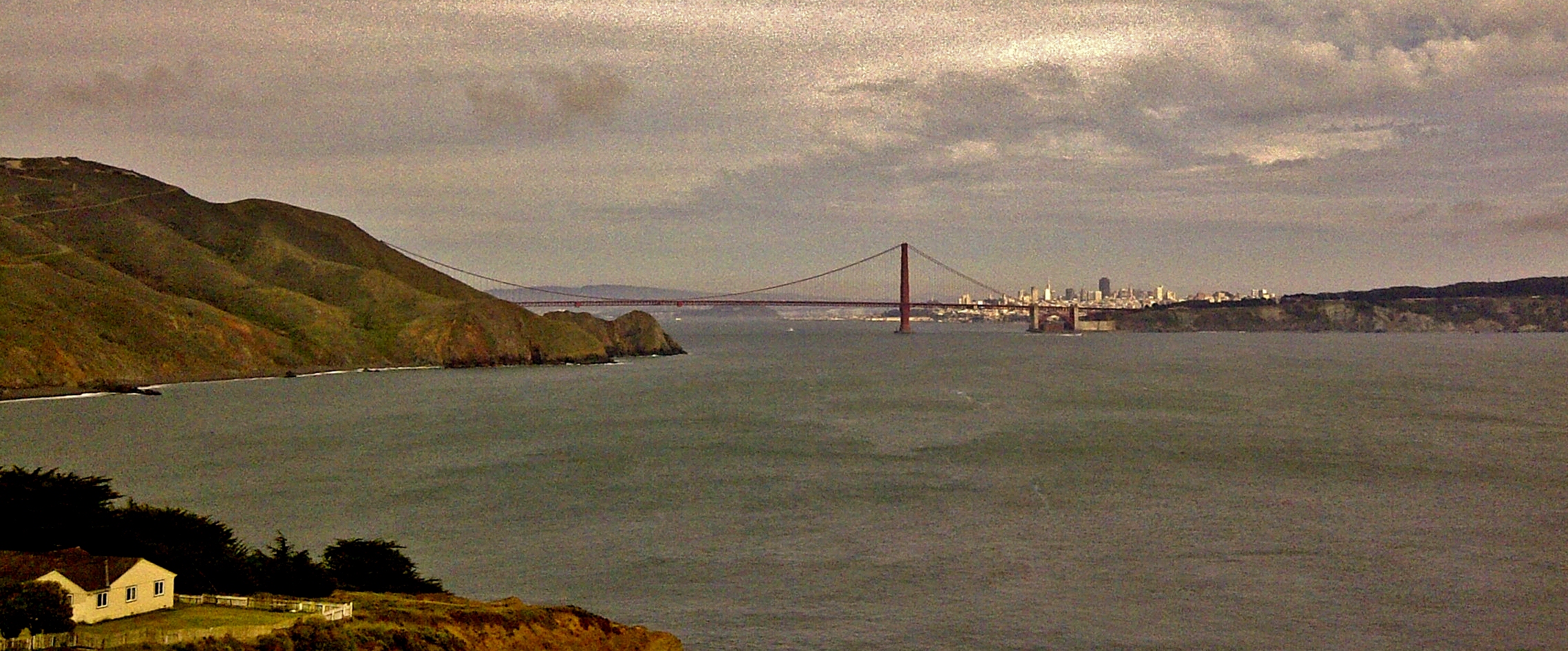




 MTK The Writist