I got on a plane in Texas and after 22 hours got off a plane in Uruguay, and discovered that while I was onboard the flight, Dolly Parton, 80, and Ruben Rada, 83, died. Both were enormous figures of folk music in their respective countries – the ones way down there next to each other in an alphabetical list, the United States and Uruguay.
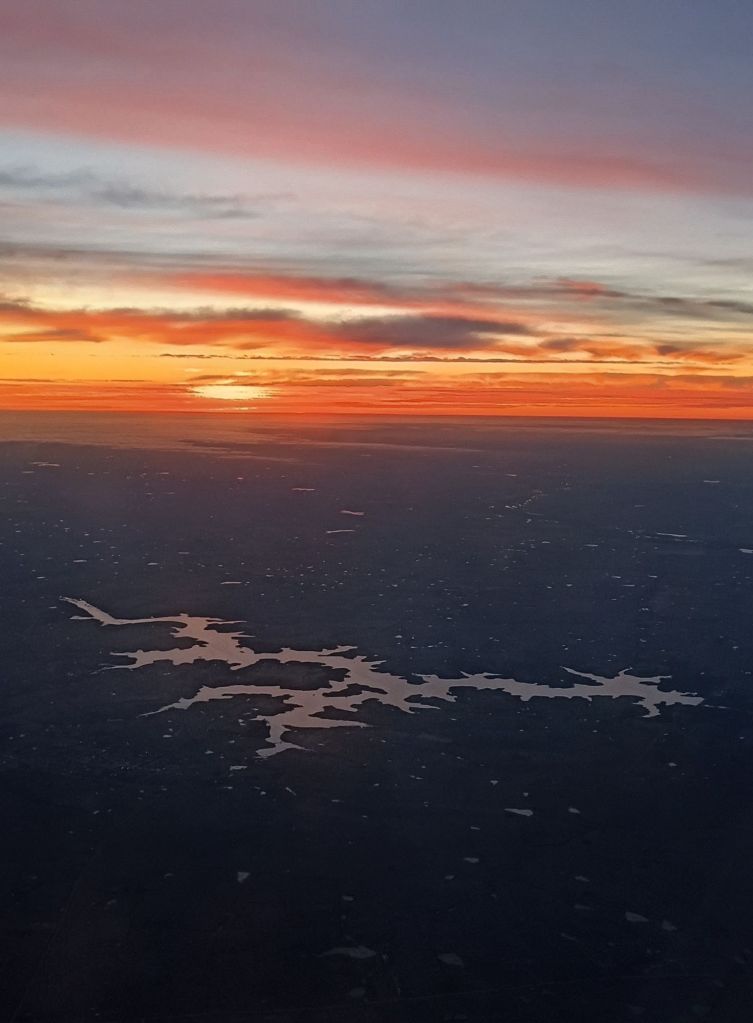
I woke up, bleary-eyed as we landed in Montevideo early on the 26th of August, put up the shade, and caught this incredible view of the Rio Santa Lucia at dawn, an image I dedicate to Dolly and Ruben:
I spent the last month in Uruguay, and uploaded 140 videos. Here’s the playlist:
There’s much to say and tell, but it is the last morning and I want this up so I can edit by phone when I am on the planes going back to the Northern Hemisphere.
You should definitely check back, because this post will be updated and rewritten repeatedly over the next 40 hours.
I woke early amidst a strange dream, shook myself of it, washed my face and shaved and walked down to the coffee shop.
Michelle. No Pete because it’s Friday, when he works at Lowe’s – “How Lowe can ya go?” he always says.
Michelle arrived to find the dishwasher broken, and so everybody else was getting a paper cup, but if I wanted a coffee mug, there were a couple of clean ones left. I accepted.
A couple of others trickled in, then the woman who lives upstairs from the coffeehouse and always comes down in her bathrobe to grab hers and go, arrived.
So I asked her and Michelle for a dream analysis. She proposed I ask ChatGPT. Nearly broke my heart in half. So, I mock-yelled out, “Oh I get it, no, I understand, no more human contact. Thought I’d come down to the coffee shop and get some perspectives on my dream, but we don’t do that anymore.”
Then we all discussed the idea that my dream was likely an internal expression of insecurity about what it is I am doing at this stage of my life. It was very early, but then suddenly four guys carrying crowbars, wearing neon yellow vests and sweatshirts announcing they were members of various steelworkers unions, arrived.
They were ordering coffee and when Michelle asked one of their member if he wanted room, he said no, he wanted his black, even though his mother told him drinking it black meant, “You will never find love.” Which was – wow.
I commented that seemed a little harsh, but that as a black coffee drinker for 30 years, he should respond to her, “That’s why I carry the mints.” Jeez, ma.
Meanwhile their colleague had noticed the pastries. “You don’t want no bread?” He asked the tall, younger man who had ordered coffee before him and stepped away. He pointed at the cabinet, “They got bread.” Michelle paused at the register to await his reply. The guy took a deep breath, swiveled back around and asked, “Is it vegan?”
It was 7:15 in the morning, place couldn’t have been quieter. Michelle literally initially laughed out loud. “What?” But then replied that no, the pastries weren’t vegan, but there was a hummus wrap that was. The guy responded that was too heavy and we all moved on. Three more steelworkers arrived. They were doing a demo/clean-up of material down the street.
But yeah, that was the story this morning, of the seven steelworkers – one a vegan and one who’ll never find love – as observed by an aging, insecure writist.
Decades of my mid-life were swallowed by the great American fiction. I could do nothing meaningful in it. The best I could hope for was working for the least compromised insiders I could find.
I gave what I had: my voice, my words, some small amount of muscle and legwork.
Mostly I supported other Americans. My name’s not on much of it. Yet evidence of our efforts exist as more than memory, despite the way the USA has changed. “Vast contributions never disclosed.”
Everything I write, say and do is governed by an oath I took when I was 14, a minor, instructed to do so by my mother, who sought to divorce my father. This was how I became an American, twelve years after my parents brought me here from India when I was two.
To this moment, I have felt utterly manipulated by indoctrination through the socio-political behavior of every American educational institution I attended, and every American I ever met, befriended or loved.
I cordoned off sections of who I am and behaved as asked by Americans to go to school, to have relationships. To find work. To find places to live. To participate in a society that considers me separate and apart from it, at best – and at worst, a terrorist.
And they have always treated me as if I demand correcting.
Americans have spent four decades telling me how and what to think. Some of it is useful. But my thoughts and beliefs have always been separate and distinct from the vast majority of theirs. I know all men are not created equal.
They condescend to me and treat me “less than” as an immigrant, first and most. It has always felt as if I am just being allowed to exist, and merely tolerated. Being told what they will call me. Being told how to be.
I tell people I am a pet in a zoo. Or that my life was like a Truman Show before the movie ever came out or the book was ever written.
I have been an American for 46 years and the entirety of US American society is oppressive to me. Or racist against me, my name and culture. Or isolating.
The lies are believed so broadly by coalitions of pseudo-social entities: religions, corporations and the military, that defining what an American is or isn’t is in my face all the fucking time. Fuck you.
I am totally alone because you isolate me for being a free thinker. You isolate me for not going on the ride of your pop culture or sportstainment. “It’s how we talk American.”
It’s how we begrudgingly let Guantanamo happen or a 20-year failed, illegal war in Afghanistan and Iraq, or Iran, now. Were any of these any less illegal than Russia in the Ukraine?
Decades of lies and obfuscation in the wake of the terrorist attacks of 2001 – a military intelligence failure that remains insufficiently explained – has created legions of disinformed loyalists to absurd fictions and positions of state. Democrats and Republicans, deluded both … programmed.
So much 100% bullshit spouted by indoctrinated ignoramuses all around me on the 250th birthday of the USA.
In anticipation of a good or at least interesting season of Spurs basketball, I opened a BlueSky account when the NBA season started and entitled it The Road Spur. I live-posted most games from this account. I also used it to repost videos and stories about the Spurs.
I went to eight Spurs games and filmed at them. These each have a playlist.
And I called the NBA Western Conference Finals and four games of the Finals as radio play by play.
I did this both to exactly document each minute of every game, and to practice radio play-by-play … to get long unused chops back for that type of performance.
Sets of ten: “My thirties, my forties, my fifties …” replaces sets of four-year chunks: “my undergrad, grad school, New York or LA years …” as I age out and no one remembers what I remember, anymore. Fuck Cassandra, I write my truths.
This is the 15th year I’ve blogged my existence, categorically as
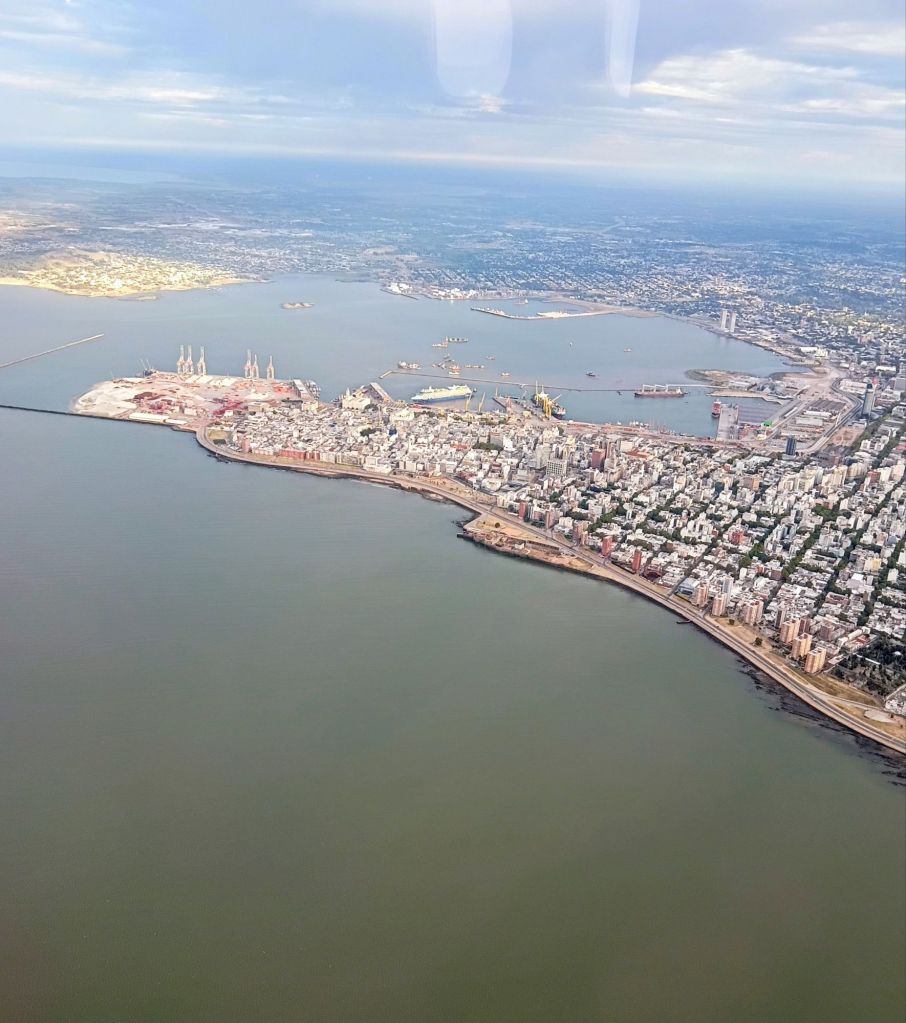
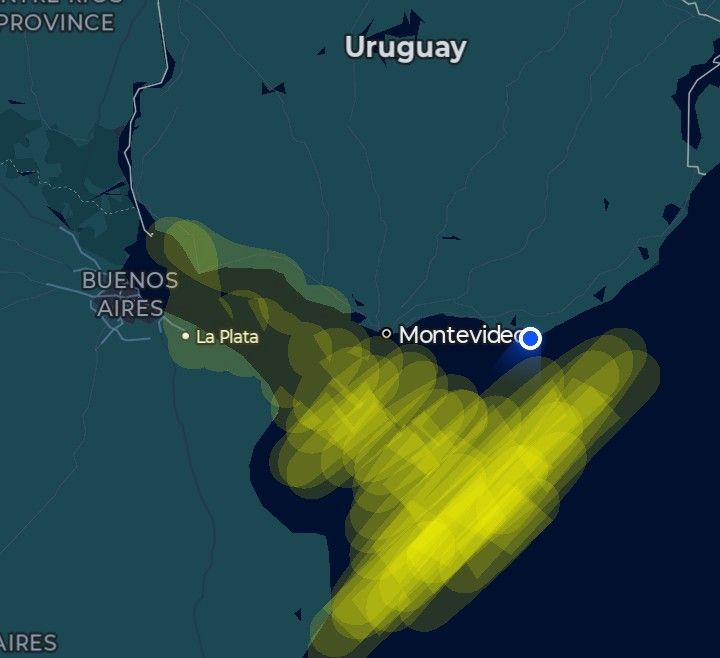
Montevideo, like San Francisco, is surrounded by water, a city on a peninsula. But the peninsula is pointier and, rather than sitting on a bay, the capital of Uruguay sits on the Rio de la Plata, a massive river which flows South from the confluence of the Rio Parana, the second longest river in South America, and the Rio Uruguay.
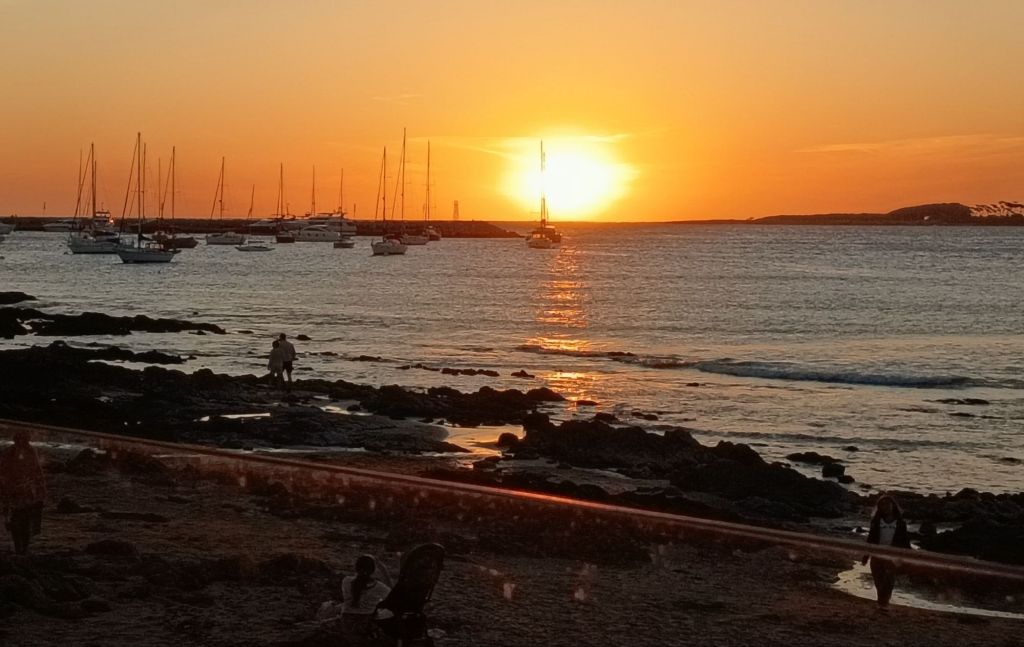
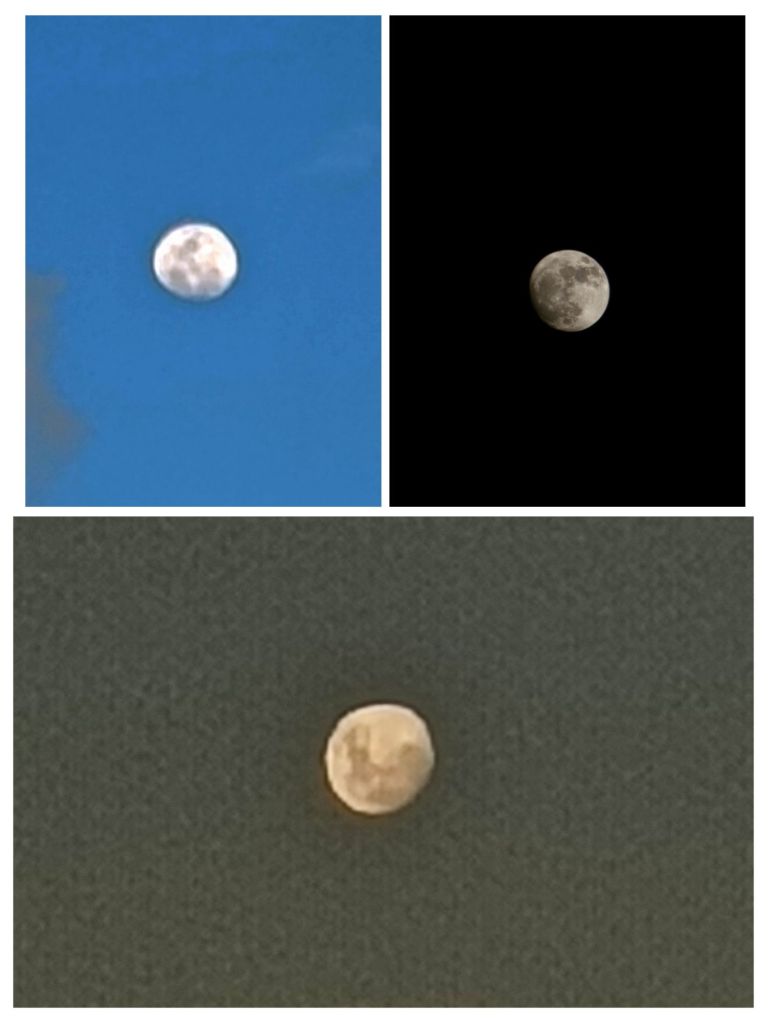
Montevideo, Uruguaymoonrise and sunset
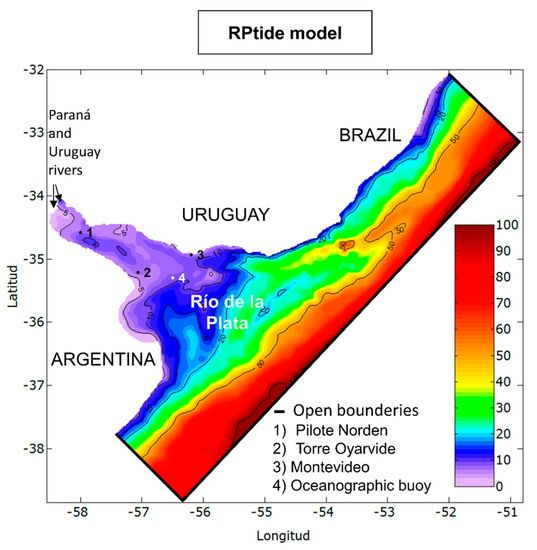
Sediments from the north are brought down through Brazil, Argentina and Uruguay to the South Atlantic Ocean, here. The water in the Rio de la Plata appears brown because of this.
It is classified a muddy estuary by NOAA, but to me it’s more like the massive delta of a river continuously rushing the silt of a continent out to sea.
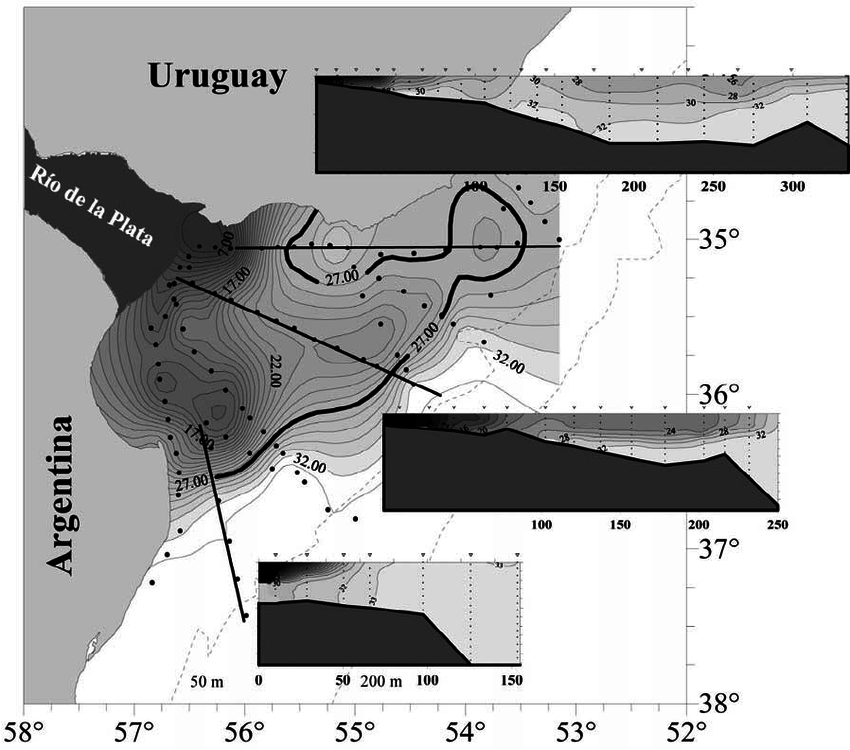
The Rio de la Plata is the widest river on our planet because the river pushes so far out into the South Atlantic Ocean.
The definition of the river is measurable by the lack of salinity in the water, and by measuring the tidal action.
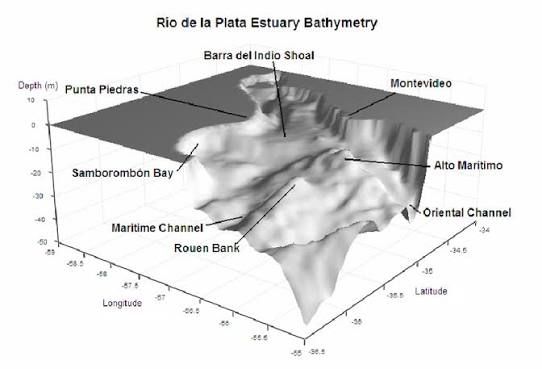
Also, bathymetry of the river bed,
reveals a long, tiered alluvial range pushing miles out into the sea.
Oceans are rising everywhere as a result of warming temperatures, but here a powerful river pushes back. This makes Montevideo and Buenos Aires river cities. They are influenced most profoundly by the action of the river to the sea, not the South Atlantic Ocean.
Montevideo is a clean, orderly city. It’s relatively flat and has diverse botany. As a port city, much of that diversity is from Colonialism – eucalyptus from Australia, fortnight lilies from South Africa, jasmine from Asia via Europe. The climate and the river allow palm trees and non-native conifers to grow comfortably adjacent to one another at the coast.
Buenos Aires is upriver, to the West of Montevideo, both cities at near 35° S Latitude. This was the furthest South I have yet been. It was tangibly different: the air, the sunshine, the light, the magnetic field.
The Buquebus ferry between the two capitals, crossing the wide, brown river, gives one a good feeling for the size of the Rio de la Plata.
There are few seagulls in Montevideo or Buenos Aires, one sees more shore birds and tidal hunters like the snowy egret
or, palm and fruit tree birds like the monk parakeets:
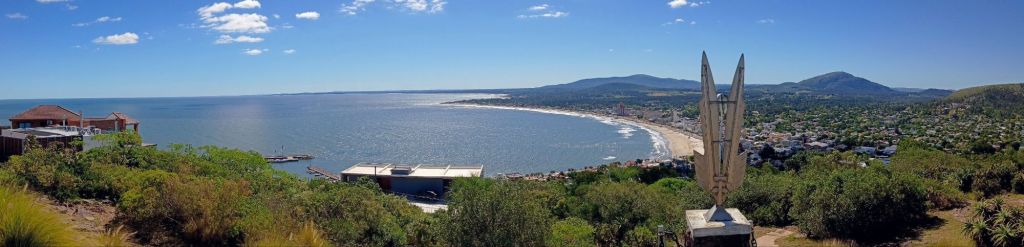
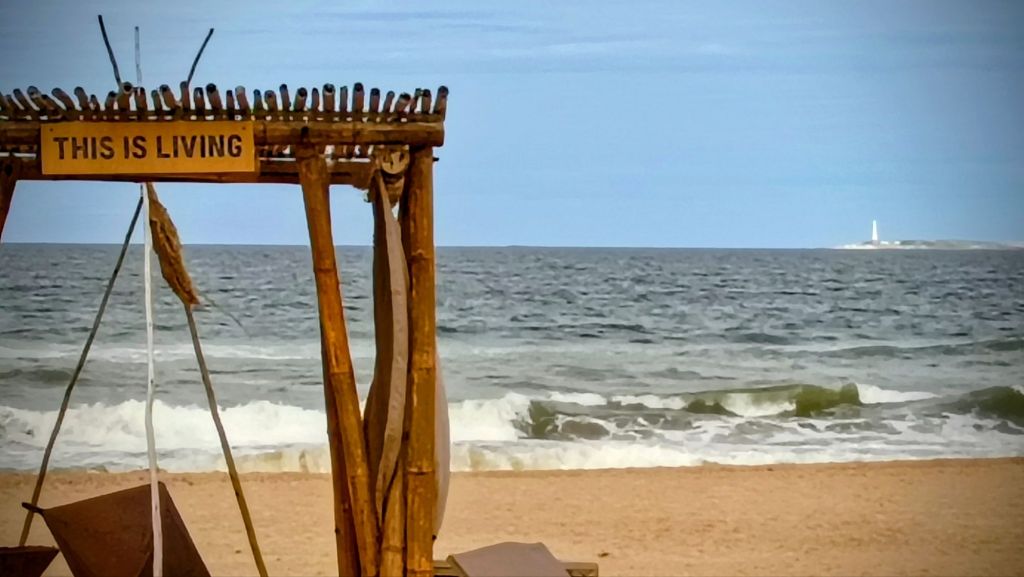
To get to actual ocean and see flocks of seabirds, one has to travel East from Montevideo, past Punta del Este, where the sea finally approaches the shore of Uruguay. The district to the east with ocean-facing shores is Maldonado, where I spent most of my time.
I rented a car and drove eastward from Punta del Este as far as Jose Ignacio and back, considering the beaches and the rolling hills and vineyards of Piriapolis, Punta Gordo, Punta Negro and Punta Ballena – home to Casapueblo, a sun sanctuary created by the artist Carlos Páez Vilaró.
Every evening at sunset, a crowd gathers to hear Vilaró’s poetic recitation to the sun. This is a moving and communal affair that I found very touching. Vilaró felt like a cherished ancestor of the art world.
The sky is a presence in a different way here. It’s transition to night was visible in another unique setting, also the result of an artist and visionary, just a few miles East of Casapueblo.
The James Turrell Sky Space at Jose Ignacio is a remarkable version of Turrell’s concept of an eyehole on the sky. This one is in an idyllic environment and made with imported Italian stonework of a remarkable quality.
I watched the color of the sky change from within the columnar ring of granite from the Dolemites,and saw Jupiter emerge from the inky blackness of night.
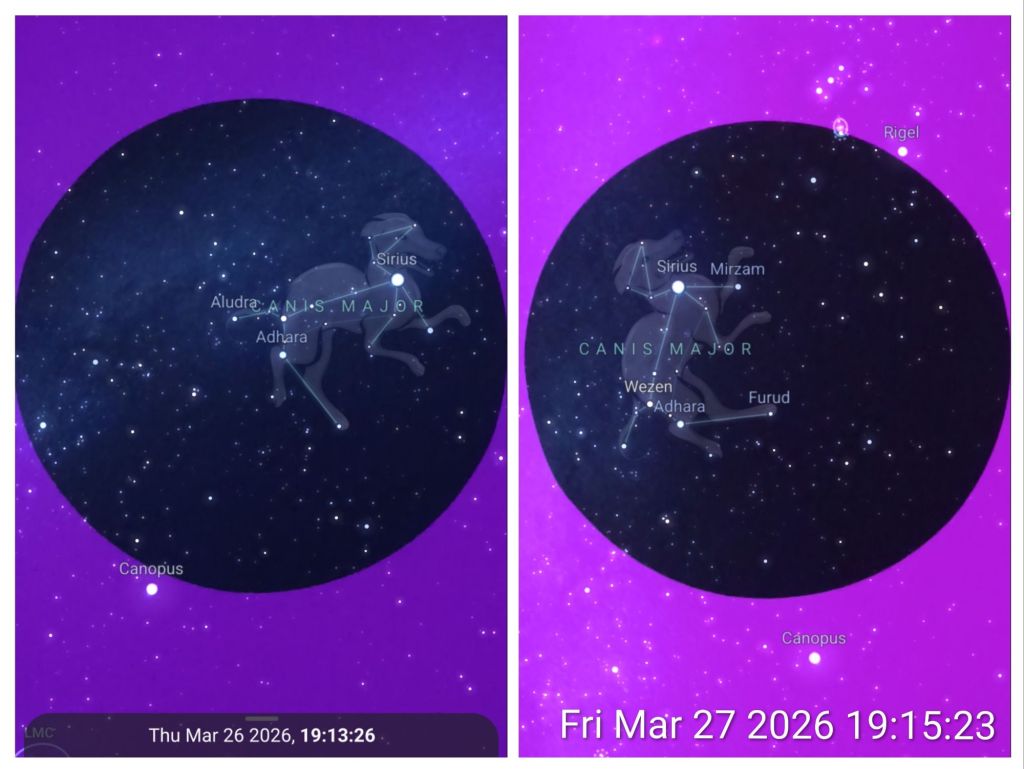
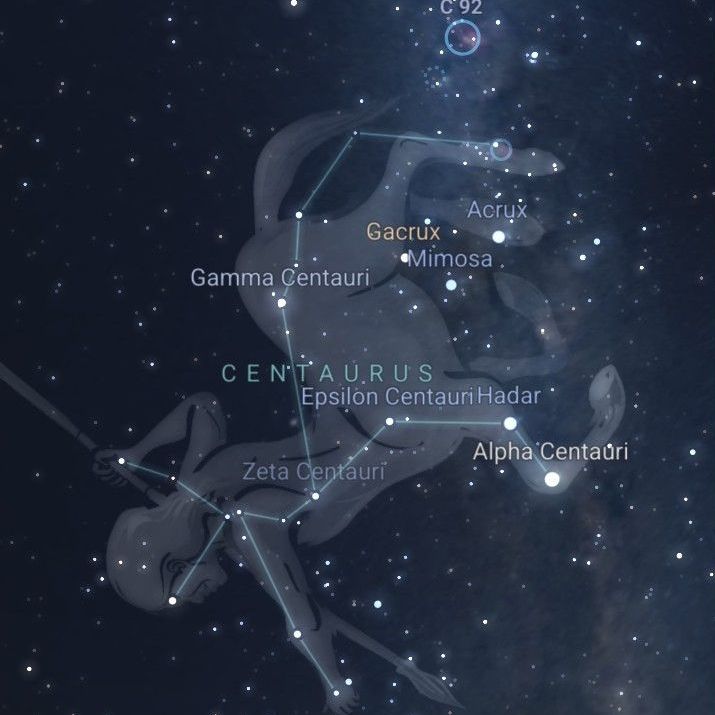
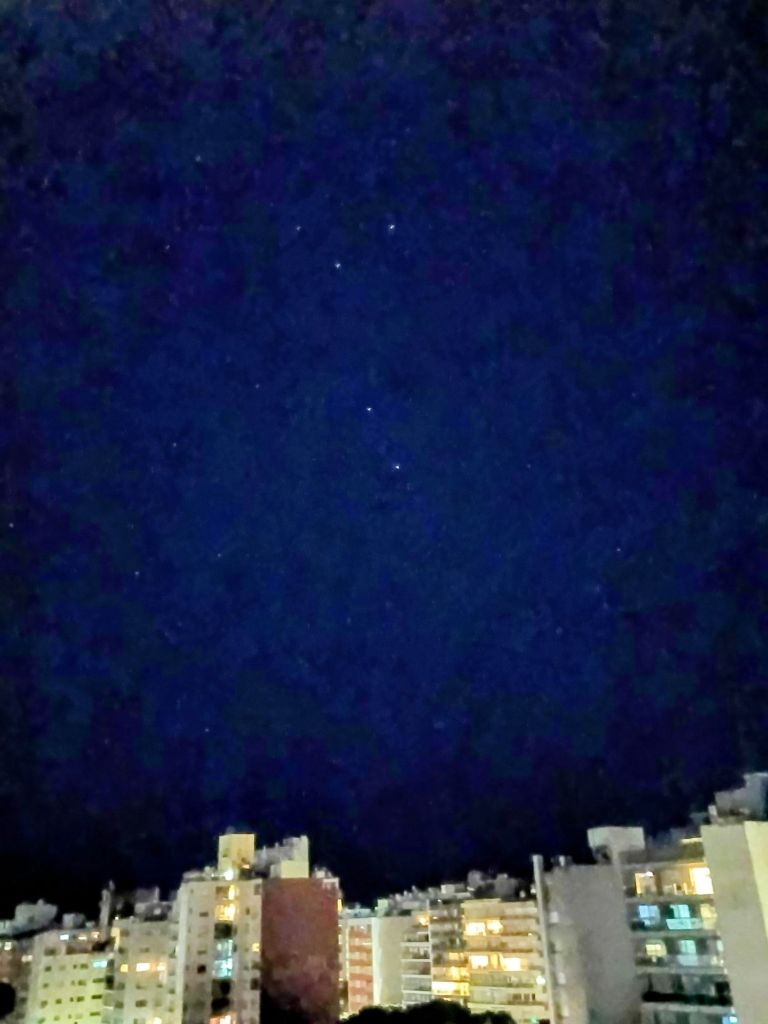
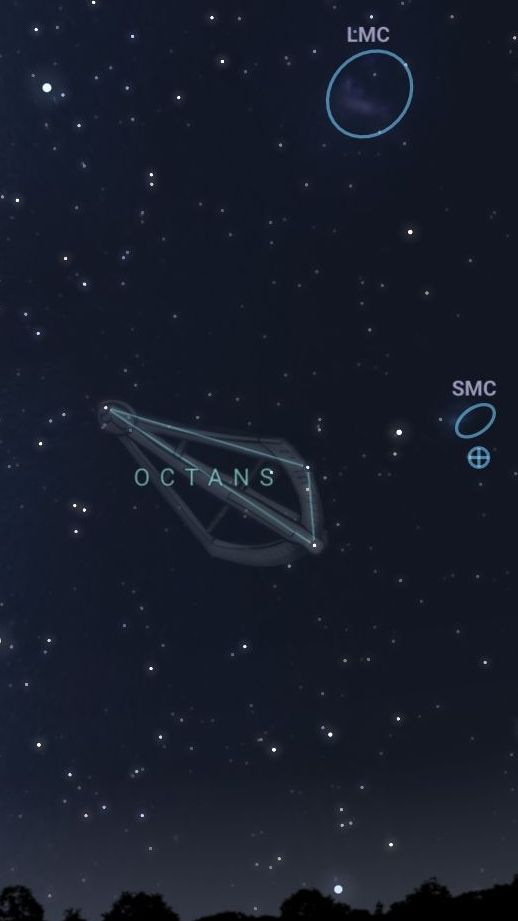
The night time sky was endlessly fascinating to me in South America. I saw Alpha Centauri for the first time in my life, and then saw Centaurus every night for forty nights, and learned the path of Sagittarius and Hydra before it.
The shape of the land in these “puntas” at the coast all the way down to Tierra del Fuego are like fractal curves of the earth. They give one a unique vantage on the celestial hemisphere. From the earliest days of my arrival I could see the curve of it clearly.
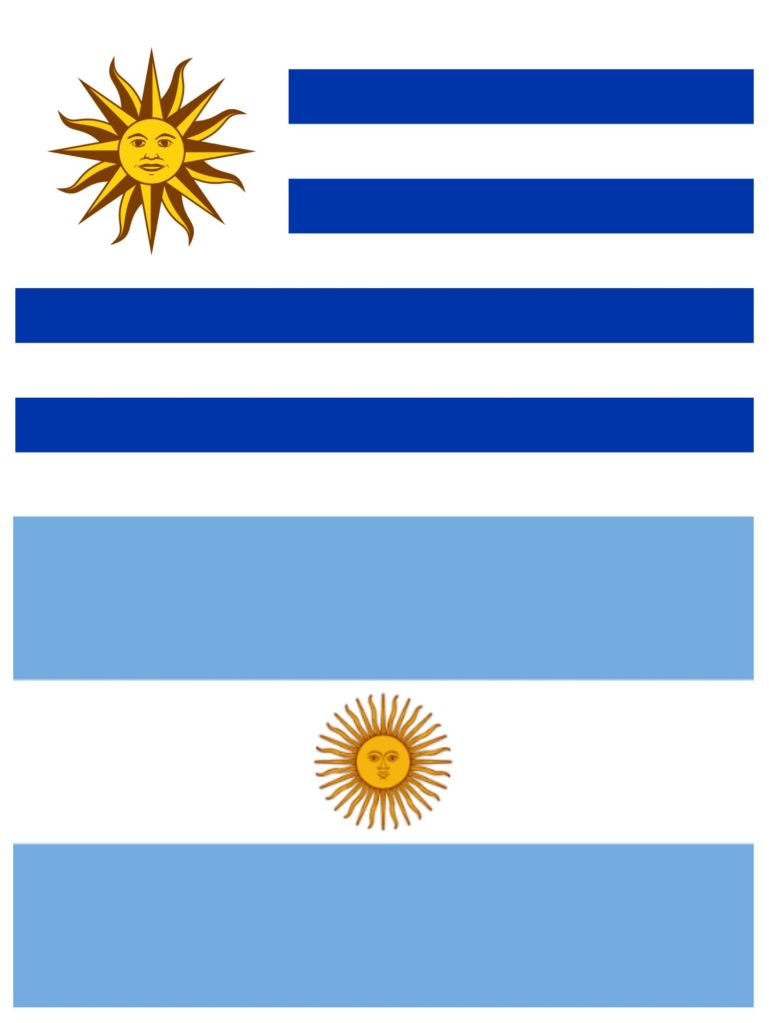
It was summer and the sun was a dangerous laser beam. The sun is on the flags of both Argentina and Uruguay because it shone at an auspicious moment of the May revolution of 1810, initiating their independence from Spain, but it could also be for the sheer power of the sun.
The solar rays and heat felt different here at the end of their summer. My skin darkened significantly. The light itself was very different from San Francisco. When I was in Punta del Este I was 10,000 kilometers from San Francisco, going against the 23 degree tilt of the world – the obliquity of the ecliptic.
The Riviera of South America, Punta del Este is a thriving tourist destination for wealthy Argentines and Brazilians. I was told the private airport that serves Punta del Este will end commercial flights on the last day of this year – only private jets after that. Condominium buildings and resort properties are being built everywhere.
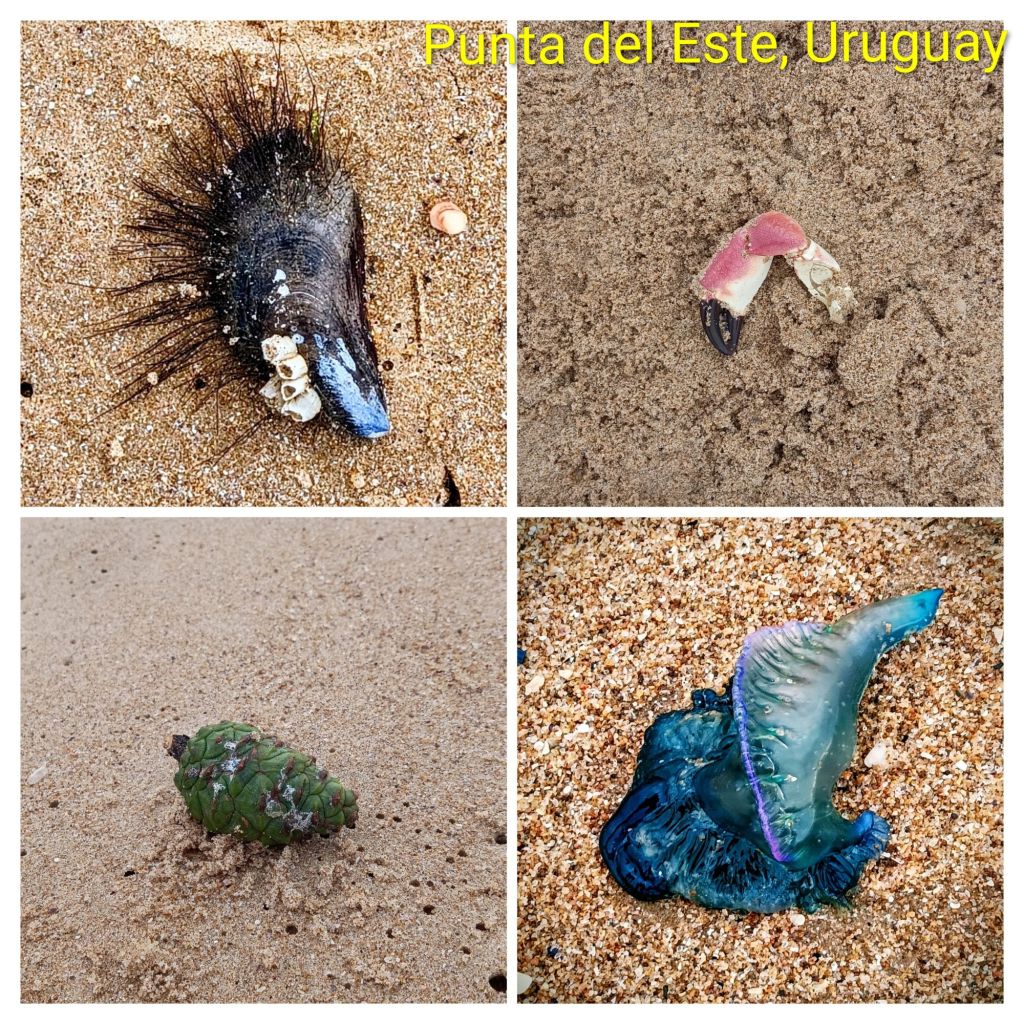
Punta del Este, Uruguay
Prices are climbing. There is tension between longtime residents and developers, and comedic derision of Argentine tourists by locals, though they call Buenos Aires a sister city.
Uruguyans have an advanced and refined culture that can be found even among the people living simple lives in Maldonado, but it’s different from that found in Buenos Aires. The pace is slower, more at ease in eastern Uruguay.
differing colors at low tide
Here is a playlist of videos of restaurants, museums and beaches from my 40 days in Uruguay:
Buenos Aires has the energy of a city of the world. The buzz and bustle of New York or Paris or Tokyo. I only stayed in two comunal, as the neighborhoods are called, Recoleta and Palermo, but it was a good first trip:
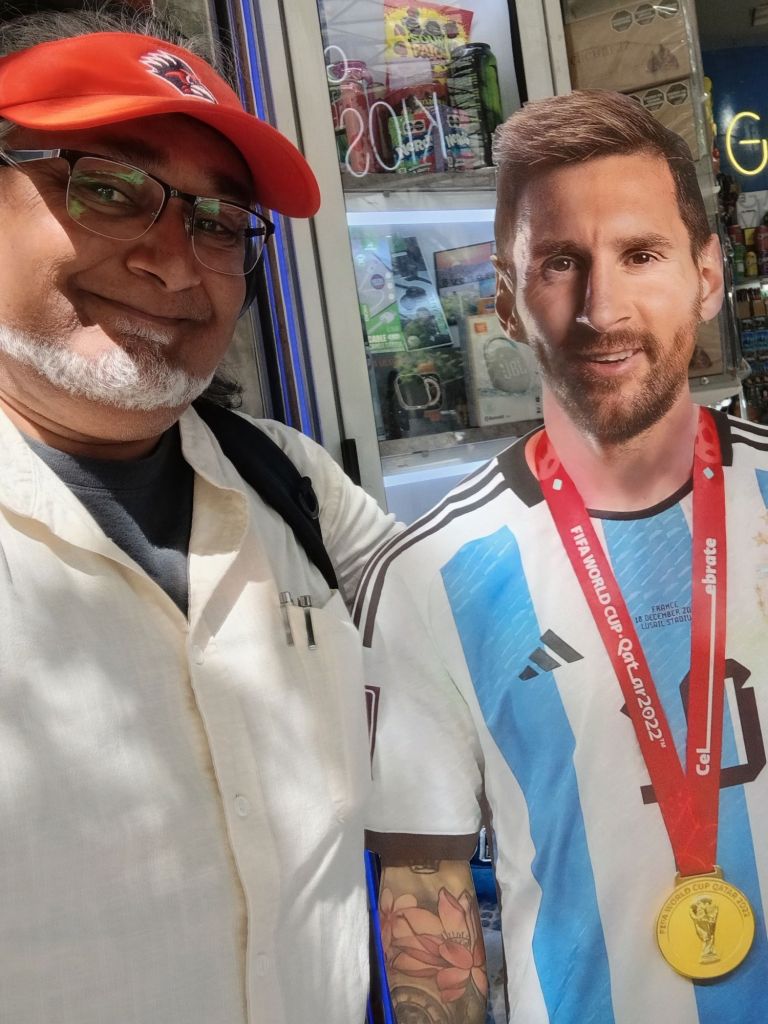
Here is me and Lio
and here is the complete playlist of videos from my two weeks in Buenos Aires:
As I did in Thailand three years ago, I made a study of the legalization of marijuana in Uruguay and found a thriving subculture of growers and producers working collectively with little to no interference from the government.
They are proud they were the first nation to legalize it but, in keeping with their character, don’t make a big deal out of it. It’s just obvious that the right position is legalization.
There is a collective sense of righteousness in Uruguay that reminded me of Japan – a rectitude. It’s what drives them to be progressive – doing the right thing.
Take look at this recycling station!
Here’s a story I have been telling about the Progressiveness of Uruguay.
I have been back in the US for three weeks now. I have many deeper memories of people, places and things I encountered in Uruguay and Buenos Aires, but the pace of life, once again, has forced me into this rushed first report back from my trip.
Hello, Sun. Once again, without announcement you come to visit us. Once again, in your long path from the beginning of life.
With your loaded belly of boiling gold to share it generously in villas and homes, country chapels, valleys, forests, rivers or in long forgotten villages. No one denies you belong to us all, but you prefer to give your warmth to those most in need — those who need your light to illuminate their homes made of tin; those who receive from you the energy to face their daily work; and those who ask God that you never fail to enrich the crops and grant a harvest.
It’s that you, Sun, you are the golden bread on the table of the poor. From my terraces, I watch you arrive each dusk like a ring of fire that never slows its pace and comes rolling through the years, punctual, infallible, inspiring my philosophy since the day I dreamt of giving rise to CasaPueblo and putting between these rocks the first brick and mortar. I remember it was a tempestuous day, and the sea had replaced its blue hue with a grayish tint.
On the horizon, a sailboat hard on its side tuning its path in an attempt to avoid the storm; the sky covered with escaping crows; and the squall combed the hills waking up possums and rabbits. Suddenly, like a supernatural omen the skies opened and you emerged. You were neat and round, perfect and delineated, placed on the stage of my initiation with the sacred strength of a church’s colorful stained-glass windows. From that moment, I felt God lived within you — and in your caldron melted the faith, and through your rays faith was transmitted wherever you went. The same golden arms that reach out and awaken light also warm the hills, or upon descending gild the sea.
Hello, Sun. How I would have liked to share your long journey and your gift of light. Because within your path you’ve caressed the life of thousands of villages; you’ve shared their joy and their sorrow; you’ve witnessed war and peace; you’ve inspired prayer and work; you’ve accompanied liberty; and you’ve made the darkness of prisons more bearable. In your path, alligators fall asleep, sunflowers awaken and roosters crow. Vagabond cats lick their whiskers, dogs scratch as if playing the guitar, and moles are dazzled as they peek out of their burrows. In your path, there is sweat on the forehead of workers and on the bodies of bronzed women carrying water back to the slums.
With your heartbeat, you arouse the sea and render music to factories, markets, and to the sowing and harvesting of the fields. In your path, stampedes of buffalo and antelope ran, the lion yawned, the giraffe was startled, the snake glided, and the butterfly flew.
In your path, the lark sang, the eagle took flight, the bat awoke, and the albatross migrated.
Hello, Sun. Thank you for inspiring once again my artist soul and for easing my loneliness. It’s that I have grown so much accustomed to your company that if I don’t have you I search for you wherever you may be. That’s how I encountered you once in Polynesia, when they crowned you king of the mother-of-pearl archipelagos and of the intricate coral reefs. Also in Africa, when you gave impulse to the revolutionary quest for freedom, and your reflection on the mirrors of their tribal shields injected them with courage.
I’m looking right at you, and I see you haven’t changed — that you are the same sun the Aztecs revered; the same sun of my pilgrimage while painting throughout the Americas; the sun who engulfed the mysterious and secretive Amazon; the one who lit up my sacred journey to Machu Picchu in Peru; and the one in the valley of Patagonia, or even in the Sioux and Comanche territories.
The same sun that took me to Borneo, Sumatra, Bali, the musical islands, and to the burning sands of the Sahara. In contrast to a bolt of lightning that in the night merely cracks whips of light, from your planetary kingdom your glowing rays continue active, permanent.
At times, mischievous clouds hide your splendor, but we know you are there playing hide- and-seek. Other times, instead, we see you smile when swallows or seagulls pretend as if you were paper on which to write the lyrics of their flight.
Thank you Sun, for invading the intimacy of my afternoons and diving into my waters. Now you will become the light of sea creatures and of their underwater secret universe, as well as the glow of ghosts that inhabit the womb of sunken ships.
Thank you Sun, for the gift of this golden ceremony and for impregnating my white walls with your phosphorus glow.
Among squalls and storms, traversing cyclones and gales as well as rainfalls and tornadoes, you were able to arrive here to depart once again silently in front of our eyes. Because your mission is to depart and illuminate other places.
Lumberjacks and fishermen await you in other regions where the night will disappear upon your arrival. As if responding to a magical chime, you will awaken cities, you will accompany children on their way to school, you will put in flight the joy of birds, and you will call people to daily mass. Upon your arrival, scaffolds will liven up with workers, markets will be filled with singing, the edge of the river will burst with women washing, and joy will enter through hospital windows.
Good-bye, Sun. When in one instant you will depart totally, the afternoon will die. Nostalgia will possess me, and darkness will enter CasaPueblo. Darkness with its insatiable appetite will penetrate under my doors, through windows, and any crack it can uncover to filter into my studio, giving way to nocturnal butterflies.
Good-bye, Sun. I adore you. When I was a child I wanted to caress you with my kite. Now that I am old, I’m content to just greet you while the afternoon begins to yawn.
Good-bye, Sun. Thank you for provoking a tear in all of us, as we reminisce that you also gave light to the lives of our grandparents, our parents, and loved ones who are no longer with us but still enjoy you from other heights. So long, Sun. Tomorrow, I’ll wait for you again. CasaPueblo is also your home. That’s why the people call it the “House of the Sun.” The sun of my artist soul; the sun of my loneliness. It’s that I’m a wealthy man as I possess a million suns, which I forever keep in the treasure chest of my horizon.
Last night I saw the constellation Centaurus for the first time in my 58 years in this material form.
Thus I also saw Alpha Centauri for the first time.
It has never before been visible to me, because I’ve lived only in the Northern Hemisphere.
It’s difficult to explain how meaningful this was to me. I first learned that Alpha Centauri existed and was just over four light years away when I was around nine or ten years old.
It appeared in science fiction stories as a destination, a source of alien intelligence, a goal, even. It became how, for the first time, I conceived of four light years as being nearby. Sci-fi writers imagined it expressively.
So last night, when I finally saw the procession of Sagittarius, Hydrus and Centaurus for the first time with my own eyes, it was a long-held desire, and an inspiring moment.
It’s a Tuesday. I arrived Sunday morning and so’ve been in Montevideo about 50 hours. I am at 35° South latitude, furthest South I’ve ever been. I finally get to see certain constellations
I said my next post would be Part Two, but of course, the life we all live now moves too fast and is horribly crowded with slop and garbage, so haven’t gotten to that. (Have faith, I shall. I have great stuff from Nusa Penida I want to share with you).
I’ve only used the typewriter and handwriting since last August, which is different. It’s note-taking and structure-making more than writing.
Oh, wait – and I’ve spent time with the stupefying reductionism of social media and messaging again – mind-numbing, attention-deficit inducing, crap writing. They think it’s quick-witted, but it’s puns and jokes from punks and blokes. Sigh. People don’t read anymore. So they can’t write. They can’t read. Illiterates.
But I write every day. Still. 50 years, every. day. I quit all the major socials I was on back in 2021, but have been posting to BlueSky lately which is a smaller, more chill place to engage. Friendlier, open-source, ad-free for now … so In addition to @mtksf.bsky.social, I cover the NBA’s San Antonio Spurs @theroadspur.bsky.social there.
It feels good, to be back at the keyboard, I guess. How’re you?
It’s just us. Maybe like 30 people will read this, at most, so get comfortable, make yourself at home, grab a tea or a beer or whatever. I do appreciate whomever you are. Thanks. Tell ’em MTK hipped ya.
The climate here is unique to me – in the mornings it’s cool and pleasant, but by 10 am, it gets warm, humid and sticky. Then around 4 o’clock in the afternoon, the temperature is several degrees cooler again. One can go from shorts and a tee shirt to a pullover and a scarf, the way we do in San Francisco, but the middle of the day there rarely, if ever, gets this warm: high 70’s. It’s 80° F today, – high season.
Montevideo, like San Francisco, is surrounded by water, a city on a peninsula. But the peninsula is pointier, and rather than a bay, it sits at the delta of the Rio de la Plata, which flows down from the confluence of the Rios Paraná and Uruguay at Punta Gorda in Uruguay. The Paraná itself descends from the Rio Grande and sediments from the north are brought down through the continent to the South Atlantic Ocean, here. The water in the river and delta appear brown because of this:
Uruguay sits to the East of the Rio de la Plata delta, and Buenos Aires, Argentina, to the South and West. I hope to visit BA next week.
Montevideo is a clean, orderly city. It’s relatively flat and has diverse botany. As a port city, much of that diversity is from Colonialism – eucalyptus from Australia, fortnight lilies from South Africa, jasmine from Asia via Europe. The climate and the river allow palm trees and non-native conifers to grow comfortably adjacent to one another at the coast.
Montevideo is diverse culturally from Colonialism as well. Because of Brazil to its North, the Spanish spoken here is influenced by Portuguese and sounds different. I have heard Spanish, Portuguese, South African idioms, English and French already.
Prices are going up and people are moving here right now. There is building and development everywhere. Like how Bangkok was when I went a couple of years ago – new apartment buildings going up all over the place.
Dawn, here
well, that’s it for now. Happy Year of the Horse to my Chinese friends.