• About
  • Fauna
  • Flora
  • Landscapes
  • Radio
  • sketchy stuff

MTK The Writist

~ Homo sapiens digitalis

MTK The Writist

Tag Archives: m.t.

Labor Day Memorandum

08 Monday Sep 2003

Posted by mtk in journalism, Los Angeles, protest

≈ Leave a comment

Tags

2003, 90.7fm, angeles, comment, editorial, evening, Karthik, kpfk, los, m.t., mtk, news

To: Staff at KPFK, 90.7fm, Los Angeles, CA

From: News Director, M.T. Karthik

Re: Labor Day 2003

Friends, enemies, colleagues, compatriots, Pacificans, idealogues and free radicals – a quick note at the end of summer:

Summer 2003

THEM:
Systematic Claims by the Pentagon that the Occupation of Iraq was wrapping-up, with quick, public replacements (in television terms) of all major players involved in the actual conflict. Powell for Rumsfeld, Garner for Franks, McClellan for Fleischer, Folksy Bush taking advantage of the summer to do the one thing he does well … chumminess with  boorish, Fourth-of-July loving Amerikka (Bush’s Birthday is right around then)

Franks was retired quickly and out of sight because he was named in the ICC lawsuit by nineteen Iraqis (Bush actually thanked Franks by name in the “End of the War” reality TV Show he produced for May 1st on the USS Lincoln) and the diplomatic flap resulting over threats from the US against Belgium in NATO and this has led to the current split over EU/NATO Security Issues. By contrast, Fleischer got a resignation party, the image of an honorable discharge.

The Establishment of a puppet council of 25 men, many of whom have not been in Iraq for more than twenty years. This Council has a red, white and blue flag and at least one of its members, Ahmad Chalabi, is actually a convicted criminal – a man who stole from Jordanian interests via a family-owned entity called Petra Bank.

US:
The USA Sucks commentary on Fourth of July

IRAQIS:
Car bombed the United Nations, assassinated envoy. Truck-bombed the Jordanian Embassy, and continuous guerrilla warfare against Anglo-American forces leading to more deaths of American soldiers since Bush declared war over and Iraq free.

Why I Wanted to Have a Child

05 Wednesday Mar 2003

Posted by mtk in essay, journal entries, Los Angeles, our son

≈ Leave a comment

Tags

child, have, Karthik, m.t., motivation, our, reason, son, why

Why I wanted to have a child

  • to give myself a reason to stay alive
  • for the experience
  • because Tifa wanted a baby and I knew we could do it
  • I immediately knew the WTC buildings were demolished in a controlled way
  • I wished for a child to whom I could tell the truth, based on my own experience

October 05, 2003

Los Angeles, CA

three days before my son’s first birthday

What Motivates My Writing

17 Monday Feb 2003

Posted by mtk in beliefs, Commentary, essay, journal entries, Letter From MTK, Los Angeles, thoughts

≈ Leave a comment

Tags

Karthik, m.t., motivates, mtk, my, what, writing

What motivates you in your work?

In a slow, measured and lucid way, a way that has revealed itself to me with heaviness over the past fifteen years, I have come to believe I am seeing the end of something.

Humankind must put an end to war or war will put an end to humankind.

To isolate oneself in contemplation, no matter how comfortable it may seem a position from which to view the world, is simply unacceptable; costly.

We must use the extremely complex tools we have invented for this purpose: to focus our energies and work toward more equitable and efficient distribution of the earth’s available resources.

We must put an end to warmongering.

We must disarm and then de-militarize first the United States.

It must be held accountable for its excesses and waste. It must assume responsibility for the Colonial Era and the good U.S. Americans, who know the truth, must begin the task of admission of the ongoing genociding of cultures in USA, of the economic reality that the current power structure has been built on slave’s labor [for the Millennium?]

Rampant, bloated overdependence as a result of the Era of Capitalism must be tamed and harnessed to bring the world together peacefully.

Those incapable of diplomacy should be jailed until they have calmed down and seen the error of their course.

I am motivated to aid those who see that thieves and dacoits have stolen the greatest of the earth’s resources for the last five hundred years and are not through yet and must be held to task for such barbaric idiocy; that seeks to interfere with the great continuity of human thought.

The USA is the world’s greatest impediment to peace, stability and progress; it must be told by humanity to stand down in the exact manner that international humanism told South Africa, “Aparteid will not stand.”

M.T. Karthik, February 17, 2003, Los Angeles

Our Son and His Country, 2002

12 Saturday Oct 2002

Posted by mtk in essay, journal entries, Los Angeles, our son, protest

≈ Leave a comment

Tags

2002, Karthik, los angeles, m.t., mtk

Family:

Ocean Mandela Milan has been born to my partner TRW and myself.
He enters the western calendar at 9:13 a.m. (PDT, GMT-8) on 8th October, 2002, a Tuesday.

He weighs in at 3170g and has a full head of black hair. His eyes initially appeared blue! But now they are getting browner by the day. We are not getting much sleep, but we are thrilled to have him with us.

We conceived Ocean purposefully, with all loving intent, courage and will, last winter. It is our first child. We have known each other only as adults. I met TRW in San Francisco when she was 22 years old and I have known her for more than seven years. We lived together in New York City for 18 months. We have relocated to Los Angeles. I am 35. She is 28.

In my partner’s work with young children (aged 0-6), and through her studies in college, preschool and in intimate family settings, it has become apparent that loving family structures benefit a child greatly. We have read, studied and personally observed that the most important factors in children’s development and happiness are parents who are attentive and loving and the presence of love, kindness and attentiveness in any extended family; parents, grandparents, aunts and uncles who are supportive, kind and encouraging.

Here in the U.S., we have both witnessed single parents, divorced parents, and unmarried couples who are more involved and loving than many of their married counterparts and who do have happier, more balanced children. We want to provide a safe, stable, loving, educational and enlightened environment for our child in which POSSIBILITY is a fundamental that makes life worth living and fulfilling. We do not want to create an environment that symbolizes RESTRICTION of possibility. We want to be organic in addressing the needs of our child. We do not want to create formalistic rules based on pre-existing social structures, rules that might limit the growth of our child’s mind, soul or body.

Recently, friends, family and others have asked if we are married or worse, if we plan to marry, or worse still, why we aren’t married.

Young children don’t know or care whether their parents are married; it’s simply not an issue before age 6. And while it’s true that as children become older (6 and up, school-age), they are more aware of social structures and may be influenced by peers or others who may imply that their parents are “supposed” to be married, we have witnessed this stigma lessening every year as times change. We are confident, from watching and learning from families and children and society around us, that in 2008, marriage will not be as serious a societal expectation and that our decision will not affect our child’s self-esteem or security.

We are quite proud to provide for our child’s friends, an example of a relationship in which parents are individually whole, total and perfect equals, mother and father, neither reduced or inflated by the socially-weighted titles of “wife” or “husband”, providing a happy and healthy home for their child. We are proud to be strong enough, stable enough in our love for one another and secure enough in our knowledge of self to be unmarried partners in the endeavor of raising a child.

We met in San Francisco and moved thousands of miles, abandoning personal projects and employment, to make our family and settle here in California, a place we love, where we feel secure. We made this decision to have a child because we care deeply about our world, are devoted to making it a better place, and feel that by raising a kind and conscientious child we can change the world. This pregnancy is happening now because we are lucky, and because it is meant to be. The world needs peace-minded, enlightened, non-violent, intelligent, humanist parents, badly.

Neither of us feels the institution of marriage is for us. We recognize marriage as something that many people have grown to expect of those who love one another and who want to have a child – but marriage, as an institution, has no personal meaning for either of us.

Religious marriage ceremonies conducted when any party is NOT a faithful believer in the philosophy under which the ceremony is being held have always struck us both as hypocritical and fundamentally bogus bonding rituals. And licensed marriage under a State that STILL refuses to recognize same-sex marriages and is completely unrepresentative of our political views is ethically reprehensible to us. We think of ourselves as brave in our deep commitment to TRUTH and honesty in politics, life and our love. We do not want to participate in rituals or support institutions in which we do not personally believe.

If we were to ignore the discomfort we feel and marry to satisfy our family’s, state’s or anyone else’s expectations, we would both soon regret it, and we strongly believe that we would be starting out on this venture with a negative feeling. Resentment—toward each other, toward the family or state that pushed us into it—would be sure to develop quickly. We don’t want that.

We have both witnessed tragic and debilitating divorces, and have seen the heavy expectation that marriage places on relationships. I was an unwilling participant in the terrible strain that orthodox concepts of marriage placed on my parents at an age when I should have been free of such concerns. Separation has been good for my parents as individuals and would have been easier to cope with had the heavy expectation of marriage not been such a significant factor. Many people trapped in marriages they do not want suffer needlessly in relationships that no God or good person would wish for any sentient being.

Neither my partner nor I know any couples in wildly successful long-term marriages. We do know couples who have been together for many years without marrying and who have strong relationships. Some of these couples do not have children but wish they could, eventually hope to. Marriage has never been a positive consideration for them in that decision-making process – only a negative: “Well, if we do have a child, we’ll HAVE to get married.” They say it because they are considering HAVING to satisfy someone ELSE. This (sadly common) sentiment in these relationships actually prevents beautiful, stable and wonderful people from committing to bringing new life into this world.

We both feel that if we were married we would lose control of the pure and honest love that we are daily working so hard to build. By deciding to have a child, we feel we are leading by example, providing an alternative for other unmarried couples – those who choose to be together and may have similar feelings but lack the personal security or the courage to have a child.

We are proud to assist in reducing the expectation society places on anyone in love.

There are things we each feel strongly about, and overwhelmingly, remarkably, my partner and I agree with each other about the most important environmental factors that will help determine what kind of person our child will grow up to be. That is in large part why we have decided we’ll be good partners in parenting. We enter into all our decisions together and with great thoughtfulness, foresight, and clarity.

This decision, not to marry, was the first of many decisions we made and will make together. It is a decision that reflects our personal beliefs, our experiences and the ways in which we hope to change this world and our child’s experiences in it.

Just as we respect others’ different opinions—and know that they are what make our society and world a diverse and fascinating place filled with cultural and social variance—we expect respect for our opinions in return.

Now, to his name:

We have considered dozens of names in the past year. I won’t go into the many possibilities, but I will tell you some of the things we like about the name we have given to our new son.

We both decided early on that we didn’t want to take either of our family names – we feel that a third new surname would serve to bond our family better since we chose not to marry. To this end we have given our son his own first, middle and surname. We will eventually decide whether or not we wish to take his name for ourselves, likely we will.

TRW and I have swum in many oceans and seas. We have both always loved the Ocean, having been born by it ourselves – TRW near the Pacific and I by the Bay of Bengal. It was a great day early in this pregnancy that we agreed that the English name for Ocean could be used for either a boy or a girl and that French, Portuguese, Spanish or Sanskrit variants could be used by anyone who chooses to do so (Oceano, is the Spanish, Swedish and Portuguese, and a particular favorite of mine). It’s easily translated.

It was TRW’s idea that a second initial with an ‘M’ would make “OM” and we agreed that would be nice. Had he been a girl, the name we first thought of was Madeleine (a French name that TRW has always liked and I remember enjoying in the children’s book of that title). After she had chosen the girl’s name she asked me to think of a three-syllable, ‘M’ name for a boy. Within seconds, the first thought was of one of my heroes, Mandela.

TRW agreed that the name Ocean Mandela has both a wonderful sound in English and carries international significance for its socio-political importance (a sidenote: Nelson Mandela titled his autobiography “Long Walk To Freedom” after a quote from Nehru)

The hardest part for us was choosing a surname for the baby. We ended with Milan because it means “union” or “coming together” in Sanskrit. We are an inter-racial couple and we feel this name is progressive and beautiful. In addition to creating the sound ‘OMM’ with his initials, the name has the following anecdotal niceties.

As letter number 13, ‘M’ is the center of the western alphabet providing balance.

The numbers of letters in each name corresponds to the number of syllables in the haiku form of poetry from Japan – 5,7,5.

Only afterward did I remember Milan Kundera the GREAT Czech writer – exiled in Paris – whom I have read and enjoyed for decades.

I, for one, call him “Little Man” and approve of Manny or other variants as long as they are tasteful. We look forward to introducing you to our son, Ocean Mandela Milan.

I mean that as the aforementioned Czech-writer Milan Kindera once wrote: “An illusion revealed and a rationalization unmasked have the same pitiful shell. Nothing is easier than to mistake one for the other.”

My life in the USA has been a constant disagreement with the powers that be. I find them deeply bigoted, fascist and corrupt. But until 9/11/01, I allowed myself the thought there was hope for this place. I always worked hard to believe I was helping to educate and create a better USA than the one I was forced to move into. That we would one day come to common ground. What nonsense! This place is run by supremacists and pseudo-Christians who suck oil, water, air and energy from the rest of the world and then justify their bloated, self-serving attitude. 9/11/01 only made what was covert, overt. Unmasked the rationalization of empire.

We were all spending the last decade talking about “post-colonialism” only to find that in the Christian’s 21st century, colonialism is alive and well, and its latest manifestation, the USA under Bush and Cheney, is no different from the ones who locked up my grandfather in a jail in his own country in 1928 and 1931, and who claim to have “civilized” India with railroads. They are only wearing a different mask.

My son, my partner and I vociferously protest the American military intervention planned for Iraq and the covert operations that these pigs continually run around the world – in the Philippines, in Colombia, in Afghanistan, in Africa, with armadas on all high seas, overtly militant, with global positioning technology accurate to the size of a dime.

Because of my protest work for the last fifteen years, (and because of the sensitive work my father did for the American military) I am absolutely certain that my e-mail and phone are monitored by the NSA. Though I have always followed their rules and have struggled mightily to work within their system, there is no real freedom for me here and there never has been.

The American nightmare is what I hope my son can avoid. My partner and I – truly global citizens who believe in world peace and harmony between peoples – intend to raise him to lead us away from war – to disarm the USA and to demand multi-lateral, peaceful disarmament of the entire world for his grandchildren.

Us = Them, installation feat. "1984" performance, Los Angeles, 2002

11 Wednesday Sep 2002

Posted by mtk in artists books, installations, Los Angeles, MTKinstalls, performance, protest, talks

≈ Leave a comment

Tags

1984, 2002, 331/3, 9/11, allerslev, aloud, alvarado, anniversary, booklyn, books, brouwer, cyrus, Daullatzai, ferrara, frank, gallery, George, Karthik, L.A., LA, los angeles, m.t., mccabe, mtk, novel, orwell, Parkel, read, Rigo 02, soheil, sosa, spagnuolo, sunset, tactic, us, us equals them, us=them, usa, Wagner, Weber, Wilde, williams

usequalsthem001

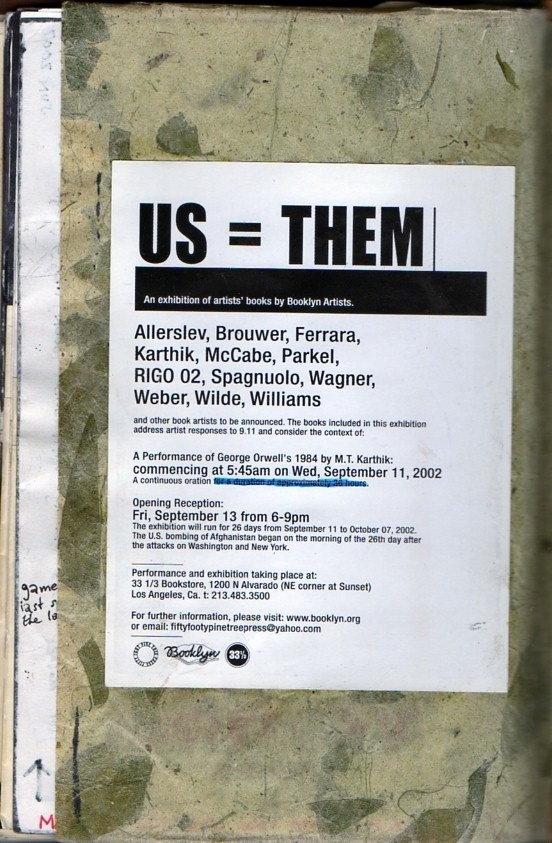
Us = Them, curated and produced by M.T. Karthik, Fifty Foot Pine Tree Press, Wine Hobo Trio, Booklyn Artists Alliance and 33 1/3 Books and Gallery, Sunset at Alvarado, F. Sosa, Proprietor, September 11, 2002

1984, performance by MTK

On September 11th, 2002, beginning at 5:35am Pacific Time, corresponding to the moment the first plane struck the World Trade Center in New York City exactly one year before, MTK read George Orwell’s novel 1984, aloud in its entirety at 331/3 Books and Gallery, at the corner of Sunset and Alvarado, in Los Angeles, ending at sunset:

as a performance element on the opening day of the Booklyn Artists exhibition

Us = Them, installation feat. “1984” performance, Los Angeles, 2002

11 Wednesday Sep 2002

Posted by mtk in artists books, installations, Los Angeles, MTKinstalls, performance, protest, talks

≈ Leave a comment

Tags

1984, 2002, 331/3, 9/11, allerslev, aloud, alvarado, anniversary, booklyn, books, brouwer, cyrus, Daullatzai, ferrara, frank, gallery, George, Karthik, L.A., LA, los angeles, m.t., mccabe, mtk, novel, orwell, Parkel, read, Rigo 02, soheil, sosa, spagnuolo, sunset, tactic, us, us equals them, us=them, usa, Wagner, Weber, Wilde, williams

usequalsthem001

Us = Them, curated and produced by M.T. Karthik, Fifty Foot Pine Tree Press, Wine Hobo Trio, Booklyn Artists Alliance and 33 1/3 Books and Gallery, Sunset at Alvarado, F. Sosa, Proprietor, September 11, 2002

1984, performance by MTK

On September 11th, 2002, beginning at 5:35am Pacific Time, corresponding to the moment the first plane struck the World Trade Center in New York City exactly one year before, MTK read George Orwell’s novel 1984, aloud in its entirety at 331/3 Books and Gallery, at the corner of Sunset and Alvarado, in Los Angeles, ending at sunset:

as a performance element on the opening day of the Booklyn Artists exhibition

Gallery

Soon, a zine, 2002

25 Saturday May 2002

Posted by mtk in artists books, collage, jazz, journalism, Los Angeles, poetry, travel

≈ Leave a comment

Tags

2002, antonio, california, drawings, hindu, Karthik, m.t., media, Mingus, mixed, mtk, road, San, soon, texas, trip, trotsky

This gallery contains 19 photos.

79 Days Before the Towers Fell

23 Saturday Jun 2001

Posted by mtk in journal entries, NYC

≈ 2 Comments

Tags

2001, beach, before, brooklyn, chinatown, coney, days, fell, greenpoint, island, m.t., m.t. karthik, mtk, subway, towers, walk, williamsburg, wtc

Rent in Williamsburg has risen to the point where a small, clean, $700-a-month, one-bedroom apartment is impossible to find, requests for roomshares are on the rise and complaints about the cost-of-living are played out.

Next door on this very block, “loft building” banners have gone up across construction sites in two empty warehouses. The owners advertise cookie-cutter, 750-1200 square-foot apartments for $2000 – $4000 a month with amenities like all new appliances, double height ceilings, gas heat and hot water; on flyers at the local deli where, yesterday, a woman picked up a flyer, stared at it and seriously muttered, “there goes the neighborhood.”

Burns, a bicycle mechanic and bassist, and Dr. Tracer, an instructor at a local community college, live on a four-year-old lease and pay $1000 a month for perhaps 700 sq. ft. – the back space of which Burns has converted into his bedroom.

Ten days ago I took the world’s longest nonstop flight from Hong Kong to Newark.
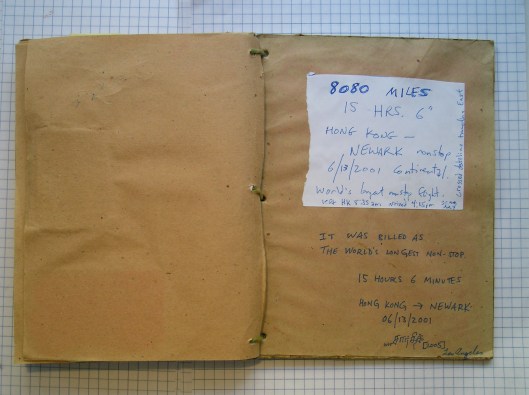
I’ve been sleeping here in Burns’s room when he leaves for gigs or work and writing with his laptop on the nightshift.

I rose from my daysleep just after midnight to find Dr. Tracer had dropped acid.  He was about an hour into his trip when I awoke and he offered me a tab. I meditated, ate and dosed.

It was 1:20 in the morning and I was awake and alert for the next 15 and a half hours for a cool, rainy trip on a Saturday morning in June in Brooklyn and Manhattan.

Dr. Tracer illustrated without malice, frustration or the use of traditional spoken language that as a result of only 180-degree sensory input, a person who cannot hear evolves under a powerful sentiment of paranoia about what is behind them or out of their field of vision.

We began walking through Williamsburg at 2:30 in the morning, past the swinging doors of a bar. Partied-out, Friday-night boozers stumbled into the street looking for taxi or subway or deli or restaurant doors, their eyes blearily seeking something recognizable, the stench of smoke and alcohol wafting off them.  Music drifted faintly out the open doors.

We stopped at a deli, where a broad swath of bottletops had been crushed into the asphalt in a dense, rectangular splay of circles – a speckled count of the beers drunk at the cornershop on hot summer days, when tossing a bottlecap out onto the street meant it got stuck in black, melted goo. A girl was hanging around the pay phone, Brooklyn summer night; couples fell into each other, lazy eyes smiled, engines fired up, a black sedan pulled away from the curb.

We had a coffee and made our way to a bar off McCarren Park. I drank a couple of martinis, Tracer had cold white wine.  We conversed until 4:30, discussing broad philosophical topics casually. We were specific on the matters of death, writing and deafness.  At one point Tracer and I agreed that when we were children, we were surrounded by others who did not understand how to communicate with us, whose methods were sympathetic but crude. This we agreed, drove us to write.

Two women, a redhead and a brunette, walked in and seduced two men.  The women sent one man home alone and, as he stumbled out, but before the door had fully closed, the brunette said coldly to the redhead:    “T-G- H-G!”-  in time with his steps, with the door swinging closed and with the click shut, she mock-laughed as she fell forward on her stool, elucidating: “Thank. God. He’s. Gone.” as she turned back to the man who remained.  At last call, they walked home with the second man, the brunette told him they wanted to teach him something. We were the last customers and left shortly after this.

A few blocks away, we ran into Tracer’s former roommate, a German who shared his apartment for the three years before Burns moved in. The German’s wife and child were out of town and he was up at 5:00 in the a.m. strolling neatly out of a bar, wide-eyed, looking for cocaine, asking if we had any – we did not.

The sun rose quickly, early on one of the longest days of the year. Dr. Tracer and I returned to the apartment, rolled a joint and continued talking.  The joint was affirmative and Tracer had a broad laughing fit while in the bathroom alone. We decided to travel.

We had a coffee, then took the G and the F trains to the ends of their lines, arriving at Coney Island just past 8:00 a.m. It was a rainy morning and thick, grey clouds masked the sun. The light was a cold-white glow behind them.  The beach was a neat, empty, expanse of sierra-colored loam, darkened by wetness in neat lines by tractors pulling wide metal rakes. The sand was made soft by the thin, white line of foam that the edge of each wave drew as a loose parallel to the horizon, a black straight-edge between the gray sky and the grey sea.

We began walking from the boardwalk to the beach silently, occasionally signing as we walked. We passed an elderly, disheveled woman, who was entirely wrapped in a blanket lying on the beach. After we passed this lump of cloth and human flesh, I saw peripherally that she rose from her reclined position. I then clearly heard her say, “who knows … maybe they like walking on the beach.”

I have never known LSD to contribute to paranoia in me. My use of it has generally resulted in hyper-attenuated hearing and sight and an alertness and remoteness of character. But even now, I wonder about what I heard and saw in that moment.

It could have been a woman on a phone call talking to someone else about something else, but her physical movements implied awareness of us. It could have been a crazed, semi-lucid homeless person babbling incoherently to herself, afraid of people approaching and passing her encampment on the beach or, it could have been an agent of some U.S. policing department observing us as we visited the beach. More engagements with seemingly random others on our trip would increase my feeling that we were being closely observed.

Dr. Tracer and I sat by the ocean, waded, ate a bag of chips on the lifeguard’s chair, had Saturday morning at Coney Island Beach for forty minutes and decried the lack of sunshine. I tape-recorded the sound of the waves and the seagulls to listen to back in the city.

I hoped, pathetically, that the sun would emerge until Tracer pointed out that the storm off the coast was headed inland.  We left the beach before the rain started.  As we left the boardwalk, vendors were opening for business.  We had a coffee.  The first drops of rain struck us as we crossed the street to the subway. We decided to go to Chinatown.

We caught the N and smoked a bowl in an empty car during the long stretch between the end of the line and 50th. Then we switched to the operator’s car to watch people.  On the way back, I glared out the windows at the grey sky defiantly until we went underground. Dr. Tracer finally joked, “when we get out on the other side the sun will be shining down on you … vindictively!”

A black, 40-plus-year-old man, clean shaven and slightly balding, got on and sat beside me carrying a rustly collection of objects in two plastic bags; black plastic covering a white plastic bag inside. He had a small band-aid strip stuck on his head exposed below his high hairlines. The obvious rectangular strip was set perpendicular across a straight, red line of blood above the temple – the wound was obviously fake, staged. The man fumbled with his possessions, continuously muttering to himself. He could as easily have been a semi-crazed denizen of New York as an undercover NYPD detective.

Once we moved from the empty car in the back to the operator’s car, many people who got on the subway on their way to Manhattan seemed like characters, with staged aspects, or too-perfect appointments. I wore headphones, listening to a CD of sarangi and hearing the outside world leak in. Two women with children sat beside us, a young boy in a stroller, his mother holding his infant sibling. They were northeastern Asians, maybe Korean. Their grandmother was gently inspiring the children to be friendly.  The son, cool, observant and thoughtful, seemed worried; the baby was still at the age of wondering at the world.

This was the operator’s car on the N, Saturday morning at 10 o’clock from south Brooklyn to Manhattan on a rainy day in June and I report with the impunity of a witness: public space in New York is undeniably equally peppered with lonesome egos, expressors of unimaginable histories, and potentially dangerous operatives for larger interests, both governmental and mafioso.

Another example: Agent 99, who subsequently led us to Canal street, starts with a pair of plain, white leather sneakers with silver dots evenly-spaced along the edge of the sole – thumbtacks – and a short, hot, controlled blaze of red, orange and yellow flames painted on the outer skin of each shoe, burning up, licking at the clean white leather shoetops toward the short, white, rolled columns – socks – that lead to a pale leg elegantly colored with intricate flowers of reds and blues – tattoos – into a sea of limpid green: an opaque, green silk skirt with a lime-orange border.

She wore a plain blouse and her hair was colored with straight, serene blonde streaks. She was reading a hardback with a romance cover and flowery letters that read, “The Sorcerer’s Apprentice.”  The glance of anyone on her side of the train who bent over to set something down, pick something up or tie a shoe was met with that leg, rocking up-and-down, regular as a pendulum, leading to a carefully put-together young woman on her way to Mallhattan.

We emerged from the subway to the rainstorm we’d seen hovering dark over the ocean. The World Trade Center Towers disappeared into thick, coal-colored clouds. The curved disks of the shoppers umbrellas floated through space, most were black, bobbing with the motion of their porters.  The storm had traveled overhead as we traveled underground and was now present broadly over Canal street.

The huge, warm, tropical drops, falling down, on and around street signs and ads with Chinese and English text, reminded me of Taipei where I’d been two weeks before during the see-bei-oo rainy season.

We stood under the awnings of the Asian marketplace as rain poured down. Oblique, glowing flashes of white light flooded the clouds internally, leaked out the edges.  Thunder rolled.  Rain fell and we passed through it, mindless, walking between the drops.

We crossed between corners and in front of the slow-moving traffic. Many people shopped. Two tall women, one with a necklace that spelled, “dirty south,” in cursive, solid gold letters, awaited a man, shorter, rounder, balding, mustachioed, who was buying a souvenir.  Young southern Europeans, women, were shopping.  An elder, African-American man bought a pair of scarves. Il pleut.

We stopped at a Vietnamese cafe, had hot tea, then pho, rolls and beer.  We returned to Brooklyn on the J. It was past noon.

Burns had gone to gig a wedding.  His cats, Percy and Mingus wandered around the house, mewling for food.  We fed them.  We rolled another joint.  We’d spent 27.00 on food, 25.00 on liquor, 4.50 on transportation and 3.00 for three coffees each, USD 59.50, total.

We were coming down. I was sitting in a chair opposite Dr. Tracer in his room in the apartment.  It was silent.  The grey light of the sky outside was only visible through crevices in the blinds and around their edges.  Tracer had angled a desk in such a fashion that, sitting behind it, he could see himself and me and the door out, mirrors reflecting the interior of the room around him and nothing else.  His back was to the window and the room behind him. I was able to see the window and the lightning that flashed outside.

This was the end of our trip, 12 hours after dosing and after a big meal and a long, wet walk in the rain. In my fatigued simplicity I became conscious of the sound of the weather. We were talking and the thunderstorm was accentuating Tracer’s speech.  It grew in intensity and I could no longer focus on what Tracer was saying – the anxiety of it made me jump up. I suddenly remembered that the window in Burns’s room at the back of the apartment was open. I made my way to the back of the apartment saying, over my shoulder, “the rain! … I left the window open!” I realized only later that perhaps Tracer could not hear me or see my lips.

It was pouring.  There was the continuous sound of thunder following ever-nearing lightning.  At the back of the apartment, rainwater was hammering the wooden sill and dousing objects that lay near the window with a fine spray.  Some water splashed my arm in just the time I took to shut the window.  I went back to Tracer’s room flush with the excitement.  He remained behind his desk, but was standing, pacing as he spoke.

I began to realize my error and clumsily showed him my arm, which now was hardly wet at all.  He continued speaking and I realized I wasn’t following him. I sat down opposite him again, trying to compose the communication space that I had broken.

“… and <crack> … things that aren’t funny … No!” is what I heard him say as he took his seat and pointed down the hall.

Then, not immediately, but a second or two later – as Tracer continued speaking – there was an intensely loud, short, sharp <CRACK>! corresponding to a bolt of lightning that must have grounded somewhere very near to the apartment. It was shocking – by far the loudest sound I’d heard in days.

From the open window, I heard voices on the street raised in unison about the sound and flash – the remarks of people standing by the building outside for cover. Tracer’s face and posture showed no notice of any of it. I apologized for interrupting and we resumed our conversation about rent, writing and philosophy. The storm ended after twenty minutes.

Specifics of our conversation have been edited or lost to sobriety and the mindwash of sleep.

Taiwan, artists book, 2001

15 Friday Jun 2001

Posted by mtk in artists books, Asia, collage, Taiwan, travel

≈ Leave a comment

Tags

1991, 2001, artists, book, Carter, ICRT, Karthik, m.t., mtk, rigo23, roc, Ryan, taiwan

OLYMPUS DIGITAL CAMERA
Sierra Exif JPEG
OLYMPUS DIGITAL CAMERA

tee shirt, nyc, 2001

18 Sunday Feb 2001

Posted by mtk in conceptual art, NYC

≈ Leave a comment

Tags

1999, jaded, Karthik, m.t., mtk, not, still, t-shirt, yet

The Voting Chamber, installation, 2000

01 Wednesday Mar 2000

Posted by mtk in Austin, collage, elections, installations, journalism, MTKinstalls, protest

≈ 1 Comment

Tags

1st, 2000, austin, Barnes, Bush, canvas, chamber.movements, currency, death, gallery, George, John, Karthik, killed, logo, m.t., March, McCain, mtk, No, Odell, painting, party, Penalty, primaries, Primary, real, Republican, rights, State, super, texas, the, thyagarajan, timeline, Tuesday, voter, voting, W., wrongly

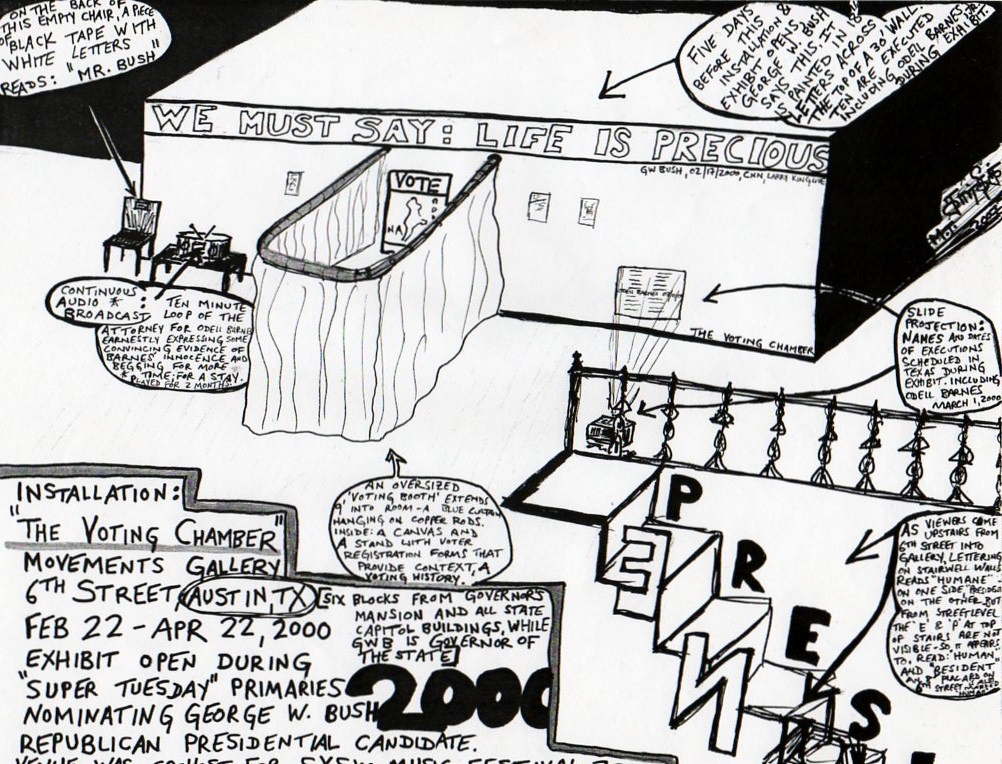
The Voting Chamber was an art installation at Movements Gallery in Austin, TX, six blocks from Governor George Bush’s Mansion, and the exhibition was open during the Super Tuesday Presidential Primaries of Election 2000 and the South x Southwest (SXSW) Arts and Music Festival of that year.

COMPONENTS:
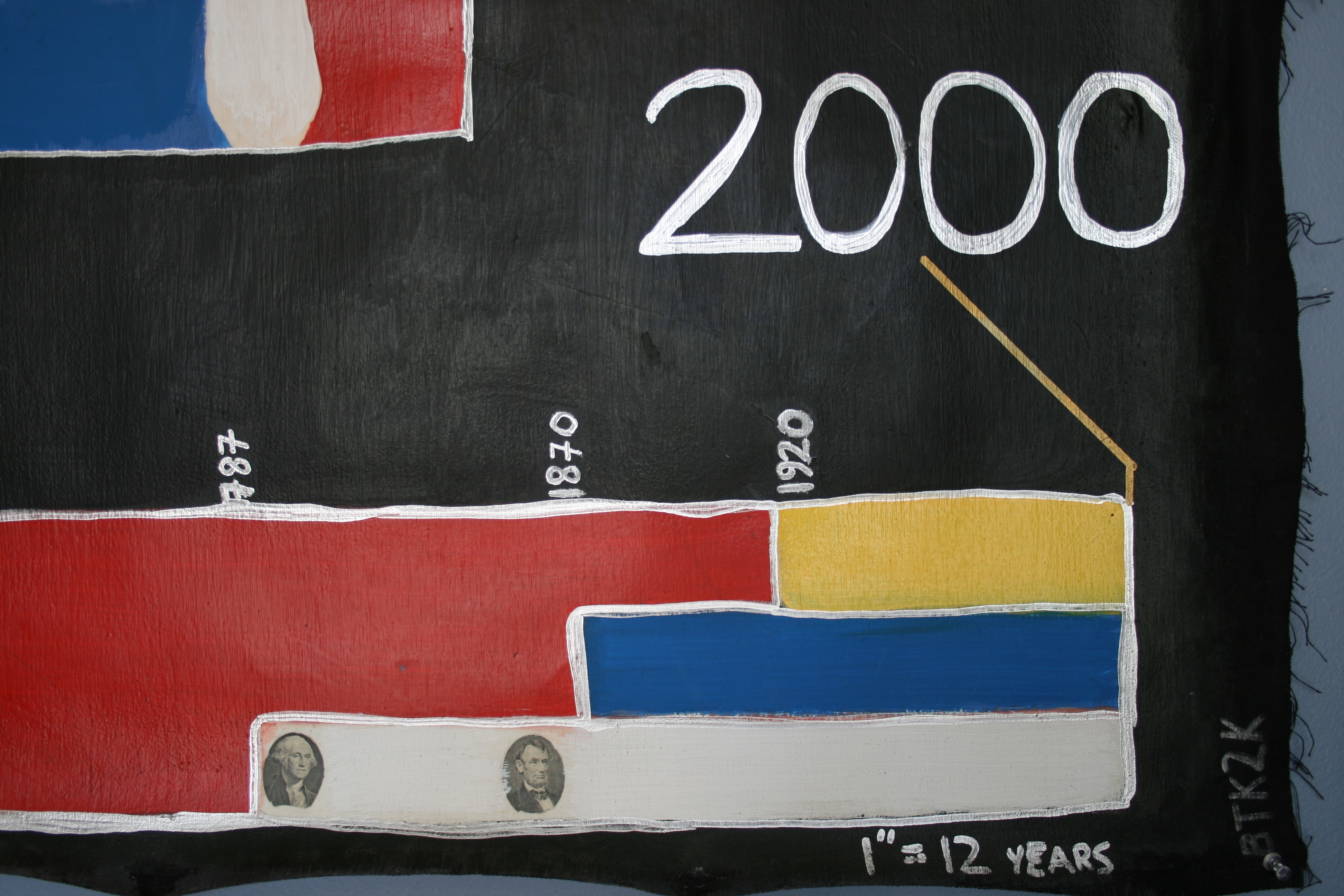
No Real Choice [2000], 5’ x 3’8”, acrylic, currency on canvas
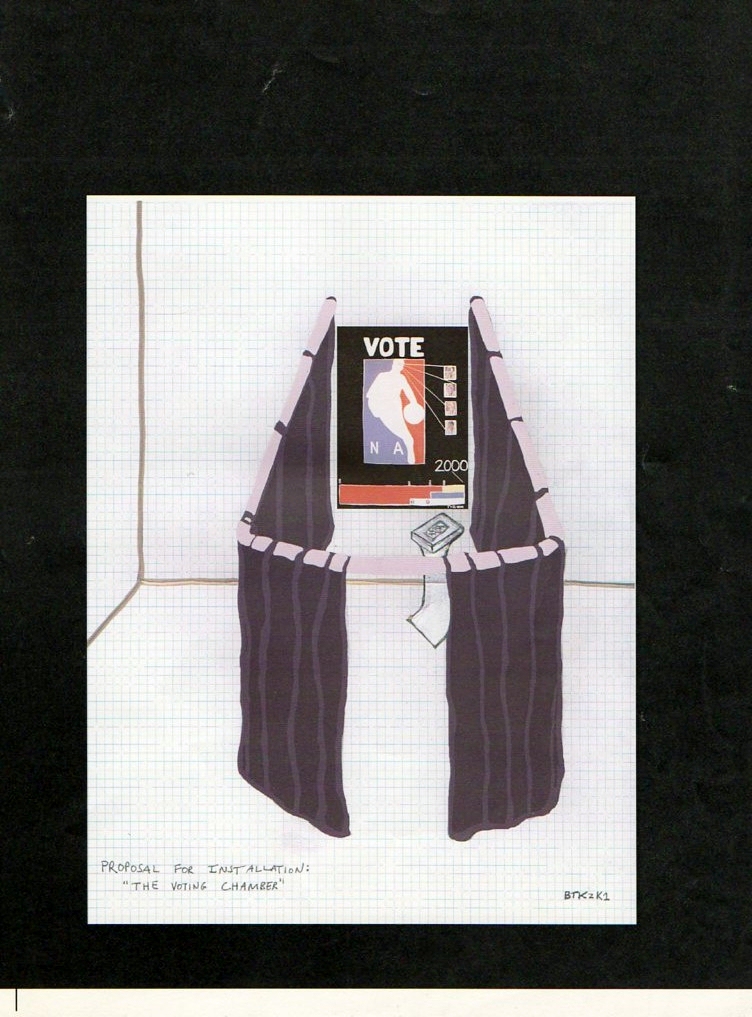
The Voting Chamber (metal rods, fabric curtain, tabletop, audio component
Civic Dimension (acrylic on stairwell walls; chalk on pavement
Internet Component, including data from State Website and Death Penalty Opponents

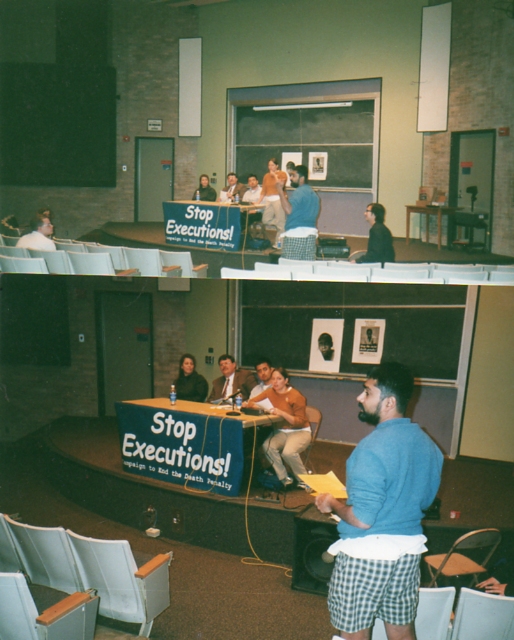
I flew into Austin from Brooklyn and immediately went to a local chapter meeting of an anti-death penalty group and introduced myself publicly as an artist planning to do an installation at Movements Gallery on 6th Street:

installed for about ten days:

PRESS RELEASE

FOR IMMEDIATE RELEASE

OPENING RECEPTION: FEBRUARY 22, 2000
GEORGE WASHINGTON’S BIRTHDAY
6-8 P.M.
MOVEMENTS GALLERY
SIXTH STREET
AUSTIN, TEXAS, USA

“THE VOTING CHAMBER”

FEBRUARY 22-APRIL 22, 2000

A MULTIMEDIA INSTALLATION IN PROXIMITY TO THE TEXAS GOVERNOR’S MANSION

THE STATE OF TEXAS EXECUTES MORE PEOPLE THAN ANY OTHER JURISDICTION IN THE WESTERN WORLD. THE CURRENT GOVERNOR OF TEXAS (1994-2000) HAS OVERSEEN THE EXECUTION OF MORE PEOPLE THAN ALL FIVE PREVIOUS GOVERNORS TAKEN TOGETHER. HE IS CURRENTLY RUNNING FOR PRESIDENT OF THE UNITED STATES AND EXECUTING AT LEAST 18 MORE PEOPLE.

ACCORDING TO A TEXAS A&M UNIVERSITY STUDY, MOST TEXANS FAVOR ALTERNATIVES TO THE DEATH PENALTY OR ARE UNDECIDED:

47.5%    FAVOR LIFE SENTENCE
39.5%    FAVOR EXECUTIONS
13%     ARE UNSURE

Source: http://www.lonestar.texas.net/~acohen/tcadp

“THE VOTING CHAMBER” HAS BEEN DESIGNED BY NEW YORK-BASED FORMER TEXAS RESIDENT AND UNIVERSITY OF TEXAS GRADUATE M.T. KARTHIK, TO PROVIDE A PLACE TO REHEARSE FOR THE UPCOMING PRESIDENTIAL PRIMARIES AND ELECTIONS.

The State posts the Execution Schedule online

Texas State Execution Schedule: 23 Feb – 27 APR 2000

23 FEB 2000 Cornelius Goss, born May 25, 1961
24 FEB 2000 Betty Beets, born March 12, 1937
01 MAR 2000 Odell Barnes,Jr., born, March 22, 1968
15 MAR 2000 Timothy Gribble born, August 27, 1963
22 MAR 2000 Dennis Bagwell born, December 27, 1963
12 APR 2000 Orien Joiner, born, October 27, 1949
18 APR 2000 Victor Saldano, born October 22, 1971
26 APR 2000 Robert Carter, born March 7, 1966
27 APR 2000 Robert Neville, born October 5, 1974
27 APR 2000 Ricky McGinn, born March 11, 1957

Source:  http://www.tdcj.state.tx.us/statistics/stats-home.htm

OUTLINE FOR INSTALLATION

COMPONENTS:
“No Real Choice 2000” (5’ x 3’8”, acrylic, water, American currency on canvas)

“The Voting Chamber” (metal rods, fabric curtain, tabletop, agit-propaganda, and audio component)


“Civic Dimension” (acrylic on stairwell walls and sheetrock; chalk on pavement)
4.  “Internet Component”

THE INSTALLATION:

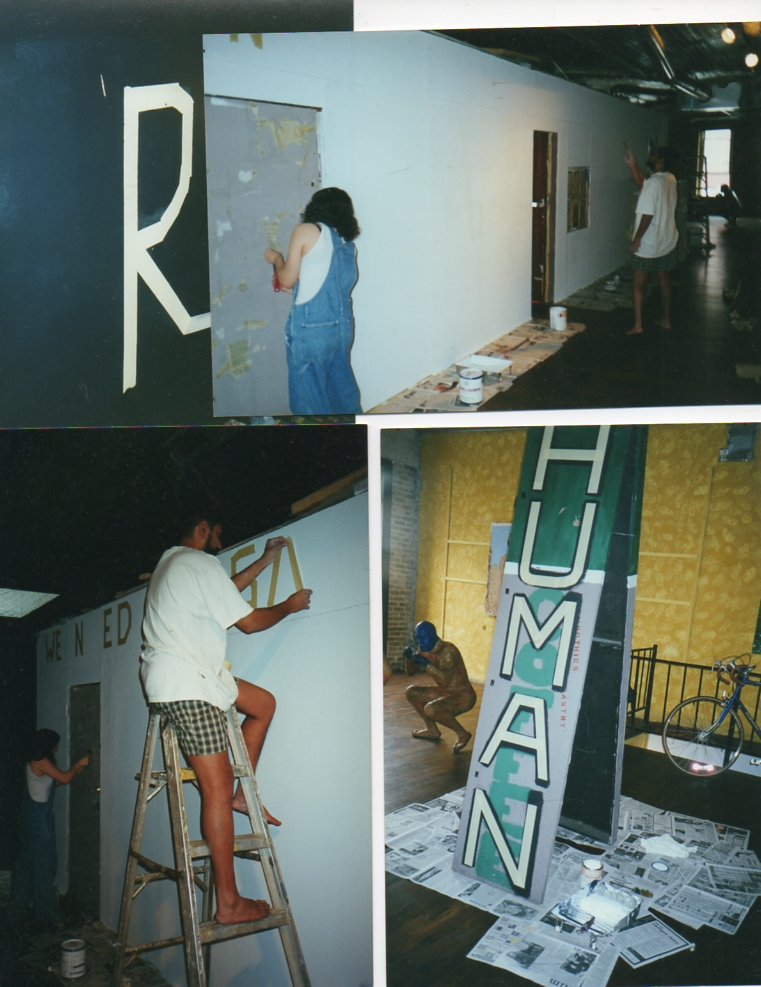
“No Real Choice 2000” was installed on the wall opposite top of the stairs to Gallery space. The 33’ wall was painted sympathetic to currently existing artwork in gallery while extending the theme of the canvas, including:

“The Voting Chamber,” a simulated voting booth: U-shaped curtain rod with a red curtain. This curtain is to be drawn around individual viewers to simulate a voting booth and allow a private viewing space of the canvas and of specific propaganda material. A looped, repeating audio component of the attorney of one of those on Death Row was played next to an empty chair.

The stairwell from the street to the Gallery floor and the sidewalks from the Governor’s Mansion to the gallery door (as practicable) were marked to point to the booth and to present statistics (see Statistics that follow) regarding the death penalty in Texas.

The Internet component contained elements: from http://www.georgewbush.com, the “Calendar of Events” describing the Governor’s current itinerary, and from http://www.tdcj.state.tx.us, the “Calendar of Executions.” and etc

CONCLUSION, 2008

It’s taken me more than eight years to write anything of what happened in Austin in the Spring of 2000. I installed The Voting Chamber and came to find out that Odell Barnes, Jr., was scheduled to die though likely innocent of the murder of which he was convicted.

The installation included an empty chair with the name “Mr. Bush” taped to the back, sitting beside a cassette player that continuously played a ten-minute audio loop of Mr. Barnes’ lawyer explaining that he needed more time to present the strong evidence of a frame-up he had discovered in Odell’s case.

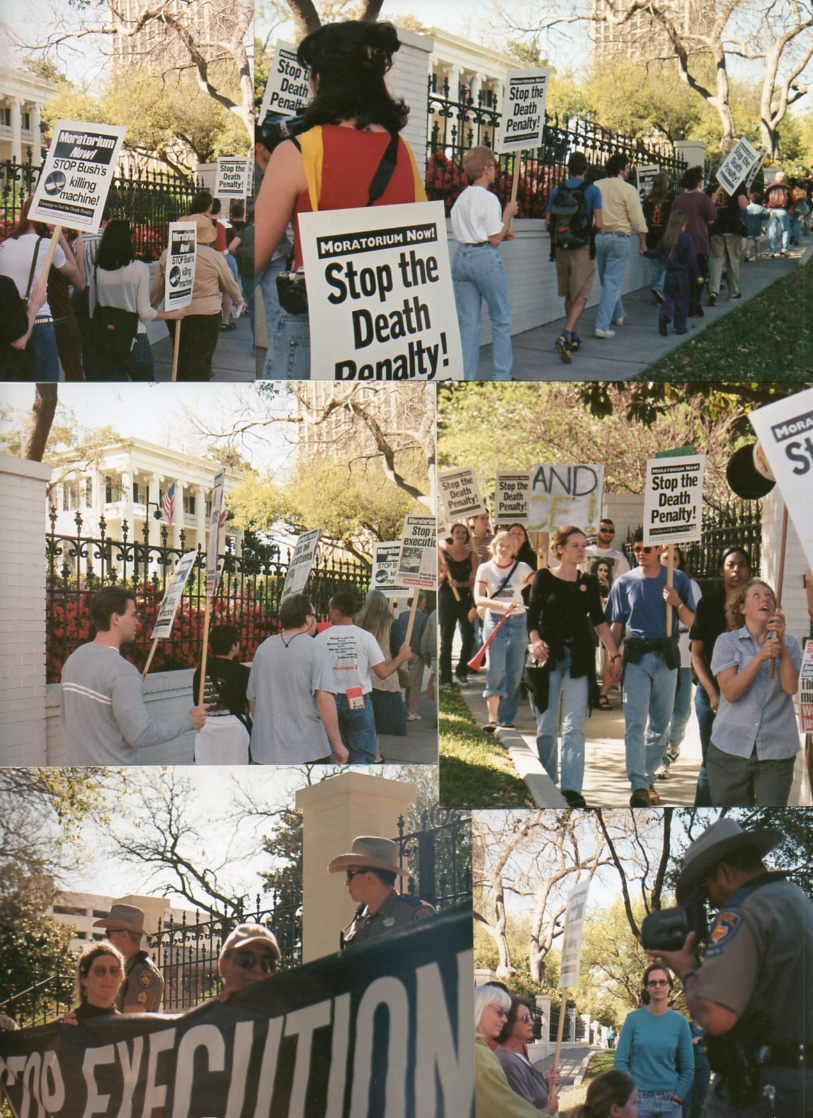
The installation inspired a march of hundreds in Austin who chanted as they marched around the Governor’s Mansion against the Death Penalty:

This all occurred during the Super Tuesday Presidential Primaries as George W. Bush, the Governor of Texas, fought Arizona Senator John McCain for the Republican nomination, Spring 2000. The installation was up during the SXSW music festival, and the venue was a site for the Austin festival so thousands saw it.

George W. Bush and The State of Texas murdered the innocent 22-year-old, Odell Barnes, Jr. on March 1st of the year 2000. The message was clear as Bush ran for President on an active record of becoming the single individual Governing the execution of more people in U.S. history.

Odell Barnes, Jr.s’ last meal request was for “justice, equality and world peace,”

and his last words were:

“I thank you for proving my innocence although it has not been acknowledged in the courts. May you continue in the struggle and may you change all that’s been done here today and in the past.”

Nine months later, George W. Bush was appointed President of the United States by the Supreme Court – contravening democracy at the most basic level –  thanks to massive problems with vote counting and issues of voter suppression in the State of Florida, where Bush’s own brother, Jeb, was Governor.

The canvas “No Real Choice 2000,” finished two months before the election, was startlingly prophetic.

Sensation! at BMA and the Mayor Giuliani Protest, 1999

02 Saturday Oct 1999

Posted by mtk in NYC, performance, reviews

≈ 1 Comment

Tags

1999, art, brooklyn, chris, Giuliani, Karthik, m.t., Mayor, mtk, Museum, ny, offensive, offili, Ofili, protest, saatchi, Sensation!, yba

Despite the sheer volume of the events of September 11, 2011 masking the years near them, anyone interested in the arts who lived in New York City at the turn of the millennium – and particularly the borough of Brooklyn – will remember the arrival of the Sensation! touring exhibition of Young British Artists [YBAs] of the 1990’s  that opened on October 2nd of 1999.

Mayor Rudolph Giuliani protested the exhibition and in specific a work by Nigerian-born, British National Chris Offili – an image of the Virgin Mary made of many materials from his homeland, but which contained elephant dung as a medium, a paint, a process natural to the production of image-based art throughout the tropics or near deserts.

Giuliani protested that it was offensive to Christianity and attempted to prevent the showing of the work. It’s this time I define the end of post-modernism, at the exact moment that Mayor Giuliani stated publicly to the press,

“here’s how I know if something is art … if I can do it, it’s not art.”

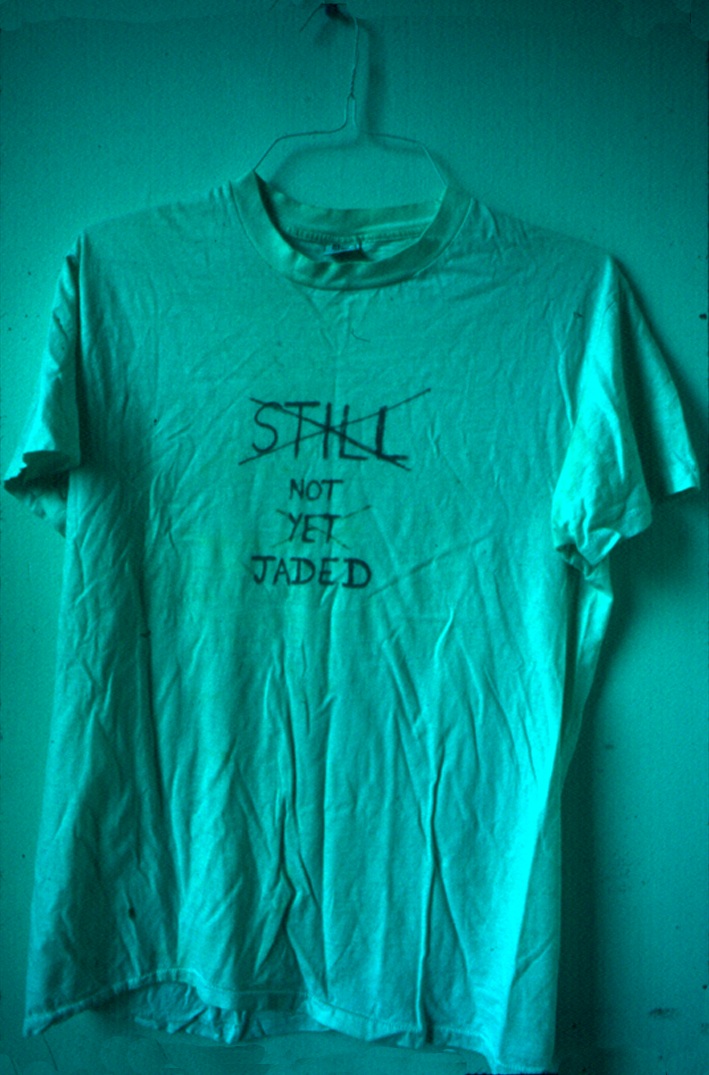
I wore this shirt, with a tie, no coat, slacks and dress shoes, to the opening.

mtk October 2, 1999

The Legend, short story, 1999

09 Friday Jul 1999

Posted by mtk in fiction, nba

≈ 1 Comment

Tags

1998, 50th, all, birthday, jordan, Karthik, m.t., memory, michael, MJ, MJ50, mtk, NYC, short, star, story, tribute, what if

There was a lack of leadership at the end of the century.  We were all waiting to see what would happen next.

I remember where I was the day of the announcement.  I was living in Brooklyn and the Yankees were in the pennant race.  I was thirty-one and trying to make it as an actor or a writer, I didn’t care which.

It was October after a full moon and the air in the city had become cool.  I didn’t own a television then.  Usually I got the news from looking over somebody’s shoulder on the train, but that day it was impossible not to know; so I was in a bar.

My job was in Manhattan but I had a pretty kind commute – on the 7 – each morning.  In the evenings I used to drink a lot, so often I took a cab home.  The announcement was made during prime time.

I had been in the west village near Chelsea, so I headed East until I’d found myself in a suitably quiet place for a drink.

There were three others in the bar on my side, all men.  The bartender was about my age, too.  We checked each other out when I walked in but she wasn’t interested.  Let me know with a glance.  She was attending to us and going back to the telephone where she was involved in a casual conversation.  That’s how we heard. She told us.

She was on the phone with her roommate, I discovered later, who told her to turn on the TV.  The television was off when I walked in, which is why I walked all the way down the bar and sat by it.  I was putting room between me and the other patrons and the bartender on her phone call.  I didn’t feel like talking to anyone, just wanted a drink or two before going home.

She walked down the length of the bar toward me, though my glass was still half-full.  “Jordan’s on ESPN,” she said as she passed me with an air of excitement.  She reached up and turned on the TV.

I moved over to get some perspective and ended up next to one of the other guys.

“Perfect timing,” he was saying to his friend, “It’s storybook.”

We were all looking at the television for a moment as we realized at our own pace it was a commercial.  Then we turned away from the TV to notice each other.  The guy to my left was a know-it-all.  Cliff Claven-type.  His Norm was an appropriately fat guy to his left, who was listening, bored.

“There’s not gonna be any basketball this year – the league’s locked out,” says Cliffy,  “It’ll be the first strike in NBA history.  And look at this – Jordan’s going to retire before it gets ugly.”  He looks at the both of us, including me in their space.  “Storybook, man!  The guy’s all class.  His entire career.  C-L-A-S-S, class.”

It seemed about right.  We had all been waiting for the announcement, fans and not fans.  We had been well-prepared by the rumours and gossip for the last few months.  The other guy, Norm, wasn’t so sure about all the “class,” but he had his “favorite Jordan moment.”

“My company’s had floor-side Knicks seats for years,” he began, “I had finished doing the numbers for the annual report a few years ago and so they let me have the tickets, as a kind of a bonus, you know.”

The ad was for Nike – a long narrative about a couple of guys buying sneakers with all these idiotic effects meant to be impressive.  They were playing one-on-one at what was meant to be an inner city court, but that looked more like a Hollywood lot – an appearance by Tiger Woods – hits a three-pointer with a golf club or something – stupid.

“Jordan was off in the first half, shot maybe four-for-15 from the field … just didn’t have his rhythm,” continued Norm, “But during the warm-ups before the second half – the Bulls were down at our end so I could see him up close – he seemed so casual.  He was joking around and chewing his gum.  He stopped during the shoot-around to sign some kid’s little plastic basketball at courtside.”

Norm turned to face us – making a little circle.  He glanced over his shoulder at the TV to make sure it was still a commercial, before continuing.  “Knicks were up five at the break and the second half started with Jordan bringing the ball down.”

“Here we go,” chimed in Cliffy, “never let Jordan bring the ball down up five at the beginning of the second half,” he said, as if that made any kind of sense.  The Nike ad was followed by an ad for the new BMW convertible.  It was being featured in a movie.  Hot Babe racing at speeds meant to appear saucy, around curves on the Pacific Coast Highway – but it was stagey and excessive – a patina of production slathered across it.

“And it wasn’t that the rest of the game was so impressive – ‘cause he went 12 for 18 in the second half and ended up with 42 points, 8 boards and four steals on the night-”

“Wooooah!” chimed in Cliffy, “See?  See?”

Norm continued:  “But it wasn’t that.  It was that first bucket after the second half started.” Norm looked at us both significantly.  “He went coast-to-coast, juked twice and burned Starks and Oakley on the way to the rack for the slam.  It was like he was waiting to turn it on and once it was on there wasn’t anybody to stop it.”  We were all silent for a minute wishing we had that … when ESPN came back on.

“If the Yanks lose tomorrow, Joe Torre will have a decision on his hands – El Duque or Andy Pettite – but as Andy Schapp reports, the decision may have already been made.”

“Yanks better win the fuckin’ series,” I said.  It was the first time I’d spoken to them and they noticed.  I have a sort of a Mike Tyson voice problem.  It’s sort of squeaky.  I’m real aware of it now.  I mean, at the time I hadn’t fully developed my speaking skills to use it to my advantage so there was always a minute or two when it freaked people out – a grown man. It’s really why I became a writer as opposed to going into say, radio … or television.

Cliff blew right by it.  “Fuck yeah, the fucking Yanks better win the fucking series.  Better win the world series, too.  I mean, what the fuck?  After the season they had?  If they don’t win, heads will definitely roll.”

We talked about the Yanks for a minute as the time passed.  I know, I know, it has to seem stupid now, but I mean, we had no idea what he was going to say.  We were all just figuring he’d retire, we’d bullshit a bit and that’d be that … on to baseball.  We were strangers in a shitty little bar in the East Village.

By now of course the video has been shown umpteen times.  The stage set in Chicago and the introduction and all of it has been ingrained in our heads for as long as the little bitmaps will last in our memories.  But let’s just review what he said, how he said it.  I mean if we’re going to talk about a Legend, it’s good to be precise.

“Good evening, everyone.  I’d like to make this as brief as possible, but there are many people to thank.  I have played my entire career here in Chicago and I have always felt the deepest love for this city and the fans.  It is without a doubt in my mind that these are the greatest fans in the world.”

He always had that sweet disarming way of saying something just a little – off – that still sounded so right and perfect coming out of his mouth.  The man had skills.

“I have faced a lot of questions this past summer about my plans for the future and I have entertained all kinds of opportunities and thoughts on the matter of retirement.  Frankly, I don’t want to give up basketball.  I love this game.”

And that look, that smile, directly into the camera for the fans at home, for the commissioner of Basketball.  It was perfect.  He knew all along what he was doing.  There was never a feeling of doubt that he was in control, only of wonderment that he was alive.  It was like that on the court and afterward.  He was a great leader.

“That is why I have to ask for your support at this critical and important time in my career.  I need each and every one of my fans, everywhere in the world to know that I have enjoyed every minute of my career in the NBA.  I wouldn’t trade it for anything.  And now I need something back from you.  I need your continued support.”

It was at this point that we, I, anyway, began to wonder if he didn’t have a surprise in mind.  I had thought it before of course, he was famous for them.  But that night, I mean, he looked to the right and left, and then for a second it seemed like maybe he was changing his mind right there.  Before letting us all in on the biggest move of his career, it still seemed like he had something else in store.

I remember the announcement and the introduction perfectly.

“I am retiring from the National Basketball Association.  [smile. flash, flash, flash, flash,flash, flash]

I would like to thank everyone, but of course that’s impossible.  Let me just re-iterate my thanks to the wonderful people here in Chicago and to my fans around the world.”  He said things twice his entire career to emphasize his point in a different manner to get it across to as many channels of media on the spectrum as possible and was misunderstood by many as, “just being a jock,” – like Coltrane, Jordan was ahead of his time with the media.

“Again, I hope you will continue to support my efforts as I move on, away from the NBA and into public life in other ways.”

This was the stumper of course.  He had every free male in the nation caught on by then that it wasn’t your average resignation.  Cliff said, “What the fuck is he talking about?  Not baseball again, jeez, the guy was a sub-200 hitter on a farm club for God’s Sakes.”  Fickle, that Cliffy.

Then, the introduction:

“I would like to introduce now, my first partner in my new life after the NBA.”

When he walked out I swear you could have knocked me off my bar stool.  I was totally confused.  I had no explanation for what he was doing there.  I quickly tried to add up scenarios that would bring the two of them together, but never in my wildest dreams could I have figured what would happen next.

“Ladies and Gentlemen … a boxer, a pugilist of world-reknown,” he said ‘pugilist’ carefully and playfully, like he had looked it up for the event, toyed with it for a while and then decided to keep it for the fun of it, and he gave us a smile when he continued, “the world’s greatest fighter in my book, and I challenge anyone to deny it:  Ladies and Gentlemen, President Nelson Mandela of the Republic of South Africa.”

The flashbulbs made it impossible to see for a moment.  Everyone was standing.  Jordan must have made arrangements for the cameramen to be positioned, though, because the television audience had a clear view throughout the proceedings.

Then, he appeared.  Mandela.  It was such an incredible feeling to be watching it “live.”  Mandela walked with such cool grace – slowly and stately past the podium to his seat beside Jordan.

Michael had effectively taken the spotlight off himself at the peak of his most significant hour.  The entire experience was like watching a game.  He was masterful, in control.  And nobody was stopping him.

“Mr. Mandela and I would like to announce that effective immediately, I will be player-coach of the South African National Basketball team to participate in the year 2000 Olympics in Sydney, Australia.  I hereby invite my friends, colleagues and players from all over the world to tryout for the team that we will field in summer of 2000.

“I would also like to announce the creation of a new line of shoes, clothing and athletic wear designed for the new South African team by my own designers and to be manufactured by textile workers throughout Africa. All proceeds from the sales of these products – that’s 100% of the proceeds – will go, in two equal parts, first to the United Nations and second to a non-profit organization begun by President Mandela and myself toward the creation of a free, peaceful, healthy and well-developed Pan-Africa in the next millennium.”

I was numb.  My ears.  My ears were filled with a dull sensation that removed me from my surroundings.  I couldn’t stand.  I couldn’t possibly sit.  I stood.  I hugged Cliff.  I slapped Norm on the back. I pulled the bartender over the rail and kissed her full on the lips … and she hit me.

The End

[I can’t even remember when Jordan retired now. He quit, came back, jammed again, quit, came back… managed the Wizards for a time, always plays great golf – a giant. I wrote this piece in 1998 after a conversation with a friend about why U.S. American sports stars don’t take more active political stances anymore (cf. Tommie Smith or Arthur Ashe or many others). It seems relevant today, but nostalgic, and weirdly attached to an era when television affiliates in every city in the USA was running simultaneous and continuous reruns of “Cheers!”- sometimes twice a day – rather than fill the spectrum with any diversity.]

M.T. Karthik

Letter to Salman Rushdie

01 Monday Mar 1999

Posted by mtk in appeals, Letter From MTK, maturation, NYC, thoughts

≈ Leave a comment

Tags

City, family, help, henry, Holt, Karthik, letter, m.t., new, NYC, request, rushdie, salman, story, thyagarajan, york

Salman Rushdie

Henry Holt and Company, Inc.

115 West 18th Street

New York, New York 10011

1 MAR 99

Sir:

I am an Indian-American man, 32 years old, unmarried, living in Brooklyn, New York. My father was among the first post-independence Indians to emigrate to the United States – in 1957 as a post-doctoral fellow in Organic Chemistry at Northwestern University.

He went back to India in 1959 and then worked to bring his family to the US in the years that followed. My mother, sisters and I immigrated from Madras to the US in 1969, four days before the first lunar landing.

My father struggled to bring us here only to have his family disintegrate in a bitter divorce. The story is still whispered among our society of Ayer Brahmins in Madras. The bitterness in our family has been taxing.

My father is an old man now and I’m his only son. I believe that telling our story will bring some peace to our broken lives and help other immigrant families who face similar difficulties. I seek help in this matter.

My eldest sister chose to return to India and lives in Madras. She married into a Punjabi family that had emigrated to our city from the North in the forties. My sister was, by the magic between two Indian newlyweds in the autumn of 1958 in Evanston, Illinois, born an American citizen.

She was taken back to India at two, brought back to the US at 12 and then returned to Madras at 15, back again at 20 and finally returned to India in 1982 to marry.

The repeated trans-continental travel at a young age reduced her emotionally and exacerbated the divide between my parents who had very different views on raising Indian children in the US.

Both my sisters and my mother are now estranged from my father. They have exchanged a handful of words in fifteen years. I am the only person who speaks to everyone, though I have not been back to India since 1991. There is a sadness among us all.

My father moved us to San Antonio, Texas in 1974. My second sister and I were raised Texan. She is now a converted Baptist living in Denver, Colorado. Three years ago she changed her name to Kate. She has assimilated to an American life.

I live in the New York metropolitan area among the largest population of Indians in the US, but I am lonesome and not close with the community here. With my eldest sister being in Madras and my parents divorced in Texas, we are a wholly divided family. Separated by geography and our anger.

My father was born in a hut with a dirt floor in South India with five sisters, while my mother was raised by a wealthier Madrasi family. Both families were orthodox Hindu Brahmins. The forebears in our patriarchy were strong-willed, powerful men. My fathers father was an idealist, a Gandhian who was jailed during the pre-Independence days when he marched the salt satyagraha. My mothers grandfather was a Congress member and a barrister, esteemed in Madras society circles. His sons were raised as anglophiles. My parents were a “love match” that went terribly wrong in the US. My sisters and I were raised in a chaotic and discontinuous way.

In 1981, the year I became an American citizen and you wrote “Midnight’s Children” there were perhaps 200,000 South Asians in the US. By 1989, when I graduated from University, there were more than 800,000. By 1995, when I finished Graduate School we numbered more than one million. My father was among the first 1,000 to arrive and I was among the first 40,000. That’s my generation.

Soon I will have to move back to Texas as my father is alone at 70 and will need care. I have come to New York to ask for help to write (and in many ways reconcile) the story of my family. I believe the telling will be a healing experience for us and a literary work of significance for other immigrants to the United States. I turn to you as a student seeking a teacher. Can you help me?

with utmost respect,

Karthik Thyagarajan

Brooklyn 718/ 383-9621

J.S. Bach's St. Matthew Passion, New York Philharmonic, Kurt Masur, 1998

18 Wednesday Feb 1998

Posted by mtk in journal entries, NYC, reviews

≈ Leave a comment

Tags

1998, bach, j.s., Karthik, kurt, m.t., masur, mtk, new, passion, philharmonic, st. matthew, york

2/18/98ce
–55 West 13th Street, Manhattan, New York, noon on the third of several grey, cloudy rainy days

Last night I heard the New York Philharmonic perform the St. Matthew Passion, by J. S. Bach, under the direction of Kurt Masur at Avery Fisher Hall (formerly Philharmonic Hall) at Lincoln Center.

The space is considerably less well designed than the Opera Hall in the same Center.  I have not yet visited the Alice Tully Hall space which completes the three.

Crossing the plaza and passing the small fountain as you approach the high-ceilinged, great glass front of the Metropolitan Opera House, two very large canvasses painted by Marc Chagall are visible from all directions.  They are something like 50 feet high and 30 feet wide.  The main stairway of the Opera House passes between the two pieces.  The Avery Fisher Hall is the auditorium to the right when facing the Opera House.  It is lower and more box-like, though it too has a tall, glass-fronted facade.

The Philharmonic Hall is long and rectangular.  The seats are arranged in horizontal rows forming a long rectangle from the stage back to the main doors on the floor of the auditorium.  Above these seats there are four tiers of balcony seats.  The box seats on the side are smaller and a little cramped.  They provide only an angled view of the stage and so one must continually turn one’s head to see the orchestra, the balcony seats in the rear of the auditorium are maybe 100 yards from the stage, but the line of sight is good and straight on from any of the seats in the back of the Hall.

Last night’s performance marked the second time I have heard the St. Matthew Passion by Bach.  I checked it out in San Francisco in 1997ce (see previous material).  This time, the stage set was completely different and the orchestration was somewhat changed as well.

The choir consisted of Thomanerchor Liepzig (The choir of St. Thomas Church, Leipzig) that Bach himself led, several hundred years ago.  They were perhaps 90 strong and provided the choir solo voices for the Apostle Peter and other parts from within their number.  They were split and arranged on benches at stage front left and front right, featured prominently.  The orchestration consisted of a small chamber group surrounding the conductor and a harmonium.  The harmonium was played by the director of the boy’s choir.  The chamber group was comprised of a cellist, bassist, first and second violins, and reeds.  On a platform behind the group were the six soloists.  The secondary strings and flutes and reeds were placed in the rear of the stage behind the soloists and Mr. Masur stood on a raised platform just to the right of the harmonium.

The performance was microphoned and amplified but the volume was far too low to enjoy complex changes in dynamics.  The sound in the corner seats in the rear boxes where we were (went with D.) was good but could have been louder and with more dynamic variance.  The seats were angled hard and somewhat cramped so we had to turn our heads to face the stage stereophonically.

The New York Times ran a review of the performance from the weekend past on the morning I saw the show (cf.: NYT, FEB 17, The Arts, p.4, aside: Siva Vaidyanthan on the cover for an unrelated story regarding a lost scrap of paper written upon by Mark Twain). The article said the work was among Masur’s first with the Philharmonic and suggested the changes and alterations (i.e. using St. Thomas Church choir from Liepzig) were Masur’s continuing efforts to come to know the music of Bach.

The performance was at a quick tempo, not workman-like, but regular. There were some lovely voices in the context of the piece, including the mezzo-soprano whose work was so beautiful.  The tenor who handled the part of the Evangelist may have been a little tired from a weekend’s worth of performance.  He was good, though.

The quality of live music performance in New York City is generally extremely high. Everywhere I go I hear bold, confident, passionate performances.  The players are eager and well-prepared.  In New York, the level of energy and play and quality of sound by any given performer is so much More More More than anywhere else I have been in the US.  There is little doubt or wavering.  The performers have in the context of their relationship to the venue and the audience, a certain confidence that frees them to try to be their best.  Or maybe they are scared witless and just playing their asses off so they can “make it in New York.” But it doesn’t “fee’” like the latter.  Rather it is just the general level of play, that the town attracts the nation’s best.  That is how it feels to me so far. (so why is the coffee so bad?)

The performance had some interesting moments:  the second mezzo-soprano solo in the second part, is predecessed and accompanied by an instrumental sectional.  There is a relationship here between the melody here and the melody of one of the six Violin Concerti for Violin and harpsichord.  The theme is augmented and then toyed with slightly, but check it out.

The section I awaited, had remembered from the last performance, was the simple harmony (or is it even unison?) calling out of the name of Barrabas.  It lacked the impact it had in SF.  There, the choir erupted in the name of Barrabas so loudly and strongly, one could hear the maddening crowd calling the name.  Here the section passed relatively quickly.  The tempo was speeded up and even-handed without such lingering drama.  Perhaps that is an aspect of performance here or by Masur.

He was beautiful to watch.  Had a relationship with the music as he conducted.  His body language, his expressiveness coaxed, pushed and pulled on the sound.  It was nice.  Masur’s an older man, balding (big centered patch over grey, evenly-cut hair all around), with a big frame.  maybe 6’2” or 3” tall.

<Break>


J.S. Bach’s St. Matthew Passion, New York Philharmonic, Kurt Masur, 1998

18 Wednesday Feb 1998

Posted by mtk in journal entries, NYC, reviews

≈ Leave a comment

Tags

1998, bach, j.s., Karthik, kurt, m.t., masur, mtk, new, passion, philharmonic, st. matthew, york

2/18/98ce
–55 West 13th Street, Manhattan, New York, noon on the third of several grey, cloudy rainy days

Last night I heard the New York Philharmonic perform the St. Matthew Passion, by J. S. Bach, under the direction of Kurt Masur at Avery Fisher Hall (formerly Philharmonic Hall) at Lincoln Center.

The space is considerably less well designed than the Opera Hall in the same Center.  I have not yet visited the Alice Tully Hall space which completes the three.

Crossing the plaza and passing the small fountain as you approach the high-ceilinged, great glass front of the Metropolitan Opera House, two very large canvasses painted by Marc Chagall are visible from all directions.  They are something like 50 feet high and 30 feet wide.  The main stairway of the Opera House passes between the two pieces.  The Avery Fisher Hall is the auditorium to the right when facing the Opera House.  It is lower and more box-like, though it too has a tall, glass-fronted facade.

The Philharmonic Hall is long and rectangular.  The seats are arranged in horizontal rows forming a long rectangle from the stage back to the main doors on the floor of the auditorium.  Above these seats there are four tiers of balcony seats.  The box seats on the side are smaller and a little cramped.  They provide only an angled view of the stage and so one must continually turn one’s head to see the orchestra, the balcony seats in the rear of the auditorium are maybe 100 yards from the stage, but the line of sight is good and straight on from any of the seats in the back of the Hall.

Last night’s performance marked the second time I have heard the St. Matthew Passion by Bach.  I checked it out in San Francisco in 1997ce (see previous material).  This time, the stage set was completely different and the orchestration was somewhat changed as well.

The choir consisted of Thomanerchor Liepzig (The choir of St. Thomas Church, Leipzig) that Bach himself led, several hundred years ago.  They were perhaps 90 strong and provided the choir solo voices for the Apostle Peter and other parts from within their number.  They were split and arranged on benches at stage front left and front right, featured prominently.  The orchestration consisted of a small chamber group surrounding the conductor and a harmonium.  The harmonium was played by the director of the boy’s choir.  The chamber group was comprised of a cellist, bassist, first and second violins, and reeds.  On a platform behind the group were the six soloists.  The secondary strings and flutes and reeds were placed in the rear of the stage behind the soloists and Mr. Masur stood on a raised platform just to the right of the harmonium.

The performance was microphoned and amplified but the volume was far too low to enjoy complex changes in dynamics.  The sound in the corner seats in the rear boxes where we were (went with D.) was good but could have been louder and with more dynamic variance.  The seats were angled hard and somewhat cramped so we had to turn our heads to face the stage stereophonically.

The New York Times ran a review of the performance from the weekend past on the morning I saw the show (cf.: NYT, FEB 17, The Arts, p.4, aside: Siva Vaidyanthan on the cover for an unrelated story regarding a lost scrap of paper written upon by Mark Twain). The article said the work was among Masur’s first with the Philharmonic and suggested the changes and alterations (i.e. using St. Thomas Church choir from Liepzig) were Masur’s continuing efforts to come to know the music of Bach.

The performance was at a quick tempo, not workman-like, but regular. There were some lovely voices in the context of the piece, including the mezzo-soprano whose work was so beautiful.  The tenor who handled the part of the Evangelist may have been a little tired from a weekend’s worth of performance.  He was good, though.

The quality of live music performance in New York City is generally extremely high. Everywhere I go I hear bold, confident, passionate performances.  The players are eager and well-prepared.  In New York, the level of energy and play and quality of sound by any given performer is so much More More More than anywhere else I have been in the US.  There is little doubt or wavering.  The performers have in the context of their relationship to the venue and the audience, a certain confidence that frees them to try to be their best.  Or maybe they are scared witless and just playing their asses off so they can “make it in New York.” But it doesn’t “fee’” like the latter.  Rather it is just the general level of play, that the town attracts the nation’s best.  That is how it feels to me so far. (so why is the coffee so bad?)

The performance had some interesting moments:  the second mezzo-soprano solo in the second part, is predecessed and accompanied by an instrumental sectional.  There is a relationship here between the melody here and the melody of one of the six Violin Concerti for Violin and harpsichord.  The theme is augmented and then toyed with slightly, but check it out.

The section I awaited, had remembered from the last performance, was the simple harmony (or is it even unison?) calling out of the name of Barrabas.  It lacked the impact it had in SF.  There, the choir erupted in the name of Barrabas so loudly and strongly, one could hear the maddening crowd calling the name.  Here the section passed relatively quickly.  The tempo was speeded up and even-handed without such lingering drama.  Perhaps that is an aspect of performance here or by Masur.

He was beautiful to watch.  Had a relationship with the music as he conducted.  His body language, his expressiveness coaxed, pushed and pulled on the sound.  It was nice.  Masur’s an older man, balding (big centered patch over grey, evenly-cut hair all around), with a big frame.  maybe 6’2” or 3” tall.

<Break>


David Dinkins Lecture, Mingus Big Band, NYC, 1998

13 Friday Feb 1998

Posted by mtk in journal entries, NYC, reviews

≈ Leave a comment

Tags

1998, Band, Big, cafe, David, Dinkins, fez, Karthik, m.t., Mayor, Mingus, mtk, new, new york, ny, the, time, york

2/13/98ce
–55 West 13th Street, Manhattan, New York, noonish on a Friday

Yo, I was set up …  by Mingus
and knocked down  … by The Mingus Big Band
over gin and tonics at the Fez.

Last night after work I went to a lecture by David Dinkins, former Mayor of New York, sponsored by The New School.  It was a part of a series of lectures taking place this semester entitled, “Media and Race Relations.”   Dinkins feels like a really positive old guy.  Very forthright and direct and even-handed.  He read a prepared speech and then fielded questions from the crowd of maybe twenty or thirty people on hand.  The speech was rhythmic and well-paced, addressing the topic in general terms and peppered with a couple of extemporary examples.

He did not say anything too unusual, said what the ex-first-Black-Mayor-of-New-York-City-who-was-embattled-throughout-his-administration-and-who-lost-re-election-by-the-same-slim-margin-he-won-by-first-time-round might be expected to say, that, and I’m paraphrasing here, things under the current administration pretty much suck … unless you’re rich.  That the crime rate being down is a good thing, but that it was his previous administrations programs that were primarily responsible.  That the current Mayor is a bully.  He defended himself against the main controversy of his term.

He is a politician after all and was obliged thus to say some things about America and “this great City,” and so on.   He spoke eloquently about the disparities of this city, though.  Mentioned that the infant mortality rate on the Upper East Side of Manhattan is 5.4 per 1,000 live births and in Fort Green Brooklyn, less than twenty miles away, it is 24 per 1,000 live births.  A frightening and sad statistic.  He mentioned another statistic that I found staggering: regarding the media and it’s treatment of women and women’s issues.

In a recent media study, he reported, it was found that when a person is referred to in the Main section of the paper, 86% of the time it is a male person, in the business section 85%, and in the Metropolitan sections 76% of the time references are to men.  Of the occasions when women are mentioned in the paper, more than 50% of the time it is as a perpetrator of some crime or in some other negative connotation.

These numbers are weird and I can not understand really how they are conceived.  I’d like to look into that.

It’s funny how a thought becomes a statistic becomes a fact and a part of social truth.  Paz:  “the North American … substitutes social truth for real truth which is always disagreeable.”  Labyrinth of Solitude, 1950.

The lecture was good.  I look forward to the next one in the series by the Reverend Al Sharpton.

(Afterward, I came back here to the office and edited the third draft of “Mahmoud Singh.”  It’s a good first story for New York.  I feel tired of it now though.  It doesn’t breathe enough.  Need to make a new one.  When?  When I get some peace of mind.)

MB made 9:00 reservations for us at the Time cafe and Fez Supper Club.

While I was waiting for him at the school, I was chatting with the security guard and a young woman who was also waiting, to meet someone after class.  I said to the guard, “You’ve heard of home-sickness, right? … what do you call it when you have no home and yet you feel a sickness? That is, you have no place to be homesick for but you feel a sickness for a home that exists in your mind?”

The young woman said, “Identity Crisis.”

I waited for MB at my building until ten minutes to 9, then we hopped in a cab to the club at Great Jones and Lafayette streets in the East Village.  Arrived right at 9 and went in.  “Time” is labyrinthine with an upstairs glass-walled, fishbowl restaurant and then a blue archway leading to an inner red-boothed bar, both filled with the pretty people and then a stairwell down into the sanctum, a blue walled hallway leading to the supper club known as The Fez, where we were met by a beautiful young bronzey Black woman wearing a wireless headset who was responsible for seating us.  Girl was fine and had a sweet smile.  I said to her, looking as deeply as I could into her eyes in the darkness of the low-ceilinged club, “it must be difficult walking around with disembodied voices in your head.” and I smiled.  She looked puzzled at first and then was actually interrupted by the voice in the headset to which she responded first and then smiled that beautiful smile and said to me, “Yeah, it gets a little confusing when it’s busy.”  Fine.

We sat and ordered a round of drinks.  MB had the usual.  I was hungry and ordered some Salmon which was not great.  It was boring and tasted like nothing except the sauces and spices which were hardly placed on the plate.  Even the supposed blackened salmon with wasabi-vinagrette that sounded so nice was boring food, and too expensive.

The deal on the gig was that the cover was $18 and there was a two-drink minimum, but you could stay for the second set once you were inside.  Dinner was not included and we were wearing serious critics ears after dropping so much bread for the much-hyped Mingus Big Band.  Much of it was choice of course, because I wanted to estimate the place, quality of the food, seating etc.

I spent three bucks on the coatcheck and 18 to get in and 63 on drinks and dinner.  That’s $84 for the two of us with the show included.  We were there at 9:00 and the show started at 9:30.

The set up:

The Mingus Big Band is a Workshop group that plays the music of Charles Mingus.  They opened the set by telling us they were going to play some music they hadn’t practiced fully, that they hadn’t looked at in a long time.  It was odd.  The performance started with a chart called, “Slippers,” and they were literally signalling and calling out changes and sections to one another.  It felt crowded and unrehearsed. They were working shit out while they played.  It gave MB and I pause.  We figured we had been taken.  $18 and the drinks for this?  We are new to New York, him a year and a half and me a few months, we didn’t know any better than to attend the Mingus Big Band, thinking we’d hear some Mingus wicked-like.

They were struggling their way through the shit when I actually wrote on a napkin at one point, “MINGUS DONE 20 YEARS and STILL KICKING ALL Y’ALLS ASSES”

The band also recognized their benefactor, Sue Mingus who was in attendance, a blonde, short-haired (business cut) older white woman with a kindly, smiley way about her.  Then they introduced a Mingus contemporary, one Mr. Howard Johnson who played in a Mingus septet at one point and who charted an arrangement of “OP,” a tune originally written for Oscar Pettitford.  Mr. Johnson was to direct the band in playing it.  He introduced it with some discussion about his relationship with Mingus and then actually took a moment to remind the band of some changes and notations.  Again it was odd.  Like a practice session.

They flubbed the shit out of it so badly they had to be counted into the “D” section.  It was almost comical. But occasionally our thoughts crept to how much we’d paid to see the show.

The set break came and we decided to take a little stroll around the block.  We got back to try to find some better seats, since the second set was less crowded.  The sweet hostess with the headset made a little small talk with me and smiled that beautiful smile again.  She led us to a pair of seats front and center.  Many people left, but there were several sticking around for the second half.

The Knock Down

Bam! How can I describe the second set to you without explaining that we were HAD!  The dark, low-hanging ceiling of the Fez filled out with the radical sounds of Mingus!  It was crazy.  It was like a different group came on.  They were wild and soloing like crazy and just out of this world.  Hollering and yelling and playing tight tight tight Mingus licks like they weren’t even the same band as the first set.  It was too much.  MB and I kept staring across the table at one another and laughing.  They completely turned us around.  It ended with a raging take on Better Get Hit in Yo Soul which knocked the doors off the place.  It was two different gigs:  a rehearsal/workshop and a straight ahead performance!  Cool.

An instructor from the New School is the bass player in the band and he had a student come up and jam on harmonica at the gig, too.  It was right on to be associated with the cat.  Big-ass shoes to fill, and he did so respectfully and with modesty.  Even had some skills, too.

The deal

The Mingus Big Band plays at the Time Cafe in the Fez Club.  $18 for both sets OR with student ID, $10 for the second set only!!!  They’re saving the shit, man.  Go second half!!!  And find yourself the soul of Mingus kicking through a 15-piece, sweet-ass, tight-playing, booty-kicking band.  The food’s overpriced unless you get something like hummus or chips, and the two-drink minimum is worth it if you’re coming in that late anyway.  Mingus Big Band, a nice time.

So yo,  I was set up and knocked down by the Mingus Big Band over gin and tonics at the Fez.

Afterward we walked for a while and ended up at the Coffeeshop on Union Square for a bite to eat, then I cabbed it home.  Expensive nights are all too much fun in NYC.

Peace.

<Break>

working vacation

snow my first night in Brooklyn, 1998

21 Wednesday Jan 1998

Posted by mtk in NYC, poetry

≈ 2 Comments

Tags

1998, brooklyn, Karthik, m.t., mtk, ny, poem, snow

I’m shivering –
can’t hold myself tightly enough and there’s no one else to hold me.
It’s cold.
It snowed last night on the spring equinox.
It only snowed once in New York this past winter –

that day, three full moons back, when I returned from Boston
to spend my first night in Brooklyn.

It fell in drifting, tiny, crisp, wispy flakes
that melted when they struck the concrete
and the earth of the city
mean

while it was snowing
in drifts up and down the east coast
shutting down whole swaths of automated New England
killing electricity for thousands
killing several who were inadequately housed.

My first night in Brooklyn was cold.
I fashioned a bed from a piece of sheetrock laid across cement cinderblocks,
and covered it in some of my warmest clothes.
My overcoat was a blanket.

I lit some candles.

there was no heat, no bath, and no electricity.
there was a toilet and a sink that gave no warm water
and I watched it snow and considered the english language

There is no snow where I am from.

Never.

There, it is either wet or dry and usually it is too hot to be outside for long.

Now, I have traveled far from where I am from
and have seen many things and kinds of things.
I have, along the way, learned new words.

I have heard english-speaking people say, in amazement:
“the Inuit have more than 30 words for snow.”

and that day in Brooklyn I wondered how
english could have snow for millennia
and yet have only one word
for the many different kinds of falling white
I’ve seen –

the cold, browzy, white haze at great heights
the soft, gentle quiet of an empty field
tiny flakes and slippery ice
hard rains of sleeting shards.

english has been arrogant.

It just feathered that day.

It was just a little feathering down.

a feathering of

NYC crickets, Queens, North Front Street, 1997

29 Friday Aug 1997

Posted by mtk in audio, conceptual art, NYC

≈ Leave a comment

Tags

1997, august, crickets, front, Karthik, m.t., mtk, new york, north, ny, queens, street, summer

recorded these crickets at the end of summer, August 29th, upon my arrival to New York City.

Prologue to my first novel, Mood

18 Saturday Jan 1997

Posted by mtk in fiction, S.F.

≈ 1 Comment

Tags

first, Karthik, m.t., Mood, mtk, novel, prologue, san francisco

Mood

(A Fortnight of Lies & a Truth for the Profoundly Sad)

Our dreams and longings cover deeper dreams
and longings in the silence far away
All things on earth, sweet winds and shining clouds,
waters and stars and the lone moods of men,
are cool green echoes of the voice that sings
beyond the verge of Time

–Harindranath Chattopadhyaya

Once, upon a time before numbers, many things occured in harmony …

… a man sits upon a hill unaware.  He is conversating with the moon.  Get comfortable it says.  This will take as long as it takes.  Timing is everything.  And nothing at once.

Just a moment –

The sun kisses me that I should be incapable of this murmurs the moon.  Smothers me in his bright ker-shmack-a-dahs that I should be unable to share with you these whispers regarding the question you are.  (Who are you?)  My airless breath is caught in his kisses but my cold, cratered soul sings on the sly.  So take measure and begin:

Temporarily I shall have to suspend the thunderous rhythm of the train of my fates though it has built steadily in momentum toward a point at which its power nearly supersedes my own strength to arrest its churning wheels.  I am full-on the brakeman (of my own invention) and have barked at the conductor to fasten loose baggage and the hatches in every compartment.  Fortunately the only remaining passengers are fast asleep or dead or deserve whatever violent surges and upheavals which this accounting and recounting and inventorying may produce. They can handle it.  They climbed aboard of their own volition (not free will but theirs all the same – unique will)  and have had clearly pre-ordained opportunities to dismount, to unboard from this passage at station after station over the terrain of life.  The stops have been regular and timely.  Scheduling complaints have been few.  Until now.

Those who are left must have some taste for the ocean and for change or they would not be here at all.

Change is here.  Tempo rarely.

This whistle-stop panegyric will end geographically in the lap of our mother Pacific, although temporally (not rarely, temporarily) it will have begun and ended over and over in times too many to number.  Holding on tightly to its corners, edges and pages is not recommended.  They are paper thin and likely incapable of supporting even the slight weight of soulless fingers much less the blood-filled, knuckled meats of a mortal variety.

(But fast, already I am skidding.  Hold, I halt more aggressively or it will all be as it will be without the benefit of observation, without the curse of remembrance.)

Forever this will have been the American century. A has-been falsely named for a wandering Italian whose public relations skills far surpassed those of his peers. Whose marketing skills predecessed the creation of this capitalized time.

And forever stories such as mine will be contrarian.  Infinitely untold they will remain guerrilla legends of a history unknown. So listen to the invisible voice, hear the reason of the pulsing millions who live in the shadow of a great white hope perpetuating existence solely (soully) for the sake of each moment, each split-second of time; those for whom being is (and history is not) …

just a moment-

Some once-sleeping passengers have risen to the change in velocity.  They have acknowledged the alteration of tempo and have felt the impending nature of the hard-driving tone of this ride.  They must be resettled.

Sleep, sleep dear souls.  Lie down and sleep.  The time to awaken has been predetermined, but that time is not now.  This rattling about has been caused by my own unctuous wriggling. Me? Why of course, I too shall shall set to sleep.  Let me coax you into your own places first. Let me tuck you in.  Would you like a story? I am filled with stories Scheherezade herself would rub heavy-lidded eyes to hear.

Once, upon a time before numbers, many things occurred in harmony, among the first of which were the alternating cries, chortles and deep-sucking breaths of a newborn child. Prior to the child’s emersion from it mothers womb many days and nights of worry and consternation had been experienced. The child’s mother had suffered from a terrible, feverish anomaly in recent weeks due to the repositioning deep within her of an ever-hardening clot of cell activity which was fast becoming a cyst.  The cyst grew to a point at which the lives of both mother and child were jeopardized by the presence of the willful collection of necrotic cells.

Many prayers were whispered and sung.  Healers came from far and wide to the bedside of the mother who was to bear the child and- with support of neither husband, family nor friends –  whose will flickered and faded like a soft-glimmering candle, whose wax has become a mere pool of melted oil, whose wick has burned out.

It was therefore with great joy that the healthy birth of the woman’s daughter was received only to be followed by the deep sadness of its subsequent orphanage. The child was named after her mother and for the world from which she had come. The child was forever marked with foreignness.  Her name was Soleta.

Soleta entered into an orphanage from the time she was strong enough and able enough to leave the hospital where she had been born.  Years later, her earliest memories of the traversing which then occurred – for the hospital was quite a fine one and the orphanage rather not – were of a terrible trip by rough roads from a place of austere and sterile beauty – a place of solitude, to a place teeming with little lives; viruses, insects, rodents, a few adults and dozens of homeless, parentless children.

Soleta had been born and upon entering the world was thrust promptly thus into societal life. Into a society which was not even her own.

Now we must take pause to remember that many other things occurred in harmony with these events which we have chosen to follow in such a fashion.  They are merely events which occurred – nay, are occurring – while time proceeds down its umpteen paths.  Many other children were born, many other women died.  And men, too.  There were great upheavals in households throughout the world.  Arguments and love affairs took root, blossomed and bore vengeful fruit in these few subtle years.

To her credit, Soleta came during the years of this period of spiking change and flux to realize how temporary these years were. She was cognizant of the futility of an attempt – even at such a young age – to grasp for firmament which would not be forever altered within weeks, days, or hours.  She did not waste her time with names for she knew names are temporary.  She was a loner.  In her patient way, she grew observant and quiet and waitful.

Soleta’s sense of awareness had been so finely attuned that on the occasion of her 16th birthday she was possessed with a powerful assurance that the period of change had ended and it was time for her to begin. Of this she had no understanding save that a beginning was to take place which seemed to her by a process of elimination more sound than an ending and less confusing than a middling.  (Though in truth her beginning was postdated, as this middling and soon an ending, too.)

Now, it must be said that the child faced a monumental task to the point of her sweet teens.  Indeed a stranger born in a foreign land with neither parent nor guide to a culture which was not her own and under the pressure of such an intense period of flux in the course of herstory might be quick, nay would know no better than, to adopt local customs, traditions and morays if for no other reason than for the comfort and solace of companionship.

Soleta however was led by the truths of her own blood and by the ghost of an ancestor of whom she would never hear one word spoken in her lifetime and from whom the power to resist perpetually swam through her veins striking down insistent, itinerant foreign agents like a one-man army of antigens.

(yes, it was a man. And a powerful man indeed who could traverse both time and space despite the will of the child’s mother – Soleta the elder – to assert such control)

And so it came to pass that Soleta the younger learned the language of her adopted culture reluctantly.  Learned their words for things right and wrong, would establish an understanding of the names they had for things good and evil but would never for herself feel an indebtedness to any of these names.  Her linguistic skills far surpassed those of any of her cohorted orphan’s for she was unencumbered by the need to divine truth from the words she was taught.  She sailed along untethered to the concerns that other children had.  She never asked, “But … why?”

Why not?

And so empowered with a language which was not her own and knowing no truth save that truth was elsewhere (and feeling somehow an insistent pull and protection from within her spirit-filled veins) she packed a small valise and on the eve of the 16th anniversary of her birth departed from the only place she ever remembered.  And set sail for her fate.

And now she is on this train fast asleep.  Forever 16.  But we shall here more from her.  Be patient.  You see now, this is the freedom express. This is the train of what was and it barrels toward the land of what may be.

Maybe.

Or perhaps not.

The shaken passengers sleep now.  Night has fallen and we make our way at a more regular rhythm.  We are slowing and it will be only a matter of time now.   Temporal matter scatters itself throughout this trip.  The chalky dust from the crumbled remains of bones kicks up in the light of every switch flipped or matchlit spark.

I must speak of life in a colder light. For now it is night and the dead rise from within the train.  Soleta the elder (once dead, now once here risen) has come to the dining car where she pulls with full, red lips at chartreuse and absinthe in alternating sips.  She sits alone and hopes for no company though she knows it futile.  She wishes death were more solitary.  Less crowded.  “Living had its benefits,” she murmurs thinking of quiet Sunday mornings before … before …

With a click and a slide of the car door which allows in the rushing air, the doppler-shifting downward pitches of our slow-grinding halt … halt … who goes there?

‘Tis the East for whom Soleta the elder is not the sun.

“Oh.  Sorry.  I didn’t think there was anyone else here,” the East begins.  Soleta the elder smiles wanly and waves at an empty barstool, at empty tables and chairs.  She knows soon they will be full.  At least until the dawn.

The East is weary.  Etched in its moonish face (since death the sun no longer rises in it) are pockmarks of an eternity of experience.  Histories cratered and unimaginable.

The arms of the East are weak and thin.  (Some years ago its hands atrophied from lack of use; withered until they became like six stumps dangling from six, thin, unmuscled arms. It appears tentacular now, another victim of the arms race, as it takes a seat at one of the crimson, velvet booths which align walls of the dining car. It looks out at the night and sighs. El Ultimo Suspiro del Este.)

Yama the Death God rides his horse through the car.  Clattering hooves cacophonize against the slow-braking train and send plates and glasses into tinkling showers of shard.  The car is crowded with the stench of rotting bodies.  The long-ripening redolence of stale, dead aspirations fills the air.

My parents are here.  My grandparents and greats.  But none of them disturb me.  They do not even acknowledge me.  They are unsure of my blood. They do not believe from my actions that I am of them.  Some are convinced I am an impostor put here to satirize, to libel the family name.  Would they had fingers they would write the train themselves.

It brakes hard.  Momentum is fading.

Soon comes the dawn and a brief respite before my lecture.  My final oration.  And eventually, with a last toot of the blasted horn, the end of the line – la mer.  The death train ends its trip.

It is time to break fast.

Good morning gentle ladies and men, esteemed colleagues, family, friends and enemies mine.

Finish your coffee and dough knots, bagels and fruit.  I will allow for your digestion but I must finish before we come to a complete halt which by my own calculations will be within the hour.  Our mother Pacific awaits our return.

I would like to take a moment of silence first for our dearly departed conductor, who passed of old age sometime in the night, and to the brakeman who – his arms having been rent from his body – has locked the brake into position with his legs but has subsequently bled to death.  Their sacrifices have been immeasurable and I look forward to seeing them on the return trip by night.

(beat)

Champagne.  Everyone.  Please. The long, dark night has ended.  The dead are behind us and we arrive at the beginning.  Soon.

The title of my lecture today as printed upon your programmes is, “Linear Models of Time and Space in Dilated-Locomotive Physics,” and for those of you who thought you could make out or wondered over the subtitle, a confirmation:  yes, it does read, “(narrative form)”. (laughter)

I take as my fundamental assumption the fact that we speak the same language at least insomuchas everything I say – have said, will say – is comprehensible.

We are all murderers and prostitutes.

Soon this train will come to a halt and we shall face our mother with newborn eyes.  She will see within you.  She will know you for your true self.  Then, on high the sun will shine down upon the waters of the Pacific and standing here on the tall sea cliffs at the last train stop of the freedom train you shall know peace.  It shall be alit within you by the triangulated silvery sparkles of the sun on the deep blue sea.  The finger of the sun points directly at you alone in sprinkles of silvereen.

Our train comes to a halt now.  I shall sound the horn for your release.  Hear it friends, hear it blow and know that you are free at last, at last you are free.  And with this trip ended, love.  Love.  Your debts are paid.  Life awaits you.

California lays beneath the sound of the great whistle hoooooooooooooooooooooot.

Run, run, run, into the ocean.  Run to your mother Pacific and feel her cold fingers (running) in your hair.

mantra

31 Tuesday Dec 1996

Posted by mtk in poetry, S.F.

≈ Leave a comment

Tags

1996, eve, Karthik, m.t., mantra, mtk, new, poem, year, years

In the new year … shit’s gonna be different in the new year
(repeat once every 365 days)

mtk, SF, 1996

Label

10 Tuesday Dec 1996

Posted by mtk in poetry, S.F.

≈ Leave a comment

Tags

1996, goo, gunk, Karthik, label, m.t., mtk, muck, ooze, retail, sale, slop, stuff, unit


This Unit Not Labeled For Individual Retail Sale
Ingredients:  stuff, gunk, goo, slop, muck, ooze, FD&C Brown No.9, FD&C Black No.23


mtk, SF, 1996

science, language and diversity proof

27 Wednesday Nov 1996

Posted by mtk in poetry, S.F.

≈ Leave a comment

Tags

1996, diversity, Karthik, language, m.t., mtk, poem, proof, science

LANGUAGE NAMES DIVERSITY.

SCIENCE IS LANGUAGE.

SCIENCE NAMES DIVERSITY.


mtk, SF, 1996

watching and watched

10 Sunday Nov 1996

Posted by mtk in poetry, S.F.

≈ Leave a comment

Tags

1996, Karthik, m.t., mtk, poem, watched, watching


There is a feeling of being watched.
Because of course, the watcher is watching.

But the watcher is the watched.

And yet the feeling persists.
Now the watching …


mtk, SF, 1996

The Storytelling is the Important Part

31 Thursday Oct 1996

Posted by mtk in poetry, S.F.

≈ Leave a comment

Tags

being, important, Karthik, m.t., mtk, poem, story, storytelling, telling


The story telling is the important part
The story is the being is the telling.  The telling is the being is the story.  The story is the telling is the being.  The being is the story is the telling. The telling is the story is the being …

the being is the telling is the story.

Not The End.


mtk, SF, 1996

my lie(f)

23 Wednesday Oct 1996

Posted by mtk in poetry, S.F.

≈ Leave a comment

Tags

1996, Karthik, lie(f), life, m.t., mtk, poem

imagine if I were to collect every single word I wrote and saved over the last fifteen years and bound them into one very fat, long book.

I have dozens of stories, poems, journal entries, drawings, notations, thoughts,

words.

Suppose I were to collect all of this and then Bind it.

I could see an ordering using language (words are lies)

of my life.

of my lie(f).

Can it?

17 Thursday Oct 1996

Posted by mtk in poetry, S.F.

≈ Leave a comment

Tags

1996, can, it, Karthik, m.t., mtk, order, poem, word, words


Can it be some other words? In some other order?

No. It has to be exactly these words.  In exactly this order.

No.  It could be any order.

mtk, SF, 1996

me, fucked

16 Wednesday Oct 1996

Posted by mtk in poetry, S.F.

≈ Leave a comment

Tags

1996, fucked, Karthik, m.t., me, mtk, poem

If computers are a fad, I’m fucked.
(me)
If computers aren’t a fad, I’m fucked.

If the Internet’s a fad, I’m fucked.
(me)
If the Internet isn’t a fad, I’m fucked.

mtk, SF, 1996

what am I doing here?

12 Saturday Oct 1996

Posted by mtk in poetry, S.F.

≈ Leave a comment

Tags

1995, doing, here, Karthik, m.t., mtk, poem, sf, what


What on earth am I doing here?
seeking control of the wrong things.
… just seeking control

lost

in a stupid place
in a stupid, stupid place,
lost.


mtk, SF, 1996

Marconi's First Words

28 Saturday Sep 1996

Posted by mtk in poetry, S.F.

≈ Leave a comment

Tags

1996, first, Guglielmo, Karthik, m.t., Marconi, mtk, poem, words


doesn’t matter what Marconi’s first words were.

He was only the first one to put them into another wave, another packet.

There are millions of ways unheard everyday.

So why celebrate one?

mtk, SF, 1996

← Older posts
Newer posts →

M.T. Karthik

Unknown's avatar

This blog archives early work of M.T. Karthik, who took every photograph and shot all the video here unless otherwise credited.

Performances and installations are posted by date of execution.

Writing appears in whatever form it was originally or, as in the case of poems or journal entries, retyped faithfully from print.

all of it is © M.T. Karthik

a minute of rain

https://www.youtube.com/watch?v=QYLHNRS8ik4

Top Categories

2022 2024 2025 Asia baseball beliefs birds Coastal Cali elections essay fauna flora India journalism landscape Letter From MTK Los Angeles music video North Oakland NYC performance photography poetry politics reviews S.F. short film social media thoughts travel

Archives

  • December 2025
  • November 2025
  • September 2025
  • August 2025
  • July 2025
  • June 2025
  • May 2025
  • April 2025
  • March 2025
  • February 2025
  • December 2024
  • November 2024
  • October 2024
  • September 2024
  • August 2024
  • July 2024
  • June 2024
  • April 2024
  • March 2024
  • January 2024
  • December 2022
  • November 2022
  • October 2022
  • September 2022
  • August 2022
  • July 2022
  • June 2022
  • May 2022
  • April 2022
  • March 2022
  • January 2022
  • December 2017
  • November 2017
  • October 2017
  • September 2017
  • August 2017
  • July 2017
  • June 2017
  • May 2017
  • April 2017
  • March 2017
  • February 2017
  • January 2017
  • December 2016
  • November 2016
  • October 2016
  • September 2016
  • August 2016
  • July 2016
  • June 2016
  • May 2016
  • April 2016
  • March 2016
  • February 2016
  • November 2015
  • September 2015
  • August 2015
  • July 2015
  • June 2015
  • October 2014
  • August 2014
  • July 2014
  • June 2014
  • May 2014
  • April 2014
  • November 2013
  • September 2013
  • June 2013
  • May 2013
  • April 2013
  • December 2012
  • November 2012
  • October 2012
  • September 2012
  • August 2012
  • July 2012
  • June 2012
  • May 2012
  • April 2012
  • March 2012
  • February 2012
  • January 2012
  • December 2011
  • November 2011
  • October 2011
  • September 2011
  • August 2011
  • July 2011
  • June 2011
  • May 2011
  • April 2011
  • March 2011
  • February 2011
  • January 2011
  • December 2010
  • November 2010
  • October 2010
  • August 2010
  • July 2010
  • June 2010
  • April 2010
  • October 2009
  • July 2009
  • June 2009
  • May 2009
  • April 2009
  • November 2008
  • October 2008
  • April 2008
  • January 2008
  • November 2007
  • October 2007
  • July 2007
  • May 2007
  • April 2007
  • March 2007
  • February 2007
  • January 2007
  • December 2006
  • November 2006
  • September 2006
  • February 2006
  • January 2006
  • December 2005
  • November 2005
  • October 2005
  • September 2005
  • August 2005
  • April 2005
  • February 2005
  • January 2005
  • December 2004
  • November 2004
  • August 2004
  • June 2004
  • April 2004
  • December 2003
  • October 2003
  • September 2003
  • March 2003
  • February 2003
  • December 2002
  • November 2002
  • October 2002
  • September 2002
  • May 2002
  • April 2002
  • September 2001
  • July 2001
  • June 2001
  • February 2001
  • November 2000
  • August 2000
  • June 2000
  • March 2000
  • December 1999
  • October 1999
  • July 1999
  • June 1999
  • April 1999
  • March 1999
  • October 1998
  • July 1998
  • June 1998
  • May 1998
  • April 1998
  • February 1998
  • January 1998
  • December 1997
  • November 1997
  • October 1997
  • September 1997
  • August 1997
  • June 1997
  • March 1997
  • January 1997
  • December 1996
  • November 1996
  • October 1996
  • September 1996
  • August 1996
  • July 1996
  • May 1996
  • April 1996
  • March 1996
  • February 1996
  • December 1995
  • November 1995
  • October 1995
  • September 1995
  • August 1995
  • June 1995
  • May 1995
  • February 1995
  • January 1995
  • October 1994
  • September 1994
  • August 1994
  • May 1994
  • August 1993
  • August 1992
  • April 1992
  • November 1991
  • February 1991
  • December 1988
  • October 1984
  • May 1982
  • July 1981
  • April 1977

Blog at WordPress.com.

  • Subscribe Subscribed
    • MTK The Writist
    • Join 56 other subscribers
    • Already have a WordPress.com account? Log in now.
    • MTK The Writist
    • Subscribe Subscribed
    • Sign up
    • Log in
    • Report this content
    • View site in Reader
    • Manage subscriptions
    • Collapse this bar
 

Loading Comments...
 

    Privacy & Cookies: This site uses cookies. By continuing to use this website, you agree to their use.
    To find out more, including how to control cookies, see here: Cookie Policy