• About
  • Fauna
  • Flora
  • Landscapes
  • Radio
  • sketchy stuff

MTK The Writist

~ my blog and journal

MTK The Writist

Tag Archives: m.t. karthik

Wiki Truth

15 Wednesday Feb 2012

Posted by mtk in social media

≈ Leave a comment

Tags

chronicle, education, ffptp, higher, m.t. karthik, truth, wiki, wikipedia

I beg you NEVER to create a wiki entry for MTK as it is understood by you to mean me, because for some time now I’ve been concerned about Wiki-culture’s perceptions of truth. Real-world arguments – in pubs, restaurants, cafes, galleries and even libraries and classrooms –  are being built on pseudo-intellectual wiki-bullshit.

Timothy Messer-Kruse’s piece concerning his area of historical research and the “editors” of the wiki world is very disconcerting.

read it here:

Of course the defense of broadening what is and isn’t “just” about the U.S. Justice system is the slipperiest slope of all; it’s just one of the thin veils of our nation exposed.

Let’s build a better USA, together, with honesty. Let us expose sophistry, sycophancy and propaganda from what we collectively, slowly, globally begin to define true.

The Kingfish Pub and Cafe is an Oakland Landmark Building

08 Wednesday Feb 2012

Posted by mtk in North Oakland

≈ 4 Comments

Tags

Advisory, Board, california, daniel, garry, goins III, Karthik, Kingfish, Landmark, Landmarks, m.t. karthik, mtk, naruta, north, oakland, pub, rajan, rockridge, schulman, temescal, valerie

I attended my first City of Oakland public meeting Monday, February 6th, to hear appeals by proprietors and regulars of The Kingfish Pub and Cafe seeking Landmark status before the Landmarks Preservation Advisory Board.

Here’s the agenda, and this piece in Oakland North covers the meeting fairly well.

In what can only be described as rare for an Oakland story about a dive, The San Francisco Chronicle actually did a cover piece on the place and this attempt to achieve Landmark status back in October  (Which was amended by a piece on C-1 of The Chron, by same author, February 12).

This discussion yields an opportunity to address local art, architecture and gentrification, and historical and archival significance of the culture of North Oakland.

We are a decade deep into the digital generation and there are new, complicated reasons to carefully consider how we archive the past. Things have long begun to look more the same and with less character. Huge mega stores and strip malls replace local businesses, and much of what has existed has been erased and destroyed casually because of a lack of concern for the vernacular value of place.

The Landmarks Board has little power in the face of the Planning Commission or the City Council, which are dominated by lobbyists, mostly for vested developers’ interests, but the Landmarks Board exists for a reason and it is imperative we sharply define exactly how much power regular people have to protest rampant development solely for personal profit.

There are serious questions as to whether our City government is sophisticated enough to appreciate and protect what constitutes a Landmark in a specific neighborhood. Though, in fairness, this cannot be said of Valerie Garry, Vice-Chair of the Landmarks Board, who is a preservationist and showed architectural, artistic and cultural sensitivity to the petitioners’ request.

The Board as a whole heard the petitioners, were thoughtful faced by so many in the gallery, and yielded time for public comment, asking relevant questions.

Board Members Daniel Schulman and John Goines III were particularly vocal,  and both voted against the upgrade of the validation request. Indeed both seemed moved, but cynical.

Goines was like a reluctant father trying to help supporters of the pub to get over losing it. Schulman declared he had been to the pub over the years, and recently as well, but argued huffily that a stronger case could be made for The White Horse in the neighborhood – the voice of political reason breaking the hearts of pub regulars. This led to a discussion about the matter and many great, old Oakland bars were brought up.

Staff reminded Schulman that The White Horse, Geo Kayes and others mentioned are storefronts in a building of another purpose, and not a free-standing, crazy-gorgeous, little wooden building built over decades.

It was inarguable that The Kingfish was in the company of all of the very old bars the Board discussed, but that among them all, the Kingfish, as a structure, is wholly unique.

Listening to these two gentlemen try to let folks down easy was one of the things that makes this discussion interesting to me: the suggestion that the petitioners are idealists asking for the moon from a Landmark Board Member who knows political reality.

I don’t know any of the Board Members, but I’ve thought deeply about the matter and inspected the Kingfish’s structure. I have interviewed regulars, owners and new customers and interacted with its extremely diverse clientele. A broad age and race demographic frequents the establishment – many of whom I know to be local residents.

In response to a direct request from the Chair of the Landmarks Board, Anna Naruta, for more oral histories on the Kingfish, I am beginning with this blog entry.

Many new residents of North Oakland are younger, wealthier and work in San Francisco. Some new homeowners are the product of the very last and most successful of the “house-flippers”.

These new owners join a flood of new renters from San Francisco and elsewhere. Rents are astronomically high. It’s hard to get a reasonable rent and dozens of high-rent apartments built during the fantasy boom stand empty, unrented. Greed has governed decision-making far more than culture.

Condos on the spot are economically and culturally unnecessary in this neighborhood and far more so if it requires removing the Kingfish, which is a remarkable structure filled with collage art and made from materials culturally syncretic to vernacular building in the area in the early 1900’s.

The first thing I told the Landmarks Board was that I am not a regular of the Kingfish Pub and Cafe , nor a friend of the owner/management petitioners. I stood before them as a local resident and urged the board to vote unanimously on behalf of the petitioners for Landmark eligibility status, because The Kingfish is a totally unique structure and a living collage of materials.

Management and regulars related that the Kingfish was begun as a bait shop in the early 1920’s, when it was built by a single individual from vernacular materials contemporary to its era, mostly wood planks.

Its location is excellent for fisherfolk because of very easy access to roads leading to many different parts of the Delta from Telegraph and Claremont. But also, for decades the Temescal Creek ran through here – until it was aquaducted so it now runs under here – and people fished it, too. The Kingfish Bait Shop must’ve been the hub for fisherfolk here.

It became popular and grew into a pub and restaurant in the 1930’s, and by the 1950’s had at least two generations of fathers, sons, mothers and daughters that had spent time buying bait, and then eventually sandwiches and beer, in what had grown into the ramshackle form it still takes.

My son and I fish. It’s clear we can get to many different fishing spots in the Bay easily from here. We notice less parents fishing these days. As computer games, digital culture and home entertainment dominate our society, less parents and children learn to fish and about the management of water-dwelling life. Less families spend time near the water.

The Kingfish is attached to a long vernacular history of people who cherish fishing here, leading up to ourselves. As a pub, because of this history, the ‘Fish attracts contemporary fisherfolk who maintain vernacular knowledge of climate, tides and environmental quality. It collects locals of a fading culture.

In the 1950’s and on into the 1970’s a second unique clientele began enjoying the ‘Fish. The pub lay just beyond the one-mile dry radius from the University of California. The Kingfish and many other local pubs became a hangout for college-aged students and, in the Kingfish Pub’s case, particularly for student athletes.

Cal players, coaches and managers as well as those from professional teams in the area, like the A’s, have long made the Kingfish a center of sports talk and culture. Its low-key, egalitarian atmosphere allows the most well-known or empowered athlete or manager to be able to co-mingle with younger athletes and students without the formalism of civic space.

The walls speak to years of this kind of activity, as sports memorabilia applied throughout the establishment exhibit the significance of The Kingfish as a Sportsperson’s Place. It’s clear that as with local fishing lore, a second, vernacular history is collected and archived by regulars of the ‘Fish, that of local sports.

The materials used and indeed the very “look” of the place are what attract me to this argument about its status as a Landmark of North Oakland. Many features of the Kingfish conjoin to demand consideration as cultural artifact of the region it inhabits, with powerful archival elements, protected solely by the managers and regulars of the pub – the petitioners.

The uniqueness of the application of the sports memorabilia is that while they are affixed in a seemingly uncurated and random manner, each comes with a story, and often regulars relate stories of how they came to be where they are on the walls. In fact, while some are quite valuable I am sure, no one would ever remove or move any of them.

Secondly, the Kingfish lets in very little light and has a low wooden ceiling. These are almost perfect conditions for archiving the materials in question! Through an oddity of its vernacular design, the culturally sensitive material affixed to the walls cannot be removed and are perfectly preserved over decades. Philosophically, from an arts and architecture standpoint, there is much to be considered here.

Representatives of the owner/developer are objecting to Landmark status and have claimed a vested interest and state-driven right to develop the land; that they had plans to do so and had those plans approved in 2007. Thus, in reality, what the Landmarks Board would have to do to support the petitioners would be relatively extreme.

The fact is, the developer’s plan was made in another universe – exactly at the peak of speculation in 2007.  The immense and global crash that has occurred since 2008 still dominates the economic environment. No numbers generated for projects then could possibly make sense now.

The Kingfish has a diverse clientele in age and cultural background, attracting new generation residents like myself and 30- and 40-year customers. It feels welcoming while being historically connected – which in my experience is unique.

I told the Board my investigations made me realize lots of local parents and their children go and have gone to the Kingfish over decades, and lead me to approve of my son dropping in to the Kingfish when he turns 21, if the bar still stands in what would be its 99th year.

As an artist living in North Oakland electing not to own a car, and traveling weekly by bicycle and on foot between Peralta Elementary (with history to the late 1800’s) where my son has been a student, and the rock ridge for which the neighborhood is named, my son and I observe and photograph changes to public space and discuss them with others.

In these past five years we have documented:

— seismic retrofit of BART

— revivification of Frog Park and the creek pathway

— removal of the eucalyptus trees at the DMV by external interests

— repaving of Claremont to the freeway entrance (likely on behalf of Safeway’s expansion)

— closing of Long’s/CVS, and many older businesses

and the arrival of dozens of new businesses, salons, cafes, restaurants, bars and pubs between 2007 and 2012, including the closure and re-opening of the Kingfish.

The re-opening of the Kingfish by current management was met with enthusiasm locally in this time of revival here. The current petition to maintain the place via Landmark status is an extraordinary result of the most contemporary incarnation of the pub merging with intense cultural connection with its past.

Matt Cain, SF Giant

08 Wednesday Jun 2011

Posted by mtk in baseball

≈ Leave a comment

Tags

cain, delivery, giants, Karthik, m.t. karthik, matt, mtk, san francisco, sf

How To Cut a Habanero Pepper

17 Monday Jan 2011

Posted by mtk in cooking video, performance

≈ Leave a comment

Tags

2011, cut, habanero, how, m.t. karthik, mtk, pepper, to

The Giants Win the Pennant, 2010

24 Sunday Oct 2010

Posted by mtk in baseball, S.F., short film

≈ 1 Comment

Tags

2010, final, Francisco, giants, house, Karthik, League, m.t. karthik, mtk, National, out, pennant, public, reaction, San, san francisco, wilson

Eleven to Eleven in the Bottom of the Eleventh, 2010

09 Monday Aug 2010

Posted by mtk in baseball, essay

≈ Leave a comment

Tags

2010, AT&T Park, back, behind, Cincinnati, come, comeback, extra, from, giants, greatest, history, innings, Karthik, loss, m.t. karthik, mtk, Reds, run, san francisco, Sandoval, sf, ten, Votto, Zito

[this was the Championship Season, August, amidst Lincecum’s first crash]

First Pitch 1:06pm – Indian Summer began with a heat wave and the warm weather seems to correlate directly with baseballs sailing out of AT&T Park.

The Giants, a great pitching team that struggled to produce three or four runs a game in San Francisco‘s foggy, cool summers, had, with the heat, flipped the script, smashing the ball against the surging, Central Division-leading Reds – scoring 27 runs in the first two night games to win 16-5 and 11-2. It was the beginning of a home-run fiesta that would carry the Giants to the playoffs.

Headed into the city on BART that morning after the long-ball fest of the two previous nights, we met lots of Giants fans looking for a sweep.

We all talked about how the day game would be even warmer, and hoped Giants bats would stay hot. More than once we heard the refrain: “I wish they’d save some of those runs and scatter them across a few games.”

We were excited to see Madison Bumgarner, the newest member of the starting rotation, a tall, strong 21-year old with big-time game. It would also be my first time seeing the Reds’ Joey Votto live. He didn’t disappoint.

In the first, with two men down, Votto blasted a two-run homer. Worse, his was followed by back-to-back solo shots by Jonny Gomes and Ryan Hanigan that got out of the park in a hurry. The Reds shelled Bumgarner mercilessly before that last out. Reds 4, Giants 0.

Though the Giants were down big before they’d even had a chance to bat, my son, the woman to my right, her son (wearing a floppy-eared Panda hat) and I all agreed not to let it bother us. Giants batters were coming off 27 runs in two nights! Pandahat favored Aubrey Huff.

Yes, game we were, in the face of four runs, and, as if to prove us and the whole universe true, Bumgarner settled down in the second, and in the bottom half Jose Guillen singled to left, was advanced to second by a Sandoval base hit (much to Pandahat’s excitement) and to third by an Uribe sac-fly. The Giants chiseled him across the plate from third on a Freddy Sanchez single. Reds 4, Giants 1.

But in the top of the third, the 21-year-old Bumgarner lost it with two outs again. Rolen doubled, Gomes singled, Hanigan walked on a full count and Drew Stubbs tripled to clear the bases. Just like that it was seven to nothing. Ugh.

Then, just when we thought it couldn’t possibly get worse, the poor kid blew it like I haven’t seen since Little League.

With two outs, three men in, and Stubbs standing on third, Righetti and Bochy decided to intentionally walk Paul Janish to set up the force out at second, first or home.

So picture it: runner on third. catcher Buster Posey standing up, glove-arm extended. The ump’s got his hands on his hips. Janish at the plate is barely even in his stance – holding the bat in a  relaxed posture awaiting his walk.

And then suddenly, Madison Bumgarner throws a wild pitch on an intentional ball! Missed Buster entirely! And Stubbs scores from third on an E1. Reds 8, Giants 1.

I had no idea what to say. Talk about brain freeze. I looked at my son between the top and bottom of the inning, speechless. I ran through the list of clichés out loud:

“Hey you know, there’s no clock in baseball, it’s the most changeable sport, anything could happen. A coupla runs here, a solid inning in relief there and a couple-few more runs, and we’re right back in this thing.”

It was weak, but the woman to my left chimed in appropriately and together, we showed strength in the face of adversity to the boys – but not before she leaned over and whispered “I wish they’d saved some of those runs from yesterday to scatter across a few games.”

Then again, torturously, with two outs in the fourth, in his first at-bat against our new right-hander Ramon Ramirez, Joey Votto homered for the second time. It was impressive. He worked the count against the second pitcher he’d face that day and calmly jacked a solo shot to left. Votto already had two big flies and three batted in. Reds 9, Giants 1.

When the Giants failed to score in the bottom of the fourth, a lot of people left, but the woman to my right and her son stayed. They minded our stuff as we took a quick walk down to concessions to see if it might change our luck. My son flipped his hat round, the first of many rally caps I’d see that day. We never leave games, but this one just got worse.

In the fifth, with two outs, Ramirez walked Stubbs, then issued a back-to-back, full count walk to Janish and finally capped his performance by yielding a single to the pitcher, Homer Bailey, scoring Stubbs.

Santiago Casilla came in to get the last out and stood on the mound facing people’s backs as they climbed the steps to scramble out, and a frustrated remaining crowd. In a tension-relieving moment akin to broken glass Casilla then beaned Reds second baseman Brandon Phillips.

It was inadvertent, but took Philips out of the game, clearly bothered, in the sixth. Casilla then just took a strikeout, so his box reads: one beaning and one strikeout in a third of an inning’s work! That was enough for our seatmates, who bolted up the steps – Panda ears a-flappin’.

And that was how the Giants got down ten to one in the first five innings of a game we now refer to as one of the greatest comeback performances in SF Giants history.

When the Giants came up to bat in the fifth down ten to one, there were maybe 20,000 of us left, enjoying a rare, hot day at the park. It was a gorgeous Wednesday afternoon and there really wasn’t a better place to be in SF. Oh, the waning light in Indian Summer, then, like a consolation gift to us for staying.

Giants recent acquisition Mike Fontenot drew a lead-off walk and Andres Torres singled and then – what, what? – Aubrey Huff advanced both to scoring position with a grounder. When Pat Burrell singled to right to bring in two runs, we made noise. Reds 10, Giants 3.

All year, our expensive left-handed reliever Jeremy Affeldt – whom we’d signed last year to a two-year, nine million dollar deal – has struggled in relief. He seemed as likely to throw a wild pitch as a strike. When he entered the game in the sixth, I felt Manager Bruce Bochy and Pitching Coach Dave Righetti had given up on this one.

I assumed they were happy taking two of three from the Reds over the week and had decided to use this opportunity to help some guys who’ve been struggling work out kinks. I had resigned myself to watching Affeldt fail before he even threw a pitch and even prepared my son for it.

Affeldt had taken a beating in the press and been shown up significantly by left-handed acquisition Javier Lopez, a specialist, whom the Giants pay one tenth of his salary. Affeldt watched Lopez enter games in pressure situations just days before – in San Diego and at home – and end them with less than ten pitches. It must have been a blow to his ego.

Affeldt stepped up and closed out the sixth without giving up a hit. Three up, three down. An electricity passed through us. None of our guys want to be the one not carrying his weight. Anybody who loves effort and was at AT&T Park that day fell in love with this team.

In the sixth, Juan Uribe hit a one-out single to short, just beating the tag. Nate Schierholtz – pinch hitting for Affeldt who’d done his job – smashed a double to right, sending Uribe to third. After five and two-thirds, the Reds pulled Bailey with a seven-run lead and brought Bill Bray in relief.

It was Bray’s wild pitch that made everybody sit up. It was a parallel to Bumgarner’s run-scoring wild pitch in the first – karma. This one brought Uribe home and sent Schierholtz to third. Fontenot then stepped up with one down and grounded out to second, allowing Schierholtz to cross the plate. Reds 10, Giants 5.

Now, the vibe in the building was palpably “no-hitterish“. It was ten to five. Nobody wanted to talk about a comeback for fear of jinxing it. But there was an excitement after that wild pitch – like maybe the Reds were more vulnerable in relief.

We were all two days full of recent memories of towering homers by Posey and Uribe and Burrell – could the Giants come back? I wondered what Kruk, Kuip and Jon were talking about. [still haven’t heard what I’m told is an epic broadcast].

In the seventh, the Reds brought Logan Ondrusek in relief of Bray, Sergio Romo pitched for the Giants, and both pitchers held.

Still down five now in the top of the eighth, the Giants brought closer Brian Wilson in early to keep the Giants within reach. Wilson, who would go on to end the season with a major-league leading 48 saves is our nutty backstop – crazy as a loon, but who knows how to finish.

Again. In Wilson, we felt the fight in this team. The unwillingness to just rollover and call it a day because you’re down.

We went to the bottom of the eighth inning trailing by five runs, but having crept back to within striking distance against the Reds bullpen. Has there ever been a more exciting inning played by an SF team than the Giants eighth that day? That’s for historians to decide, but it was the craziest Giant inning I’ve ever seen live, hands down.

Guillen leads off with a single to left, and then Sandoval, to center – runners in the corners for Juan “One-Swing-of-the-Bat” Uribe. <BLAM> three run homer. Nobody out. Ondrusek done. Reds 10, Giants 8.

The Reds, suddenly only up two, scramble. Massive substitutions. Helsey in at left, Bruce at right and Arthur Rhodes on the mound to set up Cordero, the closer. It was crunch time and we, long-suffering Giant fans – desperately searching for situational hitting and run support – watched five of our guys make it happen.

Ross and Fontenot hit back to back singles to left and Torres jumped on a Rhodes change-up, smacking a stand-up double to the same part of the park, scoring both. Reds 10, Giants 10. And then in two quick at-bats against Rhodes, Posey and Huff earned sac-flies to bring Torres home, sliding to the plate to beat the throw. The Giants lead 11 to 10.

Wow. The place went crazy. My seven-year old was high-fiving seventy-year olds! It may have been the smallest standing ovation the Giants will ever receive, but it was unequaled in sincerity.

When I looked around it was apparent that since the fifth some fans had returned, or maybe had come in from a downtown bar to catch what they were seeing on TV or hearing about in the streets or on the radio – The Greatest Comeback in Giants History.

Now, there is some dispute about what constitutes a Great Comeback. To me, it isn’t a comeback unless you win. There are many who share this opinion. This definition dominates the view presented by the mainstream sports press. But for some, a comeback is defined by effort, as measured by the difference in the lead you make: if you were down by a hundred but lost by only two, it must have been a really amazing game, and you must have made superhuman effort though you took the loss.

I find this definition of a comeback without victory to be suspect in sports with only two opponents. Because, where in a foot race, it applies to the difference between second’s finish versus third’s in relation to first (and more importantly fourths distance from third), it makes no real sense where only two are competing against each other.

That said, the ten runs made up by the Giants to take the lead was the greatest deficit overcome in Giants history. We were exhilarated. The relief of tension was palpable. We all felt special. It was incredible. We were going to sweep the Reds, scoring almost 40 runs in three days. The elders behind us and my son were just glowing in the late afternoon light . . .

It’s a shame home games don’t last just eight innings. There’s those last three pesky outs to get. Even after a huge comeback achieved as a team, you have to stay focused … and seize the win. To me, that’s what makes it a comeback.

Now, here a word must be inserted about Pablo Sandoval. I was at a local pub the other night watching the game when Sandoval made the throwing error by sending the ball home with a force out at every bag without stepping on third, preventing a double play from ending the inning – a mental slip that allowed a run to score later and lose the game for the Giants- when a patron beside me said he blamed the marketing department for Pablo’s problems.

That was when I put it together. The Marketing department, desperate to replace Barry Bonds with a ‘batting persona’ forced the 23-year old Sandoval to become The Panda. And went nuts making Panda suits, hats, bobblies, glasses, mats, key chains, stuffies and everything else. Did anyone in marketing notice that our strength is pitching and that we need team play and contact hitters? It was undue pressure to put on Pablo Sandoval.

I enjoy shouting out to the players in encouragement when I am sitting low enough to be heard. We were just up the first base line behind the Reds dugout for this one and in the third I can remember shouting to Freddy Sanchez as he awaited a pitch with Panda on first, “Hey, Freddy, You got ‘em, man! They can’t touch you!”

Pablo, standing on first, turned, pointed at me from first with two black-gloved fingers and shouted, “That’s Right!” My son was thrilled. Freddy hit into a double play. It felt like poor Pablo was cursed.

With one out in the top of the ninth and the Giants up 11 to 10 after coming back from being down 10 to 1, the greatest comeback in Giants history, Brian Wilson delivered and the Reds’ Drew Stubbs hit a routine grounder to Sandoval. I was sitting right behind first base. I looked right at him. He scooped it up and had plenty of time.

For a second, I thought I saw his eyes looking right at us. And then I watched his right arm just go screwy and his face turn. The ball flew way wide of Huff at first and into the grass in front of the dugout. Stubbs, thinking it was going to be a routine out, hadn’t really come close to first, so he turned the corner and turned on the speed, arriving standing at second.

It was a two-base throwing error on Pablo Sandoval that put the tying run in scoring position and the fifth Giant error of the game. Moments later, Wilson gave up the single to Janish that scored Stubbs. He then got the final out. Reds 11, Giants 11.

The Reds had turned to Nick Masset to finish their debacle of an eighth, which the right-hander ended with a strikeout. Now, he manhandled the Giants in the ninth, striking out three. The Giants’ Javier Lopez, la specialista, entered in the tenth and true to form made quick work of the Reds. Again, it felt like Lopez didn’t want to be shown up by Affeldt, didn’t want to be responsible for failing when called upon.

I mean this in a good way.

Not like guys competing for jobs, but like comrades in struggle. In the eleventh, Bochy leaned on Lopez to extend and the specialist held the meat of the Reds lineup to just one hit. Meanwhile, Manager Dusty Baker and the Reds turned the ball over to their excellent closer Francisco Cordero.

The Giants wouldn‘t score in the tenth or eleventh, but we got the thrill of seeing a scoreboard I don’t think I’ll ever see live again – Eleven to Eleven in the Bottom of the Eleventh.

Arriving at the top of the twelfth, exhausted of left-handed relievers, I looked down to see Barry Zito trotting out to the mound. Bochy probably thought he had no other choice. Maybe he thought it would help the slumping Zito get back some lost confidence. But there was starter Barry Zito on short rest, entering a tied game in the 12th inning in relief.

Janish singled to left, then Matt Cairo doubled to center sending Janish to third. With two on, nobody out in the twelfth inning of a midweek day-game, the last of a series in August, against the Central Division leader, and a failing Zito on the mound, these Giants refused to die.

The next batter, Chris Helsey, hit a sharp grounder to Uribe hoping to at last get the winning RBI. Janish sprinted for home, but the hard-charging Uribe scooped it up and threw a bullet to Posey at the plate, in time to get the sliding Janish. We roared.

It was still 11 to 11. But now it was one away with runners in the corners for Zito facing league MVP-candidate Joey Votto. We knew the battle between Barry Zito and Joey Votto would decide this game. As Votto fought off pitch after pitch on the strikes and Zito missed the box by millimeters on the balls, the sinking feeling that we were losing this one crept into us all.

In a way I was resigned to it when Barry ran out there, but somehow it didn’t matter. We had seen superhuman effort by our Giants. Grit, toughness and an unwillingness to rollover and die.

Finally though, one guy was tougher than them all and in an epic display of game-winning force, Joey Votto hit a ball so hard into shallow right field that nobody could’ve handled it – a smokin’ dribbler. Sanchez stopped it and tried to get the ball home.

Cairo, who had taken a huge lead from third arrived at the plate almost simultaneously with the ball, but Posey had blocked the plate. The two collided hard as Cairo outstretched for the plate, but Posey held on! The umpire, Hirschbeck, signaled vigorously and shouted, “Out!” … then the ball flew up in the air, slipping out of Buster’s hand … and the call was reversed. He was safe.

Reds 12, Giants 11.

Cordero retired the side in order and stole a win as the Cincinnati Reds beat the San Francisco Giants 12 to 11 in 12 crazy innings. Zito took the loss to fall to 8-9 (he didn’t win again this year and this was the one that made him a losing pitcher for the 2010 season).

Epilogue

Amazingly, the story of this game and its internal question of whether or not you can lose a Great Comeback was buried by baseball itself, which, in its statistical perfection provided a definitive Comeback Game on the very same day, by the very same margin of difference as ours.

In a staggering coincidence only possible in the mathematical infinity of baseball’s continuity, the Atlanta Braves were ahead by the exact same score of 10 to 1 over the Colorado Rockies and allowed Colorado to come back and win 11-10. On the same day! So guys were like, “Now, that’s a comeback.”

Thinking about it now, you could say it was the last game the Giants lost because of a collection of their own mistakes rather than by a single player’s lapse or by being outplayed by the better performance of their opponent. But despite the lop-sided opening and all the crazy errors made by so many Giants, this against-the-odds contest was also the grittiest expression of this team’s fight that I‘ve yet witnessed.

I’ve never been happier after a loss in my life. I was just so proud of our guys for trying that hard. You could feel that pride among all the fans as we shuffled toward the exits, smiling.

The whole team had an unwillingness to lose, yet lose they did, and in a sad but poetic way, that loss came at the hands of our own beloved, expensive, Prince of Inability, Barry Zito. Yes, we were proud of our Giants, despite, and now I understand what people mean when they say a Great Comeback can end in a loss.

Oaktown Streets Cutup

28 Wednesday Oct 2009

Posted by mtk in collage, North Oakland

≈ Leave a comment

Tags

california, cut, fliers, flyers, Karthik, m.t. karthik, mtk, oakland, oaktown, streets

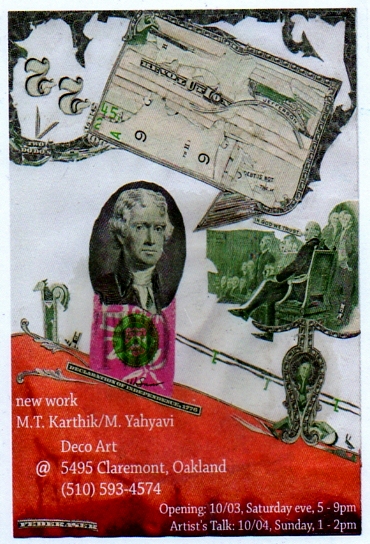
Making Money … Into Something Else, installation, 2009

03 Saturday Oct 2009

Posted by mtk in collage, installations, MTKinstalls, North Oakland

≈ Leave a comment

Tags

2009, art, Avenue, Caroline, Claremont, Deco, Karthik, m.t. karthik, mtk, new, oakland, Stern, work

flyer for show: Jefferson Snowboarding [2009]

Concerning the Author’s Previous Attempts at Fiction

05 Tuesday May 2009

Posted by mtk in Berkeley, Commentary, essay, journal entries, Letter From MTK, novel, self portrait, thoughts

≈ Leave a comment

Tags

fiction, history, Karthik, m.t., m.t. karthik, mtk, nobels, novel, stories, story, writing, writings

Between 1995 and 1997 I wrote my first novel, Mood. Because digital printing and imaging were nascent technologies, and because I was growing increasingly interested in doing art myself, in making visual art myself, Mood was conceived and designed specifically, with a graphic element that drove the creative engine of the work: the passage of an image of the changing moon moving through the margins, and the presence of the night sky on the pages by making the pages dark and the letters light, with the slightest alteration of color and contrast of the pages and letters as the book progresses to correspond to the light provided by the moon as it passed through a fortnight of phases during the course of the narrative of the novel. The pages were to be the night sky and the letters the stars – paragraphs were constellations.

The timing of the narrative takes place during the fortnight represented by the physical pages and artwork, and as a conceit, the main character’s name changes with each phase of the moon. Set in San Francisco, I employed many contemporary businesses – bars, restaurants – that were popular among scenesters then. I punnishly changed names, or not, on a whimsical basis. Anyone who went out to hear live music or DJs or art in The Mission, North Beach, SOMA or elsewhere in the mid 1990’s would recognize many locations by their descriptions in the novel, Mood.

I physically took Mood to New York City in August of 1997, and attempted to have it published. I hand delivered copies to Sonny Mehta at Random House and at all the major houses. This was the exact moment when many of NYCs oldest and most famous publishers were being bought out by large German corporations.

Response to Mood was almost negligible. Only one agent wrote back at all, a handwritten note to say he liked the style but that the work was too experimental. The book was never produced as imagined and for a dozen years has existed as only a single, 187-page hardcopy, bound in 1997 (which may be lost in India), and as files stored on floppy disk. In January 2000, one chapter of Mood was published as a short story by the Conde Nast women’s monthly, Jane magazine. That story, Shanti, was roughly 1500 words long and represents my first published work of fiction that had a national audience. More than 50 readers wrote to an e-mail established to receive feedback. All the feedback was good.

I stayed in New York to attempt to write more and address the publishing industry, but grew increasingly disappointed in the changing face of the industry and writing in general. The New Yorker rejected seven of my submissions between 1997 and 2009, though once they wrote by hand that I was on the right track, “this one is more like what we might run,” the unsigned note read.

In 2001, my short story, Close the Piano, was published in an anthology of South Asian writers out of Toronto, Canada, under the pseudonym Raj Balas. I did a public performance as Raj Balas reading a part of that story aloud to a group gathered at the Asian American Writers Workshop in Manhattan, in April of that year – four months before the September 11th attacks which changed my career trajectory, somewhat, as I began and have been doing much more art, performance, news and journalism rather than fiction writing, ever since.

After 9/11, I nearly stopped writing fiction altogether. This has been an intense period in my life that includes the birth of my son and years of writing hard news and politics for Pacifica Radio, as well as anti-war essays and e-mails for a half decade. I was very politically active during the Bush/Cheney era. I also completed a lot of art, performance and installation work that was politically motivated in response to our changing world.

My explorations into visual art – which began in 1996 with Rigo 23 in San Francisco – began to fruit in New York in part as a result of collaboration with Christopher Wilde, Marshall Weber, Mark Wagner, Sara Parkel, Amy Ferrara and others at Booklyn Artists Alliance, and also because, on an irregular but intense level, I began assisting Rigo 23 with large scale art and installation projects all around the world. I became a working artist somewhere between the year 2000 and 2003 – when most of my placed work found its home in educational and arts institutions in the U.S.A. This is also when I founded Fifty Foot Pine Tree Press (Los Angeles, April 25, 2002) to begin producing limited editions, artist’s books, prints and digital art, now on the web at www.ffptp.org

In the 21st century, I began to make artists books and to do collage, drawing and painting more than to write fiction, however, I did write one more novel and five more short stories while in New York City. None of this work was published, though the novel was posted page by page, online, in its entirety, by a now defunct website. That novel remained online for a full year, December 1999 to January 2001.

I have only finished one story since 9/11, as raising my son has made it nearly impossible to find the mental space and time to write what I want to write. The only fiction I have finished in the last 3 years is Before You Came, the opening chapter of a novel with the working title, The Outsider Inside.

M.T. Karthik

Berkeley, California

May 2009

The Attacks on Mumbai, India 11/26/2008

29 Saturday Nov 2008

Posted by mtk in India, journal entries, journalism

≈ 1 Comment

Tags

2008, Attacks, m.t. karthik, mtk, Mumbai

The Attacks on Mumbai, India
[posted by mtk, 2230 IndianStandardTime, Saturday, November 29th]

Late Wednesday night, in Mumbai’s priciest district, on the city’s south coast shoreline, two-member teams of gunmen suddenly appeared, fanned out and fired AK-47 rounds randomly into crowds while hurling grenades out of their backpacks.

They targeted luxury hotel restaurants and eventually seized hostages and whole floors of two major hotels and a Jewish Center, from which they launched a firestorm of bullets and incendiary devices aimed at Mumbaikars, tourists, police, anti-terror forces, and the colonial-era hotels themselves.

Gunfire began at or near the Oberoi Hotel at Nariman Point around 9:30pm, and by 11:30 the coastal Marine Drive was a war zone of ambulances, police vehicles, satellite TV vans and trucks filled with heavily armed soldiers. Soldiers moved into the Oberoi even as seven grenade explosions rocked the Taj Mahal, which burned for hours. Simultaneous grenade and gunfire attacks by armed gunmen began at the central railway station, a taxi stand and a hospital. Fierce battles between police and terrorists lasted more than 50 hours and have been described as urban warfare.

Two full days later, the death toll stands at nearly 200, including 22 foreigners, three high-ranking Indian anti-terror police, and at least nine of the terrorists. One has been captured, nine others detained and the nation of India stands shocked to attention.

The attacks themselves relied on multiple, audacious gunmen and were conducted with organized and well-trained execution, implying greater terrorist infrastructure, but most serious experts doubt the involvement of al Qaeda.

At the Trident Oberoi and Taj Mahal luxury hotels, the “terrorists” sought and killed foreigners. American and British guests were targeted in particular, but among the dead are a Greek millionaire, a Japanese tourist and at least two Australians. The attacks were brash, loud, pointed and violent. Many are still wondering who would do such a thing and why?

On Thursday morning, speaking from inside the Oberoi, where foreigners were held hostage, a man identified as Sahadullah told India TV he belonged to an Indian Islamist group seeking to end the persecution of Indian Muslims: “We want all mujahideens held in India released and only after that we will release the people.”

This claim and a written fax #stating responsibility was with a group called “Deccan Mujahadeen” – a regional identification with the South Central Deccan Plateau in India – masked the true authors and were meant to inspire “homegrown” terrorists within India.

The attacks are cast thus somewhere between a suicide bombing and a revolutionary assault. But they seem hyper-provocative – an orgy of public violence for an unlikely single objective. There are strong reasons to believe they are provocations with other authors and objectives.

We can describe four:
1. Hindu Extremists
Mumbai has a history of Election year violence and investigations continue into an internal political agency for the attackers. There are accusations against Hindu Nationalists in pursuit of a harder-line policy, concerning Kashmir and Pakistan in specific, and Muslims in general. Extremist Hindus have executed attacks or organized them to create a greater fear of terrorism and push the election toward their policy.

It has been reported that Hemant Karkare, chief of the city’s anti-terrorism squad, who was gunned down Wednesday in the line of duty, was in fact on the trail of Hindu extremists in the cases of certain attacks in previous years. This from Amaresh Misra [tel:91-9250305699]:

“The Mumbai ATS chief Hemant Karkare and other officers of the ATS have been killed. These were the same people who were investigating the Malegaon Blasts–in which Praggya Singh, an army officer and several other noted personalities of the BJP-RSS-Bajrang Dal-VHP were arrested. Karkare was the man to arrest them. Karkare was receiving threats from several quarters. LK Advani, the BJP chief and several other prominent leaders of the so-called Hindu terrorism squad were gunning for his head. And the first casualty in the terrorist attack was Karkare! He is dead–gone. the firing by terrorists began from Nariman House–which is the only building in Mumbai inhabited by Jews. Some Hindu Gujaratis of the Nariman area spoke live on several TV channels–they openly said that the firing by terrorists began from Nariman house. And that for two years suspicious activities were going on in this house. But no one took notice.”

UPDATE: China says don’t rule out Hindu extremists on the basis of “the red thread” around the wrist of attackers – a Hindu practice, that wouldn’t be necessary camo/costumery where they were attacking, a westernized part of town. Read the “Red Thread” China angle here. (Chinese Red Thread, ha! multicultural poetry, I say) The only other named agent in all this then is Dawood Ibrahim (discussed below) who serves as the transition to:

2. Unseen Hands in Pakistan
China, the USA, Russia and Iran all have their hands in “leaderless” Pakistan, since the collapse of Musharraf and the murder of Benazir Bhutto. China has negotiated a port with Pakistan to allow the Chinese access to Caspian Sea oil by pipeline. The United States is actively interested in Indian/USA alliance to balance China. Iran is the source of the China oil, Russia seeks to counterbalance USA’s presence in region. Jane’s has alredy identified a China/Russia/Iran Axis that seeks Pakistan. Countered by a USA(via Iraq/Afghanistan and now)/India alliance – trying to get India into aggression with USA versus Pakistan. All of these hands have interests and remain largely unseen could any of them be involved in these attacks? Are there terrorist or operatives willing to deal with anyone for the highest price? Who are they? Could this be from Pakistan but having no relation to Zardari or ISI?

3. Israel/BJP connection?

There are claims that when the BJP was in power in 2001 (when it allowed Sharon to visit as the first Israeli PM recognized by India) secret alliances were made between Extremist Hindus and Zionist Jews to address Pakistan more aggressively. It has been claimed that as recently as this summer, Israeli Security and Mossad Agents have been involved in training these Indian Extremists. The idea of Mossad involvement here is far-fetched, but possible. Could extremist Zionist and Extremist Hindus be running provocation false flag attacks to incite violence? Again, Misra:

“It is clear that Mossad is involved in the whole affair. An entire city has been attacked by Mossad and probably units of mercenaries. It is not possible for one single organization to plan and execute such a sophisticated operation. It is clear that this operation was backed by communal forces from within the Indian State. … Muslims and secular Hindus have been proven right. RSS type forces and Israel are all involved in … destabilizing … India. India should immediately snap all relations with Israel. We owe this much to Karkare and the brave ATS men who had shown the courage to arrest Praggya Singh, Raj Kumar Purohit, the army officer and several others.”

the radical blogster aangir fan agrees and thinks Dawood Ibrahim (if you don’t know who he is, it’s detailed in clip) is a pawn of both Pakistan’s ISI and USA’s CIA! [BTW, after the NYT blamed them yesterday, the L-e-t have since issued a denial] so Ibrahim serves again as a transition which leads us to:

4. Bush/Cheney Actively Agitating Covertly (cf. Iran)
Seymour Hersh reported in The New Yorker this year that Bush/Cheney received the go ahead from Nancy Pelosi and seven other Congressmembers – four Democrats and four Republicans – to earmark $400 million dollars for covert actions in Iran. COVERT US military within the sovereign country of Iran! These are resources and personnel allocated to agitation. Bush/Cheney and the neocons’ stated policy is to agitate and push these countries into action in an attempt to get the US military involved to “settle” it as a part of their War on Terror. Are the bombing of the Marriott Hotel in Islamabad and these attacks on Mumbai covert agitiation black-ops out of USA’s Pentagon?
UPDATE: Professor Michel Chossudovsky of The Centre for Research on Globalization at Univ of Ottawa has an excellent piece on the whole affair! with deep details into U.S./I.S.I. relations. It concludes with this smart rebuke of “what we are seeing now” in the English-language press:

“The role of the US-UK-Israeli counter terrorism and police officials, is essentially to manipulate the results of the Indian police investigation.
It is worth noting, however, that the Delhi government turned down Israel’s request to send a special forces military unit to assist the Indian commandos in freeing Jewish hostages held inside Mumbai’s Chabad Jewish Center (PTI, November 28, 2008).

Bali 2002 versus Mumbai 2008
The Mumbai terrorist attacks bear certain similarities to the 2002 Bali attacks. In both cases, Western tourists were targets. The tourist resort of Kuta on the island of Bali, Indonesia, was the object of two separate attacks, which targeted mainly Australian tourists. (Ibid). The alleged terrorists in the Bali 2002 bombings were executed, following a lengthy trial period, barely a few weeks ago, on November 9, 2008. (Michel Chossudovsky, Miscarriage of Justice: Who was behind the October 2002 Bali bombings? Global Research, November 13, 2009). The political architects of the 2002 Bali attacks were never brought to trial.

A November 2002 report emanating from Indonesia’s top brass, pointed to the involvement of both the head of Indonesian intelligence General A. M. Hendropriyono as well as the CIA. The links of Jemaah Islamiyah (JI) to the Indonesian intelligence agency (BIN) were never raised in the official Indonesian government investigation –which was guided behind the scenes by Australian intelligence and the CIA. Moreover, shortly after the bombing, Australian Prime Minister John Howard “admitted that Australian authorities were warned about possible attacks in Bali but chose not to issue a warning.” (Christchurch Press, November 22, 2002).

With regard to the Bali 2002 bombings, the statements of two former presidents of Indonesia were casually dismissed in the trial procedures, both of which pointed to complicity of the Indonesian military and police. In 2002, president Megawati Sukarnoputri, accused the US of involvement in the attacks. In 2005, in an October 2005 interview with Australia’s SBS TV, former president Wahid Abdurrahman stated that the Indonesian military and police played a complicit role in the 2002 Bali bombing. (quoted in Miscarriage of Justice: Who was behind the October 2002 Bali bombings?, op cit)”

All of this must be considered and investigated seriously, and restraint and calmness must be encouraged in India. Let us mourn and heal and investigate.
Indian investigators, from the street level up to the Prime Minister’s office, state that forces responsible for the attacks are “based outside the country” – and the world’s press has rapidly presumed Pakistan. There has as yet been no explicit charge against another nation, but it has been revealed that the one captured terrorist is from Pakistan[and stated he had accomplices in Mumbai] , and a guarded, but confident and firmly-worded statement from the Prime Minister warned “neighbours” of consequences if they continued to allow the use of their territories to terror groups.

[posted by mtk, 2230 Indian Standard Time, Saturday, November 29th]

Last Piece Before Election 2008

31 Friday Oct 2008

Posted by mtk in appeals, beliefs, Berkeley, Commentary, elections, essay, journalism, politics, public letters, thoughts

≈ Leave a comment

Tags

2008, election, electronic, fraud, Karthik, m.t., m.t. karthik, mtk, problems, voting

We’ve proved that the electronic voting machines are made by highly partisan private corporations and feel strongly that fraud has occurred. There are dozens of very serious cases, allegations and simulations of sheer electronic fraud, by reputable academics. There are allegations of vote theft – the outright changing of results … read this excellent summative:  http://www.wanttoknow.info/electronicvoting


And still as many as ONE-THIRD of U.S. votes are being cast into the black box of un-auditable e-voting without paper record trails. See who votes how here:

[http://verifiedvoting.org/verifier/index.php?ec=mixed&topicText=&state=&stateText=] 

While this year’s presidential election has generated more interest than those in say 1996 or ’88, and perhaps even more than the Bush/Rove manipulations in 2000 and ’04, very few in the corporate press are preparing for what could be another utterly bogus presidential election night. The Republicans don’t need to actually win because they can negotiate the Democrats losing, and make the corporate press agree the polls were wrong.

“The Bradley Effect: that people won’t admit to pollsters that they didn’t vote for a black man” is already being paraded as an excuse, and races that are polling very wide are being portrayed as close! why? So it can be fixed again and presented as legit?

By contrast, many in the blogosphere of the Internet now feel that the outcome of the 2008 Presidential Election must be “either an Obama landslide, or definitively election fraud …” as it has been already identified in 2002 and 2004; including computer fraud via the alteration of votes in electronic voting machines, illegal vote purges and suppression in key states.

We have uncovered the exact ways in which HAVA (the “Help America Vote Act“) – forced county clerks in communities all over the country to rapidly accept UNAPPROVED Diebold, Sequoia and Premier electronic voting machines. We have testimonial after testimonial – all over youtube – complaining of what looks like rigging or suppression of votes. The outright changing of electronically cast votes by an exceptionally simple and quick hack is alleged nationwide. See these 3 movies on the facts:

http://www.freeforall.tv/
http://www.uncountedthemovie.com
http://www.stealingamericathemovie.org

So, on election night, what are we going to do? be transfixed by the corporate media? by Karl Rove’s fat face telling us a state has “flipped” from blue to red? or a “Too Close To Call” tuesday night and then a fixed election wednesday morning? how are we as a people to prevent election night and indeed our whole election process from being an utter joke?

Don’t let surprise turn into silent acceptance of a coup on election night. 

Brad Friedman started with that attitude. The one-man election integrity super-blogger has been pursuing issue after issue in an organized fashion for the past four years. www.bradblog.com is indispensable now from the standpoint of election integrity awareness. It’s possibly the single best place to go on the day after election day to follow up on a priori complaints. 

Black Box Voting, begun by Bev Harris, pursues similar goals – they are at www.blackboxvoting.org – and have begun a campaign they call: What to Do on Election Night “Protect the Count!” that advocates taking your video cameras where votes are stored on election night and being prepared to spend the night.

From the standpoint of long term solutions, so we can get together after this election and write the un-HAVA [maybe we could call it SAVA, the Secure America’s Votes Act]  and have it passed by the new Democratic President and Congress, here’s one: Open-Source Voting http://openvotingconsortium.org/ It’s endorsed by many who care, as a good way out of the nightmare HAVA has produced. 

“But MTK … ,” you ask, “ … all that’s fine and good, but what are we gonna do if it’s election night and they are freaking rigging the election and shoveling a result down our throats via the Corporate Press with bullshit numbers, un-investigated mysterious vote-shifts and hundreds of thousands of purged and missing ballots, again?”

First, I think be very open-minded, slow to judge and aware. Second, why not be prepared to bring the government and the press to a halt on Wednesday the 5th of November if necessary – a stoppage of the process for investigation. In all seriousness. Be prepared to say you do NOT accept a concession by any party or any interpretation of the votes by any government body without a full Congressional Investigation into the Election. Imagine headlines in the Times that read Election Fraud Alleged … Public Demands Results Be Investigated, and subheads:

impound the electronic voting machines

do NOT certify any election where voters claim the process was interfered with.

demand the right for a re-votes, tell people to prepare for a second ballot if necessary and entire re-votes of counties and states should be encouraged if necessary  

Other than that … get ready to tell the people who want to take this country over illegally again that that isn’t what democracy looks like, ‘cause that’s what we will be doing. And it may take months.

sincerely,

mtk on the mic

Before You Came, short fiction, 2008

28 Tuesday Oct 2008

Posted by mtk in fiction, NYC

≈ 1 Comment

Tags

2008, Before You Came, Karthik, m.t. karthik, mtk, short, story

The bed is relieved. Two lovers lie beside each other, weightless. Amber light from a street lamp outside falls through the open window casting itself across their splayed bodies painting their skin – his chest goes deep red, her shoulders, a canvas to the shadow of the windowframe – a perfect rhombus in pale orange. She puts her arm over him.

“All right,” he murmurs, “We do it.”

“Mmmm,” she hums into his chest.

They sigh in unison.

That’s how the decision is made. He does not hide his anxiety and she senses it but says nothing more. His lips are chapped and he picks at the dry skin. The movement jostles her. She wriggles, and turns away, already drifting off to sleep. He lies awake considering a temp job.

The next day she tells her assistant, Lucy:

“We’re going to do it.”

High morning sunlight blazes through her office. Lucy enters, closes the door, flattens the blinds, then turns on the ashtray. It was a gift — an ashtray that sucks smoke into its belly and diffuses it.

A gaily plaid-patterned pouch fluffs out under a black plastic tray containing the suction mechanism. It looks like a sporran pulled from the navel of a Scot or, when there’s more than one cigarette resting on it, like a tiny set of bone-white bagpipes.

“Well, now you’ve gotta quit,” Lucy comments, shaking a cigarette loose from the pack on the table between them. Jennifer pulls a lighter from her purse.

“Mmm,” she agrees, “this one’s my last.” She leans across the desk, lights Lucy’s, then her own. They smoke in silence. Jennifer rocks back in her chair as she puts the cigarette to her lips, then leans forward to exhale. It is quiet between them in the office – the barely audible crackle of the burning paper, the long, slow exhalation of smoke into the ashtray, the soft beeps of fax machines and telephones from beyond Lucy’s desk. Jennifer ashes.

“Well,” Lucy says, finally, “hope it’s a girl.”

The would-be father of her child sits on a bench in Union Square in a black overcoat with a wool scarf wrapped tightly around his neck; folded once lengthwise and then tucked into a loop made from halving its length — comme son ami Stan, comme un Parisian.

The scarf was a gift from Jennifer. He’d had it dry-cleaned only once: during The Horrific Autumn of the Void when Raj became convinced that noxious World Trade Center dust, porting asbestos and burnt humanity, had infected everything capable of holding it. He’d even rid himself of his beard, then. But it was back by winter – speckled with tiny white spacecraft each time it snowed.

Rajagopal Balasubramaniam americanized when he moved to New York, taking the name Raj Balas, because he felt it had a European feel. He was 19 then and the Mayor was a Jew – it was a good time to change your name.

When they first met, Jennifer thought it would be a one-night stand. In Raj’s arms, after that hot night, she said: “People from outside the U.S. aren’t put off by girls with a weight problem,” she said, “It’s like it’s not part of their culture to discriminate – or maybe it’s even better, you know, to have a little more on you?”

“You don’t have a weight problem,” Raj mumbled.

Since that encounter, seven years have fired by at New York’s inhuman tempo. They stayed together through four infidelities, three of which they discussed openly. Raj slept on the sofa fourteen times. Jennifer once left on short notice to stay with her mother in California but she returned after the weekend. They didn’t rush into things after nine-eleven, but knew then, for certain, where it was going.

It’s twilight in autumn when day darkens early and gray dusk speeds toward nightness – the hour of the shift change, when empty taxis return to their gates leaving tourists at street corners waving their arms in futility at yellow cars topped by bright white letters: “not-for-hire.” The city of New York breathes workers in and out – the drone bees of the great hive exhaled and inhaled, exhaled, inhaled.

In the park, Raj watches a woman in black moving fast against a stiffening wind. The woman runs to get to the subway steps. Traffic picks up.

<wheedley eedley eedley> goes his phone. “Balas,” he replies.

“Bigot!” whispers the voice of a shape-shifting creature known as a rakshasa. The streets are a tumult. There are chiseled cement barriers cast into the avenue, cracked and speckled with tar. A tattered leaf skitters across the stone surface of the pathway in front of him. It comes to rest near Raj’s shoe. “Admit it, at least,” hisses the voice.

Raj holds the phone still against his cheek. A zephyr passes over his face. The rakshasa takes the corporeal form of a gray-flecked, tattered thing that flutters to a landing on the sidewalk.

He pockets his phone. The pigeon steps cautiously, stretching the wrinkly pink skin on its knobby legs. A scaly sheen of iridescent violet and sea-green glimmers in its neck.

“And yet you profit from avoiding conflict,” it murmurs, “you hypocrite.”

Raj looks left and right. He thinks a pigeon is talking to him. The park fills with people en route to the subway. From the pocket of his overcoat, he withdraws a crumpled, white paper sack. He unwraps half a bagel, tears off a piece the size of his thumb and throws it down in the walkway. The pigeon pecks at it.

Several more birds gather, clucking and cooing. Raj feeds them. The light fades fast. The thousand thousands descend from high-rises into the concrete street, all the souls of city traffic, like leaves drifting down.

Part Two
Lucy was born into a large Irish family that shared a small flat in King’s Cross, London, in the early 1980’s. There wasn’t enough room for a happy family, much less one with her father at its root.

These days, she plugs headphones into a sixteenth-inch jack attached to a radiating plastic box on her desk each morning at 7:30, faces the monitor, the door and the telephone, takes a one-hour break for lunch, returns to her hemispheric chamber for five hours in the afternoon, and then pulls out of the jack at 6, like a stopwatch, <click>.

And she does it again the next day … infinity.

This has gone on for seven years.

Lucy is a vibrant human being who has evolved into a robot trained to respond when things beep and ring:

<wheedley-eedley-eedley>

“Creative.” she sings into the receiver,

It’s Raj: “Hi Lucy, what’s up?”

“I see us as huge, flat, irradiant disks,” Lucy replies, “enormous plates of data stacked on top of each other in a hierarchy of information access. We constitute our consciousness of what is happening in the world right now from the information marketplace, consuming only what’s available at our financial level – on our particular plateau. Nobody reads anything that isn’t on the Internet any more, so it all comes down to TV.”

Ten year’s in the industry, and Lucy’s voice has been whetted for the phone: cool and metallic.

“If you’ve only got TV, you’re in the ghetto where everybody knows the same false shit. If you’ve TV but no cable, you’re broke or the nouveau chic who cut the cable after 9/11 and ran out and bought a DVD player. You watch videos, claim they’re documentaries.

“If you’ve TV and cable – and I’m talking just basic, now, because news and information ride the basic and premium packages equally – then you’re on the biggest, widest disk of all. We shop together, eat out together, form opinions together in electronic media and real time everywhere-now. We watch the same shit on a TV mounted in the back of a seat on the airplane. Most of us have Internet access, which less than 10% of the world has …

“From our huge, flat socio-intellectual group it gets smaller – smaller disks of information consumers: satellite TV, digital, broadband, until you finally end up with the wealthy few flipping through free porn and catching Formula One live from Dubai,”

Lucy takes a breath, and in a series of quick motions, opens a drawer, pulls out a message pad and cuts the iTunes dj, midstream. “And these aren’t the Illuminati we’re talking about, Raj. These are the most powerful wankers on earth. Neroes, Raj, masturbating while Rome burns.”

In the park Raj shrugs back the chill, “I read the papers. Can you put me through, please?”

“One moment please.”

In her office, Jennifer stabs an index finger at the grey button marked “intercom” and immediately the office is filled with the airy sound of static, a plastic mic dangling in the wind.

“Hey,” she calls out.

“Goddammit, take me off.”

“What do you want?”

“Let’s celebrate …”

“I can’t.”

Cars swoosh by, a horn, in the distance, a siren. A heartbeat.
“C’mon, pick up the phone.” Jennifer takes a drag, eking out, “My hands are full here.” She exhales into the ashtray.

“When are you done?”

She sighs and flips her wrist to see the face of her watch. “I don’t know. Ten, maybe?”

“All right, look, I’m going to Gopal’s.”

“Look for pregnancy books.” Jennifer hangs up, then stabs at another line to call her mother.

“Hello?”

“We’re going to have a baby,” she blurts into the receiver. “We’ll start trying in the spring. It’s decided.”

“Are you getting married?”

“No.”

The dead nothing sound of the digital line between words, then the unmistakable sigh of her mother, “I’ll call you back.” <click>

Jennifer sets the phone down and immediately reaches for a cigarette. “This one’s my last.”

Part Three
Still radiator coolant in a puddle at the curbside bus stop shimmering electric green reflects the neon strip from a lotto sign in the window of the corner shop owned by the immigrant whose kid tagged “AMERIKKKA” everywhere after the buildings got knocked down.

Nobody here – where it’s taught early not to ask or tell too much – would say for sure that the Bush Mafia didn’t let 9/11 happen and most put up an American flag since it meant the Italians’d do business. Pimping and hoing continued at 96% efficiency while the legitimate economy tumbled blindly waiting for the murder of Arabs to save it.

Here, the same smells in an orderly way from the same places everyday, end in a mix remembered miles away as Brooklyn. Each twilight brings the sound of jet-fuel burning in the turbines of descending planes and a few hundred more people everyday. To see what exactly? New York died in the 20th century. The eleventh of September just sealed the tomb, neatly closing the era for historians. It was all so scripted.

Picture night over rooftops and chimneys. When everything is still, you see me. I am a New York night.

Ovid: There is, far above us, a way. It appears white at night and so we call it milky.

Picture a white skipping stone, pulsing, at night. That’s right, a satellite. See that skipping stone blipping regularly across the fluid blackness between the still points of ancient light that forms the great sea of time and space. I am the black sea upon which rests Ovid’s great white way.

On that first night of the new era, while you slept or tried to sleep, having nightmares or dreaming it all a dream, I was clickety-click, lickety-split, looking-climbing, seeing everywhere. I crept across rooftops from ocean to ocean, swam – one among billions of plankton – in the bitstorm on the infosea, avoiding whales of security teams: enormous beasts of agency drifting through the fluid ones and zeroes making as much useful information as stochastic noise.

I lay low, listening as they passed, singing their weird music that pushes them forever on. I became the white eyeball. Have you ever seen two men fight? I am a New York night and there is no greater authority on such matters. I host eight million egos. I catch a fight every shift.

There’s often a moment just before the shit goes down when it seems it won’t happen at all: a slouch in posture, a moment’s hesitation, the briefest instant of sanity or fatigue before the flurry of escalation that leads, ultimately, to assault. It might be a <sigh> that breaks the hard-built tension just before the nod, the push, the shove-jam-cock that ends with the <pop> of battery.

The deaths of 2,800 in my belly were the outcome of one such flurry of violent exchanges between the most desperate and the wickedest of the wealthy. The Oil Cabal Americans – whose religion is capitalism – drunk with newfound power from the success of their Millenial coup d’etat, spent the summer of ’01 baiting the fearless blackguards of the shadow markets over possession of dark crude from the shores of the Caspian Sea.

Then it was the spectacle on CNN worldwide, which means that there was a declaration of war all right, only it happened months before the morning of September 11. Perhaps years, decades and centuries come into it. Will we ever know?

No.

Instead we’re stuck with the birth of a fiction: the spectacle re-interpreted and woven into artificial jingo, accepted by at least enough people to let the war parade begin, middle and … will it ever end?

Part of the spectacle happened half a mile from the hard-angle of Gopal’s nose. It was spectacular right before his eyes. He stood on the roof of his North Brooklyn bookstore – where he’d watched the sun set a thousand times over the glittering Manhattan skyline, where he’d smoked a thousand joints after work over the last seven years – chin dropped to his chest, brow furrowed, staring in awe. He saw the fiery bursts, witnessed the collapse and the enormous hoary plume of ash, poisoned dust and rubble. He rolled a joint.

He’d have made a unique photo. His calmness from a distance linked him with no one. His hawkish South Asian nose was only accentuated by that perched posture on the bookstore rooftop staring at the nullification of the World Trade Centers. He looked more like a vulture than anything else.

Then Gopal went downstairs to watch the news. The kids had been let out of school and some of the teenagers drifted into the shop to hang out. Gopal told them their parents would want them home, and when the shop was empty, locked up downstairs, flipped the “closed” sign and went back up to the roof.

Jennifer was at her office when the second jetliner screamed past. She didn’t get back to the house until after 2 in the afternoon. She found Raj face down in his pillow and woke him with the news. He’d slept through the apocalypse.

They watched the replays of what had happened just half a mile away while he slept. They went to the roof. There they found Gopal, atop his, next door, smoking. They crossed over the flashing. It was Gopal who first said: “There’ll be backlash.”

Part Four
The First Gulf War never happened for Gopal, nor for his wife, Amrita. In May of 1990, just a few months before Bush’s Marines moved into Desert Shield, the newlywed Indian-American couple moved to Madras, she on a fellowship, he under contract. It was the month of the fire winds of Agni, that blow down from the slight eastern ghats across the desert of Tamil Nadu to the sea. Rajiv Gandhi hadn’t yet been assassinated. There was a drunken-ness in the fat, sticky afternoons.

They struggled with being Americans in India. It tore at their relationship. He drank late, often, and gave himself, swaggering, to Indian time. She found him condescending and patronizing and so was defiant when they went anywhere together. He thought her a hypocrite.

By April of the following year, while George H. W. Bush was declaring Kuwait a free republic, Gopal and Amrita were divorced.

Their families were generally unconcerned that a George Bush sought to crush Saddam Hussein and attack Iraq even then. Many secretly rather appreciated the cover that Bush’s war provided for the family misfortune – the hushed-up word and the secret bibliography of unmarried writers – “diworce.”

Bush the Elder’s war was declared over because it was bad politics. Amrita and Gopal called it quits for bad vibes. Late at night on a golf course in Bangalore, they made love, drunk, for the last time. Amrita pitied him and let it happen.

They moved back to New York and found friends who watched television at a frightening speed. Ubiquitous shrinking cel-phones led beep-beeping to workstations playing DOOM with three-dimensional range-of-motion in New York, capitol of capital – into which they leapt, single. Well, Amrita did: she went to grad school, married a Manhattan Jew, and became something of a demi-goddess; dark, silent and lovely set against all those white people, a broad-leafed houseplant whose curved palm wove its way into everything. She grew into the role. She and David rented a flat on the upper west side. Pukka.
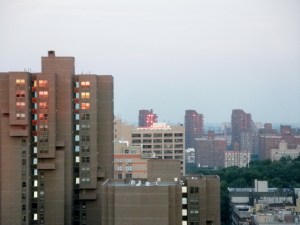
Gopal meanwhile, moved to Brooklyn to tend the bookstore, Subbu’s Books. North Brooklyn pronounced it, “Soo-Booze”.
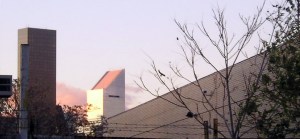
Subbu’s Books is a tall, narrow shop in a converted, ochre-brick row house at the end of a Brooklyn block that neatly separates two neighborhoods of different languages. Because of post-9/11 gentrification and development, the new customers are immigrants, artists, writers and film-makers.

Subbu’s sells newspapers, poetry, literature, magazines, how-to, nonfiction, a handful of first editions, calendars, selected best sellers, bookmarks, stamps, postcards and textbooks in Spanish, English, Arabic, Romance, Polish, Hindi-Urdu, Russian, Mandarin Chinese and so on. An image of the store’s founder, one V.V. Subbuswami, hangs, framed, garlanded, dusty, behind the counter. Today, Gopal, Subbuswami’s eldest nephew, makes purchasing decisions himself alone.

The block is silent but for the occasional whisper of rustling dry leaves on the asphalt. The birch out front of the shop has begun to turn; several leaves have achieved red and gold and a few yellow ones threaten to be the first to fall. Gopal hasn’t yet replaced the screens in the doors with glass and a thin, chilly breeze gusts through the shop. He props open the door to the washroom to sweep, mop and change the paper.

He was currently obsessed with American novelists of the mid-twentieth century, absorbed in a Van Wyck Brooks paperback of interviews.
After cleaning the toilet, Gopal picks up the paperback from the tank, closes the door and sits down to empty himself:

“In the summer of 1954, when he was forty, two years after winning the National Book Award in the United States for his first novel, “Invisible Man,” Ralph Ellison sat at Café de la Mairie du VI. In postwar Paris, with a group of expatriated Americans, he granted an interview to The Paris Review. It was his last day in Europe at the end of a well-traveled summer. He would return to the U.S. the next morning.

“I suspect,” Ellison said, “that all the agony that goes into writing is borne precisely because the writer longs for acceptance – but it must be acceptance on his own terms.”

Ellison, at perhaps the height of his freedom, embraced by some intellectuals and academics in New York and Europe at least, critically assured of his place in any history of the American novel – “Lolita,” would not appear until the following spring – continued:

“The Negro novelist draws his blackness too tightly around him when he sits down to write – that’s what the anti-protest critics believe. But perhaps the white reader draws his whiteness around himself when he sits down to read … he doesn’t want to identify himself with Negro characters in terms of our immediate racial and social situation, though on a deeper human level identification can become compelling, when the situation is revealed artistically.”

The interviewers describe the author as “overwhelming. To listen to him is rather like sitting in the back of a huge hall and feeling the lecturer’s faraway eyes staring directly into your own.”

Ellison, facing the literary attention of Europe and Euro-america, was direct and serious:

“The white reader doesn’t want to get too close, not even in an imaginary re-creation of society. Negro writers have felt this, and it has led to much of our failure.”

Gopal shits and reconsiders the text: “The white reader doesn’t want to get too close, not even in an imaginary re-creation of society.” He flips to the frontispiece. The little paperback had been published in the city, by Viking, in 1963; the exact year that, some thirteen thousand miles away, Gopal had fallen into this existence. “Too close to what?” he mutters.

When Raj arrives he tells Gopal: “We’re going to have a kid.”

“The aunties will have a fit if you don’t get married.”

Raj adopts a Valley Girl tone that he and Gopal once mocked, putting his hand up, palm out, “What. Ever.” He rolls his eyes heavenward. Laughing, Gopal reaches over and high-fives the open palm.

“How old are you?” he asks.

“Thirty-six.”

Gopal shrugs and returns to his paperback.

As Raj picks at the shelves, he and Gopal spend the afternoon trying out the sound of their new names: Gopal-mama, Gopal-uncle, Appa, Dad, “Pops” and so on.

Part Five

The rakshasa returns as an African-American male, 6’2″, puffy afro, in the alley behind the bookshop. Raj, who had slipped out back to piss in the street since Gopal had beaten him to the toilet, finds himself facing the demon dressed in an all-black sweatsuit with two parallel white stripes running down the pants leg. White, block, sans serif lettering is printed across his chest: HOUSE NEGRO.

“Will you please wake up?”

Raj mumbles like an idiot, looking up and down the alley, peering back over-his shoulder at the bookshop for Gopal’s piercing eyes. “What do you want from me?”

“Come clean!” barks the brother from another planet. The rakshasa looks at Raj in disgust, steps toward him. “Take your clothes off, man, we’re swapping.”

The near-silent alleyway drips invisible trickles of water. Several blocks away a garbage truck sounds its high-pitched, repeated <wheet-wheet-wheet-wheet> backing up to a curbside dumpster. Raj Balas is standing naked and alone on a side street in Brooklyn, his clothes in his hands, his cock and balls hanging out.

Later, Raj lays his dark hand upon Jennifer’s pale breast – como Neruda; un reloj en la noche. He makes tiny circles with his index finger around the shades of pink.

They share the row-house next door to Subbu’s Books. Their bedroom window looks out onto the tree-lined street. Opposite their building, the brick walls of a materials warehouse are tagged with graffiti: SOON.

“A pigeon called me a bigot yesterday.”

“I suppose it was only a matter of time,” she murmurs.

“I’m being visited by a demon. He says I’m a house nigger.”

Jennifer tenses: “I told you not to use that word in front of me.” She half lifts the sheets. “So what are you telling me?” she manages, “that your conscience is brown, too?” She rolls over, away from him, her long white back a wall of silence.
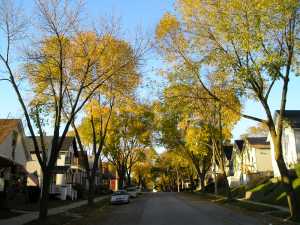
Part Six
On this day, a Sunday, they are expected in New Jersey for a garden party to be held at the home of Ramesh and Kalpana, septuagenarians who had emigrated to the U.S. in the same year as Raj’s parents and who had been close with his Uncle Subbu. “We were a Tamil family all alone here and they were Telegus,” his mother would say when he was young, with such respect and wonderment, “So, of course, Kalpana and I became like sisters.” Since his own father’s death, Raj had become closer with Ramesh-uncle and Kalpana-auntie.

The stems of chlorophyll-leaking leaves snap free, sending showers of technicolor shard drifting down to the earth, rusted and yelloween. Kalpana stands still, at the edge of the driveway on the concrete path leading to the door, looking out across the lawn.

Though she has been a resident of Northern New Jersey for the past thirty-five years, she’s never grown accustomed to the scent of fallen leaves soaked in rainwater. The damp odor clings to her tongue, hangs thick in her nostrils. She and her neighbors order the leaves raked before the rains come. They are stuffed into bags and marched to the curb, where they stand like squat dwarves, a family of Oompa-Loompahs side by side before each house in their neighborhood.

Kalpana and Ramesh live in a private community set among curving roads over a collection of hills covered in poplars, birches and oaks. Each home has a grassy, landscaped lawn with a copse of trees and a concrete drive connected by a sidewalk that runs along the road. A rectangular trail of grass between the sidewalk and curbside thematically unites each lawn.

From inside, she hears the phone:

<brrrrrrring>

Ramesh, tilted back in a cloth-covered easy chair in the living room, a few meters from the yellow Princess in the kitchen, makes no move to answer. The La-Z-Boy is an immense cavern around his frail, aging body. He is a tiny, thin South Indian man swallowed by a copy of The New York Times.

The recliner is positioned at an angle in front of a huge-screen television a few feet away. CNN is on, the volume unbearably loud. A second ring from the old yellow phone in the kitchen: <brrrrrring>.

“I’ll take it,” Kalpana calls out, making toward the phone. “Helloo!?” Her voice is hard-edged, high-pitched and grating. When she answers the phone, she always sounds slightly irritated, to dissuade the endless parade of telemarketers and scam artists but more, to put the fear of God into anyone from her family who might call.

“Auntie?” It’s the tinny sound of Raj Balas, swift in motion on a train marked New Jersey Transit.

“Aaaanh,” Kalpana says affirmatively, in a flat tone.

“It’s Rajagopal.”

“Aaaanh. Aaaanh,” she repeats. In the next room, the television blares. Kalpana glares at Ramesh, who remains in his chair, unmoving. “Who is it?” he shouts out from behind the Times.

“We’ll be there around 12:30,” Raj says.

Ramesh lowers the paper and looks across the living room into the kitchen. “Is it Lakshmi?” Exasperation crawls into his voice.

“Aaanh.” Kalpana repeats, to Raj.

“WHO IS IT?!” shouts Ramesh.

Flustered, Kalpana screams into the phone, “AAAANH!” On the train, Raj pulls the cellular away from his ear. She lowers the receiver, covers it with her hand and shouts to Ramesh, “Pah! It’s Rajagopal! Leave me alone! God!”

After Kalpana hangs up, she remains sitting at the kitchen table, staring into the living room at the vast, crinkly rectangle of the front and back pages of the Living Arts section that masks her husband. Ihe television blares. She says calmly, “He is coming with Jennifer.”

“Yaarre?”

“Jennifer!” Kalpana repeats loudly. “Che! Why don’t you turn that thing down?”

Ramesh lowers the paper and mutes the television with a finger to the remote. He looks across at Kalpana. “What’s he doing now?”

“He’s written an opera.”

Exactly 172 minutes later, Raj, wearing sunglasses and holding a gin and tonic, stands in Kalpana-auntie and Ramesh-uncle’s kitchen, opposite Prasad-Uncle, a 70-year-old Brahmin, in an open-collar and tee shirt, black polyester pants, who is shouting: “Krishna says, ‘I am God!’; Christ calls himself the Son of God! Mohammed, the Prophet of God. Only Krishna says, ‘Who is God? I. AM. GOD!”

A young boy runs past. Raj pulls his hips back and throws his arms out to avoid him, swinging his glass before him to prevent a spill, “Woah-ho!”

He leans back a little, pushing his free hand into his pocket; a maneuver meant to show deference to his elder with a demureness of posture in dissent. “but Uncle,” he begins, “I mean, the stories are metaphors told over and over creating a consensus on how we agree-”

“No,” replies Prasad-uncle firmly, “Consider Vyasa as a seat from which the story of God and man is told. It is the role of a man to tell, and of God to write – it is Ganapati who writes the story after all.

“But who puts the story in the mind of man? God. Every dream and notion is God’s first. Until it is written it belongs to God and only the enlightened can understand it.”

“And when it is written?” Raj asks.

“Then,” Prasad-Uncle smiles triumphantly, “it belongs to man.

Jennifer approaches quietly and Raj leans forward to kiss her cheek, whispering, “What a circular viewpoint.”

She slips an arm around him. “We’ve got to get back, babe.”

On the New Jersey Transit the atheist Raj Balas is suffering helminths. These particular blood-borne parasites don’t die easily. They swim in the veins for generations. The wicked beast manifests itself in all manner of hallucinations. Now it is auditory; an unending prattle in his mind as they speed toward Penn Station: “Faker, Fakir.”

Opposite him, Jennifer has fallen asleep, her full, white breasts gently rise and fall with her breathing; her shoulders sway left and right with the motion of the train.

Part Seven
Raj Balas’s opera characterizes Woodrow Wilson as a pedagogic Calvinist who led the U.S. into “the great war in Europe,” believing in an end to war forever and a new world order in which nation-states around the globe communicate in peace through ambassadors at a League of Nations Assembly.

The climactic moment transpires in the fifth and final scene of the third act, when the bespectacled, black-haired American President, a tenor, ascends an arpeggiated, slow-building, upper-register aria in the Oval Office.

It is the end of the war. Wilson has prepared a grandiose plan of reparations. The following morning he will leave for Europe. It is night. Wilson is in his bedclothes. First, the basses accompany him in drawn, syncopated half-notes. Their rhythmic pulse is picked up by the cellos, that push the tempo en pizzicato.

Wilson falls to his knees. The 14 points toward a new world order swell in volume as sectionals are added, from the strings to the woodwinds, the brass. The cellos persist, but their frenzied pik-pik-pik can barely be heard over the ensemble of instrumentation. The orchestra amplifies in a crescendo as Wilson climbs high above his clef into the effeminate heavens of the altos. He rises. The opera climaxes in the fervor of the Calvinist at the height of delusion. He stretches himself like a tautly drawn wire pursuing higher and higher pitches. He sings, “The world shall know a peace as never before / The brotherhood of man in shared holy contemplation …” a portrait of the American President overextended at the pinnacle of doomed hubris.

From the 14 points aria, the story tumbles down through the post-war years. The production arcs through the failure of the League of Nations, its blown Senate ratification, Wilson’s fall from favor with the public.

In the closing scene, the aged, beleaguered Wilson, making unattended whistle-stop lectures across the U.S., collapses in a heart attack on the train, raving madly about meaningful dialogue between all people on earth. And then he dies.

Winter brings calmness to the Apple. The shopping season ends. Mallhattan rests. Jennifer walks 23rd Street through a soft feathering snow. It is dawn. The silence is embracing. She is expected on an all-day photo shoot at a warehouse in Chelsea. Arriving, she finds Lucy outside, on a cigarette break.

Hugs. Cheek-kisses. Lucy mutters through the falling flakes. “How’s Mama-2-B?”

“Not counting her chickens before they hatch.”

“Hmm,” Lucy replies, flipping her cigarette into the gathering snow curbside, “Best not to put them all in one basket.”

For lunch at a German place in the central village, Jennifer orders beef and vegetable stew with potatoes, Raj, lentil soup and a beer.

“You don’t mind coming here, right?”

Raj stirs his soup idly, “No, it’s fine”

“Babe, I want to start soon. We’re ready.”

The tintinnabulation of silverware and words on glass, laughter from a table in the back. Raj stirs.

Jennifer puts her hand out across the table and touches the fingers of his left hand with hers. “I’m ready.”

They finish their meal in silence.

The rakshasa stamps around Raj’s subway car rattling through subterranean New York: a beast with wild fangs and spiky claws, it howls: “You are drowning in pollutants!” It is the dead of winter – 23 degrees (F) outside – but in a metal box under the East River, Rajagopal Balasubramaniam is sweating.

In Conclusion

The following day, in the middle of the afternoon, Raj and Jennifer take a long, hot shower together. Using the special sponge, he lovingly soaps her entire body and receives the same in return. The difference in the color of their skin is never more apparent than in these moments, their most intimate, delicious reprieves from urbanity.

It is the first time in many years – since the scare – that they have not used a condom. Before Jennifer falls asleep, this is the last thing she remembers Raj whispering, softly in her ear:

“… and then we’ll say … to our little baby:

‘That’s how it was when you came into this world.’”

M.T. Karthik, 2001 – 2008

written in NYC, Los Angeles, Japan, India and Oakland

Sonny Rollins, concert review, 2008

04 Friday Apr 2008

Posted by mtk in essay, jazz, journalism, reviews

≈ Leave a comment

Tags

2008, Berkeley, Cal, california, collossus, Colossus, Ishmael, m.t. karthik, mtk, Performances, Reed, review, rollins, sonny, the, The Colossus, Zellerbach

77-year old Sonny Rollins absolutely lifted 2,000 plus in a wowing two-hour set Thursday night at Zellerbach Hall on the Berkeley campus.

The gig was the first before a worldwide tour over the next two months for the tenor giant that includes Singapore, Japan, China and Rollins’ first trip to Korea. The group returns to the US briefly before moving on to Europe in the summer.

The irrepressible genius called tunes and blew glowing chord support throughout the show and was positively still energetic backstage – after two hours of uninterrupted performance. The Rollins feel remains, an unmistakably witty and stable voice in jazz and the sextet has found a dope new heartbeat in drummer Kobie Watkins who, churning the toms, created a pulsing drum-and-bass groove that Rollins, and all of us, felt. If they were strolling it would be sick.

Rollins’ broad tone blends seamlessly now with long-time collaborator, trombonist Clifton Anderson, whose fluidity is technically superior and, at moments, gorgeous. Rollins continues to experiment with African percussionist Kimati Dinizulu.

Highlight of the evening for me was witnessing novelist Ishmael Reed and Rollins share a fistpound backstage after the show, and hearing the former introduce his wife to Rollins, thus: “Meet my wife, Carol, Carol … The Colossus.”

word.

Letter to House Speaker Nancy Pelosi, 2007

19 Monday Nov 2007

Posted by mtk in elections, public letters

≈ Leave a comment

Tags

2007, Bush, cheney, impeachment, Karthik, letter, m.t. karthik, mtk, Nancy, Pelosi

AN OPEN LETTER TO NANCY PELOSI, SAN FRANCISCO 2007
To: U.S. Representative Nancy Pelosi:
You are the only person of power we on the progressive left can approach, because of your position as Speaker of the House: you could re-structure the dialogue in this nation, and some would say you could single-handedly save it in a totally unique and American way.

We beseech you to ignore Republicans, Democrats and so-called Progressives who have conceded impeachment in toto.

Impeachment, Censure and Congressional Investigation allow us as citizens to monitor our leadership. They are important tools of state that must be exercised actively to keep balance. We feel you know this, but are being roped into a position of pseudo-neutrality by National and Federal pressures in your role as Speaker, and so, as constituents, here in the Bay Area, we urge you to reconsider, to take a new approach and to save this country from despotism.

Representative Pelosi, you will be greeted by a flood of support from the grassroots level if you take this on. You could revolutionize the argument. You could be the one in Washington who says, “This has nothing to do with the upcoming primaries or the Election of 2008 – this has to do with what this country wants revealed by this Administration now, before another can take over, before they are out of the reach of public accountability.”

Make History: We ask you to have a public change of heart and to step up to being the ethical and cultural conscience of our nation at this tense moment in history when this very unpopular administration has us poised to begin world war against Russia and Iran on bogus intelligence and false claims against another of West Asia’s ancient centers of culture.

The Cheney/Bush agenda for tactical nuclear strikes on Iran is aggressive, frightening and – exactly like the agenda against Iraq was – illegal, unconstitutional and against our country’s fundamental values. Yes, Ms. Pelosi, I am accusing them of lying and deceit in the engagement of their war in Iraq – the Persian Gulf War Two. I accuse them of great, staged manipulations in their idiotic War on Terror. Many at home and abroad fear greatly that they are engaged secretly in practices to do this again, thus: If we do not impeach Cheney and Bush then they will bomb Iran … with or without our sanction.

The only way to regain control of the U.S. American government from this kind of despotism is to actively promote transparent investigation of every single corner that Bush/Cheney has labeled “National Security,” to do the same with this War on Terror.

Demand the Administration open these to Members, in private or a special committee, if not publicly. Look into the requests of Constitutional scholars and others who see criminality in their behavior. Yes, definitely Investigate and Impeach Cheney; and be proud of taking this Bush government up loudly and on the record, because future generations will vindicate you. The lies, conflicts of interest and criminal acts are provable, apparent.

Bush, Cheney and the Neoconservatives:  Rumsfeld,  Ashcroft, Perle, Wolfowitz et. al., must be questioned. They have lied to the United Nations and our own people, and are universally being condemned for this. Our only hope is to show the rest of the world that our system here in the United States does have in place the means to check itself, when it is so obviously occupied by despots. That is what Impeachment and Censure are for. The world waits for us to take these people to task. Congress must open up the Bush/Cheney administration before it leaves office.

It is imperative to the future of our country that we force them to testify and tell us what has been going on in our name in their so-called war on terror. The successes they trumpet turn out to be staged and often involve terrified innocents. Their failures in Iraq and Afghanistan are riddled with criminal activities in prisons, in the field of battle and in the streets. There are hospitals and villages where our soldiers are feared and despised.

Please, Representative Pelosi, look deep into the future of this country, summon the courage and do what you do so well. Stand with your colleagues in the House who cry for Congressional Investigation of Cheney/Bush – that includes Impeachment and Censure, if necessary. It is an absolute necessity before the U.S.A. can pass one more law or engage in one more battle.

No, Ms. Pelosi, Impeachment, Censure and Congressional Investigation of Bush/Cheney have nothing to do with the Election of 2008. They have everything to do with the soul of our nation.

Respectfully,
M.T. Karthik

F/A-18 Jet Engine Audio

13 Saturday Oct 2007

Posted by mtk in audio

≈ 1 Comment

Tags

2007, A-18, blue angels, F-18, F/A-18, m.t. karthik, mtk, san francisco, sf

At the Blue Angels Show in SF, I had just turned my brand new digital recorder on, set levels and was telling BPW, my partner’s younger sister what it was … when the show started and a jet screamed directly above our heads.

This audio has not been tweaked in any way. It is the actual .wav file recorded by the handheld digital recorder.

Vous êtes à Pudduchcherri, installation, 2007

18 Friday May 2007

Posted by mtk in Asia, collage, India, installations, MTKinstalls, Tamil Coast

≈ Leave a comment

Tags

2007, bar, hotel, m.t. karthik, mtk, mural, pondi, pondicherry, pondy, Pudduchcheri, pudducherri, qualithes, Vous êtes à Pudduchcherri

This slideshow requires JavaScript.

At 40, in my homeland, I painted, collaged and signed, Vous êtes à Pudduchcheri, M.T. Karthik, on the back of the wood liquor cabinet installed in a wall at Qualithe’s Hotel Bar in Pondicherri, Pudduchcheri, Tamil Nadu, India in three weeks in May, 2007.

The cabinet is 84 x 50 inches, 6.5 inches above the floor, and the wall is perhaps  fifteen feet wide. It was immediately interesting to toy with the line dividing the lighter upper from the darker lower layers. The text was decided upon after weeks of discourse with locals and regulars – and translates in English to: “You are in Puduchcheri”

Collaged Elements

The image of the moon is an actual photograph taken in 1971 by telescope from observatory of the University of Montana.

The oil well is from the back of the old,purple Indian 1-rupee note.

I photographed the haliastur indus (brahminy kite), pair, myself, from my studio for nine months, and then printed and selected the images of the two raptors collaged into frame – male and female.

The palm tree was photographed at a local beach as well.

The postage stamp is the a magazine reproduction of the first stamp issued by independent India.

the detritus on the beach includes a matchbook and wrapper from a package of firecrackers, and the tiger from the tiger balm packaging.

art students from the Chitra Kala Parishath art college in Bangalore, were invited to add depth to the waves and a second heavenly body, a single white point representing Venus, over the sea.

mtk, 2007

After Po-Mo and Before We Agree

11 Wednesday Apr 2007

Posted by mtk in art, Asia, Commentary, conceptual art, India, talks, Tamil Coast

≈ Leave a comment

Tags

after, agree, art, Auroson, auroville, before, contemporary, culture, India, Karthik, lecture, m.t., m.t. karthik, mtk, po-mo, show, slide, talk, we

After Po-Mo and Before We Agree

art talk by M.T. Karthik

Auroville, India 2007

Begin with the piece on The End of Post-Modernism, October 1999. (pause)

But I thik that Giulianis comment, as ignorant and political as it may have been, is indicative of the feeling at the end of the 20th century. Arthur Danto had written The Death of Art in 1994, the century was limping to an end.

*******K Foundation

On 23 August 1994, the K Foundation (Bill Drummond and Jimmy Cauty) burnt one million pounds sterling in cash on the Scottish island of Jura. This money represented the bulk of the K Foundation’s funds, earned by Drummond and Cauty as The KLF, one of the United Kingdom‘s most successful pop groups of the early 1990s. The duo have never fully explained their motivations for the burning.

The incineration was recorded on a Hi-8 video camera by K Foundation collaborator Gimpo. In August 1995, the film—Watch the K Foundation Burn a Million Quid[1]—was toured around the British Isles, with Drummond and Cauty engaging each audience in debate about the burning and its meaning. In November 1995, the duo pledged to dissolve the K Foundation and to refrain from public discussion of the burning for a period of 23 years.

A book—K Foundation Burn A Million Quid, edited and compiled by collaborator Chris Brook —was published by ellipsis Books in 1997, compiling stills from the film, accounts of events and viewer reactions. The book also contains an image of a single house brick that was manufactured from the fire’s ashes.

last year I was with Matthew Higgs

Matthew Higgs is director of White Columns in New York. He is also associate director of exhibitions at the Institute of Contemporary Arts in London, England. He has organized more than forty exhibitions, including To Whom It May Concern and Reality Check: Painting in the Exploded Field at the CCA Wattis Institute. A regular contributor to Artforum, Higgs has written for many catalogs and other publications. As an artist, he is represented by Murray Guy in New York and Anthony Wilkinson Gallery in London.

But I think that the socio-political scene drove arts to find new ways to seek new materials and do things that Rudolph Giuliani could do but which are still art. and to communicate ideas through mass media.

I am going to talk about a few different places and people I have met and known in San Francisco, New York, Japan. India and elsewhere and let you see some work here and get an idea of what is being made and by whom.

It is interesting to me that the Venice Bienale opened today is it and I didn’t go to the site to see who is in it or whatever. I wanted to try to construct this talk from – as Auroson suggested – my own experiences of art and artists.

Vik Muniz (Brazil, 1961) is an avant-garde artist who experiments with novel media. For example, he made two detailed replicas of Leonardo da Vinci‘s Mona Lisa: one out of jelly and the other out of peanut butter. He has also worked in sugar, wire, thread, and Bosco Chocolate Syrup, out of which he produced a recreation of Leonardo’s Last Supper. Many of Muniz’s works are new approaches to older pieces; he has reinterpreted a number of Monet‘s paintings, including paintings of the cathedral at Rouen, which Muniz accomplished using small clumps of pignment sprinkled onto a flat surface.

Vik Muniz’s use of materials is more than a result of aesthetic decisions alone. In his picture of Sigmund Freud, for example, he uses chococlate to render the image. The photograph is printed in such high resolution that one can almost taste the material from which the image is made. In this sense, Muniz is refering to Freud’s theory of the oral stage. Likewise, because of the chocolate’s viscosity and visual similarity to excrement there is an allusion to Freud’s anal stage as well. This conceptual framing of matter is also apparent in his Sugar Children series. In this body of work, Muniz went to a sugar plantation in Brazil to photograph children of laborers who work there. He made the images from the sugar at the plantation. The differential in value between the wages of the laborers, and the fluctuating cost of sugar in the international market as well the price for the photograph, reveal much about geopoltics, global/local economics, and the art world.

Vik Muniz works with the syntax of photography, hut his images are not simply photographic. As Vince Aletti pointed out in the Village Voice, “[Muniz] has teased the medium mercilessly and with an infectious glee. He makes pictures of pictures — sly, punning documents that subvert photography by forcing it to record not the natural world but a fiction, a simulation.” (left: Action Photo (After Hans Namuth), 1997, 60 x 48 inches, Collection of Eileen and Peter Norton, Los Angeles)

Born in 1961, Muniz grew up in Sao Paulo, Brazil where he studied advertising, a field which he acknowledges,”made me aware of the dichotomy between an object and its images.” After he moved to New York in 1983, Muniz made sculptures which he documented in photographs, then began incorporating photographs in his sculptural installations. He discovered that what interested him most was the representation of objects rather than the objects themselves, the dislocation between expectation and fact, representation and reality.

Muniz’s pictures are illusions that draw from the language of visual culture, but they twist and redefine our perception of both the commonplace and the fantastical. His images humorously, as well as critically challenge our ability to discern fact from fiction, reality from appearance. Utilizing a range of unorthodox materials — granulated sugar, chocolate syrup, tomato sauce, thread, wire, cotton, soil — Muniz first creates an image, sculpturally manipulates it, then photographs it. Whether a portrait, landscape, still life, or iconic image from history, Muniz’s works are never what they seem.

More recently he has been creating larger-scale works, such as pictures carved into the earth (geoglyphs) or made of huge piles of junk. His sense of humor comes through in his “Pictures of Clouds” series, in which he had a skywriter draw cartoon outlines of clouds in the sky.


Surasi Kusolwong

born in 1965 in Ayutthaya, Thailand. In 1987 he received his BFA from Silpakorn University, Bangkok, Thailand, and in 1993 he received his MFA from Hochshule für Bildender Künst, Braunshweig, Germany. Kusolwong’s artistic practice includes installation and performance-based work and, since 1996, he has concocted variations on market settings where inexpensive, mass-produced, Thai-manufactured goods are sold for a nominal fee.

The artist has shown widely in Europe, America, Asia, and Australia. Solo exhibitions include Institute of Visual Arts (INOVA), Milwaukee, WI; Arte all’Arte (Arte Continua project), Casole d’Elsa, Italy; Fri-Art Centre D’Art Contemporain Kunsthalle, Fribourg, and Art & Public Gallery, Geneva, Switzerland. Group exhibitions include P.S.1 Contemporary Art Center, Long Island City, NY; Hayward Gallery, London, England; Kiasma Museum of Contemporary Art, Helsinki, Finland; Academia de Francia/Villa Médicis, Rome, Italy; 21st Century Museum of Contemporary Art, Kanazawa, Museum of Contemporary Art, Tokyo, Japan; Pusan Metropolitan Museum of Art, Samsung Museum of Modern Art, Seoul, Korea; Edsvik Art & Culture Center, Sollentuna, Sweden. Kusolwong has exhibited in many biennales including the 2001 Berlin Biennale, Germany; Transfert, 2001 Swiss Sculpture Exhibition, Biel, Switzerland; Kwangju Biennale 2000, Korea; Taipei Biennale 2000, Taiwan; Third Asia-Pacific Triennial of Contemporary Art, Brisbane, 11th Biennale of Sydney, Australia; and the 1997 Vienna Secession, Austria

Lu Jie was born in Fujian, China in 1964. He holds a BFA from the China Academy of Arts in Hangzhou and an MA from the Creative Curating Program in Goldsmiths College, University of London. Lu Jie has curated numerous contemporary art exhibitions internationally including the Chinese presentation at the 2005 Prague Biennale and the 2005 Yokohama Triennale. He is the founder of the Long March Foundation in New York, and the 25000 Cultural Transmission Center in Beijing. Over the past six years, Lu Jie has been concentrating his efforts to produce The Long March – a Walking Visual Display which was exhibited in National Museum of Contemporary Art, Oslo, Museum of Contemporary Art, Lyon, 2004 Shanghai Biennale, 2004 Taipei Biennale and will be exhibited in 2005 Yokohama Triennale, Vancouver Art Gallery and the next Asia Pacific Triennale.

Long March Capital – Visual Economies of TransMedia

Initiated in 1999, carried out on the historical Long March route in 2002, and returning to Beijing from where we are still marching locally and internationally today, the Long March is a multifaceted and complex art project in which the journeys through the realities of different social locations, contexts, and dimensions are part of a process of artistic experience and creation. The Long March’s approach to new media, therefore, extends beyond the faculties of technology, rather looking at the metaphor of the Long March as a medium and methodology in which creative expression can arise. In this regard, the Long March acts not only as an art project but as a “transmediator,” a form of capital which offers a platform, context, and professional service for the realization and display of new media works, as well as a “glocalely” situated “social” as a new media. Participants work together, turning local resources into the international language of contemporary art, and conversely imbuing international art with a local context and significance. As such, the Long March journey becomes a collective knowledge production and performance where both audiences and artists alike become participant observers constantly negotiating the boundaries and relationships of the various visual economies bounded within artistic production.

Lu Jie is the founder and director of the Long March Foundation, New York and the 25,000 Cultural Transmission Center, Beijing. Over the past six years, Lu Jie has been concentrating his efforts to produce the Long March Project, portions of which have been exhibited internationally including in the 2004 Shanghai Biennale, the 2004 Taipei Biennale, at the Vancouver Art Gallery 2005 and The Yokohama Triennale 2005 and Sao Paulo Biennale in 2006.

The Long March Project: : Lu Jie in Conversation with Hsingyuan Tsao and Shengtian Zheng

On the evening of October 12, 2005 the Vancouver Art Gallery presented “Dialogues on Art: Lu Jie in Conversation with Shengtian Zheng and Hsingyuan Tsao.” The presentation was organized in conjunction with the exhibition Classified Materials: Accumulations, Archives, Artists.

Lu Jie: The Long March Project was initiated in 1999 when I was a curatorial studies student at London University. During that time I developed a critique of the representation of politics in the context of international Chinese art exhibitions. I was thinking about the ways that contemporary art practice could connect with social development and social change. I developed the Long March Project as an organic structure that could parallel the grand narrative of the historical Long March initiated by Mao Zedong. I developed the idea that a number of sites could be created according to this historical Long March—this search for utopia, this sharing of resources, this going beyond the limits of body and ideology.

After several years of preparation, the Long March Foundation was established in New York in 2000. I spent two years visiting the six thousand miles historical Long March route. In 2002, we established the 25,000 Cultural Transmission Center in Beijing before launching the project that summer. After a three-month journey, twelve of the twenty planned sites were completed. We already had the contribution of two-hundred-and-fifty local and international artists. People thought that the government would stop us, but there were no political problems.

In the Yanchuan papercutting survey—which we believe is a milestone of the whole Long March up until today—we asked questions such as: what do we do with the so-called folk artists who live in China, whose life and profession is all based on an aesthetic that we do not value? This work is something that other curators and institutions do not deal with. But for the Long March Project—a project that wants to face reality—the different social hierarchies and historical frameworks all connect together to create a new understanding of contemporary Chinese art. So we believed from the very beginning that folk art, such as paper-cutting, is something that should be re-examined.

what’s next?

list and

culture jamming

media pluralism

regionality

death in the village, 2007

04 Thursday Jan 2007

Posted by mtk in Asia, essay, India, Tamil Coast

≈ Leave a comment

Tags

2007, chavady, death, m.t. karthik, mtk, mudaliar, periya, tamil, village

Over the last few nights, lit by an obese moon, the local animals have been fighting; first the dogs went at it ferociously; then loud, wailing cats; hissing, crying, haunting sounds. Then a crazed bird-fight, filled with screeching – all this in the two nights of the moon’s fullest face.

The village is a breathing thing, a living ecosystem of many species of insects, reptiles, mammals and birds living adjacently. The village mood is governed communally, first by the most powerful forces of nature, primarily the sun and moon – and, here, the sea – and secondly, by humanity in concert with nature.

In working with nature, humanity is further subdivided, along a continuum from those who will care for animals and plants, to those who would not tolerate them, but as food. Most follow a gentle co-existence.

A properly functioning village can be considered among the most sane and balanced social ecosystems ever created by human beings. Interspecies tolerance, collegiality and an awareness of the fundamental interconnectedness among all living things exists.
Here, vegetarianism is considered a social enlightenment for most people. Trash is often laid out on low thistle or brush to allow ants and other insects to pick it clean. I have watched a village woman wash the anus of her cow with her bare hand and water with such care as she would give her own child.

The village is asleep shortly after sundown. It gets dark quickly. Public lighting is elegantly limited to one or two long, narrow, tube lights, atop wooden posts placed at the intersection of paths or at the gate of one of the wealthier homeowners. But power outages are common, eliminating even this small amount of soft, light pollution. The night sky is clear, the stars, sharp.

Dawn is the loudest time of day, from cock’s crow, through crow’s caw and eventually multiple, staticky, jam-boxes, and at least one television set, projecting bhajans and popular songs. This comes to an end abruptly, when there is a brief silence into which the cow next door lows – an enormous sound – at least once each morning. Today, all sound was overcome by a single, overpowering noise, a retort, by human design, repeated at regular intervals. Someone was lighting and dropping grenade-like bombas.

This same, single, very powerful firecracker, set off very near to this house every half hour or so, was irregular enough to feel sudden each time – 9:30, 9:55, 10:27. The noise hit me in the gut. The dog was terrified.

It is an intense sound in this place – and now the cat fight continues, screeching and hissing, tearing-around sounds between booms.

Bombas all day long: “someone died” is the best we have. Sekar says it was two people, one on either side of us, in recent days. The villagers gathered with firecrackers, drums and flags – multiple very loud retorts all day long; many right now.

The dog stayed under the bed for hours, until sundown when the bombas finally ceased – we all sat in silence. Then, through the night, under the flat, bright light of the fat waning moon – really three days full –  came the horrible, sad, wailing of a woman who sounded like a widow, or a mother, begging God or anyone to explain “Why?” between heavy, interminable sobs. She finally fell asleep, but her cries were the loudest sound in the night for an hour. The death must have been literally just beyond the wall to our West.

The entire village is a part of the death – even the crows were vacated by the noise. They say that when a king dies, crows fly and caw – maybe it’s because of the fireworks. This full moon there was an important death, likely two, in our village. The crows and dogs and cats know it … and I know it, too.

4 January, 2007
Periyamudaliar Chavady, TN, India

[discovered that one of the two deaths was L’s grandmother –  the mother of the man from whom I’ve been leasing a motorbike. We learned, too, that there was another death, just next door to us – very close to us, on the same day – likely someone we had seen daily in the last few months – but we don’t know whom. I would know the face … but which face, of the last few months, is missing now? that I cannot say. So it was Usha,  the daughter- in-law of one of the deceased, who told us, three weeks after Pongal, that the villagers did not celebrate Pongal this year because of these deaths, a full moon before].

Auto-Rickshaws in South India, 2006

16 Saturday Dec 2006

Posted by mtk in Asia, India, photography, Tamil Coast, travel, vehicles

≈ Leave a comment

Tags

2006, 3-wheel, auto, autorick, chennai, Coimbatore, India, Karthik, lambretta, m.t. karthik, mtk, Nadu, rickshaw, rigo 23, tamil, three, Tricycle Museum, wheel

tiltwheeler
Sangetha3Wheelerdetail
Sangeetha3Wheeler
redautorickz
redautoricky
redautorickx
redauto3
redauto2
redauto1
Picture 081
Picture 076
Picture 019
JeevaTransport
foggyredback
39
28
shareauto
Picture 078
Picture 011
Picture 010
niceredautorick
autorickwithCD
two
private3
private2
private
communistmarxist2
communistmarxist
closedback2
closedback
1984europe
1984c
1984b
1984a
1984
1969europe
1969d
1969c
1969b
1969aa
1969a
1969
1968d
1968c
1968b
1968
1967e
1967d
1967c
1967b
1967
1966b
1966
1964g
1964f
1964e
1964d
1964c
1964b
1964
1958

In autumn of 2006, for a traveling project by Rigo 23 that he calls Tricycle Museum, I researched and purchased three-wheeled vehicles from South India and shipped them to Madeira Island, Portugal. Here are some of the best of the many auto-ricks I photographed.

They are arranged in reverse chronological order for the most  part and the last one is a 1958 model that was still running on the roads in Coimbatore in 2006!

Tricycle Rickshaws, Tamil Nadu, India

08 Friday Dec 2006

Posted by mtk in India, photography, Tamil Coast, travel

≈ 1 Comment

Tags

2006, chennai, cycle, cyclericks, India, Karthik, m.t. karthik, madras, mtk, Nadu, ricks, rickshaw, tamil, tricycles

1
2
3
4
5
6
7
8
9
10
11
12
13

In autumn of 2006, for a traveling project by Rigo 23 that he calls Tricycle Museum, I researched and purchased three-wheeled vehicles from South India and shipped them to Madeira Island, Portugal. Here are some of the best of the many cycle-ricks I photographed.

Found in Translation, Center for Book Arts, NY, 2006

29 Friday Sep 2006

Posted by mtk in artists books, collage, installations, MTKinstalls, NYC

≈ 1 Comment

Tags

2006, A.P. Ferrara, arts, book, booklyn, books, center, Found, in, Karthik, m.t. karthik, Mark Wagner, Marshall Weber, mtk, new york, translation

This slideshow requires JavaScript.

The Discourse on the Polarizing Events of 2001 [MTK with A.P. Ferrara]

installed:

my education to 2006

01 Sunday Jan 2006

Posted by mtk in essay, journal entries

≈ Leave a comment

Tags

2004, education, Karthik, m.t. karthik, mtk

Pacifica Station KPFK 90.7fm Los Angeles
2003-2005 radio

Independent Study with Booklyn Artists Alliance, Brooklyn, NY
1998, 2000-2002 book-making, art, development, grant writing

Independent Study with Rigo 23, worldwide
1996-2006 art, art handling

The New School University, Manhattan, NY
1998 creative writing, data conversion, project management

Genentech, Incorporated, South San Francisco, CA
1994 FDA Clinical Trials Research, relational databases, data management

Tulane University School of Public Health and Tropical Medicine, New Orleans
1993 biostatistics
1992 international health and epidemiology

Independent Study and Travel, Asia
1990-1992 Taiwan, Thailand, India, Japan, Korea, China, Indonesia

University of Texas at Austin
88-89 radio, political science, history, French
87-88 radio, political science, history
86-87 radio, television, film, art, history
85-86 engineering, physics, biology, chemistry

Tom C. Clark High School, San Antonio, TX
84-85 senior Physics, Calculus, Music, Literature
83-84 junior Physics, Trigonometry, Music, Literature
82-83 sophomore Chemistry, Music, Literature
81-82 freshman Biology, Music, Literature

William P. Hobby Junior High School, San Antonio, TX
80-81 8th grade
79-80 7th grade
78-79 6th grade

Locke Hill Elementary School, San Antonio, TX
77-78 5th grade
76-77 4th grade
75-76 3rd grade
74-75 2nd grade

The Power of Nightmares, review of BBC documentary series, 2005

31 Monday Oct 2005

Posted by mtk in essay, reviews, short film

≈ Leave a comment

Tags

2005, adam, bbc, curtis, documentary, Karthik, m.t. karthik, mtk, nightmares, power, review

The Power of Nightmares, a BBC documentary in three one- hour parts by Adam Curtis, is available free online and free from intellectual property burdens. It is in the Creative Commons so you can just download it from

http://www.archive.org/details/ThePowerOfNightmares

Watch it and rebroadcast it anywhere you can. The series takes as its subject a comparison of two ideological groups that have tried to shape the entire world for the past fifty years using money, power, influence, religion, violence and finally fear.

This doc also seeks to define and address a change in policy makers: from positivists who seek to represent humanity toward a better life into negativists who perpetuate stereotypes of fear to remain in power. But fundamentally the series is a comparison of two radical groups who now hold the world in their grip:

The Islamic Fundamentalist Extremists and
The US American Neoconservatives

The series begins with an examination of the intellectual pursuits of Egyptian philosopher and Islamic Fundamentalist scholar Syed Qtub and Neo-conservative Scholar and University of Chicago professor Leo Strauss in 1949 and details how their pursuits led to what would become the ideology behind these two currents of hyper-conservative thought that have been extremely active: struggling against their own societies, subsequently working together to defeat the Soviet Union in Afghanistan and ending up in direct conflict in a Winner-Take-All-Fight-to-the-Death, which is taking place even now in the guise of the War on Terror [which ought rightfully be called the War of Terror].

But more, this series properly addresses the tactic of fear used by both groups, and especially that used by the neocons, to propagandize humanity into electing politicians willing to use the fear model for their own selfish interests – Tony Blair is really exposed as an opportunist by this series.

I deeply wish more people could see this doc so we could begin a discussion to reframe the global power conversation that is being dictated to us by military and militant authorities.

Curtis’ series does not address the possibility of Neocon or US American complicity in the attack on 9/11 nor does it properly address the Clinton era in context:

He says 9/11 was executed by extreme readers of Islamic Fundamentalism and leaves it at that [he says the actual events were executed by a plan drawn by KSM (that’s Khalid Sheik Mohammad in CIA-speak)] and that Clinton was a fundamentally good agent who was buried by a neocon cabal which trained its powers of attack at him [painting Clinton as a victim].

In these readings, I have differences with Curtis, but he doesn’t take a stance on these matters that threatens the possibilities lined out by many other researchers and documentarians with more access and focus on them. He simply leaves them as generally accepted media ideas for the sake of a wider, more historiographic perspective that is really very brilliant.

He proposes very effectively that the neocons have used the exact same exaggerative tactics to take down first the Soviet Union, then Bill Clinton and now, finally, Muslim Fundamentalism under the vague rubric of Terrorism.

The series goes further and proposes that “there is no al Qaeda.” And fully debunks the Bush administrations claims of successful anti-terror work in the USA post-9/11.

This is a GREAT historical view of conflicts authored by and between the Neocons and the Islamist Extremists … really important work.

Please find some one with high speed connection universities would be perfect places to achieve this – and broadcast them widely.

Film clubs, organizations, peace groups, non-profits, NGOs, students or professors or faculty or staff with access to computer labs with high-speed connections: please download this important three part series from the BBC and have public viewings and showings.

I urge this because I think it would make a great beginning to reframing the 21st century conversation.

M.T. Karthik
31 October 2005

dereliction

24 Monday Oct 2005

Posted by mtk in artists books, collage, Los Angeles, NYC, poetry, politics

≈ 1 Comment

Tags

2005, acrylic, artists, book, Borsa, bound, dereliction, gouache, Karthik, large, m.t. karthik, maps, mtk, paint, salvaged, size, Wilde

dereliction [2005]
13.5 x 21 in

an original poem by M.T. Karthik on seafarer’s maps salvaged by G. Borsa from a derelict tugboat on the Newtown Creek that separates the boroughs of Queens and Brooklyn, NY; with gouache, acrylic, ink, and collage of printed paper, printed plastic and color prints from digital media by M.T. Karthik; bound by C.K. Wilde

OLYMPUS DIGITAL CAMERA

Initially authored during the Republican National Convention as it was taking place in New York City, “dereliction” [2004] begins with a slap across the face of the Prince of Wales in 2001.  A reprint of the BBC World Service Internet screenshot features 19-year-old Alina striking Charles with a rose in Riga, Latvia, and is collaged into a map of the seagoing entrance to the Gulf of Riga in the Baltic.  Accompanying text reports that Alina was protesting the then recently begun bombing of Afghanistan by the United States and the United Kingdom. This is the only spread in the book which maps an actual place.

An invocation:
“O, Chorus of unknown seas, drowning the known to smithereens”
leads the viewer from the map and image of an actual place into a fantasy cartography.

As an organizing principle each folio is designed such that no spread has paper from the same original map in its recto and verso facia.  To achieve this, the maps were spread out, cut into quarters and recomposed, designed primarily with an aesthetic created from the juxtaposition of land masses and water. The land and water were then treated with media to create text that serves to obfuscate specificity further, but also to unify bodies of water and masses of land.

Each spread (including the title page and frontispiece) is composed from deconstructed maps positioned to create shorelines and seaways with no basis in earthly reality. The result is a deconstruction of the original maps that creates an atlas of a world familiar yet not accurately descriptive of any known place. The title page is companioned with a frontispiece detailing the title, as the first sets of waves of text appear in the sea: “the ship of state is derelict”.

Figures rigid in concept, but loose and flexible in media, create a striking paradox, as patterns of zeroes and ones are painted in gouache across the land masses – a reminder of digital output and a haunting count.
Swiftly, the context leaps back in time to the era of the Atomic Bombs dropped on Hiroshima and Nagasaki, as a play on words is employed in the repeating waves of text in the sea: Truman as the “worst president,” the decision to use the bomb as the “worst precedent”. [Curatorial note: there are momentary and unique changes in the underlying text in each spread. In this case, buried in the text are two additions:  “the buck stops here” and “worst Missouri Mob” … meant to implicate unseen hands behind the Truman presidency.]

A spread follows featuring the English transliteration of the name of Hiroshima copied 1,000 times and of Nagasaki 750 times and leads to the A-bomb spread: the spread with the most text in the book, in all five layers, including the Sanskrit transliteration of Chapter 11, Verse 32, from the Bhagavad Gita, quoted by Oppenheimer upon seeing the cloud from the first successful test of his atomic bomb.

From the A-Bomb spread, “dereliction” [2005] continues to accuse the founders of the U.S. of genocide and the current leaders of the United States of militarization for centuries. A parallel is made between the figure cited by Bartholomew de las Casas as killed by Columbus’ ventures and a figure representing those killed by the USA abroad in covert and overt operations between 1945 and 2001 and digital photos of pre-columbian sculptures from Oaxaca, Mexico float in the seas.

The centerfold of “dereliction” [2005] employs a quote from James Joyce’s “Portrait of the Artist as a Young Man” to make a point about the rush to war in Iraq. In the novel, Joyce describes his class being asked by his teacher, to copy the phrase “zeal without prudence is like a ship adrift,” repeatedly. At the place marked in the maps as “Middleground” this quote is written over and over as instructed, and creates the central thesis of the text: that the USA is adrift, waging bungled wars led by men who don’t know even simple philosophical truths.

The text then moves to an admonition of those adrift without such knowledge:

“Oh, woe betide ye, adrift at sea, without even a cosmology”

and concludes by offering a cosmology in the form of a Haiku [5 syllables, 7 syllables, 5 syllables]:

a cosmology :
sun father mother ocean
the moon is a god

Mister Lonelyhearts 2005

22 Thursday Sep 2005

Posted by mtk in conceptual art

≈ 1 Comment

Tags

2005, art, conceptual, digital, Karthik, lonelyhearts, m.t. karthik, mister, mtk

This slideshow requires JavaScript.

I conceived of and completed this piece in Japan in nine months in 2005. It took a few hundred games of hearts. It’s been installed once, in India, at atelierMTK in 2006-07.

kota taki art, installation 2005

18 Sunday Sep 2005

Posted by mtk in Asia, installations, Japan, MTKinstalls, sculpture

≈ Leave a comment

Tags

2005, cement, hit, Japan, kamakura, Karthik, kota, kottaki, m.t. karthik, mtk, small, strike, taki

This slideshow requires JavaScript.

cicadas, Kamakura, Japan, 2005

13 Saturday Aug 2005

Posted by mtk in Asia, audio, Japan

≈ 1 Comment

Tags

2005, august, cicadas, Japan, kamakura, Karthik, m.t. karthik, mtk, summer

Evening News Hour with MTK

05 Monday Apr 2004

Posted by mtk in audio, journalism, Los Angeles, performance, radio

≈ Leave a comment

Tags

90.7fm, 98.7fm, anchor, angeles, Barbara, county, drive, evening, host, hour, journalist, Karthik, kpfk, los, m.t., m.t. karthik, mtk, news, newscast, non-commercial, pacifica, producer, public, radio, santa, time, writer

The Night Schwarzenegger Won

07 Tuesday Oct 2003

Posted by mtk in audio, journalism, Los Angeles, protest, public letters, reviews, social media

≈ 1 Comment

Tags

2003, 7, 7th, 90.7fm, A's, angeles, by, california, described, drive-time, election, governor, gubernatorial, Karthik, kpfk, L.A., LA, London, los, los angeles, m.t. karthik, morning, mtk, October, radio, recall, Schwarzenegger, speech, victory

I anchored news coverage for KPFK radio in Los Angeles during Governor Davis’s Recall to perhaps a quarter million listeners. Backed by solid investigative reporting and original interviews with numerous sources, my staff and I wrote what I would deliver after Schwarzenegger declared victory.

I co-authored and authorized the use of these words to introduce the new Governor. Much thought and weeks of effort went into it – listen:

I was initially suspended for my actions, but listeners protected me and I defended myself with sources and original reporting we had done into Schwarzenegger’s background for each of the adjectives we used to describe the new Governor.

In the end the phrase “sexual predator” was the issue. But I had, myself personally interviewed women for our news program who claimed it. Several others on our staff had interviewed other women complaining of it as well.

These were women who had been unheard by the State, likely because of Schwarzenegger’s power. We were the only news outlet affording them airtime. I made that call. As a journalist, I felt obliged.

I don’t know if anyone else described it like this on mass media, but I doubt it. Now years  later, Arnold’s sexual problems have been revealed publicly and his marriage dissolved from it. We were right. We said it … and few people heard.

and just a few minutes later, I was asked to describe and explain it to Londoners, who were just waking up to the fact that the movie actor Arnold Schwarzenegger had just won the Governorship of California.

MTK on British morning drive time radio.

That was 12 years ago, I was 33 and a news director with the backing of a huge progressive community in Los Angeles and the Pacifica Network – we were a voice for that community. That was the last of many lonely moments in that year for myself and our listeners.

An Austrian, Arnold Schwarzenegger, stole the Governorship of California because Democrats couldn’t effectively prevent a Republican-forced Recall Election of Governor Gray Davis, nor, once the Recall was in effect, competently back the supremely qualified Lieutenant Governor Cruz Bustamante to victory (many in the State claimed it was because he was a Latino. ouch … 2003.)

haiku, 2003

23 Tuesday Sep 2003

Posted by mtk in Los Angeles, NYC, poetry

≈ Leave a comment

Tags

2003, cosmology, father, god, haiku, m.t. karthik, moon, mother, mtk, sun

one cosmology:
father sun, ocean mother
the moon is a god

mtk, NYC&LA, Jan-Sep 2003

← Older posts
Newer posts →

M.T. Karthik

Unknown's avatar

This blog archives early work of M.T. Karthik, who took every photograph and shot all the video here unless otherwise credited.

Performances and installations are posted by date of execution.

Writing appears in whatever form it was originally or, as in the case of poems or journal entries, retyped faithfully from print.

all of it is © M.T. Karthik

a minute of rain

https://www.youtube.com/watch?v=QYLHNRS8ik4

Top Categories

2022 2024 2025 Asia baseball beliefs birds Coastal Cali elections essay fauna flora India journalism landscape Letter From MTK Los Angeles music video North Oakland NYC performance photography poetry politics reviews S.F. short film social media thoughts travel

Archives

  • December 2025
  • November 2025
  • September 2025
  • August 2025
  • July 2025
  • June 2025
  • May 2025
  • April 2025
  • March 2025
  • February 2025
  • December 2024
  • November 2024
  • October 2024
  • September 2024
  • August 2024
  • July 2024
  • June 2024
  • April 2024
  • March 2024
  • January 2024
  • December 2022
  • November 2022
  • October 2022
  • September 2022
  • August 2022
  • July 2022
  • June 2022
  • May 2022
  • April 2022
  • March 2022
  • January 2022
  • December 2017
  • November 2017
  • October 2017
  • September 2017
  • August 2017
  • July 2017
  • June 2017
  • May 2017
  • April 2017
  • March 2017
  • February 2017
  • January 2017
  • December 2016
  • November 2016
  • October 2016
  • September 2016
  • August 2016
  • July 2016
  • June 2016
  • May 2016
  • April 2016
  • March 2016
  • February 2016
  • November 2015
  • September 2015
  • August 2015
  • July 2015
  • June 2015
  • October 2014
  • August 2014
  • July 2014
  • June 2014
  • May 2014
  • April 2014
  • November 2013
  • September 2013
  • June 2013
  • May 2013
  • April 2013
  • December 2012
  • November 2012
  • October 2012
  • September 2012
  • August 2012
  • July 2012
  • June 2012
  • May 2012
  • April 2012
  • March 2012
  • February 2012
  • January 2012
  • December 2011
  • November 2011
  • October 2011
  • September 2011
  • August 2011
  • July 2011
  • June 2011
  • May 2011
  • April 2011
  • March 2011
  • February 2011
  • January 2011
  • December 2010
  • November 2010
  • October 2010
  • August 2010
  • July 2010
  • June 2010
  • April 2010
  • October 2009
  • July 2009
  • June 2009
  • May 2009
  • April 2009
  • November 2008
  • October 2008
  • April 2008
  • January 2008
  • November 2007
  • October 2007
  • July 2007
  • May 2007
  • April 2007
  • March 2007
  • February 2007
  • January 2007
  • December 2006
  • November 2006
  • September 2006
  • February 2006
  • January 2006
  • December 2005
  • November 2005
  • October 2005
  • September 2005
  • August 2005
  • April 2005
  • February 2005
  • January 2005
  • December 2004
  • November 2004
  • August 2004
  • June 2004
  • April 2004
  • December 2003
  • October 2003
  • September 2003
  • March 2003
  • February 2003
  • December 2002
  • November 2002
  • October 2002
  • September 2002
  • May 2002
  • April 2002
  • September 2001
  • July 2001
  • June 2001
  • February 2001
  • November 2000
  • August 2000
  • June 2000
  • March 2000
  • December 1999
  • October 1999
  • July 1999
  • June 1999
  • April 1999
  • March 1999
  • October 1998
  • July 1998
  • June 1998
  • May 1998
  • April 1998
  • February 1998
  • January 1998
  • December 1997
  • November 1997
  • October 1997
  • September 1997
  • August 1997
  • June 1997
  • March 1997
  • January 1997
  • December 1996
  • November 1996
  • October 1996
  • September 1996
  • August 1996
  • July 1996
  • May 1996
  • April 1996
  • March 1996
  • February 1996
  • December 1995
  • November 1995
  • October 1995
  • September 1995
  • August 1995
  • June 1995
  • May 1995
  • February 1995
  • January 1995
  • October 1994
  • September 1994
  • August 1994
  • May 1994
  • August 1993
  • August 1992
  • April 1992
  • November 1991
  • February 1991
  • December 1988
  • October 1984
  • May 1982
  • July 1981
  • April 1977

Blog at WordPress.com.

  • Subscribe Subscribed
    • MTK The Writist
    • Join 54 other subscribers
    • Already have a WordPress.com account? Log in now.
    • MTK The Writist
    • Subscribe Subscribed
    • Sign up
    • Log in
    • Report this content
    • View site in Reader
    • Manage subscriptions
    • Collapse this bar
 

Loading Comments...
 

    Privacy & Cookies: This site uses cookies. By continuing to use this website, you agree to their use.
    To find out more, including how to control cookies, see here: Cookie Policy