Tags


06 Saturday Dec 2025
Posted in 2025, Commemorations
Tags
07 Sunday Sep 2025
Posted in 2025, history, journal entries, Letter From MTK, midlife, thoughts
Tags
24 Sunday Aug 2025
Posted in 2025, art, conceptual art, MTKinstalls
Tags
configurations, edition, english, five, Karthik, m.t. karthik, mtk, three, triptych, words

16 Wednesday Apr 2025
Posted in 2025, fauna, San Antonio, TX
Tags
2k, America, ASMR, behavioral, chewing, chews, City, Didelphis, eat, eating, eats, food, fruit, Joey, joeys, Jurassic, juvenile, litter, m.t. karthik, marsupial, mtk, Mukbang, nature, nocturnal, north, observation, Och, Ooch, opossum, possum, science, Shakuntula, shed, sound, Uch, urban, video, virginiana, wean, weaning, wild, Young
Four and a half years ago, an opossum, Didelphis virginiana, the only marsupial of North America, gave birth to a litter of joeys under the shed in the backyard of my father’s house. It was six months after he died.
Here’s a playlist of videos of the opossum mother, whom I called Shakuntula, and her offspring from
August of 2020:
There’s remarkable footage there of Shakuntula facing off and driving away a big, fat raccoon. Not playing dead. Rare confrontation. And there are videos of five joeys in August of 2020. The first male is known in the videos as Primo, but should have been called Bharat. It exited and wandered on its own before the others.
Marsupials are pre-placental mammals. They are older than us by a hundred million years. Their little hands – with opposable thumbs! – existed before our hands by tens of millions of years.

Pre-placental Mammals
The platypus is a monotreme, older still, lays eggs.
The marsupials evolved to grow their babies in a pouch on their bodies, still do. The placenta was an evolutionary advancement allowing us mammals to grow them in a pouch inside our bodies.
MAY 2021
In May of 2021, I filmed an opossum, returned. The dark legs and fair body seemed familiar. But I cannot be sure. Size-wise, is this right for a ten-month old opossum? If so, it’d be Shakuntula’s offspring.
Is this a female? Shakuntula’s daughter?
APRIL 2025
It’s four years later, and ten days ago, I discovered a joey wandering around the yard. I set up cameras again and lo, and behold, another litter of opossum under the shed.
I think the mother is one of Shakuntula’s, perhaps the one that returned above, and that these are Shakuntula’s grandjoeys.
Compare the little, white-faced, dark-legged opossum joey in the 2020 and ’21 videos to this one.
I believe that video shows the mother, whom we will call Och, the Mayan word for opossum, (pronounced ‘awch’) checking out the fruit plate and leaving the area to hunt or gather nutrients.
Och then returns to the plate, eats the banana, then goes into the burrow to nurse the as-yet unweaned young. She comes out, cleans herself off (including her front, where her teats are) before eating the remaining fruit.
That was April 10, 2025. I saw one of the joeys at least a day before I set up that camera, wandering and lost in the backyard. The one I believe to be the first male of this litter. I decided to feed and film them.
Possum Mukbang
Mukbang is a broadcast genre (originally from South Korea) for video, especially one that is live-streamed, that features people eating an abundance of food and addressing the audience.
In the USA opossums are colloquially known as ‘possums.’
Since I began feeding the mother opossum and have started filming the very first bites taken by her young, I call these videos Possum Mukbang:
I will be filming the joeys as they grow over the next 100 days, and go from not being able to eat solid food to having 50 teeth, most of any mammal.
This will be Possum Mukbang 2025.
mtk
06 Sunday Apr 2025
Posted in 2025, Coastal Cali, travel
06 Sunday Apr 2025
29 Saturday Mar 2025
Posted in 2025, Coastal Cali, Road Trips, self portrait, Uncategorized
Tags
california, central, coast, limes, lines, m.t. karthik, road, trip, valley, Yestermorrow
The Lime of Yestermorrow follows the bells of the dreaded conversions of the Camino Real. When you see a bell, know it’s a white woman – before women could vote, in the late 1800’s – who campaigned to create those bells to mark the passage of the Spanish missions. Sigh.
and ends with ten minutes of surf sound
and point break surfing
28 Monday Oct 2024
Posted in 2024, art, artists books, conceptual art, literature, self portrait, thoughts
Tags
2024, book, m.t. karthik, Writist, zine
The Writist by M. T. Karthik is a 16-page book. It is described during production in the videos below:
12 Friday Jul 2024
Posted in 2024, Commentary, Letter From MTK, Uncategorized
Tags
I am no longer on social media. And recently I have started turning my phone off entirely. For days at a time. I’m unemployed and without any need for it.
I feel very lonesome much of the time, but I don’t think much of the artifice of friendship and camaraderie projected by text messages and social media whatnot. It’s pointless drivel.
The only thing that’s real is presence.
Nobody ever knew me in reality, so dispensing of the bogus social media artifice leaves me alone with myself, a condition to which I grow accustomed. It will be how it is until I’m dead. It’s kind of how it has always been.
The world in my time has been a decaying disappointment. No one from my family or the nation of my birth cares for me, or if I live or die, I’m an irrelevancy to them, or worse, for what I have become away from there.
The nation I was dragged to as a child, considers me an idiot immigrant. I have always felt horrifically trapped, surrounded by ignorant, deluded zombies who loyally parrot jingoistic or corporate slogans to promote to me a pseudo-nation, invented by profoundly racist and genocidal Europeans. They don’t care a thing about me.
I have no home. No family. And no real friends. I sleep mostly in hotels now. Alone
Moving now, through this world, I see things from an outsider’s perspective – slower, more deliberate. I feel it’s a more honest appraisal of these strange people all around me, who act progressively more superficial, less caring. They live in echo chambers of limited truths.
I have trained myself to think freely for decades and am proud of my independent understanding of our world.
I wish I could communicate my thoughts to … well to anyone, really.
But I am a failed writer.
I make things I feel few understand, but which to me speak loudly about my perceptions. But worse, deep within me are trapped four decades of painful and brilliant thoughts I cannot get out because of the complex social barriers the digital generation erects to being able to consider them.
It’s irrelevant because I have no audience and most people think I am crazy or ill – which I firmly deny.
I am the direct product of my circumstances which were a bullshit Truman Show of selfish, arrogant morons telling me lies about the world and my place in it
What to do … what to do … what to do?
Right. I think that about covers it for today.
Love,
Karthik
13 Saturday Apr 2024
Posted in 2024, fiction, literature
Tags
#mtkforever, Asia, asian, fiction, m.t. karthik, Mindswimming, tamil
(4500 words)
© M.T. Karthik 2024
It was as if the ocean herself took a gulp. The wave was instantly far above him. The riptide churned and he tumbled in the suck.
Kiran let himself roll until struck by the terror he had not taken a deep enough breath. He unrolled parallel with the wave and opened his eyes but saw only pulses of light.
At last the pull lessened. He strained to the surface, broke through into the bright sunshine and gasped, swallowing air. He breast-stroked to the shallows, crawled up on the sand, and collapsed, exhausted.
A wrinkled old man wrapped in cotton squatted on the sand a few feet away. He remained unmoved. Kiran lay face down, beached, sputtering. The man spoke.
“Good. You did not panic.”
The old man shifted slowly. His eyes narrowed. He returned to staring out to the distant horizon.
Kiran lay in the sand, breathing hard. The waves lapped up the legs of his trunks, chilling him. His cheek was pressed into the speckled sand. His open eye focused on the tiny grains.
When he was younger, most likely stoned, he’d have concentrated on the microverse of color and texture, aimlessly. Instead, at 45, he found himself reminded of the article he’d just read about this beach. He propped himself up with both arms, peered at the sand.
“Is this monazite,” he thought, “What color is monazite?” He seemed to remember it was a reddish-brown.
It wasn’t the first time he’d misjudged the tide. The last time was years before, but the feeling was discretely precise: the grip in his chest and his mind screaming, “I’m out of breath!”
But instantaneous to the panic was a knowledge not to. His rational mind took charge.
His heart was pounding. He shuddered and felt older. Kiran gathered himself and stood. The Indian Ocean licked his ankles. A brahminy kite, Haliastur indus, screeched. He turned to see it dive into the tide. It emerged with a fish. It hunted in the sea, on land, in the air, a masterful omnipresence. The mated pair that nested in a palm tree near his hut were apex predators. He watched the male fly off toward home with his catch.

Kiran was master of little, apex of nowhere. He had come back to his birthplace to resurrect himself, but thus far all he had resurrected were memories that burdened him. He swam twice a day and stayed fit but his spirit flagged. He was shiftless. Soon, he’d have to leave.
“But not yet,” he thought.
He stumbled to his towel, grabbed his novel and sunglasses and headed back to the hut he called home the past three months.
Kiran plodded up the beach warily, avoiding the shits of the villagers and pied-dogs. His mind twisted in the blistering heat. Summer on this coast culminated in hot winds; Agni Natchathiram, the hottest period of the year on the Tamil calendar. It was way-offseason, which was why he could afford to return to India at all. Now, he was broke.
Kiran stopped at the gate to the gravel road that led back to the village. He shook the sand off his chappals and dusted his feet. Children ran about. No one paid him attention. He had almost drowned. He wondered if the old man would have let him.
There was a narrow pathway between the beach and the village, fenced off by wind-bent bamboo. He turned the corner to the path and the tintamarre of the beach dropped dramatically. It was the mid-morning calm.
Dawn was the loudest time of day, from cock’s crow, through crow’s caw, multiple staticky jam-boxes and at least one television set every hundred feet projecting bhajans and popular songs. Through it all, Kiran lay awake in bed or sat at his desk with coffee. The clatter came to an end abruptly – when there was a brief silence into which the cow next door lowed – an enormous sound.
Kiran had seen his neighbor wash the ass of that cow with her bare hands and water with as much care as she gave her own child.
It did not go unnoticed in the village that Kiran bought fish from Ambika, and at least once a week went into town and had a steak at the French restaurant, or a burger or a chicken sandwich.
Despite being born a local Brahmin, he wasn’t a vegetarian – yet another count chalked up to his Americanism, like the western accent he had when speaking Tamil.
He’d traveled on a U.S. passport, a citizen for decades, but here in his birthplace, unemployed and divorced, he was untethered. That was why he had returned: to see if he still belonged, or to discover for certain he no longer belonged, here.
Within days he knew it was moronic to think he could answer such a question, in three months, ten years or a lifetime.
The trouble was, with the changes in the U.S., he no longer felt he belonged there either.
A respite from the war on terror seemed to emerge with the election of a well-educated and earnest black Democrat – who had voted against the Iraq War.
He and the First Black First Lady breathed fresh air into the nation for nine months, when <wham> slammed the financial crisis of 2008, plunging the country into deep recess.
Bad economic times dispensed by a personable and intelligent President numbed everybody Kiran knew further. They began to ignore the drone strikes and Iraq and Guantanamo and the incessant war.
Suddenly the pressure to buy-in was real. They succumbed to the insistent crush of the seductive digital economy – joined Facebook and Twitter and put increasingly complicated phones in their pockets and then in their homes, devices that spied on them freely.
As Kiran’s friend Siva, a professor of culture and media studies put it, in his book on Facebook: “It isn’t Orwell, it’s Huxley.”
When he decided to return to India, Kiran felt on the cusp of something. He was desperate for direction but earnest no one else should author it.
He wanted to know what he was supposed to have learned by now. What was life supposed to have taught him?
He walked through the village quickly and swept through his gate. He rinsed off his feet with the hose on the cement patio and wondered if the reddish water swirling down the drain was monazite.
Months before, a stone carver he’d invited over had pointed out the mineral’s value, but Kiran had done nothing to investigate. He didn’t act on the possibilities right beneath his own feet until it was too late.
“Shit or get off the pot,” Phillipe had said, but with his accent, it was hilarious.
Kiran cursed his sloth as he showered. The hut and its small yard were surrounded by an eight foot wall which allowed Kiran to live unobserved by the villagers. This contributed to their speculatory gossip about him.
He took advantage of the privacy to walk around naked after a shower. He liked drying off openly in the hot Tamil air. It was something he would never do anywhere else. It felt so natural and normal here. Everything felt more base here.
He felt more like the animal he was. Yet he was no longer that animal. Knowing it was like a sting. Had he loved at all?
The sting and that question were immediately followed by a flood of images – Jim Carrey smiling like a tool in The Truman Show. He wondered if his entire American life was a simulacrum.
If he felt more connected to the animal he really was here, then what had he been there?
Who had played hoops and spun records?
Who had loved Sara, and planned with her and fathered Dash?
He wondered if his whole personality to this point was merely a projection he’d created to function in the U.S.
The thought that emerged these past three months in his birthplace, where he felt like a foreigner in practical society and profoundly himself when alone, never progressed. It only was.
He walked in circles around the small hut and yard, naked.
India was exploding with possibilities as the U. S. downspiralled.
For two and a half months he’d been walking in this circle, going swimming twice a day, and walking in this circle.
Because he knew nothing ends he had no answer.
He stopped walking and snorted aloud, “Yeah, right, I’m going to start mining thorium from the sand.”
Kiran drew the curtains and lay down on the mat. He was still. The fans turned. Then nothing moved. The power was intermittent.
With the power cut it was too hot to sleep or work and when he heard a high-pitched, “eeeeeeeeeeeee!” – the whine of the first mosquito – he leapt up.
Lying naked in a still hut by the beach mid-morning was asking for months of nasty joint pain: the blood-suckers carried chikungunya. He’d have to go into town.
Kiran wrapped himself in a cotton lungi and took a long-sleeve jibba from the second drawer of his dresser. As he pulled it over his head, he heard the call of Ambika, the fishmonger: “Meee-eeeeen!”
The woman sat patiently awaiting him on the dusty patio outside his gate. She had a wide, shallow, stainless steel dish on her lap. There was usually little left to choose from by the time she got to his hut because Kiran woke later than everyone else in the village and went swimming with the sun well up
Ambika woke with her husband long before dawn. She made him capi and saw him off to the sea. She received him back after sunrise. The men divided the day’s catch and she cleaned and prepared her dish with the wives of the other fishermen. They each walked a separate route through the village to sell their share of the ocean’s bounty.
Ambika wore a sea-green and midnight-blue sari with thin, gold lining that matched her nose ring and the gold chain that hung around her neck signifying she was wed. She had dark skin and deep blue tattoos on both arms in the style of the older tribes. She was just two years older than Kiran, but years in the sun in this beach village, gave her a wizened look.
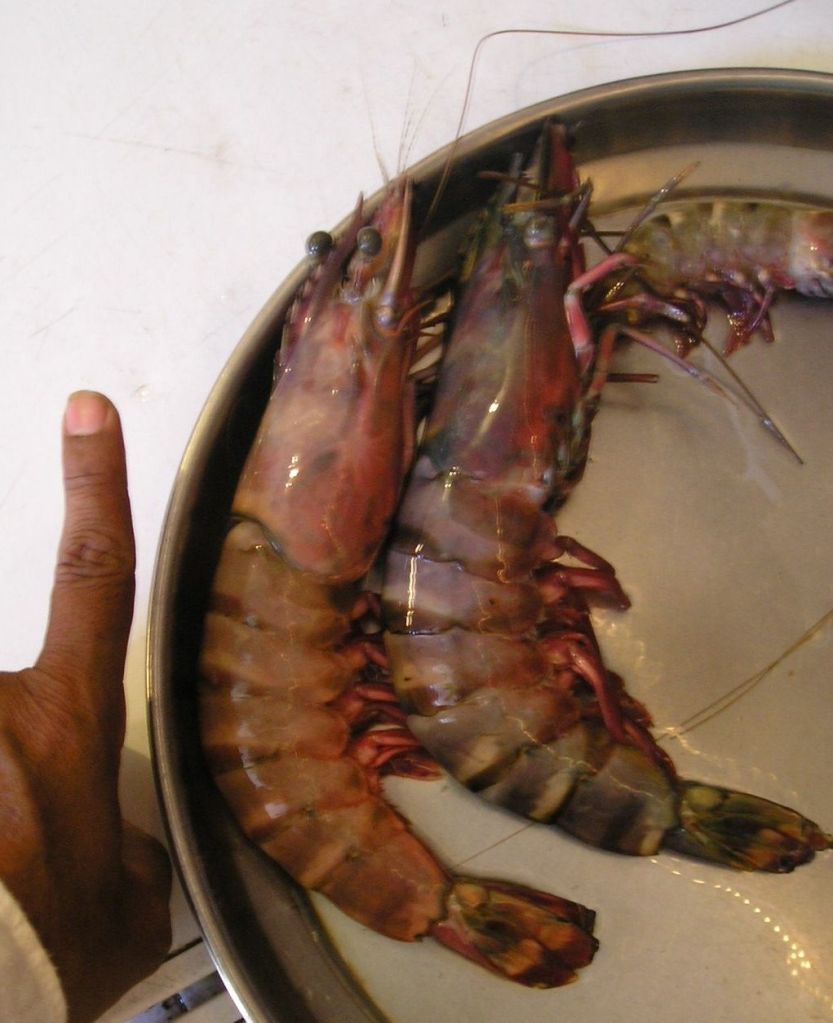
Today she had a single white perch and two giant tiger prawns. The mid-morning sun glistened and flashed brightly off the stainless steel dish as she swiveled it to show him. He bought the perch but then asked if he could take a picture of the prawns.
Ambika loved when he did this. Despite the ubiquity of phones in the village nowadays, no one used them to take pictures of food. It was something foreigners did. This time she posed, which was a first.
Kiran had eight pictures of Ambika in his phone, documenting seven different species on her dish. In the initial snaps she looked wary and stoic – on occasion suspicious. Now she took time to position herself. She turned the dish to prevent glare. She drew the top of her sari from her shoulder up and over her head to shade her face.
Suddenly, Kiran realized that she, and therefore all the villagers, must think he was leaving. He imagined her saying to the fishermen’s wives that next time he asked to take a picture of her fish, she would pose – because ‘who knew where sir was going and who all then would see her?’
He bent down and zoomed in on the dish, eliminating her from frame. The prawns were huge, at least ten inches long. Green and dark gray at the tips of their tails, their color grew lighter along the fat crustaceans’ bodies over the swimming legs, and pink toward the fore. The walking legs were striped a cartoonish pink-and-white beneath the dull, gray-pink carapaces.
Two round black eyes sat like little black caviar roe placed atop the rostrum above the wiry, red antennae that swept out before them. “Decapods,” Kiran thought, as he set his left hand beside the dish and stuck his index finger out for scale. He had never seen prawns this size before – not in the U.S. He suddenly felt he couldn’t think of anything better about the USA at all.
He stood up, and thanked and paid Ambika. Then he took the perch back inside. He had leftover rice from last night’s meal. He warmed it in the pan as he fried the fish. He stirred in some diced green onion and ginger, finally adding some cut spinach and chili paste. A squeeze of lemon brought out the flavor of the whitefish. It cut flaky and tasted delicious.
As he ate, Kiran thought again about Ambika. She saw much more clearly than he did despite all his travels and his western education. She and the other villagers were lighting-quick-witted. Their connection through daily process to thousands of years of Tamil made it so.
His mind was filled with the ceaseless noise of his Facebook, Twitter and IG scrolls.
When he arrived he never said when he’d depart. They knew before he knew himself. They were reading him as they read every tourist who came to stay.
The villagers’ lives were unchanged for centuries. They’d seen many come and go, among whom he was no more or less unique – to them he was a simpleton.
Kiran finished eating, washed up and changed into trousers, replacing his chappals with closed-toed black loafers. He had to go to the bank.
He wheeled the bike out, locked the gate and pushed off. He took the main road only as far as the first circle road. He did not want to pass the cafe on the way in. He wasn’t ready to face the gossip pit of expats and regulars yet. Cutting east, he headed down back alleys to the bank.
Emerging from one of these alleys into the round that diverted lorries and buses to the highway, he crossed but got caught between lights at the auto-rickshaw stand.
“Dey! Merica-sir!” a voice yelled at him. He turned to see the autorick driver he’d been buying ganja from standing among a cadre of his fellow drivers. He called him “Merica-sir” because he knew he hated it. It was both respect-building for his local familiarity with Kiran, a foreigner, and it was a dismissive dig.
The driver waggled his hand in a combination hang-loose and call-me sign. His head swiveled in the back-and-forth bobbling unique to South Indians that asks, implies and gestures, at once.
Kiran shook his head and waved him off as the light changed. If he hustled, he could make the light at the next round while all the lights between were green.
He drew a gulp of dusty, earthen air, the grit and residue of thousands of souls, and pushed hard. The auto-rick driver squeezed his rubber air-horn in a honkedy-honk-goodbye which Kiran was surprised he could pick out from the tumultuous roar of the busy street.
He made the lights, swung into the next roundabout and shot out into the bank parking lot. He pulled onto the front patio and chained his bike to the end of the crowded stand. There was a mall adjacent to the bank. The bike rack was always crowded.
Kiran loved coming to the bank. It had an entrance way – mirror-tinted double glass doors let you in to a small foyer and another set of glass doors that led inside. It was a glass air lock – an area to shake oneself of the dust and heat before entering the cool A/C and the clean confines of the bank.
There was a water fountain in the foyer and even a small, single-stall restroom with a sink. Kiran went in and rinsed off, wiping the sweat and dust from his arms and face. He dried his hands by pushing back his hair, took a deep breath and looked at himself in the mirror. He was older.
His temples were flecked with gray that contrasted sharply with his long black hair. His scruffy beard was equally salty. He knew he’d have to shave it all before going back to the U.S. He pulled down the skin under his eyes and stared into himself. When he let go he pored over the extent of the bags.
Kiran had opened the bank account from California over the net. They overnighted him a card international express. When he arrived at the airport in Chennai, he withdrew 120,000 rupees. He used it to get situated. Only then did he use the card to buy sundries in town.
He knew the e-trail of his purchases was being closely observed by the bank. If he spent money at Western fast food chains and checked into a 5-star hotel it meant one thing. If he bought groceries and supplies from local shops, it meant something else. He paid for the hut in cash.
After a few days in the village, he made his way to the bank on a bicycle, covered in cotton. On a Tuesday, a week after he had been in town, Kiran made a showy first appearance at the bank to “meet the manager” and be seen by those who had been watching his purchases as a non-resident Indian.
It was standard practice: make it seem you have plenty of money in the U.S. and are here to share it with family and explore business opportunities. Behave as local as you can. He used the card to buy his bicycle. He used cash when he rented a moto.
He never used the card at local bars. It was the first arrangement he made with Phillipe. He left a deposit, ran a tab till an agreed upon limit and then paid in full in rupee notes. Keeping currency fluid was an invaluable skill of travel.
Mr. Srinivasan was a prototypical South Indian money manager: balding on top and clean shaven, with a round face and baby cheeks. He wore thin wire spectacles that could have been a decade old. He wore a brown suit. It was 42 degrees C outside and this guy was in a suit.
“It is vonderful to see young men doing well in America and coming home to invest,” Srinivasan had remarked as they signed the paperwork. There was an old wooden abacus at the edge of his desk. In the corner, unused, sat a typewriter. Kiran gave him a thumb impression for the bank’s records. “Will you require transfer account?” Srinivasan had asked.
“Not at the moment,” Kiran had replied, “We’ll see.”
The manager bobbled his head at him, “India is booming, sir. You will do very well here now. And your vife, sir?”
“We’re divorced,” Kiran had murmured, signing and initialing paperwork. It was another tight, efficient lie, that pegged him as American.
Srinivasan immediately fired off the excessive tsks that were so common here, “Tsk, tsk, tsk, tsk, tsk, tsk, tsk, tsk, tsk” – a rapid-fire nine tsks was considered more empathetic – “terrible,” he had concluded.
Now, as the interior glass doors slid open before him, Kiran realized he looked forward to seeing the old man again. Srinivasan would testify to his goodness if called upon to do so while he was away. Kiran was confident he’d left an impressive e-trail of purchases and relationships.
There was a podium placed beside the doors as he entered. This was new. A tall, thin, mustachioed young boy in uniform stood at the podium and greeted him. Kiran asked to see Srinivasan. The boy furrowed his brow and looked down at a nonexistent list. “There is no one here working by that name, sir.”
Kiran then asked after the manager and was told he would have to make an appointment. He told the young man to go and ask the manager if he would see him now. Being pushy at the bank exhibited the confidence of both a wealthy American and a local Brahmin. It couldn’t hurt to try.
“Madam is a madam, sir.” the boy replied.
“Fine,” Kiran threw on the frustrated voice, “ask her.”
The young man dropped his head to his chest and ran to the back offices. “The new India, “ Kiran thought, “where turnover is high and smart women make moves to gain control of their lives.”
Now one of them appeared. She was young. “Maybe not 30,” Kiran thought. She was 28: “I’m Urmila.”
Like the bank manager before her, Urmila dressed in western attire, though considerably more sensibly. She wore a thin, black, linen jacket over a light white blouse and a medium-length, business-cut, black skirt. She wore a string of silvery-white pearls. Her gold name tag read: “Urmila Narayan, Manager”.
She extended her hand. Her hair was tied up in a tight bun. She had a sharp but elegant nose over which she now assessed him with searching, dark-brown eyes. All business. They shook and he noticed she looked him-up-and-down before saying, “Come on back to my office.”
Urmila spun around quickly and strode off to the back. Kiran hop-stepped to catch up. He called out after her, “Hey, listen, I didn’t realize I needed an appointment-”
“It’s no trouble,” she called out over her shoulder, not breaking stride.
Her office was small, but one wall was a window treated with the same mirror-tint on the front of the building and when she closed the door the space was cool, well-lit and humming. There were two wall-mounted monitors overhead which ran livestreams of BTVI and Bloomberg Global and two monitors on a desk crowded with a keyboard, mouse and documents. She sat behind the desk and indicated a chair opposite.
There was unopened mail on the chair. He handed it to her and she glanced at the envelopes as she set them atop all the documents on her desk, put her hands together, looked at him and asked, “What can I do for you?”
“I’m headed back to the States briefly and want to maintain my account. I just wanted to touch base with the bank about that. Clarify dates, if there’s a minimum balance or …” he trailed off.
She looked up his account on one of the monitors before her and said, “I see you opened this just a few months ago. How long do you expect to be gone? Because we have some options.”
Kiran was not prepared for this. It was a long way from balding Srinivasan and his abacus and typewriter of a few months ago. “Uh, I don’t know for sure. I have to go back to take care of a few things. Of course I’ll be in touch from there and I can still conduct operations with my account through transfers and the net, right?”
“Right,” Urmila replied, curtly, as if suddenly realizing exactly whom she was dealing with.
She sat back and spoke quickly: “You’ve taken our most basic account, which you opened with a principal balance you deposited as a lump sum from your account in California before you arrived. The monthly fee for the card and other services has been taken out of this principal. So if you continued with this basic account, you’d have to keep paying the monthly fee and maintain a balance,” she paused, scanning the monitor, “I think it’s like 100,000 rupees. There would of course be penalties if you didn’t manage this.”
“Sure, I understand,” Kiran replied.
“Alternatively,” Urmila continued, swiveling in her chair to a shelf behind her, “I would encourage you to consider investing with us.” She pulled down a glossy folder from the shelf and passed it to him. It was filled with printed pages and charts. “Here’s a simple explanation of some of the opportunities we have. You could leave as little as 5,000 US here and it would be working for you.”
Kiran tried to look cool. “Oh, I see,” he took the folder and pretended to flip through it. His ignorance wasn’t lost on her. “But I guess there would be tax implications …” he trailed off again.
Urmila sighed and grabbed a business card, flipped it and deftly wrote her number on the back. “This is my mobile. It’ll be easier than trying to use the appointment line. Call me direct to discuss and we can do the needful.” She handed the card across the desk to him and sat back.
He realized this was all the time she had and stood. He thanked her as they shook hands and he left. It was all cold, swift, mechanical and delivered exactly as it might have been in Modesto. “The new India,” he thought.
He put the folder in his backpack and headed out of the bank. The second doors opened and the heat hit him like a wall. He craved a drink, but knew he had to visit the Internet cafe first. He had to look up flights and let Sara and Dash know he was headed back. He unchained the bike and set off.
He pulled up to the cafe and was pleased to see there weren’t that many bikes out front. School hadn’t let out yet. In the afternoons the place was swamped with teenagers. There were only 15 cubicles, stalls really, so groups of kids hung around each, spilling over.
Kiran checked in and slid into a stall. He ran a Kayak search on tickets and checked every box: Cheap-O air and ijustfly and orbitz and priceline and whatever Indian options they added. There were nearly a dozen windows to sift through to get an idea of a price range. He would use the range to negotiate with a local travel agent for a lower price or a better flight. After a half hour of collecting data, his mind swimming with flight numbers, fares and connections, he shut down all the sites and put away his notes.
He wrote Sara first. Short sentences. Their relationship had decayed to where only the most pertinent info was exchanged. It was like writing a telegram in the last century: “Home next month. When can I see him? – K.”
He thought about writing to Dash to tell him as well, but realized he didn’t have concrete dates to share. Instead, he sent him a few snaps of the beach and of an elephant he saw on the road. “Wish you were here. How are the A’s doing?” he wrote. Kiran wondered if Dash even kept up with baseball.
He spent a few minutes looking for articles about thorium in the sands of Tamil Nadu. He stared at images of monazite-laden sand. He couldn’t tell anything from comparing the images. They all looked different from each other and the sand by his hut.
The tiny bell on the front door of the Internet cafe began ringing periodically and insistently, as teenagers and their posses kicked it open and filed in. Many of them were Dash’s age.
It was time to go.
27 Wednesday Mar 2024
Posted in fiction, literature, North Oakland, Oakland, S.F., SF Bay
Tags
Area, Bay, changing, chrysopylae, ever, ever-changing, fiction, Francisco, Karthik, m.t., m.t. karthik, oakland, San, short, story, writing
by M.T. Karthik, 2024
(6060 words)
To this Gate I gave the name of Chrysopylae, or Golden Gate; for the same reasons that the harbor of Byzantium was called Chrysoceras, or Golden Horn.
John C. Frémont, July 1, 1846

——–
On a half empty flight returning to SFO from Costa Rica, in seats 17B and C, Freddy Pico held hands with a stranger. She was in her mid-30’s and trying to get back to Vegas. She approached him at Juan Santamaria International and quietly asked if she could sit beside him on the half-empty, wide-bodied jet, confessing hapless fear during takeoffs and landings.
Her name was Elizabeth and she waited till he was alone. Freddy stood off apart from the others in front of a floor to ceiling window pane.
The harsh tube bulbs overhead were oddly made more stark by the rectangular plastic covers meant to serve as flat sconces. The ultimate effect was that everyone waiting to board, latinos y gringos alike, appeared undead.
Freddy was twisting his body around in front of the window, trying to position himself to actually see – to avoid the harsh glare and make out the fiery volcanic glow of the Poás in the distance – when Elizabeth approached and stammered her request.
Now, twenty years later and 3,000 miles away, standing on Ocean Beach, Freddy suddenly remembered what Elizabeth said during that takeoff, when she death-gripped his hand while their 747 banked slowly out to sea, leaving the ribbon of coastal Nicaragua behind.
She murmured, “I live in the desert because I don’t like change. People who like change need the ocean.”
Freddy remembered her looking up and away awkwardly to avoid any open blinds and the thousands of feet between them and mother earth. Her dishwater brown hair was tied up in a small bun. Her pale hazel eyes jumped to the no-smoking and fasten-seat-belt signs, the personal fan and light, the dull gray of the plastic stowaway bins – anywhere but the windows.
People always asked Freddy to do things like that: hold their hands during takeoff, or mind their stuff while they ran outside to feed the meter. He was easy-going. He wasn’t short or tall. He had a round, welcoming face, warm eyes. His paunch appeared and disappeared, a tide of the seasons, not the hustle of jogging.
The marine layer sat thick overhead. It made everything dark; the sea, the sky, the stone outcroppings in the gate. This contrast gave the sand a clean, beige hue. Freddy saw the boys running around on the sand and tried to implicate them in his flight mate’s analysis of what different people need, from so long ago.
Marcus, the eldest, liked change. Ricky was in constant change. Really, all the kids were.
“Kids,” Freddy thought, “need the ocean.”
“C’mon! Let’s go,” Freddy yelled at the sinewy black shadows running against the gray wall of sky and surf down the beach. He raised his hand when he saw Ricky looking back at him and swirled his finger in a wide circle in the air, reeling them back in. Ricky waved, turned away and chased down the others. Today there were four of them.
Two flying forms blew past Freddy tearing up the long beachhead. He didn’t get their names. Earlier, Marcus showed up at Freddy’s place with these two – brothers, maybe three years apart – easing in behind him. “Oye, Mr. Pico, I told these guys they could come along.” Freddy realized Marcus liked being the gatekeeper – bringing kids from the neighborhood around to his place.
It had started with one of Marcus’s classmates three years before, and today Freddy didn’t know these two brother’s names, but he knew their mother and had seen them around the neighborhood. As long as he knew the kids’ parents, Freddy never asked questions. He just gave as many as fit in his Gran Torino a ride to the beach and back, some fruit, a couple of bottled waters.
“You got towels?” the elder brother asked.
“Uh, yeah, sure.”
Ricky strolled up with his shoes in his hand, eyes sparkling and blurted, “Man, the sand’s actually cold!” Freddy turned and looked back for Marcus, whose shadowy form he made out slowly trudging toward them. The fog and swirling sand intermittently swathed him in mist.
Marcus looked up the windy beach and made sure Mr. Pico turned back around before taking out the joint. He had been unable to light it on the beach without it being obvious. He spent a frustrating twenty minutes trying to get it lit before finally giving up.
It was the first time he had ever sneaked a joint on a beach trip and he’d brought matches, which he got free from the goldfish bowl at the hostess stand next to a dish of individually-wrapped, red-and-white peppermints in the foyer of Aldo’s, the Italian restaurant in his neighborhood.
He hadn’t thought about the wind at the beach and only now realized he should have bought a lighter. As a result, he never managed to get an actual hit. He brushed the charred, crumbly bits off the end of the pinner, pinched it and twisted it closed. He slipped it back into his shirt pocket under his hoodie and shell jacket.
As he approached the cement ramp that eased up out of the sand to the car and the others, Marcus felt a sharp spasm of guilt. If he had been successful, he realized, he’d have felt worse. As he approached the big Ford, he feared Mr. Pico would smell it.
Unlocking the doors, Freddy called out ,”Hey guys, dust the sand off before getting in.” Ricky sat on a bench beside the old sedan, swatting the bottoms of his feet with his socks.
“So what’d you think?” Freddy asked the two new boys.
“It’s hecka cold, man!” the younger brother erupted, grinning. The elder boy shrugged. Freddy could see the kid was carrying something heavy all day. “So where am I taking you guys … to your mom’s?
Marcus walked up and interrupted before they could answer: “Just take us all back to your place. We’re gonna walk down to GameStop on the way home.”
The younger boys careened into the backseat, falling on top of each other. They fell asleep before the long, low Ford even hit the panhandle. In the passenger seat, Marcus had his ear buds in, his hood up and his face turned to the window.
Freddy noticed a recent change in Marcus’ demeanor, a posture of urban defiance. Marcus wanted people in the city to see him as East Bay: low-slung and closed-off. But Freddy knew he was drinking everything in, peripherally – Oakland style.
A guy in his mid-20’s with thick, black, designer glasses, wearing a gray scarf around his neck and a long, black overcoat that hung to the knees of his cuffed designer jeans, was standing on the corner texting someone, ignorant that he had the light. He stood just at the edge of the curb, tantalizingly close to stepping off, and yet … not doing it.
An Indian cabbie trying to make a right at the corner, was left hanging. Was the guy going to walk?
The Gran Torino was in the middle lane, paused at the light for traffic, so Marcus’ passenger window was immediately beside the cab and he could hear the woman in the back seat barking in rage at the cabbie to get a move on – unaware he could go nowhere until the guy on the corner either moved or looked up from his I-phone.
The full-bearded Sikh, who filled out the driver’s seat like a massive blue tuber, puffed his cheeks and let out a sigh that emptied his breast and crumpled his shoulders. His turban sank. Marcus sighed sympathetically.
“What’s up?” Freddy asked.
“Nothing,” Marcus murmured, “Just fools in the city.”
The marine layer lay thick across San Francisco as the big sedan slowly edged forward through traffic toward the bridge. The skyline was waist deep in it. The Pyramid, BofA and Salesforce were all masked in gray.
But as they came up on the 101, the gray evaporated. Halfway across the water, the fingers of the marine layer were melted away. Skies were clear over the East Bay and it was sunny; windows with views of the ever-changing chrysopylae reflected the sunlight, peppering the Oakland hills with white dots and shimmering lights.
Freddy reflected on how little the boys knew about the hills, or the city. Their world was the flats of Oakland, and only a few block radius. That was what had inspired him to take these trips to the beach; how it came to pass that Federico Ignacio Pico was the first person to introduce Marcus, Ricky and a half dozen other local kids to the Pacific Ocean.
He enjoyed watching them the first time, approaching the sea boldly, then as they got nearer the waves, more cautiously, until at last they put their toes in the water, yelped with frozen joy and leaped backward.
As his big Ford crept up the onramp to finally enter the bridge, Freddy noticed a man behind the wheel of a little gray sedan in the lane beside him, with an intense look of stress on his face.
“Driven near-blind chasing the cost of living.” Freddy thought.
It’s the same anywhere there’s hills and flats, cities and burbs; where there are people overlooking the overlooked. The hills have treasured views, and the flats get unaffordable rents. But here there’s a treasure in the flats – a glittering gem of silver and gray, blue, brown and green: the San Francisco Bay.
As the crazy, bastard pathfinder noted, at sunset from the Oakland hills: it’s golden at times, too.
The Pacific pours through this ever-changing chrysopylae under Our Lady of Perpetual Suicides. It breathes up the delta and down the South Bay, brackish. There’s continuity. If you stick your toe in Lake Merritt or Corte Madera Creek; San Pablo Bay or the Carquinez Straits, you always feel connected to the Pacific.
Freddy glanced at the boys in the rear view mirror, then tapped Marcus and spoke up to get through his music. “They don’t need to go to GameStop – they’re all crashed out. I’m taking ’em home.”
Marcus didn’t turn to face him, “Yeah, all right.” The bay rolled by.
“What’s the tide doing?”
Marcus sat up, pulled out his earbuds and leaned to look: “hustlin’ out.”
“How’s the chop?” Freddy could see the water, but he feigned focus on driving. Marcus had learned a lot in three years.
“Hella caps … gotta be 20 … well, 15.”
Changing lanes across the wide, gray asphalt of the maze to the 580, and easing into Oakland, the white of the bridge, the cranes and the road stripes shone brightly – it was warm.
“Yo, man, just let me out on Telegraph,” Marcus added.
Freddy nodded and eased the GT through the criss-crossing traffic of the thousands homeward bound.
*******
Barbara Carter rented one side of a duplex in the middle of a typical East Oakland block. At one end there was an empty warehouse building. The other end of the street crossed a busy avenue. The corner had a pizza delivery spot, a bodega, a coin laundromat, a gas station and an eight story, glass and concrete condominium rising above them all.
The units in the condo were mostly 700-square foot studios. The tenants were all unmarried singles who either didn’t have much patience for kids, or feared them. They walked city-fast, headphones in, head down to their phones tapping apps on the way to BART to the City.
The kids had no place to be. The pizza spot had no tables. It was just a stand for delivery drivers, that served $5 gourmet slices to the condo residents. The corner store owner was fascist against kids hanging around his shop. The bodega and laundromat were no loitering zones and the gas station … well, it was a gas station.
The playground for the kids was the empty end of the block with its decrepit warehouse wrapped entirely in barbed-wire fencing. Realtors signs were tied to the woven metal with metal twist-ties every thirty feet, but none of the signs were legible as each had been tagged “Paloma” in sweet, lyrical, Belton Molotow Premium Azure Blue.
Barbara’s duplex was halfway up the block. The houses on either side were all single family homes. She had a housemate, Michelle, who was obliged to pass through a small common space, a foyer, to come and go. Michelle had closed the front door to the foyer and spun to face the street just as Freddy pulled up. Her pony tail whipped around and hit the screen door as it closed.
Seeing it was the boys, she turned, opened the screen door, unlocked the front door, and then, ponytail whipping back-and forth, turned and walked back purposefully in front of Freddy’s car to his window. She leaned in and lowered her sunglasses, shaking her head: “You don’t want to go in there.”
She saw the two sleeping brothers in the backseat. “Aw, look at that! That is so sweet what you do for these kids.”
Freddy smiled, “Whose Volvo ?” He nodded to the black EX-30 parked in the driveway they shared.
“PTA,” Michelle whispered, “They’re saying Eric stole something.”
“Which one’s Eric?” Freddy asked, as he emerged to let the kids out. Michelle helped rustle them to the sidewalk. “This,” she patted his head as she gently nudged him to the curb, “is Michael, he’s eleven. And that,” she said, nodding at the elder brother, “is Eric, he’s thirteen. What did you do?”
“I didn’t do anything,” Eric murmured, half asleep, half-defiant. Freddy wondered if the kids’ sullen attitude all day had something to do with whatever was going on inside.
“Did you have fun at the beach?” Michelle asked the boys as they slipped out of the big back seat.
Michael turned and smiled weakly, giving a thumbs-up, then continued after the slinking figure of his brother toward the front door. Michelle gently patted Freddy on the back, “Good to see you Freddy, I’m telling you: Stay out of it.”
She crossed the street to her Honda and Freddy watched her start up and pull out, before turning to the duplex. He had already dropped Ricky off and, since Marcus had gotten out at Telegraph, this was his last stop.
The door to the foyer was ajar, and he could see Barbara inside as he walked up and heard her: “Oh, good. Come in,” as he waved through the screen door before swinging it open.
“Have you got a few minutes, Freddy?”
Michael and Eric’s mother was a formidable woman. She stood nearly six feet in heels and was thus slightly taller than Freddy. She had dark skin which gave her form broad, statuesque features. She stood in the entrance to the kitchen and didn’t move nearer the door as Freddy entered.
Eric was standing at the front of the living room, between them, head down, staring at his shoes. There was no sign of his little brother. A man and woman were seated on the couch. Freddy did not recognize them. Both rose when he entered.
Barbara quickly added: “How was the beach? Were they good?”
Freddy glanced about. Michael had dragged himself off someplace.
“They were great. We had fun.”
Eric stood in front of a big, flat, wall-mounted monitor. When on, it dominated the small, neat living room. Off and silent, the monitor created an immense black backdrop for Eric, who looked even more isolated as he faced the interrogation taking place.
Barbara walked across the room to Eric’s side: “Well, I’d love to hear all about your first trip to the beach, but unfortunately, we’ve got to address a problem.” She took her place behind him, supportively, and put her arms on his shoulders before turning to the others.
“This is Mr. Pico. He took the kids to the beach today,” and, turning to Freddy: “This is Lynn Chen and Paul Wallace, with the PTA.”
There was a low, round table in front of the couch, and the two stepped out and around to greet Freddy. The Asian woman seemed to be Chinese, but Freddy couldn’t tell her direct heritage. She wore a simple black dress, with white shoes and a simple medium length string of pearls. She put her hand out confidently, “Nice to meet you, I’m Lynn. Are you the boy’s guardian?”
“The boy,” Freddy thought, as he shook her hand before replying, “Oh, no-” but Barbara interrupted:
“No. He’s a neighbor.” She stopped full then added, “and a friend.” There was tension for a half second before Barbara turned to Freddy, “But I may need you in a professional capacity.” and then to the others, “Mr. Pico is a police officer.”
Freddy let go of Lynn’s hand, shaking his head, “No,” he demurred, as he turned to the tall man with thinning brown hair and glasses beside her. Middle-aged, in brown slacks and a beige blazer over a rumpled but clean, white-collared shirt, he looked a little lost.
Freddy continued, “I’m a graduate of the Oakland police academy, but I’ve never served as an officer.”
“Ah.” the tall, clumsy man said, noncommittally. “I’m Paul. Paul Wallace.”
Freddy explained, “They needed bilingual candidates and I signed up, but I was in the graduating class after the budget cuts. There were limited positions, so I deferred.”
As they shook hands, Paul nodded vigorously, approving, “I see, I see, well …” He was the type that trailed off. Freddy wondered if it was because Wallace was often in rooms filled with opinionated parents. Freddy imagined he’d grown accustomed to being deferential at the PTA.
There was dead air as they continued shaking hands and staring at each other. Seeing Wallace wasn‘t about to say anything else, he continued: “Please, call me Freddy.” He turned to find a place to sit. Barbara took Freddy’s arm, “What I meant was we may need your services as an investigator.”
There was an empty armchair to the right of the couch and Freddy took it as Paul and Lynn returned to the sofa.
“Yeah, they needed either Chinese or Hmong or Tagalog speakers so I gave up my spot.”
The tone in the room, unreeled carefully by Eric’s mother, had shifted with Freddy’s arrival. She now asked, “Would anyone like coffee?” and to the general lifting of mood and nods all around, “Great, just give me a second. Eric, honey, why don’t you come help me?”
“Terrible business, this … ” Paul muttered, trailing off.
Lynn looked to Paul but was obviously used to him, because she waited only a brief, perfunctory moment – it was like she was staring at him counting to some number in her head; a limit – before she shook her shoulder length hair and turned to Freddy to take charge of the situation.
“I think the boy’s involved with whoever has taken a valuable sculpture from the grounds. They melt them down and make good money – it’s happened before.”
“They,” Freddy thought.
“Now, Lynn,” Paul was used to this role, already back-tracking, “Slow down. Until there’s some clear-cut evidence, we shouldn’t go accusing …”
“Until,” Freddy thought.
Not knowing what else to say and eager to turn to someone else, Paul looked to Freddy, “Honestly I didn’t want to come …”
Lynn stopped short and looked at him, wounded, as he continued, “The police came when we reported it of course, but they have no leads or …,” his voice disappeared again into thin air. Then he started fresh, “The District will be conducting our own investigation,” and then he paused again, before muttering, “but perhaps you could be … of some … “
He was like an engine that just won’t turn over. “Well, I’m happy to do whatever I can for Barbara and Eric,” Freddy replied, “But I’d be working on their behalf. We’re neighbors.” He paused and looked at Lynn, “And friends.”
Lynn, visibly exasperated by the sudden appearance of someone even less allied to her views than Paul, realized she had to be diplomatic, “Well, it’s just we need to act fast because whoever’s got it is going to melt it down and turn it into cash as fast as they can. They’ve got to get rid of the evidence. And I think that boy,” she said, pointing at the kitchen, “knows where our Cooper’s Hawk is at this very moment.”
“Hmm, well,” Freddy said. “I can tell you I spent the day with Eric and his little brother, Michael, and they were great on our outing.
“I began giving kids from this neighborhood monthly rides to the beach a few years ago-”
“Oh wait-” Lynn said, “I’ve heard of that.”
“of that,” Freddy thought, before continuing, “Different kids, and if there’s room, some kids come back.”
Lynn smiled and sat back. Paul nodded vigorously, incapable of an appropriate response. Freddy let them off the hook:
“So this is one of the bronzes in that series the school commissioned last year? The Cooper’s Hawk is just one, right? of several that depict native flora and fauna reproduced in bronze?”
“That’s right,” Lynn responded, “I was on the selection committee. It’s an important work. We can’t have elements of it just walking away-”
The need for increased security for the remaining statues hadn’t struck her yet and she interrupted herself, trailing off, “The other statues …”
Barbara returned with a coffee pot and a tray with cups, which she set on the low table. There was creamer in a small, cylindrical metal pitcher with a hinged lid and spout and brown sugar in a crystal bowl with a spoon, rather than lumps. She poured Freddy a cup, handed it to him, then poured coffee into the remaining three cups on the tray and took one for herself. She gently added a dash of creamer. Paul and Lynn quickly and mindlessly did the same, as Freddy continued:
“Those statues are installed along the creek, I believe. But I’ve noticed the Cooper’s Hawk has a vulnerability in its design. At the point where the legs meet the branch, the metal’s quite thin. It has delicate talons.”
Freddy’s crisp, direct investigative approach silenced the room. The quiet unassuming fellow who strolled in like the driver or sitter was gone. In his place, a shrewd and observant local emerged. He took their silence for agreement and pressed on.
“So that’s the weak point. But it’s installed at some height, I believe.”
“Yes, that’s right,” answered Paul, “It’s meant to be seen from the ground at rest on a branch, perhaps like it’s hunting for mice. It’s probably fifteen feet up there.”
“So how did the thief get up there unseen?” Freddy continued.
“That said, it would’ve been pretty easy to break the sculpture off the branch at the thin point near the talons,” he paused, “Once you were up there – you wouldn’t need a torch.” Freddy looked directly at Lynn, “A child could do it.”
Lynn sat back smugly and listened to see where this was going.
“When was it taken? Who first noticed it missing?”
Paul replied, “It was discovered missing by a student and his father who bike the creek to school together. They noticed it on Saturday, on their way to the farmers market. The father called me to report it. So …”
Lynn interrupted more quickly this time, “So it was taken sometime Friday night.”
“Or early Saturday morning,” Freddy concluded.
Since his mother had taken her coffee cup to the other armchair opposite Freddy, Eric looked even more isolated, standing, awkwardly, staring at his shoes.
Freddy turned to him, “Eric, do you know anything about this?”
“No.”
Lynn sat up straight with alarm, “There are a group of kids who hang out together every afternoon. They hang around the campus and they … they …” she sighed, constrained by language, “they get into a lot of who knows what?
“I’ve been told for seven years now as my kids grow up in this neighborhood that we don’t use the word, ‘gang,’ because it’s inappropriate and stigmatizing, and in fact, ” she quickly turned to Barbara before continuing, “I agree with that, I do. But we need to admit we have at least one group of kids that hang around only with each other and roam about doing mischief.”
Barbara looked as though she might explode in reaction had she not immediately stood, taken a large deep breath and returned to her son’s side. Instead, she asked simply and slowly, “Do you have some specific evidence against my son? Or are you singling him out for hanging around campus after school with his friends?”
“We’re not singling him out,” Paul countered, “We’ve sent parent/teacher pairs to each of the other parents, too. So we’re not … ”
Lynn again jumped in, “On Friday afternoon, Eric and his friends were seen not just hanging around, but standing under the Cooper’s and throwing rocks at it. There were a whole lot of kids who saw them. They said they probably knocked it off the branch with a rock and took it. We’re following-up on what the eyewitnesses-”
“Eyewitnesses?” Barbara retorted, “To what?”
Freddy spoke up, “Eric, were you and your friends throwing rocks at the Cooper‘s Hawk statue?”
Eric shifted weight and looked at Freddy, “Yeah, we were trying to hit it.”
“See?” Lynn spat triumphantly.
Freddy put his palms out, face down, and patted the air between them, saying gently, “Hang on, now.” He turned back to Eric, “You didn’t knock it down?”
Eric sniffed, “No way,” he shook his head, “It’s bronze. I mean we were just throwing tiny little rocks …”
Barbara turned to Lynn sternly: “So you interviewed a bunch of little kids who wouldn’t know a bronze like that can’t be knocked off a branch by a pebble and that’s why you’re here?”
“Do you know how bronze statues like that are made, Eric?” Freddy asked, in part to ease the tension.
“Um, no.”
“Well, the metal is liquefied and poured into a form, a mold. The mold is made out of a material that’s sustainable.”
Eric listened and shrugged.
Freddy turned to Lynn, “Which means the artist can reproduce the work, right? I mean, they still have the forms for each of the pieces.”
Lynn Chen was not pleased with the direction this was going. “That’s not the point-”
Freddy continued, “I’m not sure on what criteria you made your decision on this project … delicate bronzes in public space? and he paused, “but I guess it’s a good thing you can secure a replacement.”
Lynn stared at him coolly. “That’s true.”
“And maybe the artist can strengthen the point of contact,” Freddy continued, “or make the work more secure somehow,” Then he shook his head, “But I just don‘t think Eric here would have any idea what to do with a bronze to make money off it. Can’t speak for his friends …”
He turned to Paul: “Can I get a list of the other parents whose kids are involved?”
Paul shifted uncomfortably, “Oh. Well, see. You understand, Mr. Pico- I mean, you’re not even a parent. It’s just not something …”
This time it was Barbara who seized the empty space of Paul’s indeterminacy. “I’m going to get on the phone tonight and find out what’s going on.” She turned to Eric and said, “Honey, I know you must be tired and sandy. Why don’t you go up and take a shower and get ready for dinner?”
The gratefulness in Eric’s eyes belied no trace of guilt. He turned and ran. “Make sure Michael gets cleaned up too!” Barbara shouted at the shrinking form of her eldest son.
Lynn sat back on the couch as if to fix herself there and crossed her arms. “We need to ask him what he was doing with those kids on Friday afternoon. Did he go back to the campus later that night? Where was he Friday night, Mrs. Carter?”
Freddy interrupted, “I’ll talk to Eric. I’ll ask him about it.”
“Right.” Lynn was skeptical, “and you’ll tell us if he and his friends did it?”
Freddy replied, “It doesn’t serve my business reputation to cover up crimes. If there’s more to discover, Barbara and I will let you know.”
Barbara stood to imply the meeting was over. Wallace stood immediately thereafter. Freddy slowly rose and gestured, and finally, begrudgingly, Lynn stood to shake his hand.
As they left, Freddy remarked, “I think you’ll find kids’re more forthcoming to their own families. You really ought to let the parents of the other kids talk to them first. I’ll be happy to help.”
Lynn softened, “If it wasn’t Eric, I’m sorry. I just feel we have to hold the kids responsible for their campus.”
Barbara spoke more gently as she walked them out, “I don’t want to believe he’s involved in this, but if he is somehow, I promise you, we’ll get to the bottom of it and Eric will take responsibility.” She shook hands with Paul and Lynn once again on the porch, a considerably more amicable air between them.
*****
Freddy pulled into the driveway and noticed his housemate wasn’t home. Raj had a separate entrance and the porch light over his door was on. His bicycle, usually locked up on the side of the house, was gone. Freddy went in and turned on the radio. The evening news had just begun.
Before they left for the beach, Freddy had left a filet of wild caught salmon to thaw in the refrigerator. He pulled it out and a shallow dish, which he sprinkled with salt. He squeezed half a lemon into the dish and laid the fish in it, flipping it so both sides absorbed the marinade. He let it sit covered as he filled and set the rice cooker.
He pulled a head of broccoli out of the refrigerator, cut and washed some florets and tossed them into the inner vessel of a range top steamer. He found two carrots in the crisper and diced them in.
Then Freddy pulled down a pan, set it on the range and drizzled it with avocado oil. He turned on the burner, and when the pan was sufficiently hot, set the fish inside, pouring the excess marinade from the plate on top. In a few minutes the aroma of the salmon filled his flat. He flipped on the fan in the hood and turned to peel and dice a chunk of fresh ginger which he tossed in with the fish.
Freddy drew a bottle of white wine from his makeshift stores: a cool, dry cupboard under the stairs that led up to Raj’s flat. It was a 2011 gewürztraminer from Navarro he’d bought the previous month, when he passed through Anderson Valley on the way home from a fishing trip to the North Coast. He uncorked the wine, poured a glass, then flipped the cork, reinserted it into the bottle and put it in the door of the fridge.
Sipping the gewertz, Freddy turned the fish and peeled back the skin, stir frying it separately in the edge of the pan. He diced a serrano pepper and tossed it in with the bits of skin at the edge of the pan. In the end he’d add the spicy, crispy, fried skin to the cooked rice. Freddy poured a shallow amount of water into the outer vessel of the steamer, put it on another burner and waited for it to boil. Then he gently set the inner vessel into the steamer and closed it.
Freddy’s cel rang. It was Raj. He answered: “Hey man, I‘m making fish and rice if you’re hungry.”
“I’m good,” Raj replied, “Meet me for a drink after.” Freddy agreed and stabbed at the face of his phone with his little finger to hang up.
The rice was finished. He removed the lid from the cooker and flipped the salmon skin up into the rice with the spatula. He broke up the filet in the pan to reveal the bones, then plated the rice, vegetables and half the fish. He turned off the burners, put a lid on the remaining salmon, refilled his wine glass and took his plate to the bar in the living room to eat and listen to Minds Over Matter, the radio quiz show.
He called in to answer but his guess was wrong. It was Margaret, queen consort of Malcolm III who was “first to cross the firth at Forth.”
*****
The lights of the logos for Walgreens at the corner of Telegraph and 51st had the ‘W’ of the scripted neon blown out for years. So it said “Al Green’s” for so long that’s how people liked it. The Ethiopian manager was down, so he let it be. Tricked out strip mall lighting and rolling graffiti are often misread as blight rather than culture.
Marcus strolled in under the watchful gaze of the security guard by the door. The older African recognized him as one of the neighborhood kids, knew he didn’t steal and gave him a head nod and a big smile. He wanted kids like Marcus to like him.
Marcus went straight to the counter and asked for a black Bic. He tested it with a flick, like he’d been taught to do by the kid who gave him the joint. He paid for the lighter and took it outside where he peeled off the white adhesive warning label and tossed it in the trash can on the corner. He fingered the joint in his pocket and looked down the block.
He walked to Bushrod park and found a stand of trees set off away from the playground. He stood under an oak, alertly looking around for cops or nosy adults as he lit the joint. This was only the third time in his life that Marcus had ever smoked weed, and it was the first time he was doing it alone. He coughed and struggled to hit the joint. A thin, twisting line of whitish smoke drifted upward from the tip. After just a few tokes, his mind went blank. He stubbed the joint out against the trunk of an oak, twisted the end closed again and dropped it back into his pocket. In the waning glow of twilight he wandered out of the park toward home.
*****
Barbara could see the boys were exhausted. After nodding slowly over the course of dinner, little Michael finally just fell asleep in front of his plate. His chin rose and fell on his chest as he snored lightly. Beside him, Eric was just staring into his remaining food, stirring what was left of the vegetables.
During dinner Barbara had exchanged texts with most of the other parents. Sunday evening was precious relaxation time for all the families. They collectively agreed – through a quick series of texts – to put the kids to bed and discuss the missing Cooper’s Hawk by email, or when convenient on a call, within a day or two.
“You guys must have had fun,” Barbara said quietly. “Go ahead and take your brother to bed, Eric. I‘ll come and tuck you in after I clean up.”
Eric woke Michael up with a nudge and the boys headed off to the room they shared. Barbara cleared the table, brushed the leftovers into the organics, rinsed the plates and loaded them into the dishwasher. She wiped down the table and countertops and put her smaller kettle on for tea.
Checking the time, she calculated so she could program the television. She started a Netflix show she’d saved, then paused it. Then she scheduled a new episode of her favorite show on HBO to interrupt when it was due to begin later that evening.
She went to tuck the boys in, but found them both passed out on their beds with the desk lamp on. Percy Jackson’s Battle of the Labyrinth lay splayed open across Michael’s chest. Barbara picked up the novel gently, grabbed a baseball card from the bedside table and used it as a bookmark. She set the book on the table and gave Michael a kiss. Then she drew the blankets across her two beautiful sons, turned off the lamp and left them to their dreams.
The End
Chapter One of
The Ever-Changing Chrysopylae
a Freddy Pico Mystery
20 Sunday Nov 2022
Posted in 2022, Amsterdam, art, conceptual art, dutch, journalism, landscape
24 Monday Oct 2022
Posted in beliefs, Commentary, conceptual art, performance, poetry, politics
Tags
#mtkforever, 2019, history, Karthik, m.t., m.t. karthik, mtk, parallel
02 Friday Sep 2022
Posted in 2022, Commentary, elections, politics, social media
I covered a lot of elections during the dawn of this century. Then I stopped and unplugged from it all, and, instead of journalism, I turned to ten years of helping raise my child, making art, writing poetry and prosaic thoughts and, finally, helping my father transition from this world.
I used only WordPress blogs and Youtube channels and Twitter – but not Facebook, nor by extension Instagram, because from the beginning I despised Mark Zuckerberg and his bullshit machine and saw it for what it was – a Fuckerberg. It’s why you won’t see me in the metaverse.
For reference, back in ’20, I described myself in that context.
31 Sunday Dec 2017
Posted in Final Post
Tags
archive, artist, author, ffptp, Karthik, m.t., m.t. karthik, madras, mtk, mtkarthik, thyagarajan
I’m artist and author M.T. Karthik, known as Karthik or MTK.
This is an archive of some things I wrote and did until I was 50; more current MTK can be found during baseball season on my SF Giants blog, Giants Baseball Corner, and there’s stuff up to 2021 on my Youtube chan:
Here on this blog, you’ll find original writing, images and documentation of things I made and performances I gave until the age of 50. As I find and uncover things I dropped along the way and recollect them, I add to it over the years.
I wrote everything on this site – the poetry, essays, fiction and reviews – and shot or produced all the video and photographs (all the images in the headers above) and have occupied the node mtkarthik dot org and removed advertising so you can peruse free of distractions.
In the four decades covered here, I circled the world several times, living for years mostly in California – the San Francisco Bay Area, Los Angeles – but also in New York City, New Orleans, Austin, San Antonio, Japan, India and Taiwan.
I have not landed. I don’t own property. I am mostly of nowhere and homeless; mostly unknown in both my birth nation and the nation to which I’m naturalized as a citizen. I’m most like ash on the wind or a stone skipping across a lake that studies the taxonomy of species around it.
Love,
M.T. Karthik
Oakland, 2012 and San Antonio, 2017
18 Tuesday Apr 2017
Posted in GBC Readers
Tags
alex, baseball, blackburn, Bumgarner, Buster, cain, chris, Clayton, de la rosa, frandy, gbc, giants, hundley, Jake, jarrett, Jeff, Karthik, League, m.t. karthik, Madison, major, marrero, mastroianni, matt, mlb, Moore, mtk, National, nick, olney, Parker, pavlovic, Posey, reader, samardzija, sf
Well the first fourteen games (four series) of the season are behind us and a couple of things are already clear.
Though we’re 5-9 and tied for last in the division with the Padres, we’re only four back because everyone in the NL West is actively beating up on each other. I have a strong feeling that’s how it’s going to be all year.
To get the Negative Nelly out of the way first, Grant Cohn of the Santa Rosa Press-Democrat is convinced after just 14 games that the Giants “dynasty is over,” and that we are not going to make the playoffs.
Me, I am not so sure. There’s a lot of baseball left to play.
Pluses and Minuses
Johnny Cueto is 3-0 while Madison Bumgarner has yet to win in three starts. Once again a Cy Young campaign for MadBum’s hamstrung early. sigh.
Our Gold Glovers Joe Panik and Brandon Crawford look awesome, but we lost Buster Posey to a fastball to the head. John Shea wrote this excellent piece on the after effects of getting hit in the head by a 90+mph baseball. It is reported that Posey may play in the series against Kansas City that starts tonight.
Nick Hundley has been really good in Posey’s absence, a stable veteran behind the plate who instills confidence in the position of backup C.
Nuñez ABs are fun to watch and he is a demon on the bases, but his play at third has been up and down. Let’s hope it’s early season stuff. I really like the guy.
Brandon Belt and Hunter Pence are looking good at the plate.
Matt Moore looks good for about 78- 85 pitches and then the drop off seems a little crazy. The fact Bochy doesn’t feel he can trust our ‘pen hurts in Moore’s starts.
But Mark Melancon turned around after his weak opening day showing and has looked considerably better.
Jeff Samardzija, like last year, is probably going to take a few starts to get going.
Matt Cain got a win! (Olney comments below)
LF has been a problem and it was compounded when Jarrett Parker made a great play only to crash into the wall and destroy his clavicle – gone eight to ten weeks.
On to the Reader
With Parker going down Chris Marrero could be seeing more time in left field. Kaila Cruz thinks that’s a good thing.
We traded Clayton Blackburn to the Rangers for a 21-year-old unproven utility infielder named Frandy De La Rosa – Brisbee explains why.
Jake Mastroianni has a closer look at the pitching and offense two weeks into the season.
Buster Olney had this to say about Matt The Big Horse and his win.
The Giants’ Matt Cain is facing a similar transition to the one that CC Sabathia has had to go through — adjusting to the reality that he cannot throw as hard as he used to and learning to mix his pitches differently. In Cain’s most recent start against Arizona, he did what catchers and pitchers refer to as pitching backward — by throwing breaking balls in counts in which pitchers typically throw fastballs and using his off-speed stuff to set up the less frequent use of his fastball. Cain allowed one run in five innings. Sabathia recalled an at-bat in which he pitched to Russell Martin a couple of years ago, when the left-hander had it in his mind that he would bust a fastball past his former teammate — but the best he could do was 90 mph, which Martin clubbed for a homer. Sabathia says now that he wishes he had started altering speeds with his pitches earlier in his career.
- Buster Olney on ESPN
If you haven’t yet read the sweet, sweet quotes in AlPav’s look back at Madison Bumgarner’s relief appearance in Game seven of the 2014 WS in KC, do it now.
Love,
MTK
16 Thursday Feb 2017
Posted in Book Review, reviews
Tags
Bardo, book, form, George, Karthik, Lincoln, Lincoln in the Bardo, m.t., m.t. karthik, mtk, novel, review, Saunders, structure, the, writing
The originality of the structure of Lincoln in the Bardo immediately sets George Saunders’ debut novel apart. It’s composed of stacked lists of quotations attributed to the souls occupying Oak Hills cemetery in the Georgetown section of our nation’s capitol in 1862; to the President at the time, Abraham Lincoln, and to his son, Willie, recently deceased; and to the night watchman and manager of the cemetery, neighbors, historical figures and eyewitnesses to the events of the time.
I plunged into this work thinking these crazy quotes would continue for a few pages and then return to a normal third or first person narrative. Not only did they not, the form became its own sort of thing with hilarity and piety. The quotations interact, finish one another’s sentiments.
Saunders’ approach from his short stories in Pastoralia, where letters and notes and faxes between characters move plot and create conflicts, is here in fuller effect. This “debut novel” thus actually resides somewhere between the novella and the norm of long-form fiction. Almost as if Saunders still isn’t ready to write one of those “novel” things.
It was initially off-putting because pretty quickly quotes from real historical sources reside in equanimity with a tumbling invention of the thoughts of the dead.
The first time several quotations are used to describe the same person and there are wide disparities implying unreliable reportage, forcing the reader to flip back-and-forth to separate quotes from actual historical texts from made-up ones, it’s a hilarious reminder that we’re in a novel, and it doesn’t matter.
Fiction and Non-fiction swim together.
In the mid-90’s, in San Francisco, it was the fashion among serious young (read: unpublished) writers like me to read the postmodern fiction of structuralists like Harry Matthews, the only American member of the Oulipo, with great love. The Ouvroir de Littérature Potentielle bears consideration in advance of talking about Saunders as constructionist.
There is a confidence and ease I love about George Saunders. He really is in command of his craft. With this form, within a matter of a few chapters, you are in his world. If a person were to come over to you and look over your shoulder while you’re reading this novel, it would look to them like insane gibberish.
Saunders’ effort is totally original but like Matthews and the Oulipo before him, uses structure to train you into his narrative – isolating you from being able to “tell” this book.
It was immediately apparent an audio book of this work is basically impossible without dozens of actors and a unique method for attribution, audibly. It’s another thing, a book.
I wonder how the e-versions look/read?
Once aboard, the form establishes a rhythm and momentum that sends this richly imagined exploration of death, life and loss, forward with vigor.
The historical facts surrounding the 16th President and the death of his son at the White House and the Civil War that raged with the nation’s history in the balance are the nest in which Saunders crafts a re-imagining of purgatory. He does so to examine our sense of purpose and meaning – in life and after death.
But rather than a staid, dusty exploration of our historical understanding of the deaths of the time, Saunders populates his work with real people – everyday people who lived and died normal and un-extraordinary lives, filled with sins and loves and hates and pettiness. It is part of his charm in the short form that his characters are easily believable and admirable for their flawed, utterly human qualities. They are our guides to the mind of our beloved Lincoln, and nation.
Saunders’ exceptional understanding of people and compassion for their desires, dreams and regrets is again on display as this diverse collection of souls from many walks of life reveal themselves and the stories of their lives.
The population of the cemetery includes slaves but the book fails to really plunge into the national sin. I read a review that felt the opposite, that the recrimination and oppression of the slaves in the cemetery by the whites was clearcut and evocative, giving voice to the horror, but it was disappointing to me.
As I reflect on the role the slaves do play, it is once again as from a position of rectitude, to be able to look back at slavery and racism to contain it in the national narrative.
There are some serious and violent points of intersection between the black and white population of the cemetery and one particularly poignant one never ends, an eternal struggle. But I can’t help but feel this could have been developed. Slaves and masters in the same cemetery, with only the masters in marked graves, seems a rare territory and an opportunity to explore racism more deeply.
The conceit does fruit into a tangential reference into Lincoln’s conclusions on the matter, conclusions that led to years of bloody war over ending slavery. This book isn’t about that though, nor about the civil war.
It seems to be about how we, all of us, think of ourselves and our lives more than Lincoln or anyone else in 1862 does. It seems to be about how we think of our lives in advance of, and even after, death – whether it’s the death of someone we know or ourselves. In that, Lincoln in the Bardo succeeds with sensitivity and compassion.
Saunders understands un-requite, failure, desperation and the longing we all feel. He also knows how to craft this understanding into an incredibly direct narrative. It’s amazing.
Apparently he has said about his process that the narrative tells him how long it is to be, what it is to be. In this case it became something wondrous.
I am left with so much after this novel. I find I cannot describe it very well. It’s like a magician’s deception. What you find within is worth much more than the conceit.
It is clear though, the magician knows his audience inside and out.
Impressive.
mtk
23 Tuesday Aug 2016
Posted in First Post
Tags
Currently, I’m celebrating the 2016 Nobel Laureate in Literature, Bob Dylan, by learning a few old songs on guitar
and printing some lyrics and quotes with a portrait I drew of him in 2008 (a re-working of a still from D.A. Pennebaker’s 1965 footage) that I can rubber stamp at will.
Thanks for visiting.
MTK
12/12/2016
13 Tuesday Nov 2012
Tags
2012, autumn, avatar, contemporary, Karthik, late november, m.t., m.t. karthik, mtk, now
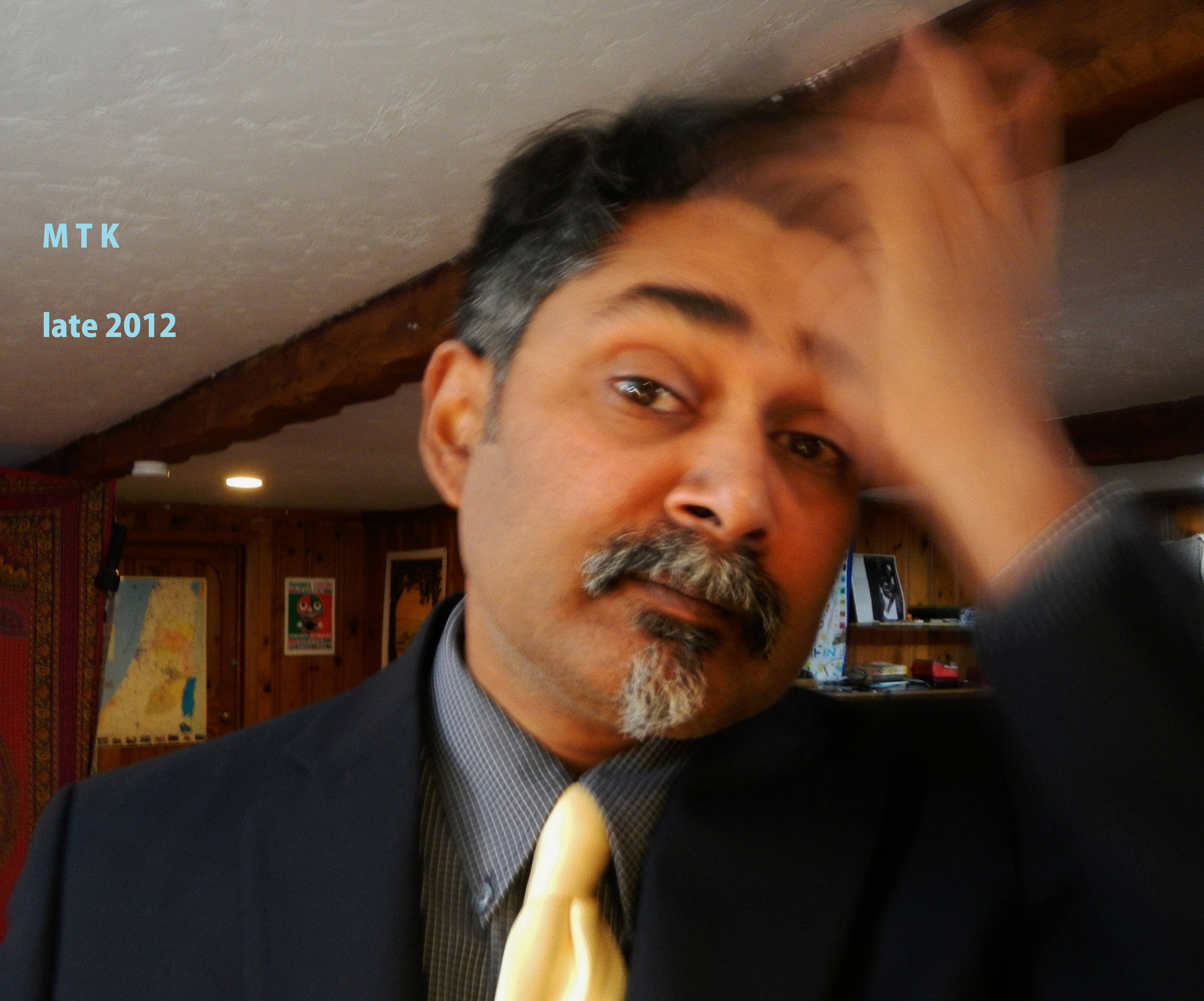
Posted by mtk | Filed under North Oakland, self portrait
03 Monday Sep 2012
Tags
2011, campaign, Karthik, m.t., m.t. karthik, progressive values, rajan, san francisco, videos
I added these to the Looks Tab and thought I’d just post them here as well for kicks. This was my project to inject progressive values into the SF Mayor’s Race.
03 Friday Aug 2012
Posted in conceptual art, journal entries, North Oakland, Uncategorized
Tags
Over the past 200 days, I’ve populated this blog with 200 posts.
Many are backdated – material collected over the past thirty years – but I’ve also posted three to five times a week in 2012, with mostly photographs of baseball games, flora, fauna and landscapes.
There’s a distinct and deliberate difference in the work of these last five years from the work before. In my 40’s, my work is decidedly less political, more image-oriented and produced with and for the plastic, digital fluidity of the inter-webbed world. This is by design.
I do not wish to be known as a political artist.
I promised myself decades ago I would work socially on political matters until I turned 40, when I hoped to turn the mantle of activism over to a younger generation. I have helped this happen and documented its occurrence.
When I was 15 I wrote that I’d make these changes to process when I turned 40, including the addition of filmmaking – which I waited decades to take seriously.
At 15, watching the first of the Macintosh computers come out, I also knew that new media would arise over the years. My generation was the very first to own a personal computer or send an e-mail.
I have tried to be judicious about studying and using tech. I do not play games.
Of new media, Youtube has been the most interesting to me. I started my first Youtube account at 40 and have several now which I use to embed videos to this site.
Continuing my methods over the past year, at 45, I joined Facebook and Twitter during seminal years for both companies. I observed closely as Twitter was given tax-breaks to move to San Francisco and FB created its massive IPO.
I’ve deactivated my account on FB and will not post there again.
I will continue to use Twitter in concert with this blog. I’ve come around on Twitter. I still decry the tax break created and approved by Ed Lee, David Chiu and the SF Board of Supervisors, but I am a Twitterer and will remain so.
The work until I turned 40 is represented here by posts of work I produced between 1981 and 2007. It’s detailed and requires time to sift through. I’ll continue over the years to add work from the past and to edit the contemporaneously written material describing work from my 20’s and 30’s.
I hope to leave behind a sound record of what I consider my work via this blog.
I dream of a reader willing to consider the continuity of thought here as a kind of single expression of a humanistic free radical living in the latter half of the 20th century and the dawn of the 21st. I am lonesome because of my work.
I like blogging and after some years of experimentation, I believe in WordPress as the best free way to do it.
Thanks to any visitors in advance; I love comments, likes and interactions. I am blessed that my site gets visits from many many different countries around the world. You are welcome here.
I remain, M.T. Karthik, author, artist, producer and director in pursuit of art, culture and change.
24 Tuesday Apr 2012
Posted in poetry
Tags
To those about to light a toothpick,
the reverse end of an incense stick or
deliberating whether to forcibly divorce
a pair of chopsticks,
by lighting one on the gas stove,
in order to light a smoke
because you’ve no matches or lighter …
I salute you.
mtk 2012 Oakland
21 Saturday Apr 2012
Posted in fauna, photography
Tags
2012, Area, Bay, california, Karthik, m.t. karthik, Marin, mtk, NORTHERN, san francisco, TURKEY

07 Saturday Apr 2012
Posted in flora, North Oakland
Tags
asagao, california, m.t. karthik, morning glory, mtk, oakland, osteospermum, rose



06 Friday Apr 2012
02 Monday Apr 2012
Posted in photography
01 Sunday Apr 2012
Posted in conceptual art, North Oakland
Tags
california, cloudy, Kingfish, m.t. karthik, mtk, oakland, partly, pub, sneakers, sunlight
20 Monday Feb 2012
Posted in Uncategorized
Tags
2004, alec, baldwin, daniel, election, ellsberg, gonzalez, interview, m.t. karthik, matt, mtk, rnc, usa
rewrote the ABOUT tab and added INTERVIEWS and INSTALLATIONS and COLLAGE and FLORA and FAUNA and a C.V.
In the Interviews section there is a nice one with Daniel Ellsberg, I was hosting live radio on drive time LA during the Democratic National Convention in 2004.
The Alec Baldwin was a good one, too.
I will dig up some others and add them. I really don’t like how the collage looks online, but am cool with these little ones being up.
16 Thursday Feb 2012
Posted in photography
Tags




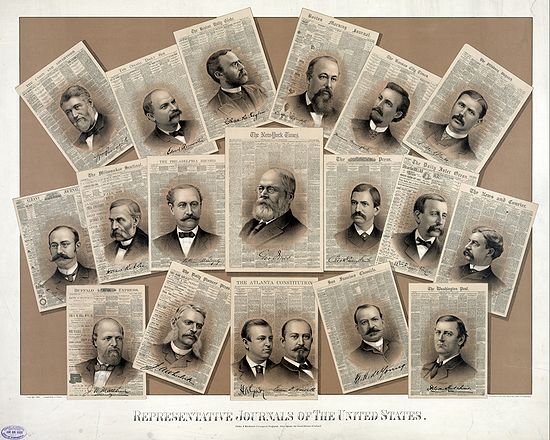


 MTK The Writist